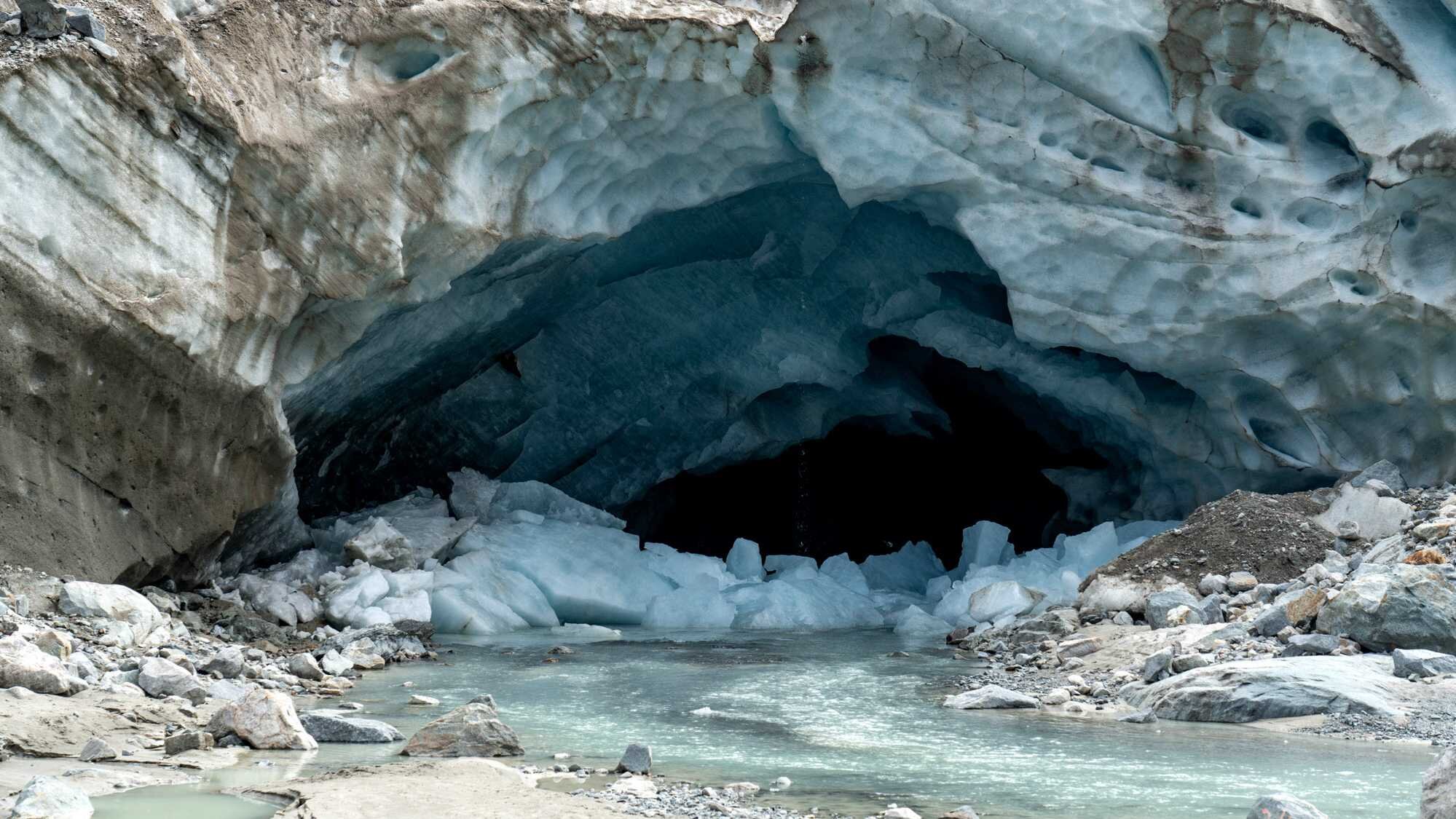
From June 29 onward, every additional liter of meltwater flowing from Switzerland’s glaciers comes at the direct expense of the ice itself, marking this year’s Glacier Loss Day. The milestone arrives after low snow cover, Saharan dust, and an intense heat wave accelerated melting, while researchers warn that shrinking glaciers could eventually reduce the very meltwater many river systems depend on during hot, dry summers.
Switzerland’s glaciers have reached a critical seasonal turning point earlier than many would hope. Beginning June 29, the country’s glaciers no longer have enough remaining snow to offset ongoing melting. From this day forward, every warm day strips away glacier ice, permanently reducing their overall mass.
The milestone, known as Glacier Loss Day, highlights how quickly the country’s glaciers are responding to an exceptionally challenging year. Low snow accumulation, dust carried from the Sahara, and a powerful heat wave have combined to push glacier melting into overdrive.
While melting glaciers continue supplying valuable water to rivers during hot weather, researchers say their long-term ability to do so is becoming increasingly uncertain as the ice itself continues to disappear.
Glacier Loss Day Marks the Beginning of Permanent Ice Loss
Glacier Loss Day represents the moment when seasonal snow reserves have effectively been exhausted. Any snow that could replenish the glacier has already melted away in lower elevations, meaning further melting directly removes glacier ice instead of seasonal snow.
This year, that point arrives on June 29.
Although this is slightly later than 2022, when Glacier Loss Day occurred on June 26, the conditions leading to this year’s milestone remain concerning. Switzerland experienced exceptionally low snow cover during April, with some locations recording record-low levels while others managed only average conditions.
The situation worsened after Saharan dust settled across the country in March. Combined with the current heat wave, these conditions have accelerated the rate at which glacier ice is disappearing.
Years of Ice Loss Have Already Reshaped Switzerland’s Glaciers
The long-term changes are striking.
Between the extreme years of 2003 and 2022, Switzerland lost approximately 200 square kilometers of glacier ice—an area almost as large as the canton of Zug.
That shrinking ice cover is now beginning to influence how glaciers behave during exceptionally warm summers.
Researchers note that 2022 remains one of the most severe years on record for glacier loss. Winter snowfall had been unusually limited, and the country experienced three heat waves during what became Switzerland’s warmest year since temperature records began in 1864.
Only the summer of 2003 recorded higher temperatures during a heat wave.
Over the course of 2022, Switzerland’s glaciers lost around 6% of their total mass, the fastest annual loss observed.
Current heat conditions suggest that 2026 may be following a similarly concerning path.
Less Meltwater Flowed Even as Glaciers Melted More
One finding stands out as particularly unexpected.
Researchers from the Swiss Federal Institute for Forest, Snow and Landscape Research (WSL) examined glacier runoff between June and August during both 2003 and 2022. Their analysis, published in the journal Hydrology and Earth System Sciences, found that glaciers contributed less meltwater to river runoff in 2022 than they had during the same period in 2003.
This happened despite glaciers melting much more extensively in 2022.
The explanation is straightforward but concerning. As glaciers lose surface area over time, there is simply less ice available to produce meltwater, even when temperatures are extremely high.
The shrinking glaciers are beginning to reveal the consequences of decades of ice loss.
The Decline in Ice Cover Is Becoming Visible
According to glaciologist Matthias Huss of ETH Zurich and WSL, the reduction in glacier ice has become unmistakable.
“The decline in ice cover is already clearly noticeable,” Huss says.
Even so, researchers emphasize that the reduced meltwater observed between 2003 and 2022 remains an isolated case rather than a long-term trend.
One reason is that glacier melt rates have remained exceptionally high every year since 2022. Compared with the years following 2003, average melt rates have also continued increasing significantly.
For now, these unusually rapid melt rates are still producing enough water to mask the effects of shrinking glacier size.
Extreme Melting Cannot Continue Forever
That temporary balance will not last indefinitely.
Researchers caution that glaciers will eventually become too small for even extreme summer heat to generate the same volumes of meltwater seen today.
At that point, higher melting rates will no longer compensate for the simple fact that much less ice remains.
This transition has important implications because glacier meltwater plays a valuable role during hot, dry summers. It helps offset falling river levels and moderates rising water temperatures when natural water supplies become stressed.
As glacier coverage continues shrinking, that natural buffer could gradually weaken.
Why This Matters
Glacier Loss Day is more than a symbolic date on the calendar. It marks the point each year when Switzerland’s glaciers shift from melting seasonal snow to losing permanent ice.
The latest observations show that glacier retreat is no longer only reducing the amount of ice stored in the mountains—it is beginning to influence how much meltwater glaciers can supply during periods when rivers need it most. Although exceptionally high melt rates are still masking much of this effect today, researchers warn that this situation has limits. As glacier ice continues to shrink, the ability of glaciers to sustain river flows during future heat waves may steadily diminish, making Glacier Loss Day an increasingly important indicator of long-term environmental change.