Every single day across the United States, a silent tragedy unfolds on asphalt stage. More than 120 lives are lost in the blink of an eye, extinguished by the screech of tires and the crunch of metal. In 2022 alone, the aftermath of these collisions sent more than 2.6 million people to emergency departments, leaving a trail of broken bones and shattered lives. Beyond the immeasurable emotional toll, the financial weight of these disasters is staggering, costing the nation more than $470 billion in medical bills and lost economic potential. For decades, we have accepted this as the price of mobility, but a new era of technology suggests that the primary cause of these tragedies—the fallible human behind the wheel—might finally be replaced by something more reliable.
The Flaws Within the Machine
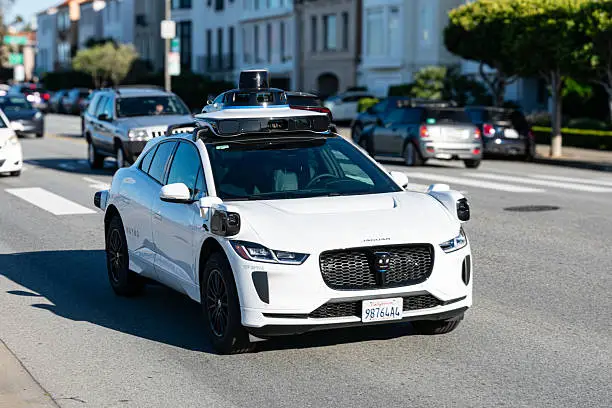
The hard truth of road safety is that the vast majority of crashes are not truly accidents; they are the result of predictable human failings. Whether it is a momentary lapse in concentration, a poor decision made in haste, or the catastrophic choice to drive under the influence of substances, human error is the engine of the current public health crisis. While we have spent years making cars into safer “cages” with airbags and crumple zones, the “software” operating the vehicle—the human brain—remains prone to fatigue and distraction. This realization has sparked a race to develop fully automated vehicles (AV), a technology that promises to remove the most dangerous element from the cockpit. Early data from pioneers in the field, such as Waymo, has already hinted at a future where machines could reduce accident rates by as much as 80% compared to human-operated vehicles.
Mapping the Decade of Change
While the promises of tech companies are bold, the scientific community seeks objective proof. A team of researchers from Canada recently set out to quantify exactly how much of a difference these robot drivers could make on American soil. To do this, they didn’t just look at the present; they looked backward to move forward. By analyzing U.S. national road traffic injury (RTI) data spanning from 2009 to 2023, they established a baseline of our current reality. They then applied a linear regression model to peer into the future, specifically targeting the decade between 2025 and 2035. Their goal was to find a mathematical answer to a life-or-death question: If we let the computers take over, how many people will walk away from crashes that haven’t even happened yet?
Four Paths to a Safer Horizon
To ensure their predictions were grounded in reality, the researchers didn’t just pick one hypothetical future. They used a mathematical growth curve to simulate different levels of how quickly Americans might adopt self-driving technology. They tested four distinct levels of AV usage: scenarios where autonomous cars account for 1%, 2.5%, 5%, or 10% of all miles driven on the road. They also accounted for the “safety gap”—the difference in performance between a human and a computer. They looked at a conservative scenario where AVs are 50% safer than us, alongside an optimistic scenario where they reach that 80% safety threshold suggested by current industry data. These variables created a spectrum of possibility, ranging from a modest improvement to a total revolution in public health.
One Million Reasons to Innovate
The results of the study, published in JAMA Surgery, reveal a future where even small changes yield massive rewards. In the most conservative estimate—where self-driving cars cover a mere 1% of total miles and are only 50% safer than humans—more than 67,000 injuries could be prevented. However, as the technology matures and adoption grows, the numbers become breathtaking. If the U.S. reaches a 10% adoption rate and the vehicles prove to be 80% safer than human drivers, the researchers project that more than 1 million injuries could be avoided over the next decade. This would represent a 3.6% reduction in total traffic-related injuries across the country, effectively sparing a city’s worth of people from the trauma of the emergency room.
The Long Road Toward Certainty
Despite the glowing projections, the researchers are careful to note that we are still in the nascent stage of this transition. The world of autonomous driving is young, and long-term, real-world safety data is currently limited. The models provide a glimpse of what is possible, but they are living documents that will need constant updating as more “robot miles” are logged. For the next phase of research, the focus must shift to the most high-stakes environments: our highways. These are the corridors where the most severe injuries and deaths occur, and they represent the ultimate proving ground for whether automated systems can truly master the complexities of high-speed travel.
Why the Data Matters for Our Future
This research is more than just a collection of statistical probabilities; it is a roadmap for saving lives. By shifting the conversation from science fiction to public health, this study highlights that autonomous vehicles are not just a convenience for the wealthy or a novelty for tech enthusiasts. They are a vital tool in addressing a leading cause of death that has plagued the U.S. for a century. Every percentage point of adoption and every improvement in the safety of AV algorithms translates directly into thousands of families who will not have to receive a devastating phone call from a hospital. As we stand on the cusp of this technological shift, the data serves as a powerful reminder that by removing human error from the equation, we can protect the millions of people who travel our roads every day.
Study Details
Armaan K. Malhotra et al, Forecasting the Impact of Fully Automated Vehicle Adoption on US Road Traffic Injuries, JAMA Surgery (2025). DOI: 10.1001/jamasurg.2025.5711