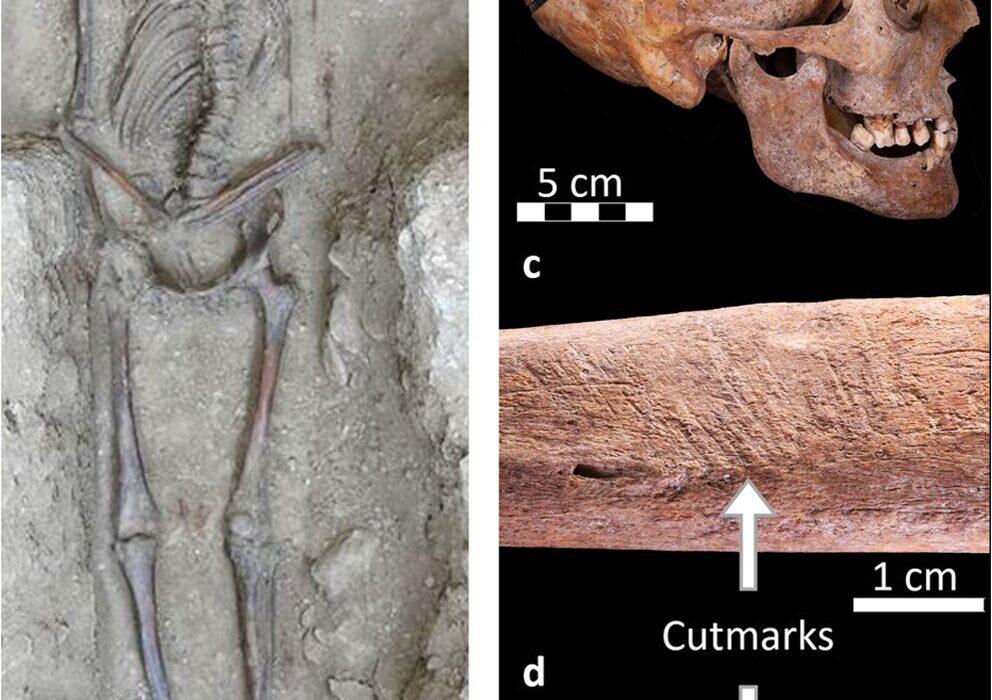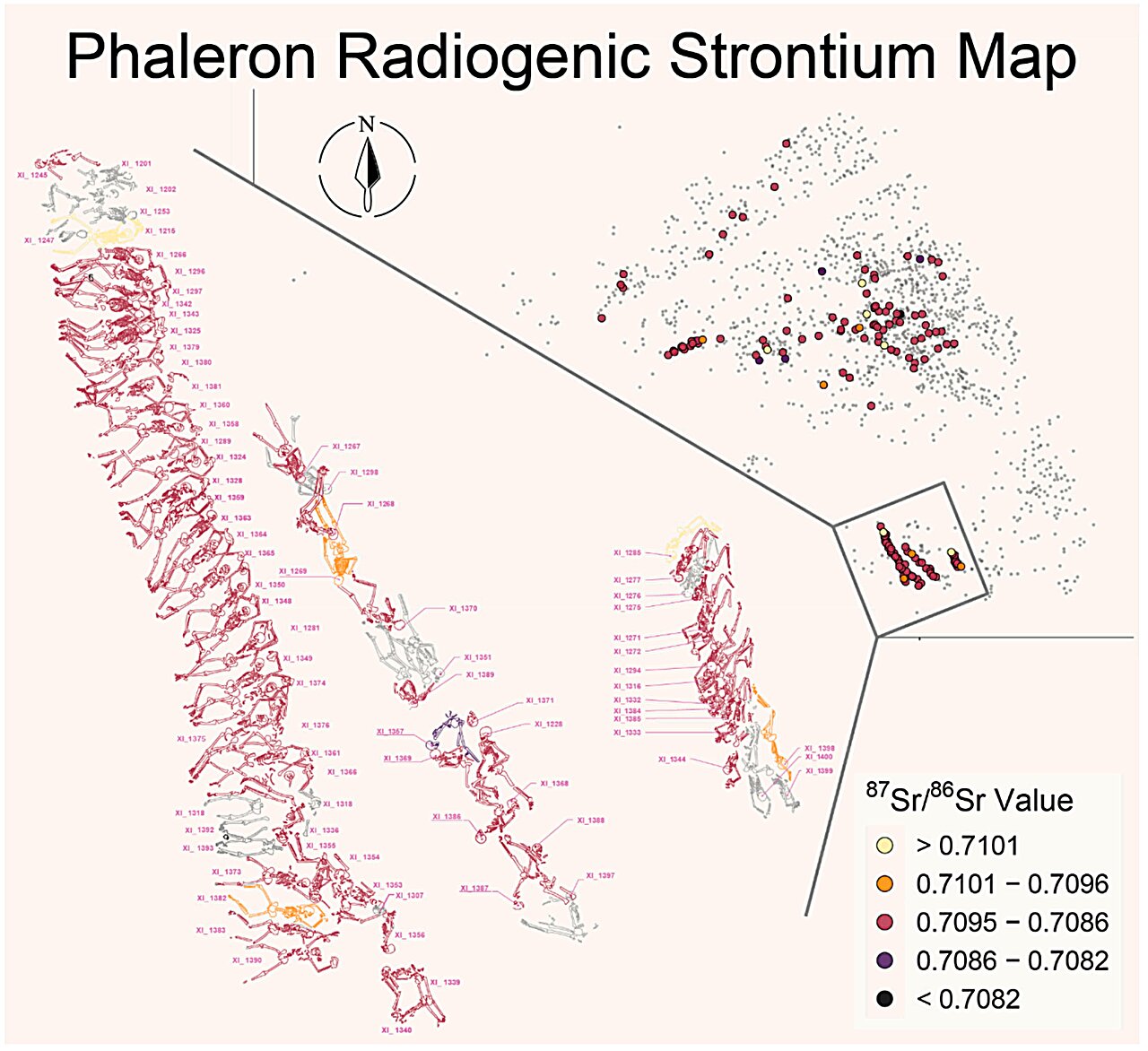
When archaeologists uncovered three mass graves at the Phaleron Burial Ground in 2016, they found the remains of 79 adult men, many of them bound with metal shackles. Their identities have remained uncertain, but chemical evidence from their teeth now points to an important clue: nearly all of the men tested had grown up locally in Attica.
The graves date to the 7th and 6th centuries BCE, a period when the ancient Attica region experienced political struggles. Since the burials were discovered, researchers have considered several possibilities for who the men might have been. They have been described as possible foreign invaders, pirates, political rebels or local criminals.
To investigate where the men came from, scientists from the United States and Greece examined the teeth of 163 people buried at Phaleron. Their sample included 66 of the 79 men found in the three mass graves.
The researchers focused on strontium isotopes preserved in tooth enamel. Because enamel does not change after it forms, its chemical composition can retain information about the geology, food and water associated with the place where a person grew up.
The results were strikingly consistent with a local population.
Of the 66 shackled men whose teeth were tested, 64, or 96.9%, had isotope signatures indicating that they were local to Attica. Among all 163 people studied at the burial ground, 156, or 95.7%, were also identified as local.
That similarity makes it unlikely that the mass graves were primarily filled with foreign outsiders.
The researchers wrote that the people buried in the mass graves were “largely local to the Attic region.”
The evidence points toward conflict within Attica
The isotope evidence does not identify the men individually. It does, however, narrow the possibilities about who they may have been.
If the men were local, their deaths may have been connected to conflict within Attica rather than fighting against outsiders. One possibility is that they were caught up in internal political violence or were executed by the state.
The researchers also consider the possibility that some or all of the men were on the losing side of a failed coup. Power struggles in the region during this period are documented in historical records.
Another possibility is that the men were local criminals who were executed together as part of a public display.
The researchers describe the violence represented by the mass graves as being directed mainly inward, toward people who were likely part of the local population and landscape of Attica.
Their exact identities remain unknown
The chemical evidence provides an answer to one part of the mystery, but it does not settle the men’s identities.
The study adds to archaeological and historical evidence suggesting that Archaic Attica experienced less migration than some other parts of the ancient Mediterranean world. The new isotope results fit that broader evidence by showing that the men in the mass graves were overwhelmingly local.
Whether they were political opponents, victims of internal conflict, executed criminals or people caught up in another episode of violence remains unresolved.
The study was published in the Journal of Archaeological Science: Reports.