On July 2, 2025, something extraordinary reached Earth from the depths of the cosmos. NASA’s Fermi Gamma-ray Burst Monitor (Fermi-GBM) picked up a strange, persistent signal—flashes of high-energy light that continued for hours. Three hours later, when the data from Fermi was compared with other space observatories—the Einstein Probe’s Wide-field X-ray Telescope and the Russian Konus-Wind gamma-ray spectrometer—it became clear that this was no ordinary event.
The world had just witnessed the most prolonged gamma-ray burst (GRB) ever recorded. The event, named GRB 250702B, lasted about 25,000 seconds—nearly seven hours. It shattered the previous record, held by GRB 111209A, by a staggering 10,000 seconds.
To put that in perspective, most gamma-ray bursts last anywhere from a few milliseconds to a few minutes. These are among the brightest and most energetic explosions in the universe, releasing in seconds more energy than our Sun will emit in its entire lifetime. But this one lingered, flickering like a cosmic heartbeat across the sky for almost a full night.
The discovery sent a ripple of excitement and confusion through the astrophysics community. A burst this long and this powerful didn’t fit neatly into any known model of how gamma-ray bursts form. Something about GRB 250702B defied the universe’s usual playbook.
Gamma-Ray Bursts: The Universe’s Fiercest Fireworks
Gamma-ray bursts are the universe’s way of showing off its most violent spectacles. They’re brief, blinding eruptions of energy that occur when massive stars die or when dense stellar remnants collide. When they erupt, they unleash ultrarelativistic jets—streams of matter traveling near the speed of light—filled with gamma rays, the highest-energy form of light known.
Scientists generally divide GRBs into two types. Short GRBs, lasting less than two seconds, are thought to result from neutron star mergers—the cataclysmic collisions of dense stellar corpses. Long GRBs, lasting more than a couple of seconds, usually come from collapsars—massive stars that collapse under their own gravity, forming black holes and blasting energy into space.
But GRB 250702B didn’t fit either mold. Its duration was far too long for a neutron star merger, yet its properties didn’t match the collapsar model either. It was as if the universe had written a new kind of explosion altogether.
A Cosmic Puzzle Unlike Any Other
To make sense of the enigma, more than 50 scientists from around the world joined forces. They pooled data from every available instrument, combining light curves, spectral readings, and timing information. Their findings were published in a 2025 preprint on arXiv, outlining a phenomenon that challenged decades of astrophysical understanding.
The data revealed that GRB 250702B had an unusually high peak energy and a minimum variability timescale (MVT) of about one second—or just half a second when adjusted for its rest frame. MVT helps scientists estimate the size and nature of the central “engine” powering the burst, such as a star or black hole.
The combination of a hard spectrum, rapid variability, and immense total energy pointed toward a violent process involving an ultrarelativistic jet—a narrow beam of radiation driven by a fast-spinning, stellar-mass black hole or neutron star. Yet even with those clues, the event’s sheer duration didn’t fit any established model.
As the study’s authors noted, these traits were “incompatible with all confirmed gamma-ray burst progenitors and nearly all models in the literature.” In other words, this wasn’t just a record-breaking event—it was a cosmic anomaly.
Theories Fall Apart
At first, scientists turned to familiar explanations. Could this be a collapsar event—a giant star collapsing into a black hole? Possibly, but the math didn’t add up. The entire process of a star collapsing and forming a jet can’t last more than a few thousand seconds. Beyond that, the star would simply tear itself apart.
Other ideas were tested and dismissed. The burst couldn’t come from X-ray binaries or galactic sources—the detected photons were far too energetic, and the source was clearly extragalactic. Magnetar flares, caused by extremely magnetic neutron stars, were also ruled out—they burn out within seconds, not hours. White dwarf mergers and binary helium star mergers couldn’t produce enough energy or last long enough to match the observed signal.
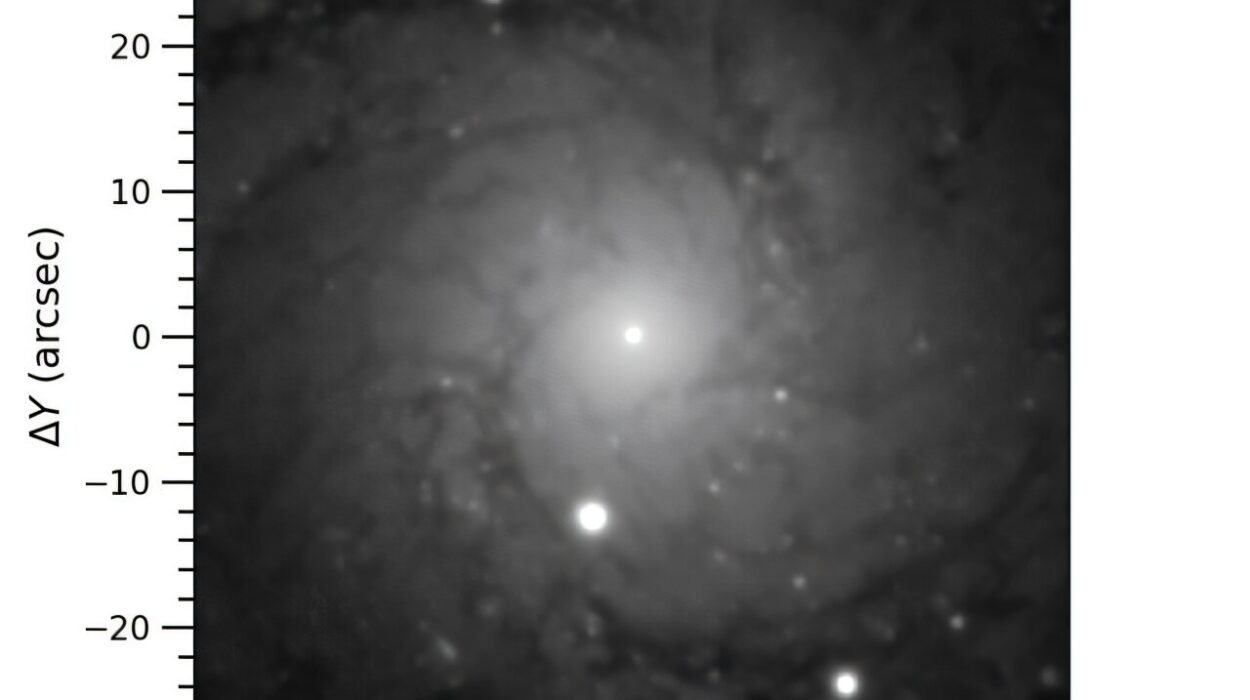
Even the idea that the event was caused by a supermassive black hole in the center of a distant galaxy was dismissed. Observations showed that while GRB 250702B did come from another galaxy, it wasn’t located at its core. Whatever caused it was happening out in the galactic suburbs—a clue that hinted at something far stranger.
A Star’s Final Dance with a Black Hole
After exhausting nearly every possible explanation, one model finally fit the data: the helium merger model.
In this rare cosmic scenario, a black hole and a massive star exist as partners in a binary system. As the star ages, it begins to swell, its outer layers expanding as it burns through hydrogen and helium. Eventually, the black hole’s orbit decays—it spirals inward, drawn into the star’s growing envelope.
This is where the real drama begins. The black hole starts to consume the star from the inside out, converting its immense gravitational energy into powerful jets of radiation. The process continues for hours as the black hole feeds, driving the prolonged burst of gamma rays seen in GRB 250702B.
As the black hole reaches the star’s core, angular momentum builds up, forming an accretion disk around it. This disk, spinning at near-light speeds, generates intense magnetic fields and fierce winds. The end result? A colossal explosion—part gamma-ray burst, part supernova—that lights up the cosmos for hours.
The researchers described it elegantly: “The angular momentum lost from the orbit goes into the helium star, and when the black hole reaches the center of the core, this high angular momentum will cause the helium core to accrete through a disk. This disk can produce the magnetic fields required to drive jets.”
In simpler terms, the star’s death became a spectacular act of creation—a black hole devouring its companion in a cosmic waltz of destruction and light.
A Window into Cosmic Extremes
GRB 250702B is more than a record-breaker—it’s a window into the extremes of the universe. It reveals how binary star systems can evolve in unexpected ways, how black holes interact with their companions, and how the cosmos continues to surprise us even after decades of study.
This event challenges scientists to refine their models of stellar death and cosmic energy. If helium mergers can produce such long-lasting bursts, they may represent a new class of GRBs—events that were once invisible or misunderstood.
The discovery also underscores the power of international collaboration. Without data from multiple observatories—Fermi, Konus-Wind, and the Einstein Probe—this event might have gone unnoticed, or worse, misclassified. Together, they painted a more complete picture of a cosmic explosion billions of light-years away.
What Comes Next
The scientists behind the discovery are already looking ahead. They hope to spot more of these ultra-long GRBs in the future to confirm the helium merger hypothesis and explore how common such events might be.
New observatories will play a crucial role in this quest. The Vera Rubin Observatory, with its Legacy Survey of Space and Time (LSST), promises to revolutionize how we monitor the sky. By capturing the faint afterglows of distant explosions, it may catch more of these rare, long-lived gamma-ray bursts in action.
Each new discovery adds another piece to the cosmic puzzle. GRB 250702B reminds us that the universe is still writing stories we haven’t read yet—and that, despite our growing knowledge, there are still mysteries vast enough to leave us speechless.
The Wonder and the Warning
When we look at GRB 250702B, we are seeing not just an explosion, but the echo of life and death on a cosmic scale. A black hole devouring a star may sound like pure destruction, yet from that chaos comes energy, light, and knowledge.
In a sense, these distant cataclysms are mirrors of our own existence—brief, brilliant, and intertwined with forces far beyond our control. They remind us how fragile and precious light is in a universe that tends toward darkness.
As scientists continue to study GRB 250702B, one truth stands clear: the cosmos is not done astonishing us. Somewhere, even now, another star may be spiraling toward its end, preparing to release its final message across the void—a message that, one day, we may again be lucky enough to catch.
And when that happens, the universe will whisper once more—not in words, but in light that travels billions of years to reach us, telling a story only biology, physics, and awe can truly comprehend.
More information: Eliza Neights et al, GRB 250702B: Discovery of a Gamma-Ray Burst from a Black Hole Falling into a Star, arXiv (2025). DOI: 10.48550/arxiv.2509.22792