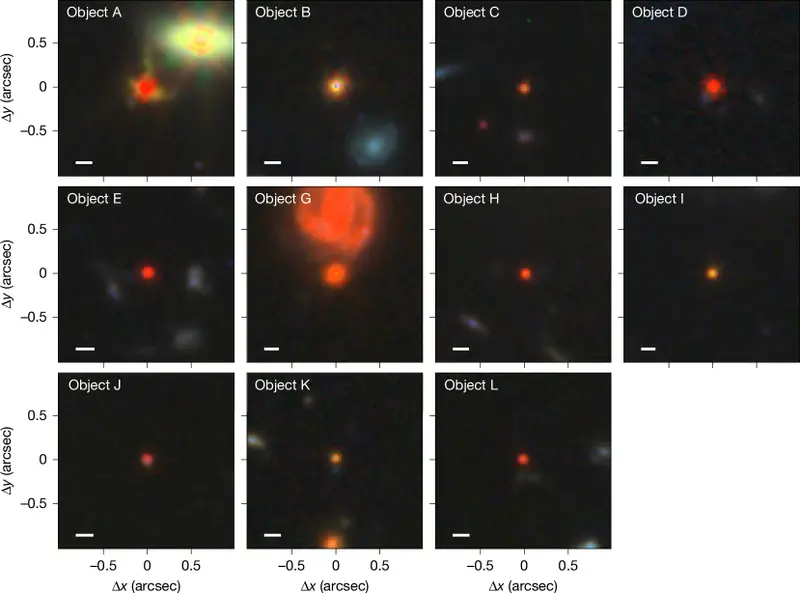
When the James Webb Space Telescope opened its golden eyes to the cosmos, it did more than deliver breathtaking images. It planted a quiet question in the minds of astronomers across the world. Scattered among distant stars and newborn galaxies were tiny points of light, glowing red against the dark. They were small, easy to miss, yet impossible to ignore. These mysterious specks soon earned a simple name that carried a deep puzzle: little red dots.
From a distance of about 1.5 million kilometers from Earth, the telescope was looking back in time, into an era when the universe was only a few hundred million years old. In those ancient scenes, the red dots appeared again and again. Then, about a billion years later in cosmic history, they vanished. No clear explanation followed them into the darkness.
For more than two years, these dots lingered as an unanswered riddle. They did not behave like anything astronomers expected to see so early in the universe. Now, researchers from the University of Copenhagen, working at the Niels Bohr Institute’s Cosmic Dawn Center, have uncovered their true identity. What looked like faint red embers were, in fact, some of the most violent objects the universe can produce, hidden behind veils of glowing gas. Their findings have been published in Nature, and with them, a new chapter in the story of black holes has begun.
When the Evidence Wouldn’t Obey the Timeline
At first, some scientists believed the little red dots might be massive galaxies. After all, for the James Webb Space Telescope to detect them more than 13 billion years later, these objects would have to be incredibly powerful. But there was a problem. Galaxies of that size should not have existed so soon after the Big Bang. According to everything researchers understood, they needed more time to form and mature.
The idea strained against the timeline of the early universe. These objects appeared too early, burned too strangely, and disappeared too quickly. Each explanation solved one piece of the puzzle while breaking another. The red dots remained suspended between theories, refusing to settle into a neat category.
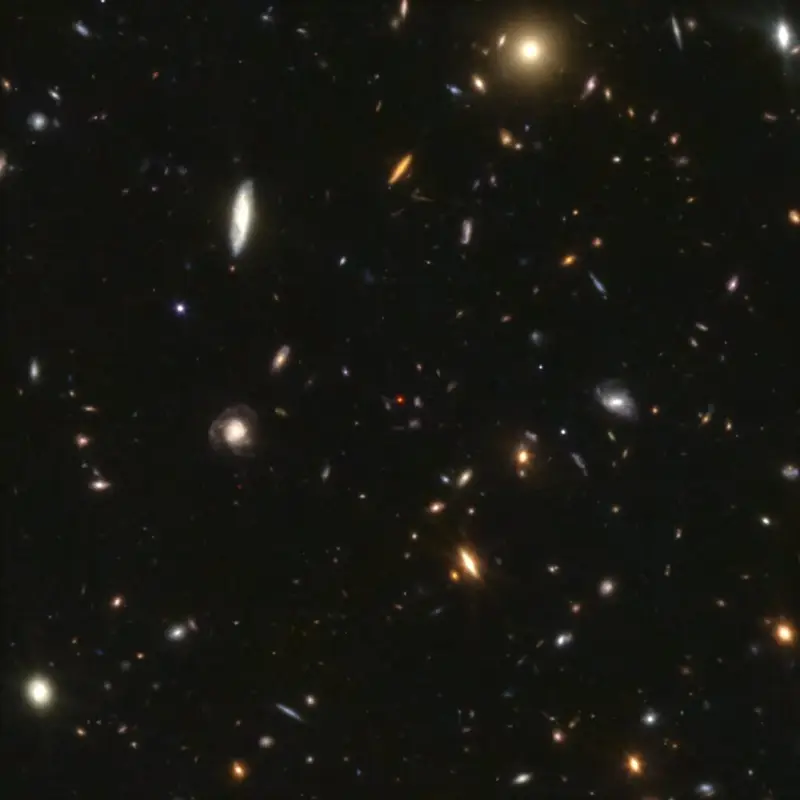
As images accumulated and analysis deepened, the researchers noticed patterns that pointed away from galaxies and toward something more compact, more intense, and far more extreme.
The Reveal Inside a Cocoon of Fire
The answer, it turns out, was hiding in plain sight. The little red dots were not galaxies at all. They were young black holes, wrapped tightly in dense cocoons of ionized gas.
According to Professor Darach Watson, one of the lead researchers behind the study, these black holes are far smaller than earlier theories had suggested. They are about a hundred times less massive than previously believed, yet still staggeringly heavy by human standards. Each one can weigh up to 10 million times the mass of the Sun, with diameters reaching ten million kilometers.
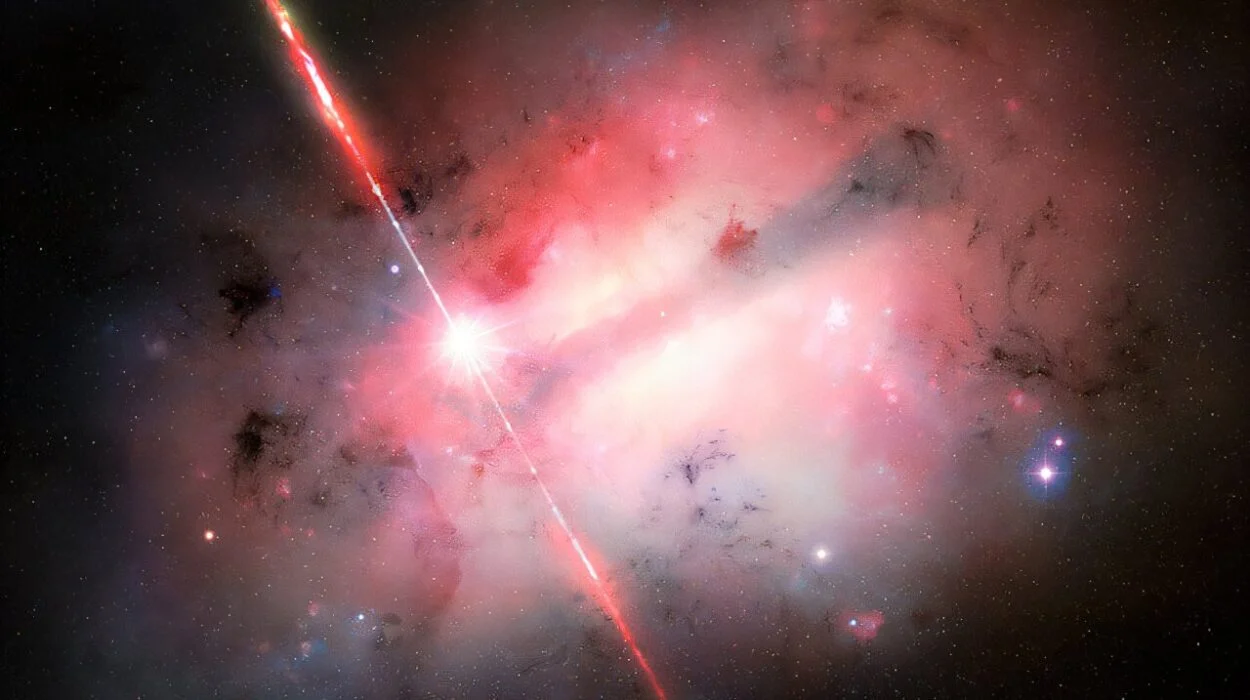
What gives them their striking red glow is not the black hole itself, but what surrounds it. The young black hole feeds on the gas cocooning it. As the gas is pulled inward, it heats up enormously. This intense heat shines through the surrounding gas, and it is this radiation filtering outward that paints the dots red in Webb’s images.
“They are far less massive than people previously believed,” Watson explains, meaning scientists no longer need to imagine exotic or entirely new cosmic events to explain their existence. The universe, it seems, was already capable of building black holes using processes it still uses today.
Black Holes That Cannot Eat Neatly
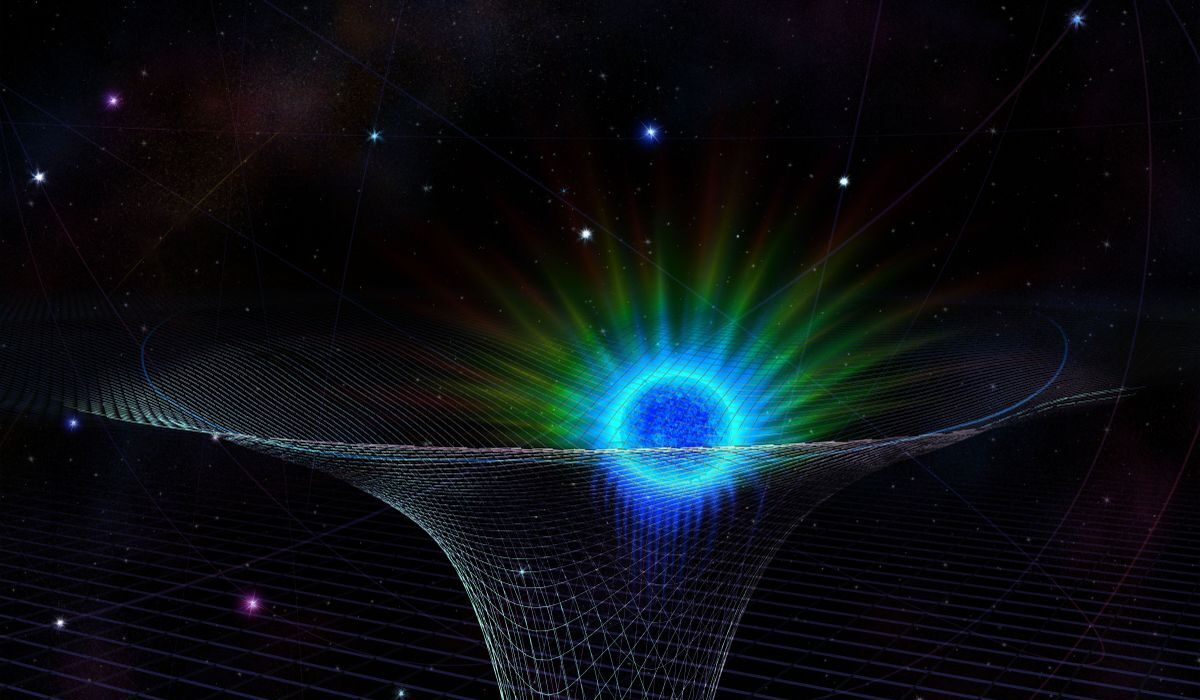
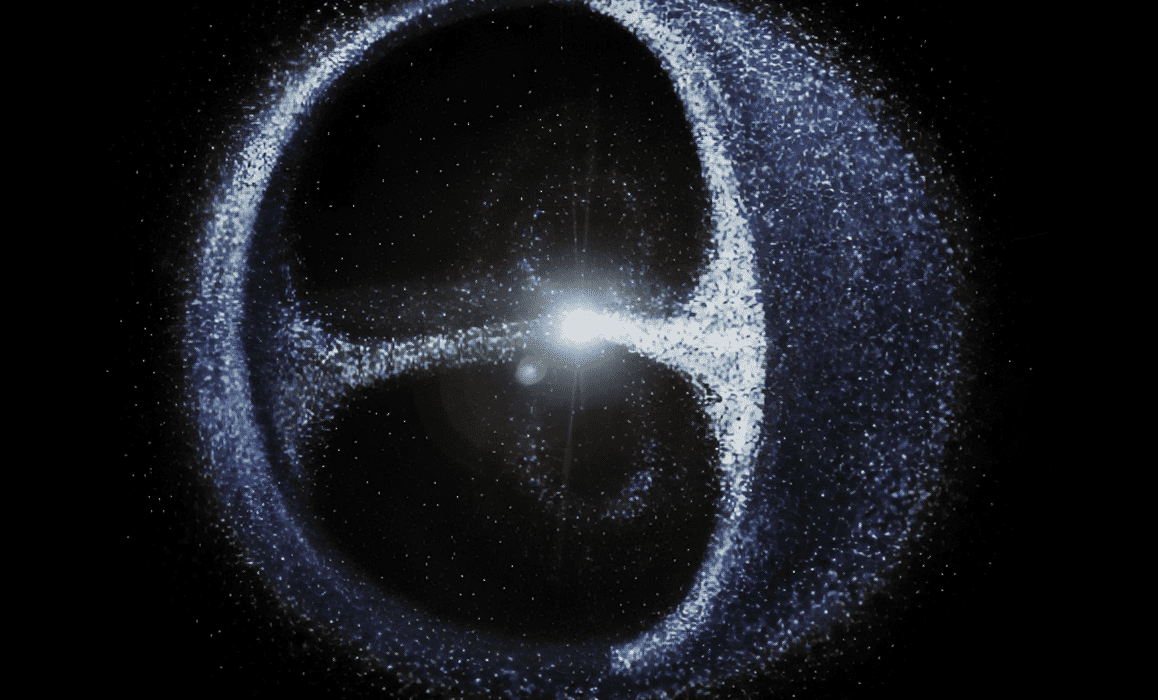
Black holes are often described as cosmic vacuum cleaners, swallowing everything nearby. The reality is messier, brighter, and far more dramatic. As gas falls toward a black hole, it does not drop straight in. Instead, it spirals, forming a disk or funnel as it races toward the event horizon.
In this violent descent, the gas becomes incredibly compressed and reaches temperatures of millions of degrees. It glows with intense brightness, releasing more energy than almost any other known process in the universe. Yet despite all this chaos, only a small fraction of the gas actually crosses the point of no return.
Most of it is flung back into space, blasted outward from the poles as the black hole spins. This is why, as Watson puts it, black holes are “messy eaters.” They consume, but they also reject, creating powerful outflows that shape their surroundings.
In the case of the little red dots, this messiness is crucial. The blown-back gas contributes to the glowing cocoon, while the swallowed portion allows the black hole to grow. What Webb captured was a fleeting stage, a moment when young black holes were feeding furiously yet still wrapped in the very material that made them visible.
Catching a Growth Spurt in the Act
There are now hundreds of known little red dots. Each one represents a black hole caught mid-meal, in a phase astronomers had never observed so clearly before. These objects sit at a key point in cosmic history, when the universe was rapidly changing and structures were forming at astonishing speed.
This discovery helps answer one of astronomy’s most pressing questions. At the center of the Milky Way lies a supermassive black hole with a mass about four million times that of the Sun, and similar giants are found in all other galaxies. Even more puzzling, scientists know that some black holes reached masses up to a billion times the Sun’s within just 700 million years after the Big Bang.
How could they grow so large so fast?
By observing young black holes wrapped in dense gas, researchers now have a clearer picture. The cocoon provides an abundant fuel supply, allowing black holes to grow rapidly during their early lives. The little red dots appear to be snapshots of this intense growth phase, frozen in light that has traveled billions of years to reach us.
“We have captured the young black holes in the middle of their growth spurt,” Watson says, describing a stage of development that had long been theorized but never directly seen.
Why This Discovery Matters
The explanation of the little red dots is more than a clever solution to a cosmic mystery. It reshapes our understanding of how the first black holes formed and evolved, and by extension, how galaxies themselves came to be.
Black holes influence everything around them. Their radiation, their outflows, and their gravity help shape the galaxies that grow alongside them. By revealing that early black holes were smaller, more common, and wrapped in dense gas, this research shows that the building blocks of today’s universe were already active and dynamic at a very young age.
Perhaps most importantly, it demonstrates the power of the James Webb Space Telescope to reveal hidden stages of cosmic history. What once appeared as puzzling red specks are now understood as glowing signposts of the universe’s most extreme forces at work.
In uncovering the true nature of the little red dots, scientists have not just solved a mystery. They have opened a window into the moment when darkness learned how to grow, shaping the universe we see today.
Study Details
Vadim Rusakov et al, Little red dots as young supermassive black holes in dense ionized cocoons, Nature (2026). DOI: 10.1038/s41586-025-09900-4. www.nature.com/articles/s41586-025-09900-4