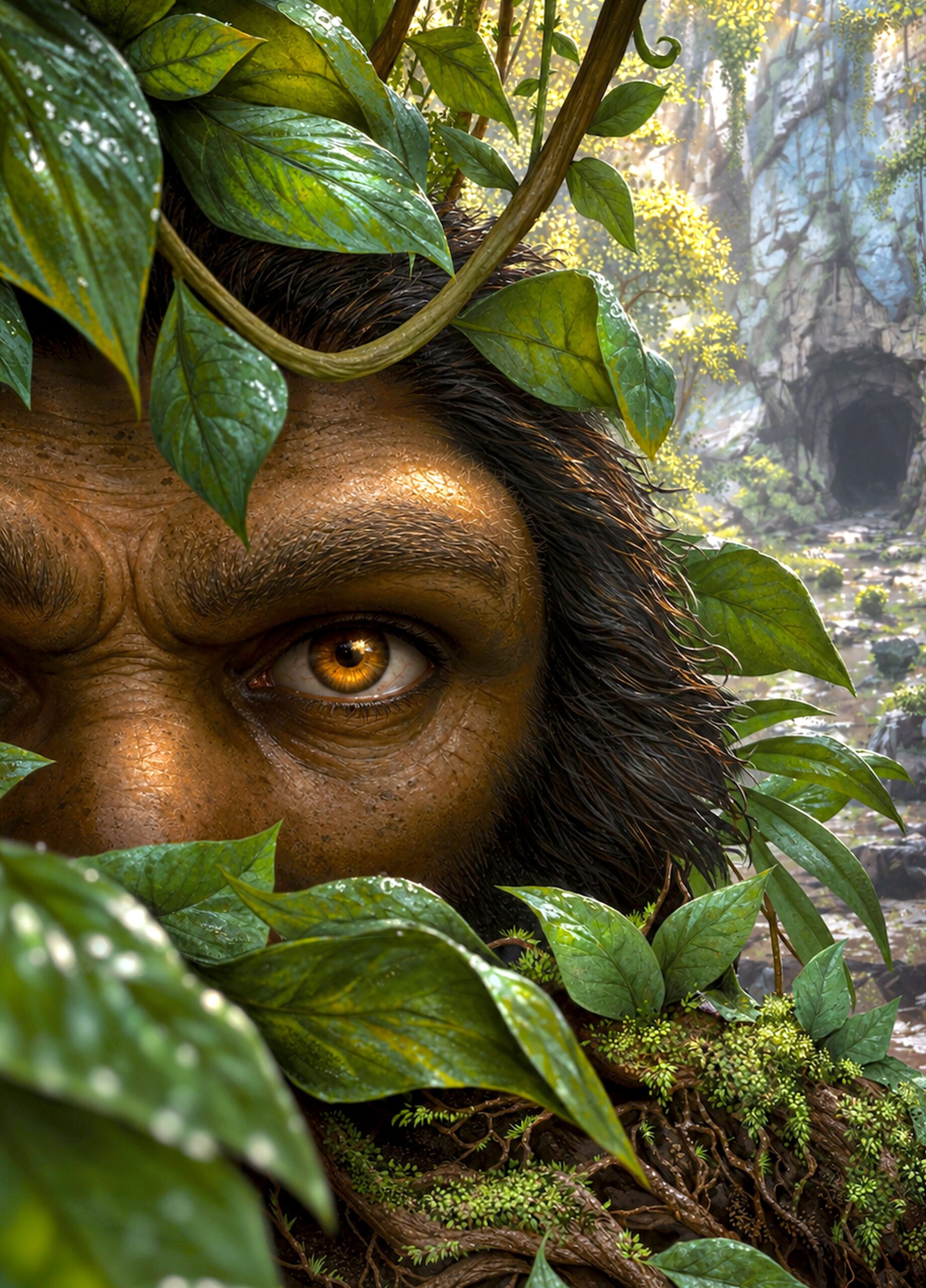
Eight fossil teeth from caves in southern China show that Homo erectus survived in dense tropical forests between 324,000 and 184,000 years ago, challenging long-held assumptions that the ancient human species struggled to adapt to such environments.
Homo erectus is often associated with open grasslands and woodland habitats. But new fossil evidence from southern China suggests some of these ancient humans were living in dense tropical forests hundreds of thousands of years ago, surviving in landscapes once thought unsuitable for them.
The discovery also raises questions about how late Homo erectus populations survived, moved across unfamiliar terrain and eventually disappeared.
Fossils reveal a late presence in southern China
The evidence comes from eight human teeth and thousands of animal fossils recovered from Baxian and Naxian, two caves about 15 kilometers (9 miles) apart in Guangxi province. The region is characterized by steep limestone hills, cave systems and tropical vegetation.
Researchers identified the teeth as belonging to Homo erectus based on their physical features and ancient genetic signatures. To determine their age, the team used five independent dating methods on the teeth, cave sediments and mineral formations.
The results place Homo erectus in the region between 324,000 and 184,000 years ago, making these fossils the youngest securely dated evidence of the species in mainland China.
“This is a fascinating discovery because it confirms the presence of Homo erectus in a location we were not expecting and at a time we hadn’t considered,” said geochronologist and co-lead author professor Kira Westaway of Macquarie University, Sydney, Australia. “This has huge implications for the timeline of Homo erectus as we attempt to understand the causes of its extinction.”
The findings extend the known survival of Homo erectus in mainland Asia and show that the species occupied environments beyond those traditionally associated with it.
Tooth chemistry points to life in dense forests
The fossil teeth offered more than clues about when these humans lived. Their chemical composition also helped researchers reconstruct the environments they inhabited.
Teeth preserve chemical traces of the food and water consumed during an individual’s lifetime. By analyzing these traces in human and animal teeth from the caves, the team found evidence consistent with a dense tropical rainforest ecosystem rather than open grasslands or woodland savannas.
“Teeth can record the environments in which animals and humans lived,” said Dr. Nicolas Bourgon of the Max Planck Institute of Geoanthropology in Jena, Germany. “In this case, the animal teeth and the Homo erectus teeth are telling the same story—these individuals were part of a rainforest ecosystem.”
The researchers also examined strontium in tooth enamel, a chemical element whose signatures can be linked to the geology of the surrounding landscape. Those measurements offered clues about where the individuals spent their childhoods.
Some of the chemical signatures suggest that the humans moved through forested karst landscapes across a relatively large area rather than staying close to a single location. The evidence may even point to regions beyond the caves, including northern Vietnam and mainland Southeast Asia.
“Some of the chemical signatures in the fossil teeth point well beyond the immediate cave region, potentially toward northern Vietnam and mainland Southeast Asia,” said professor Renaud Joannes-Boyau of Southern Cross University in Lismore, co-lead author of the study. “This suggests these humans were far more mobile than previously recognized, moving across surprisingly large distances through a complex rainforest landscape.”
The findings suggest that Homo erectus may have been capable of navigating and surviving across a broader range of habitats than scientists previously recognized.
Tropical forests may have been a refuge, not a barrier
Dense tropical forests can pose challenges for survival, including finding food and moving through thick vegetation. Their expansion across Southeast Asia has also been linked to the disappearance of some archaic human populations.
The southern China fossils complicate that picture, suggesting that tropical forests may have supported late-surviving Homo erectus populations instead of simply restricting their movements.
“These findings change how we think about Homo erectus,” said paleontologist professor Yingqi Zhang, from the Institute of Vertebrate Palaeontology and Palaeoanthropology at the Chinese Academy of Sciences. “Finding Homo erectus evidence for the first time among a rainforest fauna challenges all our assumptions about their ability to adapt to environmental changes.”
The evidence also adds to research into how ancient humans adapted to tropical environments. While Homo sapiens is known to have lived in rainforests much later in its history, direct evidence of another human species inhabiting these environments has been scarce.
“While there has been growing recognition that our own species, Homo sapiens, adapted to rainforests around the world between 100,000 and 13,000 years ago, this is the first clear, direct evidence we have for another hominin living within these habitats,” said professor Patrick Roberts of the Max Planck Institute of Geoanthropology, Germany.
The fossils and their chemical signatures suggest southern China may have served as a refuge for late Homo erectus populations, allowing them to survive in tropical forests and travel through a wider landscape than previously thought.
However, the evidence does not establish why Homo erectus eventually disappeared or whether rainforest adaptation played a role in its extinction. It does show that the species’ ability to survive in challenging environments was likely more extensive than its traditional habitat range suggested.
The findings were published in Nature.