For many years, people believed that genes were destiny. If a person inherited certain genes from their parents, those genes would determine their health, behavior, intelligence, and future. The idea was simple and powerful: your DNA was like a fixed blueprint, and once it was written, it could not be changed.
But modern biology has revealed something far more complex and fascinating. The genes you inherit are only part of the story. Your daily choices, your environment, your diet, your stress levels, and even your experiences may influence how those genes behave.
This remarkable field of study is called epigenetics.
Epigenetics explores how lifestyle and environmental factors can influence the way genes are expressed without altering the DNA sequence itself. In other words, the genes may stay the same, but the way they function can change.
This discovery has transformed how scientists think about heredity, health, disease, and human development. It suggests that the story written in our DNA is not a rigid script but something more like a dynamic performance—one shaped by both biology and life itself.
Understanding the Blueprint of Life
To understand epigenetics, it is necessary to first understand what genes are and how they work.
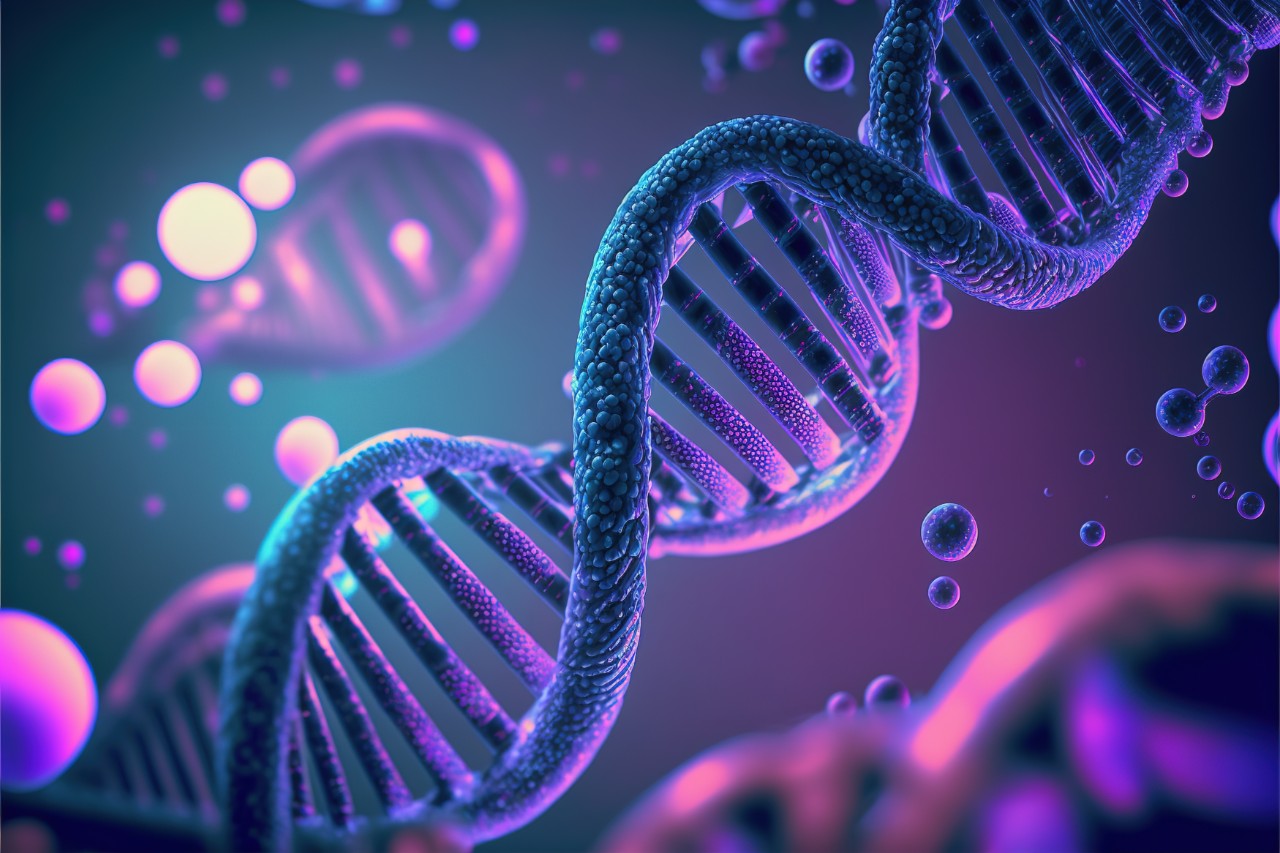
Inside nearly every cell in the human body lies a molecule called deoxyribonucleic acid, better known as DNA. DNA carries the genetic instructions used to build and maintain living organisms. These instructions are organized into segments known as genes.
Each gene contains information for producing specific proteins. Proteins perform countless essential roles in the body, from building tissues and transporting molecules to regulating chemical reactions.
The complete collection of DNA in an organism is known as the genome. Humans possess roughly twenty thousand genes distributed across forty-six chromosomes.
Although every cell in the body contains essentially the same DNA, not every gene is active in every cell. A skin cell behaves very differently from a neuron in the brain, even though both contain identical genetic information.
The difference lies in gene expression.
Gene expression refers to the process by which information stored in DNA is used to produce proteins. Some genes are turned on, meaning they are actively producing proteins. Others are turned off or remain inactive.
This regulation of gene activity is essential for life. Without it, cells would not be able to specialize or respond to their environment.
Epigenetics studies the mechanisms that control which genes are active and which remain silent.
What Epigenetics Really Means
The word epigenetics comes from the Greek prefix “epi,” meaning “above” or “on top of,” and the word genetics. In this sense, epigenetics refers to changes that occur above the level of DNA.
These changes do not alter the genetic code itself. Instead, they modify how genes are read and interpreted by cells.
A useful analogy is to imagine DNA as a vast library filled with thousands of books. Each book represents a gene. However, not every book needs to be read at every moment. Some books are opened frequently, while others remain closed.
Epigenetic mechanisms act like bookmarks, highlights, and locks within this library. They help determine which genetic instructions are used and when.
These modifications influence whether genes are active, inactive, or somewhere in between.
In this way, epigenetics acts as a regulatory system that guides gene activity throughout life.
The Molecular Mechanisms of Epigenetic Control
Scientists have discovered several biological mechanisms that control epigenetic changes. These processes operate at the molecular level and influence how DNA interacts with cellular machinery.
One of the most studied mechanisms is DNA methylation.
DNA methylation occurs when small chemical groups known as methyl groups attach to specific regions of DNA. These methyl groups can prevent certain genes from being expressed by blocking the cellular machinery that reads genetic instructions.
When methylation levels increase in a gene region, that gene is often silenced or turned off.
Another important mechanism involves histone modification.
DNA in cells is wrapped around proteins called histones, forming structures known as chromatin. Histones help package DNA into compact forms that fit within the cell nucleus.
Chemical modifications to histone proteins can alter how tightly or loosely DNA is wrapped around them. When DNA is tightly packed, genes in that region become difficult to access and are less likely to be expressed. When DNA is loosely packed, genes are more accessible and more likely to be active.
Through these mechanisms, epigenetic modifications regulate gene expression without altering the underlying DNA sequence.
The Role of Environment in Gene Expression
One of the most exciting aspects of epigenetics is the realization that environmental factors can influence these molecular modifications.
Lifestyle and environmental conditions may shape gene expression in subtle but significant ways. Factors such as nutrition, stress, exposure to toxins, physical activity, and sleep patterns can affect epigenetic processes.
For example, nutrients obtained from food can influence DNA methylation. Certain vitamins and minerals contribute molecules used in methylation reactions. As a result, dietary patterns may influence which genes are activated or suppressed.
Stress is another powerful environmental factor. Chronic psychological stress can trigger hormonal responses that influence epigenetic regulation in brain cells and immune cells.
Exposure to pollutants or chemicals may also alter epigenetic markers. Some environmental toxins have been linked to changes in DNA methylation patterns that affect gene expression.
These findings reveal that genes do not operate in isolation. Instead, they interact continuously with the environment surrounding the organism.
Early Life and Epigenetic Programming
One of the most critical periods for epigenetic influence occurs during early development.
During embryonic growth, cells divide rapidly and begin to specialize into different tissues and organs. Epigenetic mechanisms guide this process by controlling which genes become active in each developing cell type.
The prenatal environment can strongly influence this programming.
Nutrition during pregnancy, maternal stress levels, and exposure to toxins can affect epigenetic markers in the developing fetus. These changes may shape how certain genes function later in life.
Some studies suggest that early-life experiences can have long-lasting biological effects through epigenetic pathways.
For instance, early nurturing and caregiving environments may influence gene expression patterns related to stress regulation and emotional responses.
Although genes provide the underlying blueprint, early life conditions help determine how that blueprint is interpreted.
Epigenetics and Human Health
Epigenetic changes are increasingly recognized as important factors in human health and disease.
Many illnesses are not caused solely by genetic mutations but also by disruptions in gene regulation. When epigenetic mechanisms malfunction, genes may become inappropriately activated or silenced.
Cancer provides one of the most well-studied examples.
In certain cancers, tumor suppressor genes that normally prevent uncontrolled cell growth may become silenced through abnormal DNA methylation. At the same time, genes promoting cell division may become overactive.
These epigenetic disruptions can contribute to tumor development and progression.
Epigenetic changes have also been associated with conditions such as cardiovascular disease, metabolic disorders, neurological disorders, and autoimmune diseases.
Because epigenetic modifications can sometimes be reversed, researchers are exploring new treatments that target these regulatory mechanisms.
Some modern therapies aim to modify epigenetic markers in order to restore normal gene activity.
Can Lifestyle Really Change Gene Activity?
The central question often raised in discussions about epigenetics is whether lifestyle choices can truly influence gene function.
Scientific evidence suggests that lifestyle factors can indeed affect epigenetic patterns, though the effects are often subtle and complex.
Physical activity, for example, has been shown to influence gene expression in muscle tissue. Exercise can activate genes involved in energy metabolism, muscle growth, and cellular repair.
Nutrition plays another significant role. Certain dietary patterns appear to influence epigenetic processes related to inflammation, metabolism, and disease risk.
Sleep quality may also affect gene expression. Sleep deprivation can alter the expression of genes associated with immune function and stress responses.
These influences do not rewrite the genetic code itself. Instead, they modify how genes are used by the body.
In this sense, lifestyle acts as a set of signals that interact with biological systems.
The Possibility of Epigenetic Inheritance
One of the most intriguing questions in epigenetics is whether epigenetic changes can be passed from one generation to the next.
Traditional genetics teaches that inherited traits are transmitted through DNA sequences. However, some research suggests that certain epigenetic markers may also be transmitted across generations.
Animal studies have demonstrated cases where environmental conditions experienced by parents influence gene expression in their offspring.
For example, nutritional stress or exposure to toxins in one generation may lead to measurable biological effects in the next generation.
In humans, evidence for epigenetic inheritance is still being investigated. While some observations suggest possible intergenerational effects, the mechanisms remain complex and not fully understood.
Nevertheless, the possibility that life experiences could leave biological traces across generations is a fascinating and profound concept.
The Dynamic Nature of the Genome
One of the most important lessons from epigenetics is that the genome is not static.
For many years, genes were viewed as fixed instructions that determined biological outcomes with little flexibility. Epigenetics has revealed a more dynamic picture.
Genes interact continuously with cellular environments and external conditions. Their activity can change throughout life in response to various signals.
This adaptability allows organisms to respond to changing environments.
For example, when people exercise regularly, their bodies adjust by modifying gene expression related to muscle strength, energy use, and cardiovascular function.
Similarly, immune cells can alter gene expression patterns in response to infections or injuries.
The genome, therefore, functions not only as a set of instructions but also as a responsive system capable of adaptation.
The Limits of Epigenetic Influence
Although epigenetics highlights the influence of lifestyle and environment, it is important to recognize its limitations.
Epigenetic changes cannot transform a person’s DNA into something entirely different. They cannot replace the genetic code inherited from parents.
Genes still provide the foundation for biological traits and predispositions.
For example, if a person carries genetic variants associated with certain diseases, epigenetic modifications may influence risk but cannot completely eliminate the underlying genetic factors.
Similarly, epigenetic changes often operate within specific biological boundaries.
Lifestyle choices may improve health outcomes and influence gene activity, but they cannot fundamentally rewrite the genome.
Understanding these limits helps maintain a balanced perspective on what epigenetics can and cannot do.
The Future of Epigenetics Research
Epigenetics is still a relatively young field, and scientists continue to explore its implications for medicine, biology, and human health.
Advances in molecular biology and genomic technology have allowed researchers to map epigenetic patterns across different tissues and life stages.
Scientists are now studying how epigenetic markers change with age, disease, and environmental exposure.
In medicine, epigenetic therapies represent an emerging area of research. Certain drugs are being developed to modify epigenetic markers and restore normal gene regulation.
These therapies may eventually help treat diseases such as cancer, neurological disorders, and metabolic conditions.
Researchers are also investigating how personalized medicine might use epigenetic information to tailor treatments to individual patients.
As knowledge grows, epigenetics may reshape how scientists understand disease prevention, health maintenance, and biological development.
A New Perspective on Nature and Nurture
For generations, people debated whether human traits were determined primarily by nature or nurture.
Nature referred to genetic inheritance, while nurture referred to environmental influences and life experiences.
Epigenetics suggests that this debate may be too simplistic.
Genes and environment are not opposing forces but deeply interconnected systems. The genome provides a framework, while environmental factors influence how that framework is used.
In this sense, biology and experience work together to shape the development and functioning of living organisms.
This perspective encourages a more holistic understanding of health and human potential.
The Living Dialogue Between Biology and Life
Epigenetics reveals that life is not simply controlled by genetic instructions written at birth.
Instead, the body maintains an ongoing dialogue between genes and the environment. Experiences, behaviors, and surroundings continuously interact with biological systems.
While DNA provides the script, epigenetic mechanisms help decide which parts of that script are performed.
This realization does not mean that individuals have unlimited control over their biology. But it does show that biology is more flexible and responsive than once believed.
Every cell in the body carries the same genetic code, yet the expression of that code evolves over time.
In this sense, the story of our genes is not finished at birth.
It continues to unfold throughout life, shaped by the complex interplay between our biological inheritance and the world we live in.