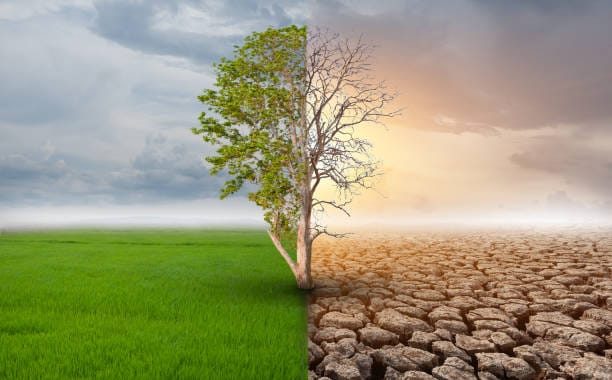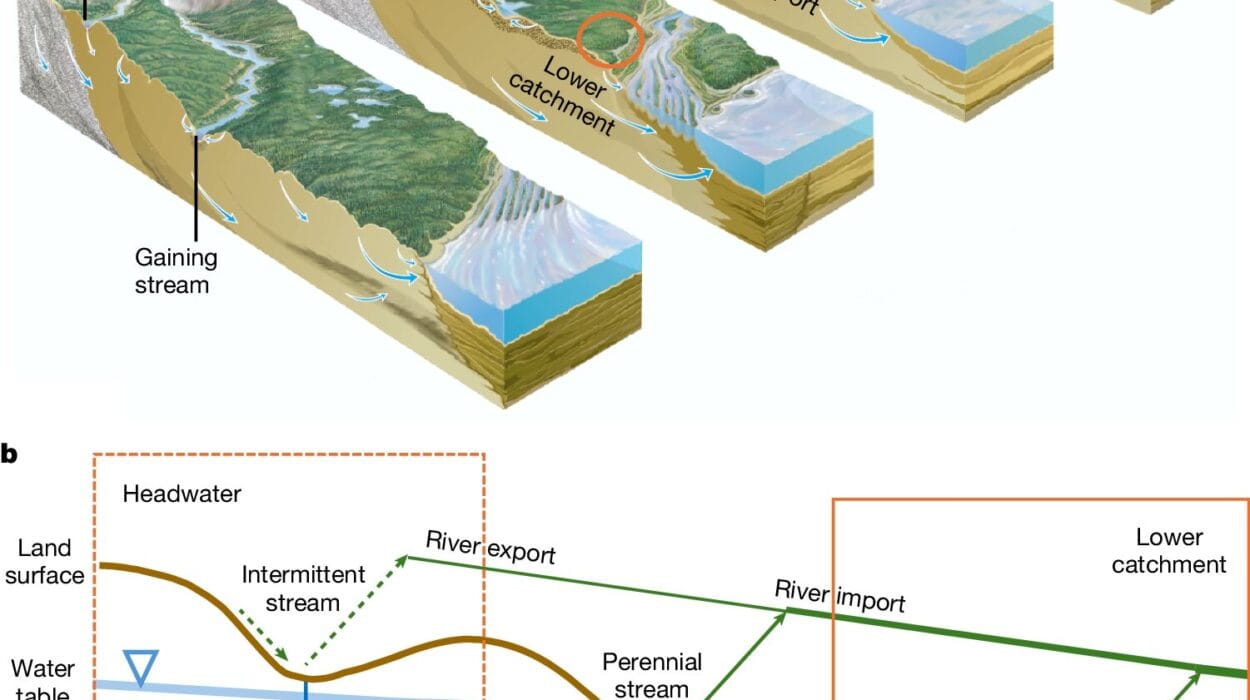
For billions of people around the world, the act of pouring a glass of water is an act of faith in the invisible. Half of the global population and 40% of all irrigation projects rely on groundwater, the hidden treasure stored in vast underground aquifers. Yet, this silent provider is in deep trouble. More than a third of the planet’s groundwater basins are currently dropping, leaving landscapes parched, causing the very earth to sink through land subsidence, and allowing seawater intrusion to taint fresh supplies. This is not just a geological quirk; it is a burgeoning crisis of social and environmental security. However, new research from UC Santa Barbara suggests that the story of our sinking water tables does not have to end in a dry well.
The Bank Account Beneath Our Feet
Imagine an aquifer as a massive, subterranean bank account. In a healthy system, nature makes regular deposits through rain, snowmelt, and surface infiltration. For decades, however, humanity has been making withdrawals far faster than the clouds can replenish the balance. In 2024, professor Scott Jasechko helped compile a massive assessment of nearly 1,700 aquifers worldwide, revealing a grim picture of accelerating decline. But hidden within that data were flickers of hope—specific places where the water levels were actually rising.
To understand how these communities beat the odds, Jasechko examined 67 distinct cases of aquifer recovery. He found that saving a water supply isn’t usually the result of a single “silver bullet” solution. Instead, the most successful regions treated their water crisis like a financial recovery plan. Some focused on “spending” less by changing lifestyles and consumption habits through policy changes. Others looked for a “side hustle,” finding alternative water sources to take the pressure off the underground reserves. The most effective recoveries—roughly two-thirds of the cases studied—used a multi-pronged strategy, proving that it is best not to carry all your water in a single bucket.
A Tale of Two Cities and a Thirsty Megacity
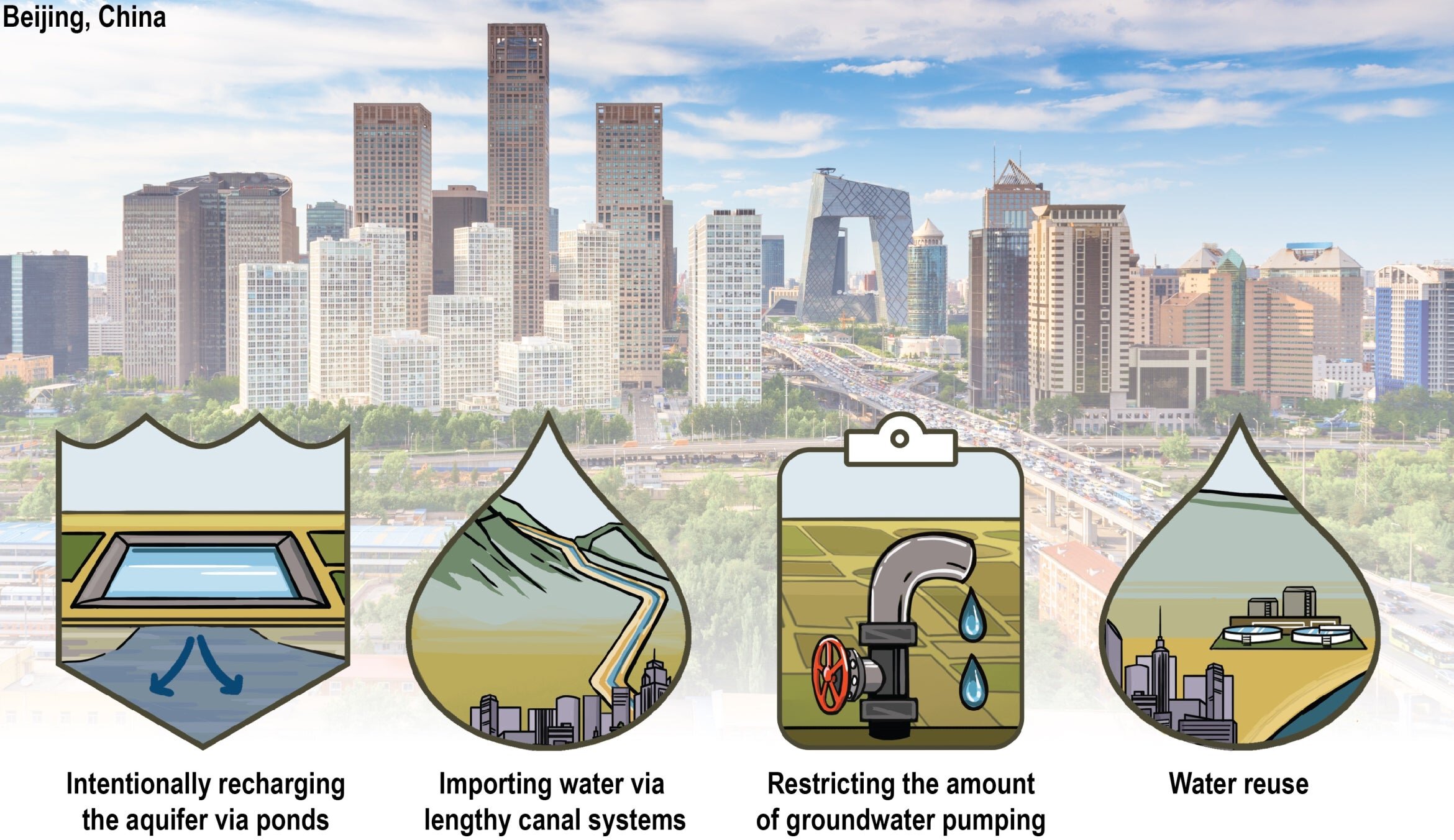
The transformation of Beijing serves as a premier example of how a city can rewrite its water history. Between 1950 and 2000, the city’s relentless thirst caused the water table to drop by more than 20 meters in certain areas. To reverse this, the government launched a massive infrastructure project in 2003, building canals and pumping stations to ferry water from the wetter southern regions.
But the city didn’t stop at just importing water. They began utilizing reclaimed water to handle environmental tasks like nursing city trees and replenishing local lakes. Crucially, they also backed these engineering feats with strict regulations, banning industrial pumping from deep confined aquifers. Today, the results are visible: the earth has stopped sinking as quickly, and ancient springs that had been dry for a generation are beginning to flow once more.
While Beijing shows the power of scale, a story from Green Bay, Wisconsin, offers a cautionary tale about the need for persistence. Back in 1957, the city built a 43-kilometer pipeline to draw water from Lake Michigan, giving its stressed aquifer a much-needed break. It worked—for a while. But as the population grew and demand surged, the water levels began to slide again. It took a second, even longer 100-kilometer pipeline in 2006 to put the city back on a path toward sustainability. This cycle highlights a vital truth: groundwater recovery isn’t a “one-and-done” achievement; it requires constant monitoring and the ability to adapt as conditions change.
The Different Paths to a Full Well
When communities look at the “menu” of recovery options, they often find that each choice comes with a trade-off. Choosing an alternative water source—which was part of 81% of the success stories—is often the most popular route because it requires the least amount of behavioral change from the public. If people can get their water from a lake or a distant river, they don’t have to stop watering their lawns or changing their industrial processes. However, these projects are frequently expensive and can sometimes just shift the water shortage from one region to another.
On the other hand, policy changes and environmental markets are much cheaper to implement and tackle the root cause of the problem: over-consumption. By directly targeting the behaviors that lead to drawdown, these rules can protect an aquifer with very little energy cost. The downside is that they can be a hard pill to swallow for local economies that have relied on unrestricted pumping for decades. In those cases, artificial replenishment—essentially pumping water back into the ground—can be a middle ground, though it requires significant energy and a reliable source of “extra” water to deposit into the earth.
Why the Hidden Science of Recovery Matters
The significance of this research lies in its ability to transform “inevitable” disasters into solvable problems. By identifying ten key themes of success—ranging from the importance of enforcement to the fact that recovery can sometimes happen in just a few years—this study provides a roadmap for resource managers who feel overwhelmed. It reminds us that while climate change and growing populations put immense pressure on our resources, human ingenuity can pivot.
This research matters because it moves the conversation from a list of “bad news cases” to a “menu of options.” It acknowledges that while every aquifer is unique and there is no guarantee that one city’s success will work for another, the “activation energy” provided by these stories is essential. We now know that declining water tables can be stabilized, that land subsidence can be slowed, and that we can secure a humanitarian and environmental future if we are willing to use every tool in the bucket.
Study Details
Scott Jasechko, Global cases of groundwater recovery after interventions, Science (2026). DOI: 10.1126/science.adu1370