Hundreds of fossilized birds scattered across a site in northwestern China have puzzled scientists for years, especially because many of their bones appear crushed into pellet-like clusters. Now, the discovery of a newly identified feathered dinosaur called Jian changmaensis may finally reveal the predator responsible for these strange remains.
For years, one of the most intriguing mysteries in a fossil-rich region of northwestern China centered on the remains of ancient birds. Their fossils were everywhere—hundreds of them. Some were even preserved in unusual clusters of broken bones, compressed into pellets similar to those produced by modern owls after feeding.
Scientists suspected a predator was responsible. The problem was that they had never found one.
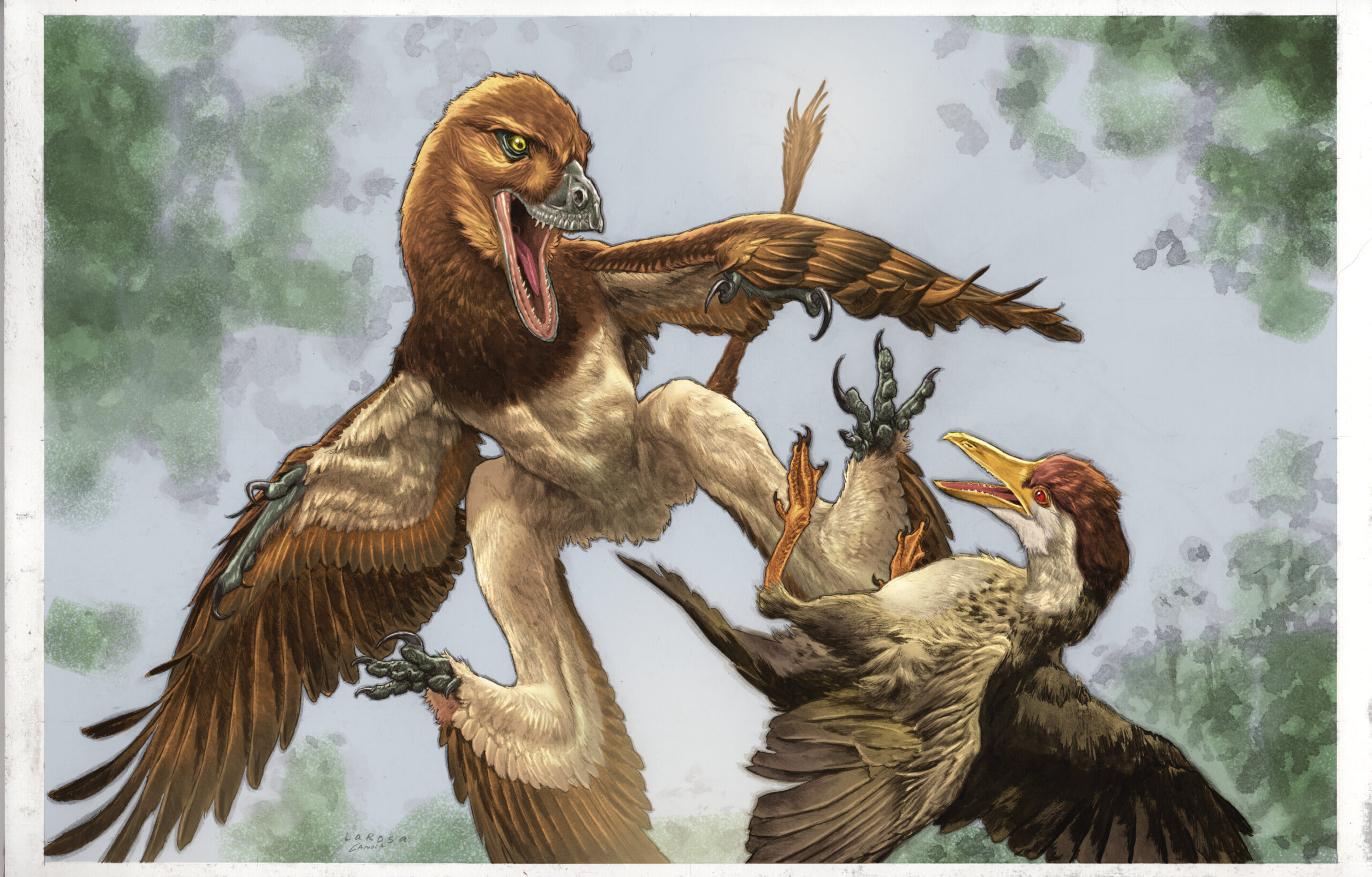
That may have changed with the discovery of a new dinosaur species described in the journal Annals of Carnegie Museum. Researchers say the animal, named Jian changmaensis, was a feathered carnivore closely related to velociraptors and could be the long-sought hunter behind the site’s unusual bird remains.
A Predator Hidden Among Birds
The fossil site in the Changma Basin of China’s Gansu province is famous for its abundance of prehistoric bird fossils. Researchers have recovered more than a hundred bird specimens from the area, helping scientists better understand the early evolution of birds.
Yet one question lingered: what was hunting these birds?
According to the research team, the newly identified dinosaur stands out because it is the only non-bird dinosaur discovered at the site. More importantly, it was a carnivore and significantly larger than the other animals found there.
Jingmai O’Connor, associate curator of fossil reptiles at Chicago’s Field Museum and senior author of the study, says the mysterious clusters of broken bird bones have long lacked a clear explanation. With the discovery of Jian changmaensis, researchers now have their strongest candidate.
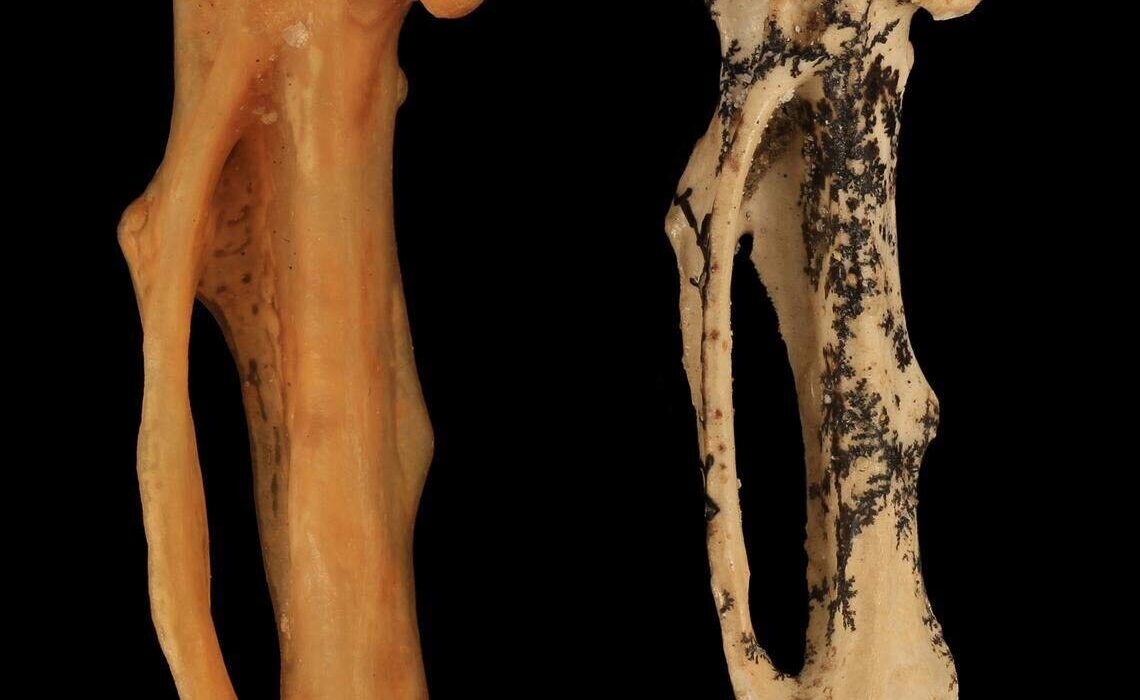
The dinosaur’s distinctive arm and shoulder bones led scientists to propose that it may have occupied the role of a predator within the local ecosystem.
A Giant Among Microraptors
The newly discovered species belongs to a branch of feathered dinosaurs known as microraptors, part of the broader dromaeosaur family. These dinosaurs were close relatives of birds and shared several bird-like features, including feathers and relatively small body sizes.
While many people are familiar with velociraptors, largely due to popular films, microraptors are generally much smaller.
That is what makes Jian changmaensis unusual.
Researchers describe it as one of the largest microraptor specimens ever discovered. The preserved section of its upper arm bone measures about 4 inches long, suggesting the animal may have possessed a wingspan of roughly 4 feet. According to O’Connor, that would place it around the size of a modern barn owl.
Its larger size may have given it an advantage over the numerous birds living in the region, potentially allowing it to prey upon them.
The Dinosaur That May Have Had Four Wings
Although scientists currently possess only part of the dinosaur’s arm, they believe it likely resembled other members of its group.
Microraptors are famous for having long feathers not only on their arms but also on their legs. This unique arrangement created the appearance of having four wings.
Researchers suspect Jian changmaensis shared this trait. If so, the dinosaur would have looked remarkably bird-like despite not being a true bird.
The feathers may also have helped it move through its environment. However, scientists do not believe these animals were capable of sustained powered flight.
Instead, O’Connor suggests that microraptors probably glided from place to place, much like modern flying squirrels. Their feathered limbs would have helped them control movement through the air, even if they could not actively fly like modern birds.
A Name Inspired by Mythology
The dinosaur’s name reflects both its appearance and where it was found.
The word “Jian” comes from a winged creature in Chinese mythology, a fitting reference for an animal that likely possessed feathered forelimbs and hindlimbs. The species name, changmaensis, honors the Changma Basin, the region where the fossil was discovered.
Together, the name highlights the dinosaur’s distinctive bird-like characteristics and its connection to one of China’s most important fossil localities.
Filling a Gap in an Ancient Ecosystem
The discovery provides more than just a new species. It also offers a clearer picture of the ecosystem that existed in the Changma Basin millions of years ago.
Matt Lamanna, corresponding author of the study and senior dinosaur researcher at Carnegie Museum of Natural History, noted that despite the large number of bird fossils recovered from the region, researchers had found only a single non-avian dinosaur specimen.
That lone specimen is now recognized as Jian changmaensis.
Its presence confirms that non-bird dinosaurs lived alongside the ancient birds that dominated the area. More importantly, it helps scientists understand the ecological relationships that shaped the lives of early birds and their close dinosaur relatives.
Understanding the Origins of Modern Birds
Modern birds are the only dinosaurs that survived the aftermath of the asteroid impact that occurred 66 million years ago. But long before that event, birds shared the world with many closely related dinosaur groups.
Among those relatives were the feathered dromaeosaurs, including microraptors like Jian changmaensis.
Studying these animals allows scientists to compare the traits of early birds with those of their non-bird relatives. Such comparisons can reveal what characteristics may have helped birds ultimately survive while other dinosaur groups disappeared.
Researchers view discoveries like Jian changmaensis as important pieces of that larger evolutionary puzzle.
Why This Matters
The discovery of Jian changmaensis may finally solve a long-standing mystery surrounding a fossil site filled with ancient bird remains. By identifying a likely predator within that ecosystem, scientists can better understand how birds and their dinosaur relatives interacted millions of years ago.
More broadly, the find helps illuminate a critical chapter in evolutionary history. Birds are among the most successful land vertebrates alive today, and uncovering the lives of their closest dinosaur relatives provides valuable clues about how that success began. Every new fossil adds another piece to the story of how ancient feathered dinosaurs eventually gave rise to the birds that inhabit the world today.