Some birds spend extra time collecting fresh leaves, herbs and other green plant material for their nests, and a new analysis of experimental studies finds that the behavior is associated with improved fitness measures. But the results do not support the leading explanations that the plants mainly attract mates or protect nests from parasites, leaving the mechanism behind the benefit unresolved.
Birds deliberately add green material to their nests
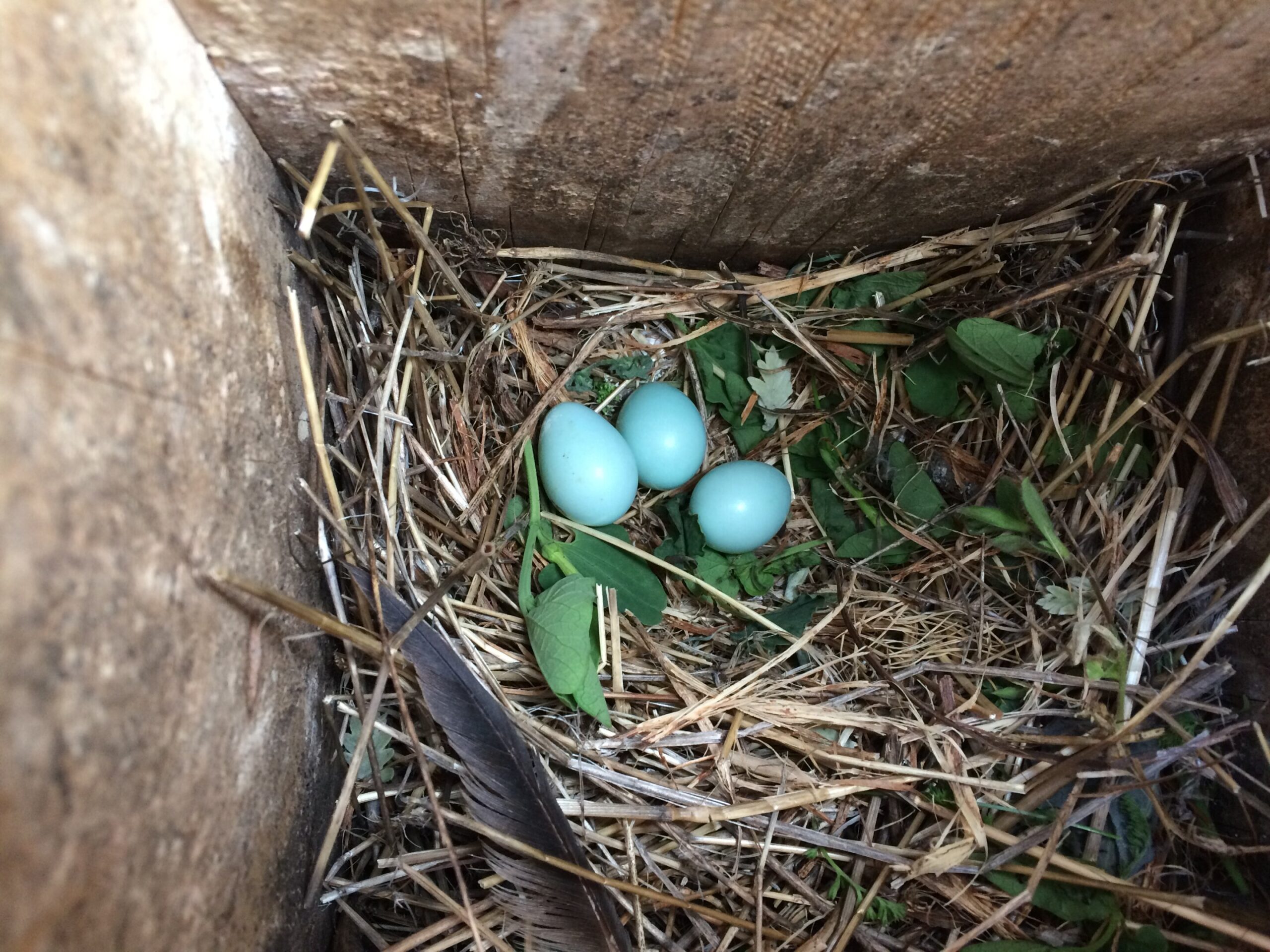
Bird nests are usually built from materials that provide structure, such as twigs, branches, grass and moss. But some birds add another kind of material that is not needed to build the basic nest.
They collect fresh leaves, sprigs and herbs, often choosing plants from a relatively small and specific part of the local vegetation. Many of these plants contain aromatic compounds, oils or resins. Collecting and replacing them can require extra time and energy, and in some cases birds must travel outside their territories to find them.
That behavior has led researchers to propose several possible explanations.
One idea is the courtship hypothesis. Under this explanation, green material could serve as a visual or scent-based signal that helps males attract females, maintain a pair bond or advertise a nest site.
Another set of ideas concerns parental care. The nest protection hypothesis proposes that chemicals released by the plants could repel parasites or reduce pathogens in the nest. The related drug hypothesis proposes that plant compounds could directly improve offspring health or immune function without necessarily reducing parasites.
The researchers grouped these two explanations together as the parental care hypothesis because both propose benefits to offspring through the use of green material.
For decades, individual experiments had produced mixed results. What had been missing was a quantitative assessment of the experimental evidence as a whole.
A meta-analysis combined 28 experimental studies
Shreya Dimri and colleagues at Bielefeld University conducted a preregistered systematic review and meta-analysis of experiments that manipulated green nest material.
The researchers identified 28 studies, including 26 published studies and two unpublished studies. Together, the studies covered seven bird species, 17 geographical locations and 274 effect sizes. The studies were published between 1988 and 2024.
The seven species were the common buzzard (Buteo buteo), blue tit (Cyanistes caeruleus), cinnamon sparrow (Passer cinnamomeus), great tit (Parus major), spotless starling (Sturnus unicolor), European starling (Sturnus vulgaris) and tree swallow (Tachycineta bicolor). Three species accounted for about 81% of all effect sizes in the dataset.
The researchers examined a broad range of measures related to fitness. These included physiology, body morphology, reproduction, behavior, parasite and pathogen loads, and the timing of reproductive events.
They used two different measures of effect size. One showed an average increase in fitness estimates of 1.9% that was not statistically significant. The other showed a statistically significant average positive effect of green nest material.
Taken together, the researchers concluded that green nest material has a positive effect on fitness proxies across the bird species studied. The results were also robust to a series of sensitivity analyses.
But the size of the effect varied considerably among individual results.
The strongest effect appeared in body morphology
The clearest positive result appeared in morphological measures.
Most categories of fitness proxy had positive average estimates, but morphology was the only category with a statistically significant result in the standardized mean-difference analysis. Its effect estimate was 0.310, with a 95% confidence interval from 0.112 to 0.509. The analysis included 65 effect sizes from 15 studies.
Morphological measures included traits such as nestling mass and tarsus length. The researchers note that these traits can respond relatively quickly to conditions inside the nest, although they are indirect measures of fitness and their relationship with later survival or recruitment can depend on context.
Other categories, including physiology, reproduction, phenology and behavior, showed small to moderate positive effects, but these were not statistically significant. Measures of parasite and pathogen loads showed weak and inconsistent effects.
That pattern is important because reducing parasites has been one of the most frequently proposed explanations for why birds bring aromatic plants into their nests.
The results did not identify one main function
The analysis did not provide clear evidence that green nest material primarily works as a courtship signal.
Fitness measures that could be specifically linked to courtship, such as courtship time and male provisioning, showed no clear effect of green nest material. The courtship category was not statistically significant in either of the two effect-size analyses.
The same was true for the parental care hypothesis. Measures specifically associated with parasite loads and nestling health did not show a clear overall effect.
The researchers therefore found no clear support for either hypothesis when considered separately.
Instead, the strongest positive result came from fitness measures that could not be assigned clearly to just one proposed function. About half of the effect sizes in the hypothesis analysis fell into this category because measures such as offspring morphology or survival could potentially be influenced by more than one process.
This made it difficult to identify a single mechanism from the available evidence.
The type of experiment mattered most
One of the clearest findings emerged when the researchers compared different experimental designs.
The strongest positive results came from experiments comparing nests containing aromatic green material with nests containing no added material. That comparison produced a statistically significant effect in both analyses. The log-response-ratio estimate was 0.111, while the standardized mean-difference estimate was 0.712.
But experiments comparing aromatic green material with non-aromatic green material did not show a statistically significant effect.
That distinction matters because comparing aromatic and non-aromatic material is one way to isolate the possible contribution of aromatic compounds.
If the volatile chemicals themselves were consistently responsible for the benefits, a stronger difference between aromatic and non-aromatic material might be expected. Instead, the large effect appeared when aromatic material was compared with no added material.
The experimental design explained about one-quarter of the variation among effect sizes, making it the strongest moderator examined in the analysis. It explained 27.8% of the heterogeneity for the log-response-ratio analysis and 24.4% for the standardized mean-difference analysis.
The researchers caution that the comparison between no material and non-aromatic material was based on only three studies, so its negative result should be interpreted carefully.
Repeatedly adding green material was linked to larger effects
Timing also mattered, although much less than experimental design.
The largest positive estimates occurred when green material was added continuously throughout the nesting period. In the standardized mean-difference analysis, this effect was statistically significant, with an estimate of 0.302 and a 95% confidence interval from 0.069 to 0.534.
By comparison, adding green material before egg hatching produced a small, non-significant effect. Adding it only after hatching produced a positive estimate, but its confidence interval overlapped zero. The timing of addition explained only a small amount of the variation among results.
The researchers say this pattern is not conclusive, but it is more consistent with the parental care hypothesis than with the courtship hypothesis.
They also note that aromatic compounds can decline rapidly. In blue tits, the concentration of active compounds released by aromatic plants can decrease within 24 hours, and females have been observed replacing experimentally removed herbs. Repeated additions could therefore maintain the presence of plant compounds in the nest.
But the researchers emphasize that this is not the only possible explanation. Fresh green material could also affect the nest through structural properties or microclimate.
Parasite reduction was not consistently detected
If aromatic plants protect young birds by reducing parasites or pathogens, the parasite and pathogen results would be expected to provide some evidence for that mechanism.
Instead, the overall effects on parasite and pathogen loads were weak and inconsistent. There was also no statistically significant difference between effects involving arthropods and those involving microorganisms. The type of parasite or pathogen explained very little of the variation among effect sizes.
The researchers therefore found no clear overall evidence supporting the nest protection hypothesis.
The findings also do not establish the drug hypothesis. Although the positive effects on morphology could be consistent with improved offspring condition, the mechanism connecting plant compounds with immune function or health remains unclear. The researchers also point out that their results indicate that non-aromatic green material may play a role, while other processes could influence offspring development.
The mechanism may involve more than plant chemicals
The results challenge the assumption that aromatic compounds alone explain the benefits associated with green nest material.
One possibility raised by the researchers is that the chemicals released by aromatic plants may have effects that are weak, short-lived or dependent on environmental conditions such as parasite pressure. Comparing aromatic material with no material, meanwhile, captures the combined effect of adding the plant material itself. That could include chemical effects as well as effects unrelated to the plants’ volatile compounds.
The researchers also discuss possible structural and microclimate effects. Regularly replacing green material could help maintain nest lining as the material dries, potentially affecting insulation and humidity buffering. It could also dilute fecal material or food debris in the nest. These possibilities are presented as potential mechanisms that require further testing, rather than established explanations for the observed fitness effects.
The analysis also found that species identity explained some of the variation in results. However, several species were represented by only one study, and most of the evidence came from just three species. That limits how broadly the findings can be extended across birds.
The evidence has important limitations
The researchers found moderate-to-high heterogeneity among the results, indicating that the benefits of green nest material depend on context. Many studies also had small sample sizes. About 41% of the effect sizes were based on fewer than 10 nests per group.
There was no conclusive evidence of publication bias in the published literature. However, the analysis found some indication that smaller studies produced larger standardized effect sizes, although the confidence interval for that relationship overlapped zero. After adjustment for small-study effects, the overall standardized effect was not statistically different from zero.
The researchers also note that the overall result differed between the two effect-size measures. They say this highlights the importance of choosing measures that fit the biological data and, when appropriate, using more than one measure.
Even with these limitations, the conclusions remained qualitatively unchanged across the sensitivity analyses the researchers performed.
More experiments are needed to separate the possible mechanisms
After more than 40 years of research on green nest material, this analysis provides quantitative evidence for an overall effect on fitness proxies, while leaving the mechanism largely unresolved.
The researchers propose that future experiments should separate the effects of volatile compounds from structural and microclimate effects. They also call for measurements of possible mediators such as nest microclimate and parasite load, along with fitness measures more directly connected to reproductive success, including fledging success and recruitment.
They also recommend experiments across different parasite and climatic conditions, as well as cross-fostering experiments that could help distinguish effects occurring at the nest level from effects associated with parental quality. Their proposed cost-benefit models could generate predictions about the conditions under which green nest material is expected to provide benefits.
The central finding is therefore not that one particular chemical or function has finally explained why birds bring greenery into their nests. Instead, the experimental evidence indicates that adding green nest material can improve measured fitness outcomes, while the strongest variation in those effects comes from how the material is tested and what aspect of fitness is measured. The mechanism behind the benefit remains an open experimental question.
The study was published in Proceedings of the Royal Society B.