The familiar division of early human relatives into genera such as Australopithecus, Paranthropus and Homo may no longer fit the evolutionary relationships revealed by modern phylogenetic studies. Ian Towle of Monash University argues that a more consistent system would place Australopithecus and Paranthropus inside an expanded Homo, creating a single genus spanning roughly 4–5 million years of human evolution. The proposal is presented as one possible solution to a deeper problem: paleoanthropology increasingly uses clade-based methods while continuing to rely on several genera that do not consistently represent evolutionary clades.
The problem with the three familiar genera
Modern evolutionary taxonomy generally aims to recognize monophyletic groups, or clades that contain a common ancestor and all of its descendants. Yet phylogenetic reconstructions repeatedly produce a different picture for several of the genera commonly used for human ancestors and relatives.
Australopithecus is the clearest example. Recent phylogenies containing multiple Australopithecus species consistently recover the genus as paraphyletic, meaning that some members are more closely related to species placed in other genera than they are to other Australopithecus species. In particular, one or more Australopithecus taxa are repeatedly recovered as closer to Homo and/or Paranthropus than to other Australopithecus taxa.
One obvious response would be to split Australopithecus into several smaller genera. But that approach could produce numerous genera containing only one species and could require repeated changes as new fossils and phylogenetic analyses appear. It would also reduce the practical usefulness of the classification.
The alternative is to recognize a larger clade.
That is where the proposed expanded Homo comes in.
Fossils have blurred the old boundaries
The traditional distinction among the major hominin genera was not based only on ancestry. Morphology, behavior, diet and presumed ecological roles also helped define them.
Those distinctions have become harder to maintain as the fossil record has grown.
Homo was once strongly associated with features such as increased brain size and, often, stone-tool use. But the discovery and study of fossils assigned to Homo have broadened the range of forms included in the genus. Homo floresiensis, some Dmanisi specimens and Homo naledi have brain sizes overlapping with, or only minimally larger than, those of Australopithecus. The earliest proposed appearance of Homo has also been pushed farther back in the fossil record.
Homo naledi presents a particularly difficult combination for a traditional definition of Homo. It had a small brain and retained adaptations for climbing, while its teeth included some robust features resembling those of more robust australopiths. Stone-tool use, meanwhile, can no longer serve as a feature unique to Homo because it is recognized in other homininan genera and in a growing number of living primates.
The position of Homo naledi and Homo floresiensis also remains uncertain in different phylogenetic analyses. Some studies place them closer to certain Australopithecus taxa than to other Homo species. Others place them near early Homo or within basal parts of Homo, while still others find closer relationships with later Homo, particularly Homo erectus.
That uncertainty matters because attempts to narrow Homo by removing early species could create new problems for classifying these later, unusual members of the genus.
The same erosion of clear boundaries appears in Paranthropus.
Paranthropus is distinctive but not fully settled
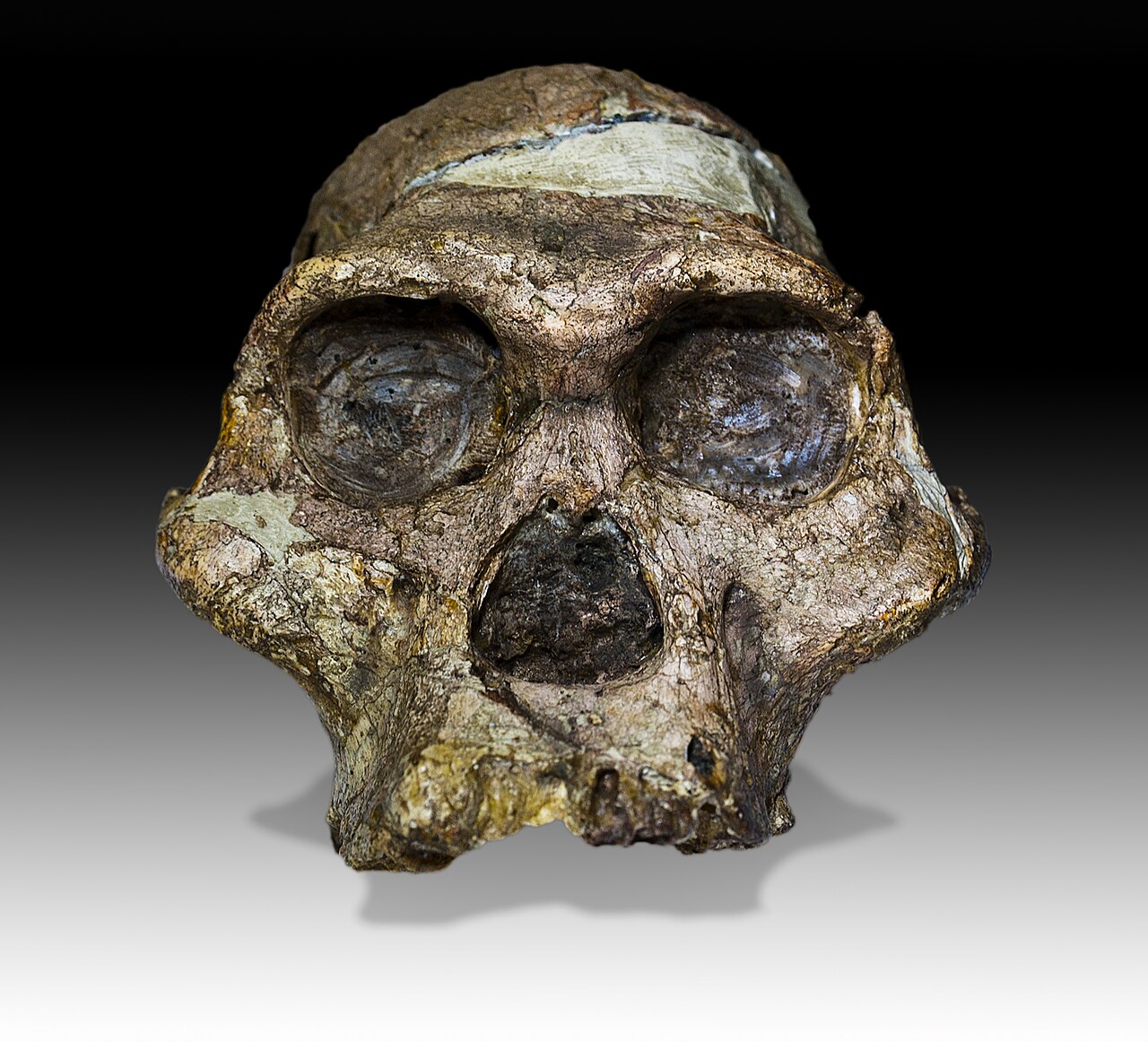
Paranthropus has traditionally been treated as a separate genus because of its robust skull and teeth and its presumed specialization for consuming tough or hard foods. Many researchers still regard its three commonly recognized species, P. robustus, P. boisei and P. aethiopicus, as a monophyletic group.
But even that interpretation remains debated.
One possibility is that the eastern and southern African forms evolved independently from different Australopithecus lineages. If so, Paranthropus would not represent a single evolutionary clade. Instead, its members could represent regionally derived forms that independently developed very large teeth and other robust features.
The functional distinction is also less clear than it once appeared. Evidence indicates that eastern and southern African Paranthropus taxa had substantially different diets, and neither appears to have relied heavily on hard foods. At the same time, dental robustness exists along a broader gradient among homininans.
Australopithecus africanus, for example, had dental robustness approaching that of some Paranthropus specimens. Australopithecus garhi had teeth larger than those of even the most megadont Paranthropus, P. boisei, despite remaining classified as Australopithecus. Some fossils assigned to early Homo also show affinities with Paranthropus.
The result is a fossil record in which traits once thought to define separate genera increasingly overlap.
Paranthropus may still represent a clade, and the shared cranial and dental traits of its members may still reflect common ancestry. But the evidence has weakened some of the functional arguments traditionally used to keep it separate from Homo and Australopithecus.
A short-lived genus creates another problem
Towle’s argument also turns to living primates for a different reason.
Genera among primates commonly span roughly 5–10 million years of divergence, although some have more recent common ancestry. Researchers have proposed using fixed time ranges to help standardize genus-level taxonomy, but such systems remain partly arbitrary and depend on uncertain estimates of divergence times.
This matters for Homo because the genus, as it is usually defined today, covers only about 2–3 million years of the fossil record.
Living primates show why a very recent genus can be difficult to define. Naturally occurring hybridization has been documented in all well-studied primate groups. Among African papionins, for example, closely related genera have complicated histories involving gene flow, population fragmentation and later contact. Some of these relationships remain difficult to resolve because morphological and genetic histories do not always tell the same story.
Other primates provide similar examples. The colobine genera Nasalis and Simias share a very recent common ancestor, likely within the past 2.5 million years, and evidence indicates that substantial gene flow continued after their initial divergence. Other colobines and guenons also show hybridization across closely related taxa, including forms classified in different genera.
The great apes provide further examples. Gene flow persisted after the split between bonobos and chimpanzees. Orangutans also show evidence of substantial historical and more recent gene flow, while gorillas have evidence of an extinct lineage that diverged from the ancestor of living gorillas and later contributed genetic material to the lineage leading to eastern gorillas.
These comparisons do not establish that the same specific events occurred throughout earlier hominin evolution. Instead, they provide a comparative framework in which very recent genus-level boundaries can be especially difficult to maintain when lineages have complex histories of gene flow and incomplete separation.
For fossil hominins, the problem is compounded because genetic data are unavailable for most specimens.
The proposed solution is a larger Homo
Against this background, the proposed revision is straightforward in its basic form.
Australopithecus and Paranthropus would be subsumed into Homo, along with closely related taxa currently assigned to separate genera that fall within the same radiation, most notably Kenyanthropus. The resulting Homo would span roughly 4–5 million years.
The proposal is intended to occupy what Towle describes as a useful middle range.
Expanding Homo farther backward could eventually create the problem of including Pan, or potentially Gorilla, in the same genus. Keeping Homo narrowly defined, meanwhile, leaves it with a very shallow temporal range and makes it more vulnerable to the kinds of taxonomic complications seen among recently diverged primate lineages. A genus extending back about 4–5 million years would remain limited to the human side of the African ape radiation while bringing its duration closer to that seen in other primates.
The proposed boundary also has a particular phylogenetic advantage.
Many recent analyses recover Australopithecus anamensis as the sister taxon to a clade containing the other Australopithecus taxa, Paranthropus and Homo. That relationship is described as unusually stable compared with many other parts of the hominin fossil record. It therefore provides a relatively defensible starting point for an expanded Homo.
The proposal would not necessarily bring every early putative hominin into Homo.
Sahelanthropus, Orrorin and Ardipithecus remain uncertain in their placement within or outside Hominina. There is little evidence that they belong specifically to the proposed expanded Homo clade, although the framework would still allow them to be considered homininans more broadly.
The revision would also change the higher-level names
The proposal extends beyond genus Homo.
The Pan-Homo clade is currently often referred to as Hominini, while the human side of that clade is also sometimes called Hominini. Towle argues that the terminology can be made more consistent by assigning Hominini to the entire Pan-Homo clade and using Hominina for the human lineage, defined as all species closer to Homo than to Pan. Panina would refer to the chimpanzee clade.
Under this arrangement, the hierarchy would be:
- Hominoidea for the apes
- Hominidae for the great apes
- Homininae for the African great apes
- Hominini for the Pan-Homo clade
- Hominina for the human clade
The terminology would also mean that groups commonly called hominins would more precisely be called homininans.
The change is intended to give a formal taxonomic rank to the Pan-Homo branch while keeping the major existing higher-level divisions of the ape family tree.
Splitting the genera is the main alternative
Expanding Homo is not the only possible response to the problem.
One alternative is to divide Australopithecus and potentially Homo into additional genera so that each recognized genus represents a clade. Some researchers have already proposed splitting existing taxa or recognizing additional genera such as Kenyanthropus and Praeanthropus.
But this strategy carries its own problem.
If every unstable relationship produces another genus, the number of genera could continue to grow and taxonomic assignments could change repeatedly as new fossils and new analyses appear. Towle argues that a mixture of carefully defined clade-based genera alongside a large, non-monophyletic Australopithecus is particularly difficult to justify.
If additional genera are created, the approach would need to be applied consistently so that all genera represent clades. Otherwise, the classification could imply evolutionary relationships that the phylogenetic analyses do not actually support.
The choice is therefore not simply between keeping the current names and adopting expanded Homo. It involves a broader question about how much information a genus should communicate and how consistently the same taxonomic rules should be applied across the human evolutionary record.
The expanded genus would lose some information
The proposal has a major drawback.
Taxonomic names can communicate information about evolutionary history, morphology and ecology. Combining Australopithecus, Paranthropus and Homo into one genus would inevitably hide some of those distinctions. In particular, Homo and Paranthropus currently communicate information about two lineages that followed markedly different evolutionary paths and displayed important anatomical and behavioral differences.
One way to preserve some of that information would be to use lower taxonomic categories inside Homo.
For example, recent large-brained Homo could be treated as a subgenus, while the taxa currently placed in Paranthropus could be represented as another subgenus, such as Homo (Paranthropus). Species groups could provide another option. Such systems could retain meaningful biological and evolutionary distinctions within a broader genus, although the author notes that they would be less satisfactory than separate genera for clearly expressing major evolutionary, morphological and ecological differences.
There is also no simple anatomical or behavioral feature that neatly defines the entire proposed Homo.
Habitual bipedalism, particular dental characteristics and broad cranio-dental and postcranial variation could provide descriptive features, but these traits are also found to some degree in earlier putative homininans and some Miocene apes. Several fossil apes outside Hominina show dental features that converge on aspects of homininan morphology, while Miocene apes display substantial locomotor diversity.
For that reason, the expanded genus is proposed primarily as a well-supported clade within an appropriate temporal range, rather than as a group united by one distinctive ecological or behavioral adaptation.
The central issue is consistency
The proposal does not claim that expanding Homo is necessarily the final or best solution.
Its broader argument is that the current system has become increasingly difficult to defend. Paleoanthropology generally favors clade-based taxonomy, yet Australopithecus remains a large grade-based group even as other genera are defined according to phylogenetic relationships. At the same time, new fossils have blurred the anatomical and behavioral boundaries traditionally used to distinguish Homo, Australopithecus and Paranthropus.
The growing recognition of mosaic evolution is central to this problem. Different traits do not always appear together in the combinations once expected. This mosaic pattern occurs across anatomical systems and may reflect processes including rapid branching, homoplasy, convergence and potentially hybridization. Similar patterns occur in other anthropoid primate radiations with comparable timescales.
The proposed expanded Homo would therefore be one attempt to replace a mixture of clade-based and grade-based groupings with a more consistently clade-based framework.
But the author also expects resistance because the change would discard some information carried by familiar genus names. The proposal itself is described as unlikely to become widely accepted in its present form.
The larger point is that whatever classification is ultimately used, non-monophyletic groups should be identified explicitly and justified when they are retained. Genera should also be defined and applied consistently across the broader homininan evolutionary tree.
The study was published in American Journal of Biological Anthropology.