Long after a Roman public toilet had fallen silent and its drains had filled with sediment, someone returned to the abandoned structure carrying two babies who had died before or around birth. Instead of discarding them in the ruined channel, they carefully built a small stone-and-tile grave, placed the infants side by side, and sealed the burial so securely that it remained undisturbed for centuries. That unexpected combination of an unusual resting place and unmistakable signs of care has become the center of a new investigation into how one Middle Byzantine community may have understood death, protection, and the fragile lives of its youngest members.
The burial was uncovered during archaeological excavations in 2010 inside the sacred precinct of the Temple of Artemis at Ephesos, in present-day western Türkiye. The grave lay within the remains of a Roman Odeion—a building once used for musical and vocal performances—that had been abandoned centuries earlier.
Among the building’s substructure chambers was a former latrine dating to the late second or early third century CE. Built with about 30 seats and entered from outside the Odeion, the facility had originally served visitors to the complex. After the building fell out of use following a fire during the fifth or sixth century, much of its marble decoration was removed, and the structure entered a long period of decay.
Sometime during the eighth or ninth century, people returned to this abandoned space for an entirely different purpose.
A tiny grave inside an old drain
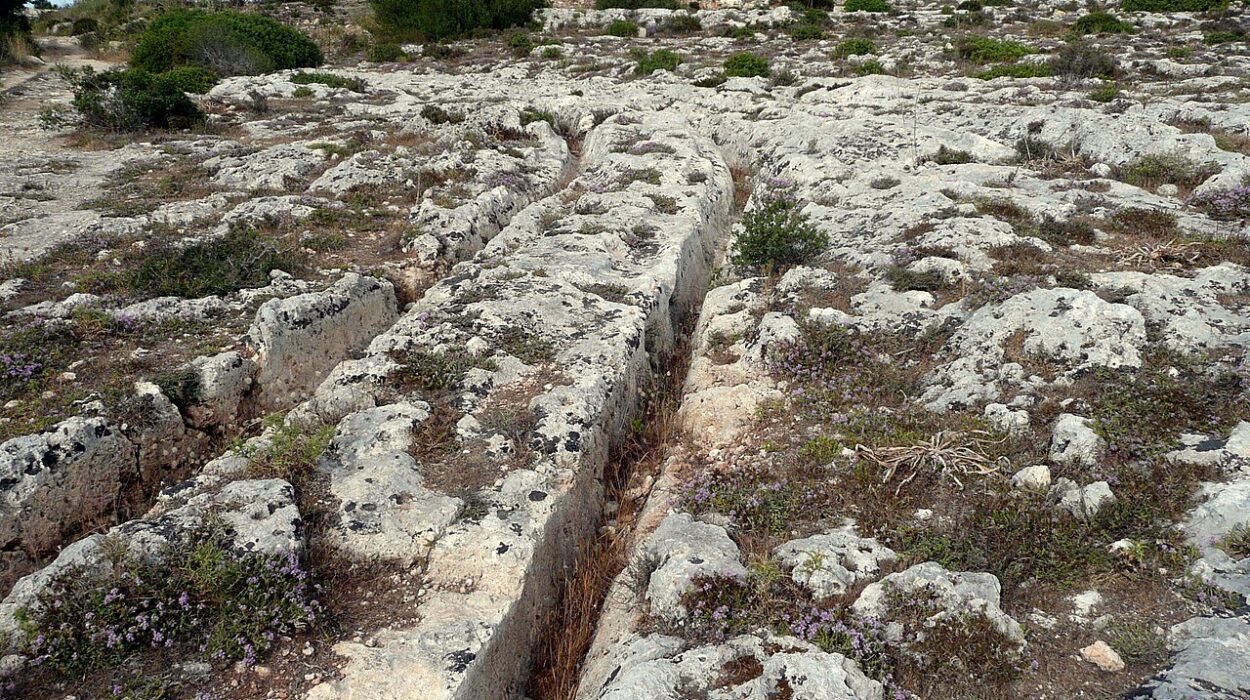
Archaeologists found a small cist grave measuring roughly 67 by 42 centimeters built directly within the preserved latrine channel along the chamber’s north wall. The grave consisted of roof tiles, bricks, and stone slabs carefully arranged to form a protective container.
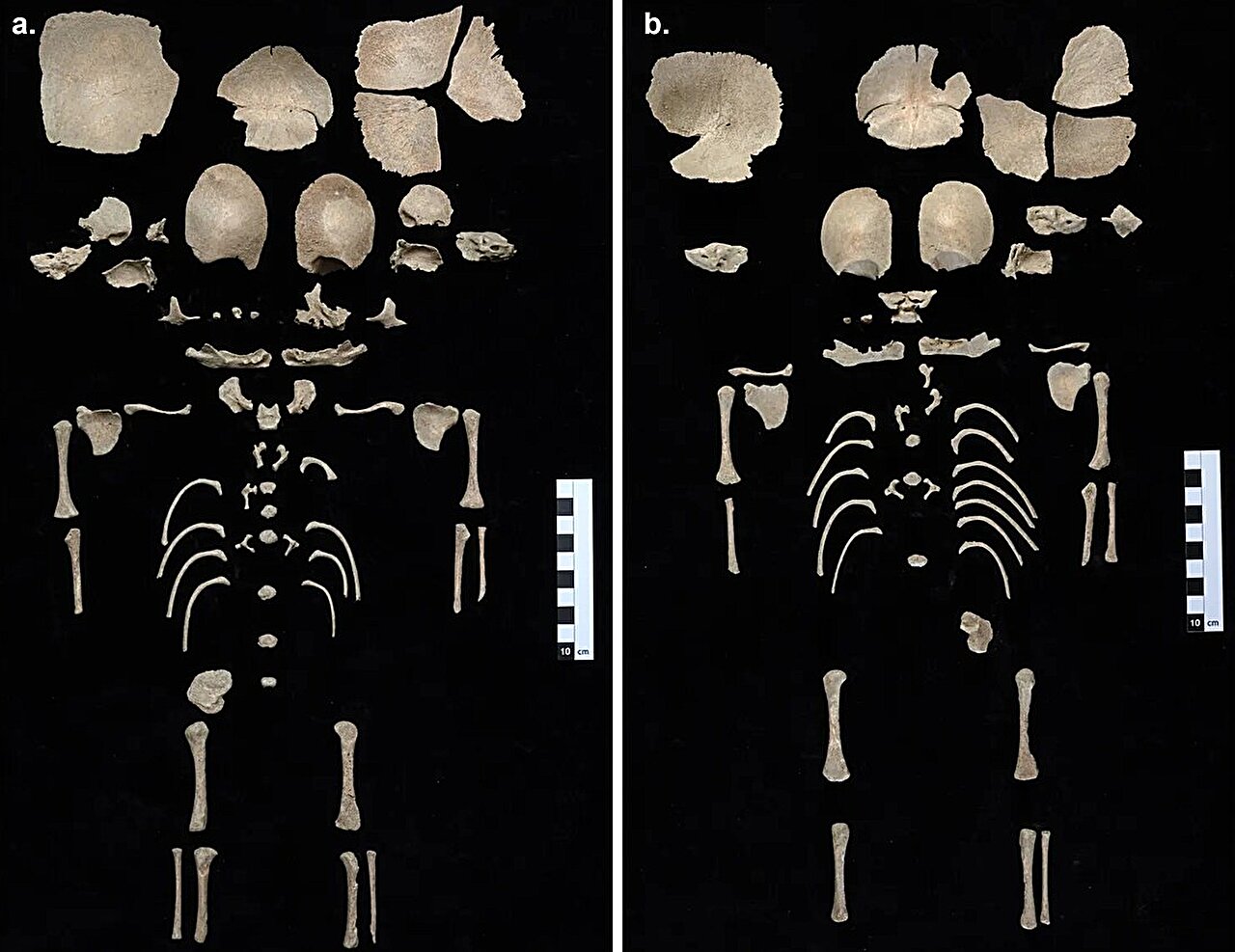
Inside were two perinatal individuals—babies who died shortly before birth or very soon afterward—lying side by side.
The burial stood apart from known cemeteries at Ephesos. Large necropolises and church cemeteries from Roman and Byzantine times are already known in the city, but this grave occupied an isolated location within an abandoned building that no longer served any public or religious function.
That unusual context prompted the new investigation.
In 2025, researchers combined renewed bioanthropological analysis with archaeothanatology, a method that reconstructs how bodies were placed in graves and how they decomposed over time. Their goal was to understand not only who these children were, but also why they had been buried in such an unexpected place.
Two babies who died before full term
The biological examination showed that both infants were remarkably similar.
Measurements of the best-preserved upper arm bones indicate estimated body lengths of approximately 43 and 44 centimeters. Those measurements correspond to ages of about 33 to 34 gestational weeks—roughly seven and a half to eight months of pregnancy—meaning both individuals died before reaching full term.
Independent observations of tooth development were consistent with this estimate, although they could not provide greater precision.
The researchers could not determine whether the babies died before birth or survived only briefly afterward.
Methods that might have answered that question—such as identifying the microscopic “neonatal line” in teeth or using micro-CT imaging to study microscopic bone changes—were not performed. Local regulations limited invasive analyses, and other specialized techniques were not feasible within the study.
The authors therefore describe the individuals as perinates or premature individuals rather than fetuses, emphasizing that their vitality at birth remains unknown.
Were they twins?
Several pieces of evidence suggest the infants may have been twins.
They were buried together in the same grave, appear to have died at nearly identical developmental ages, and share very similar body sizes.
The slight difference in estimated stature does not contradict the possibility of twinship, the researchers note, because twins commonly differ somewhat in growth before birth.
Even so, the evidence is not definitive.
DNA analysis, which would have been necessary to confirm whether the children were twins, could not be conducted during the study because of practical limitations surrounding invasive testing.
For that reason, the authors consistently describe twinship as a hypothesis rather than a confirmed fact.
One tiny bone may hint at hidden health problems
The researchers found no obvious fractures, infections, or visible bone diseases.
However, flotation of sediment collected from the bottom of the grave recovered an exceptionally small skeletal element measuring only about five millimeters long.
The bone was identified as a possible supernumerary cervical rib—an extra rib attached to the neck.
In adults, this anatomical variation is often harmless. In very young individuals, however, previous research cited by the authors associates cervical ribs with developmental abnormalities, congenital disorders, stillbirth, prematurity, and reduced chances of survival.
The researchers stress that this feature does not reveal a specific cause of death. Many disorders associated with cervical ribs affect soft tissues rather than bones and therefore leave no skeletal evidence.
Even so, the finding suggests that at least one infant may have experienced compromised health during development.
The authors note that archaeological discoveries of cervical ribs in perinatal remains are extremely rare because these tiny bones are so fragile. To their knowledge, this represents only the second published archaeological example of such a finding in a perinatal individual.
The burial itself tells an equally important story
The grave revealed evidence of deliberate planning.
Radiocarbon dating places the burial between 692 and 887 CE, with a 75 percent probability that it dates between 762 and 887 CE, during the Middle Byzantine period.
The researchers also found that soil deliberately placed at the bottom of the grave appears to have differed from sediment inside the abandoned latrine channel, suggesting material may have been brought in from elsewhere before the infants were laid to rest.
Both babies were positioned with their heads toward the west, slightly northwest because of the orientation of the existing channel.
Their skeletal remains retained enough anatomical order to show that this was a primary burial rather than bones collected and reburied later.
When the grave was opened, the bones lay exposed without sediment filling the interior. This indicates that decomposition occurred, at least initially, within an empty space rather than soil packed tightly around the bodies.
Patterns of bone movement suggest that water entered the grave over time, shifting some skeletal elements while leaving others connected.
The researchers also propose that the infants may originally have been wrapped in perishable burial cloth, possibly secured with an iron pin recovered near the head region. Although the evidence supports the presence of some kind of soft wrapping, it is impossible to determine whether both babies shared one shroud or each had their own.
Why bury babies in an abandoned latrine?
At first glance, the location seems disturbing.
Elsewhere in the ancient Mediterranean, archaeologists have documented infants discarded in drains, sewers, or wells without formal graves. Such discoveries have sometimes been interpreted as evidence of body disposal or infanticide.
The authors argue that the Ephesos burial is fundamentally different.
Rather than bodies thrown into a drain, these infants rested inside a carefully constructed cist grave.
The grave remained intact beneath later Byzantine deposits for centuries, suggesting the location successfully protected it from disturbance.
Instead of viewing the abandoned channel as a place for disposal, the researchers propose that it may have served as a physically secure place where a carefully built grave could remain undisturbed.
Its position within the former sacred precinct of the Artemision may also have carried symbolic meaning. Although the ancient sanctuary no longer functioned in its original role, the authors suggest the location could reflect a locally adapted perception of the site’s continuing protective character.
This interpretation remains a hypothesis rather than a demonstrated fact, but it fits the archaeological evidence more closely than the idea of casual disposal.
A difficult moment in Byzantine beliefs
The burial also sits within a period when ideas about infancy, death, and religion were changing.
According to the authors, Middle Byzantine society inherited traditions from both Roman and Christian belief systems.
Christian burial customs generally favored east-west orientation, simple graves, bodies placed on their backs, and few or no grave goods. The Odeion burial largely matches these practices despite its unusual setting.
At the same time, newborns occupied a particularly uncertain place within Byzantine society.
The researchers explain that baptism played an important role in determining burial practices, since only baptized individuals could normally be buried in consecrated cemeteries. Yet the study could not determine whether these premature infants were born alive or received baptism.
The authors suggest one possible explanation for the unusual burial location is that premature death and the absence of baptism may have prevented standard burial in consecrated cemetery grounds.
They emphasize, however, that available historical evidence is insufficient to draw firm conclusions about burial practices for unbaptized infants in this setting.
A carefully protected farewell
Ultimately, the study argues that the grave reflects compassion rather than rejection.
The infants were buried together inside a carefully built structure that shared many characteristics of contemporary Christian burials despite occupying an unconventional location.
The researchers interpret this arrangement as a practical compromise—one that respected prevailing burial customs while placing the children in a location that offered long-term protection.
More than eleven centuries later, the grave remained undisturbed until archaeologists uncovered it.
For the authors, that enduring preservation may itself be part of the story. Rather than treating these babies as unwanted or discarded, the people who buried them appear to have taken deliberate steps to ensure they would remain at rest.
Although questions remain—including whether the infants truly were twins and whether they ever lived outside the womb—the burial provides an unusually intimate glimpse into how one Middle Byzantine community may have balanced biological uncertainty, religious belief, and family grief when confronted with lives that ended almost before they began.
More information
Caroline Partiot et al, Peace in Unexpected Places: The Middle Byzantine Burial of Two Perinates, Possibly Twins, in a Latrine Canal of the Odeion in the Artemision of Ephesos, Childhood in the Past (2026). DOI: 10.1080/17585716.2026.2682804