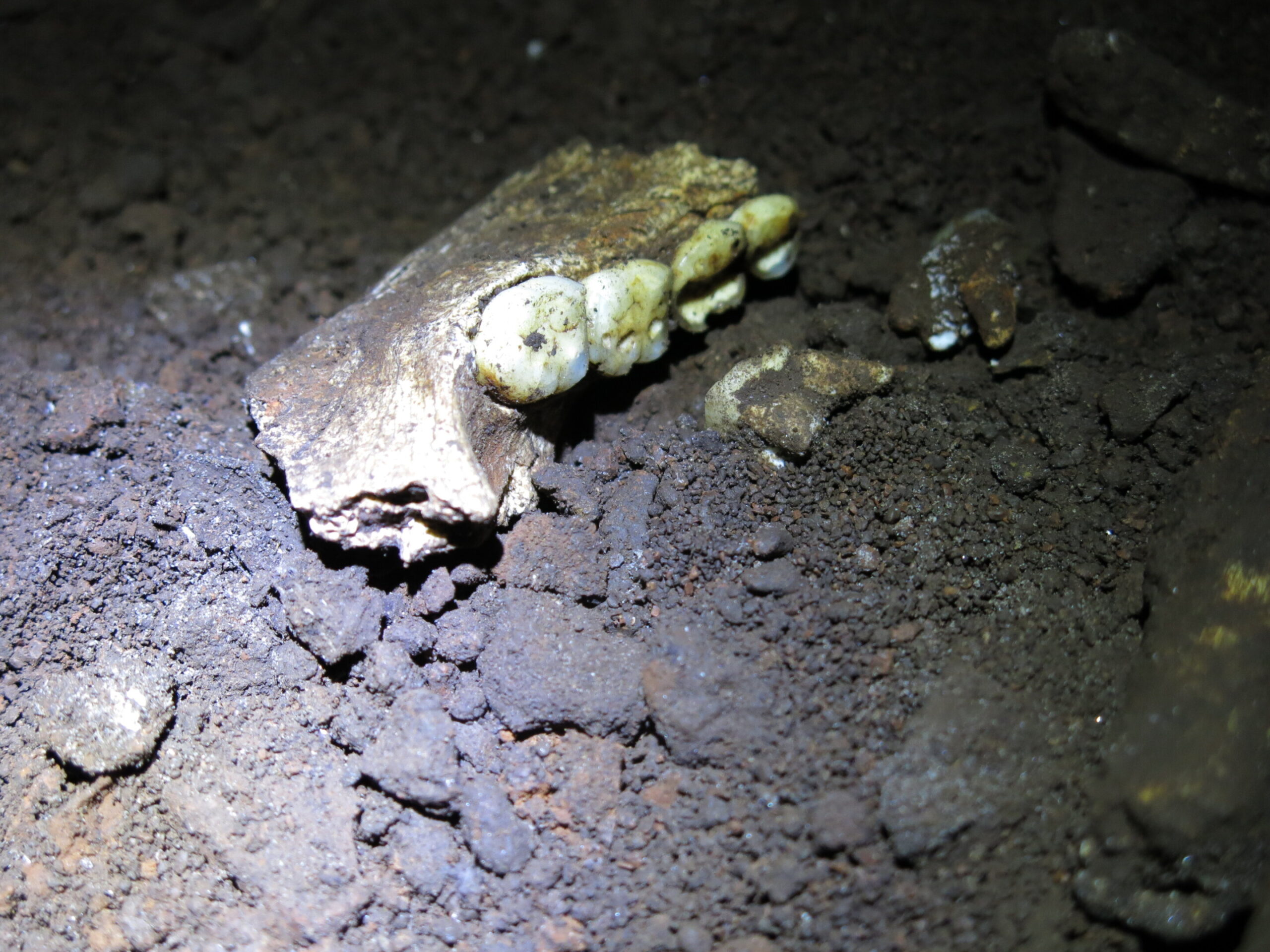
Ancient proteins recovered from Homo naledi fossils have provided the first direct molecular clues about the sex of individuals buried in South Africa’s Rising Star Cave system. Researchers found no evidence of a male-specific protein marker in teeth from at least 20 individuals, raising the possibility that the chamber may have been used exclusively for females—or that the population carried an unusual genetic trait.
For more than a decade, one mystery has lingered over the remarkable fossils of Homo naledi: why did the adults discovered in the Dinaledi Chamber look so strikingly alike?
Now, scientists have turned to ancient proteins preserved inside fossil teeth to search for answers. Their findings, published in Cell, reveal something unexpected. Every individual tested lacked a protein marker normally associated with males, opening the door to the possibility that the chamber represents the first known sex-specific burial site created by a non-Homo sapiens species.
Solving a Long-Standing Mystery
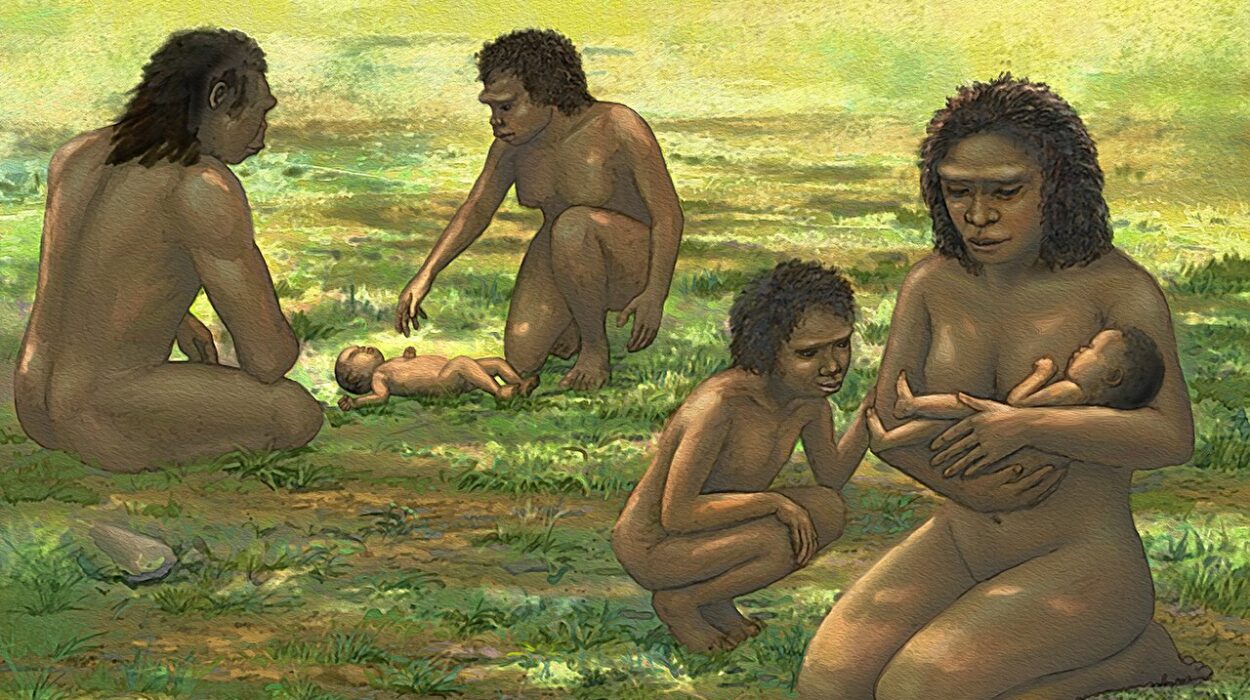
Since its discovery in 2013, Homo naledi has challenged researchers’ understanding of human evolution. The extinct relative of modern humans lived between 335,000 and 241,000 years ago and displayed an unusual blend of primitive, ape-like characteristics alongside more humanlike features.
Yet one puzzle remained particularly difficult to explain. Fossils recovered from the Dinaledi Chamber showed very little of the physical variation typically expected between males and females.
To investigate, researchers from the University of York, the University of Copenhagen, and more than ten additional international institutions turned to a technique that is rapidly transforming the study of ancient remains: protein analysis.
Extracting Ancient Clues From Tooth Enamel
The research team analyzed proteins preserved within the enamel of fossil teeth. Using a minimally destructive acid-etching method, they extracted microscopic protein fragments known as peptides from 23 teeth representing at least 20 individuals.
Tooth enamel offered a unique advantage. Unlike many biological materials that degrade over time, enamel can protect proteins for extraordinary lengths of time because it is the hardest tissue in the human body.
This preservation allowed scientists to search for biological markers that could reveal the sex of the individuals without relying solely on skeletal anatomy.
The Missing Male Marker
The key target was Amelogenin-Y, a protein encoded exclusively by the male Y chromosome.
If male individuals were present among the fossils, researchers expected to find evidence of this protein in at least some of the teeth. Instead, they found none.
Recognizing the significance of the result, the team conducted additional verification work. Researchers at the University of York analyzed amino acids within the samples to confirm that the proteins were genuinely ancient and not the product of modern contamination.
According to Dr. Marc Dickinson of the University of York’s Department of Chemistry, the absence of male markers is particularly intriguing because it offers a rare opportunity to explore not only the biology of ancient hominins but also aspects of how they may have lived and organized their societies.
The findings provide one of the clearest molecular glimpses yet into a species whose behavior has remained difficult to reconstruct.
Could the Chamber Have Been Reserved for Females?
One interpretation of the results is that the Dinaledi Chamber may have contained individuals of a single sex.
If that explanation proves correct, it could suggest that Homo naledi practiced a form of selective burial behavior. Such a scenario would imply a level of social and symbolic complexity that researchers have often associated primarily with modern humans.
The idea remains speculative, but it raises important questions about how ancient hominins treated their dead and organized their communities.
A burial space reserved for females would represent a remarkable example of social behavior deep in human evolutionary history.
Another Possible Explanation
The researchers also emphasize that the results do not necessarily prove the chamber contained only females.
An alternative explanation involves genetics rather than culture.
The study suggests that the Homo naledi population may have been highly isolated. In such a population, the gene responsible for producing the male-specific Amelogenin-Y protein could have mutated or even been deleted.
Under that scenario, males could still have been present among the individuals studied, but their teeth would not carry the expected molecular signature used to identify them.
This possibility means the absence of the male marker does not automatically rule out male individuals. Instead, it highlights how much remains unknown about the biology of this extinct species.
Ancient Proteins Open a New Window Into the Past
The study also demonstrates the growing power of ancient protein research.
Palesa Madupe, who conducted the work during postdoctoral research at the University of Copenhagen, noted that enamel proteins are especially valuable because the protective nature of tooth enamel shields them from environmental contamination over immense spans of time.
As a result, these proteins can preserve genetic information that survives long after DNA has degraded.
The researchers believe the findings may help resolve the long-standing question of why the Dinaledi fossils display so little variation. If the chamber contained individuals of a single sex, the apparent uniformity of the remains becomes much easier to explain.
Why This Matters
This study marks the first successful extraction and analysis of ancient proteins from Homo naledi fossils, providing an entirely new way to investigate one of humanity’s most enigmatic relatives.
Whether the findings point to an all-female burial group or a population with an unusual genetic history, they challenge existing assumptions about the social lives of ancient hominins. The research also highlights the growing importance of protein analysis as a tool for exploring periods of human evolution that are otherwise difficult to study.
By uncovering molecular evidence preserved inside fossil teeth, scientists are gaining access to questions that skeletal remains alone cannot answer. In doing so, they are building a more detailed picture of how ancient human relatives lived, interacted, and perhaps even honored their dead hundreds of thousands of years ago.