For decades, fossils from a Haitian cave were thought to belong to an extinct woodcock. Ancient DNA has now revealed a different identity: the bird was actually a snipe. The discovery has led scientists to an unexpected evolutionary history, tracing how these close relatives spread across oceans, colonized distant islands and diversified into species that have since vanished.
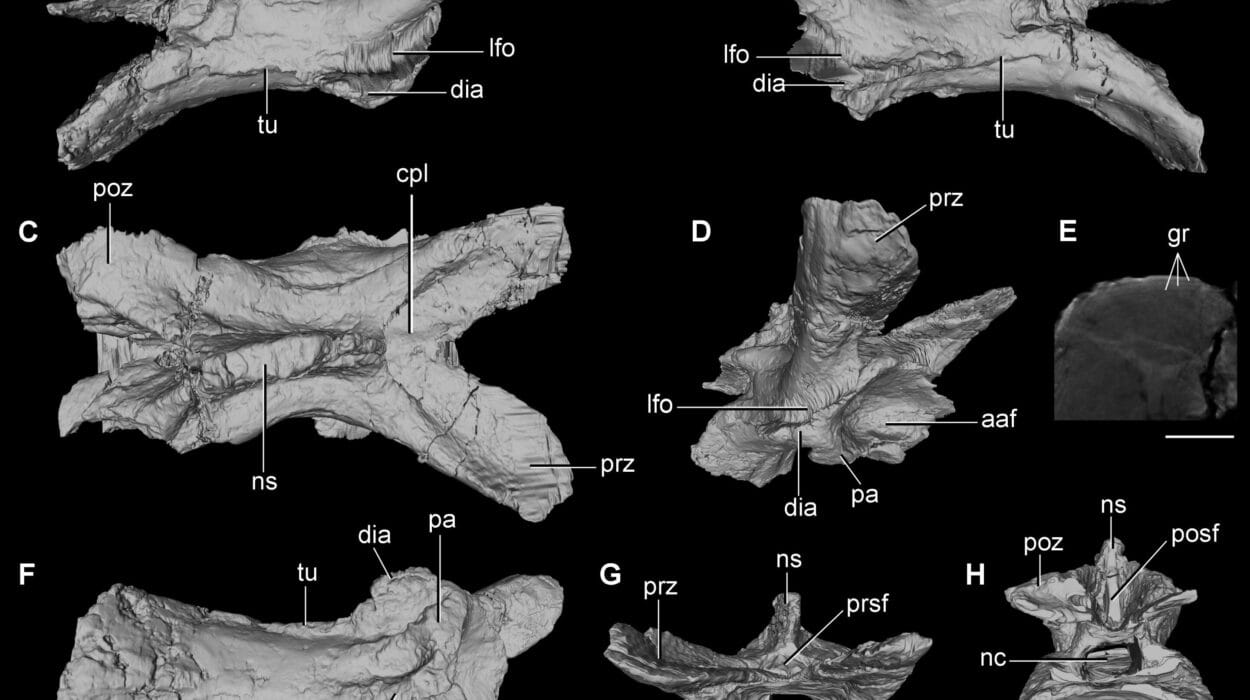
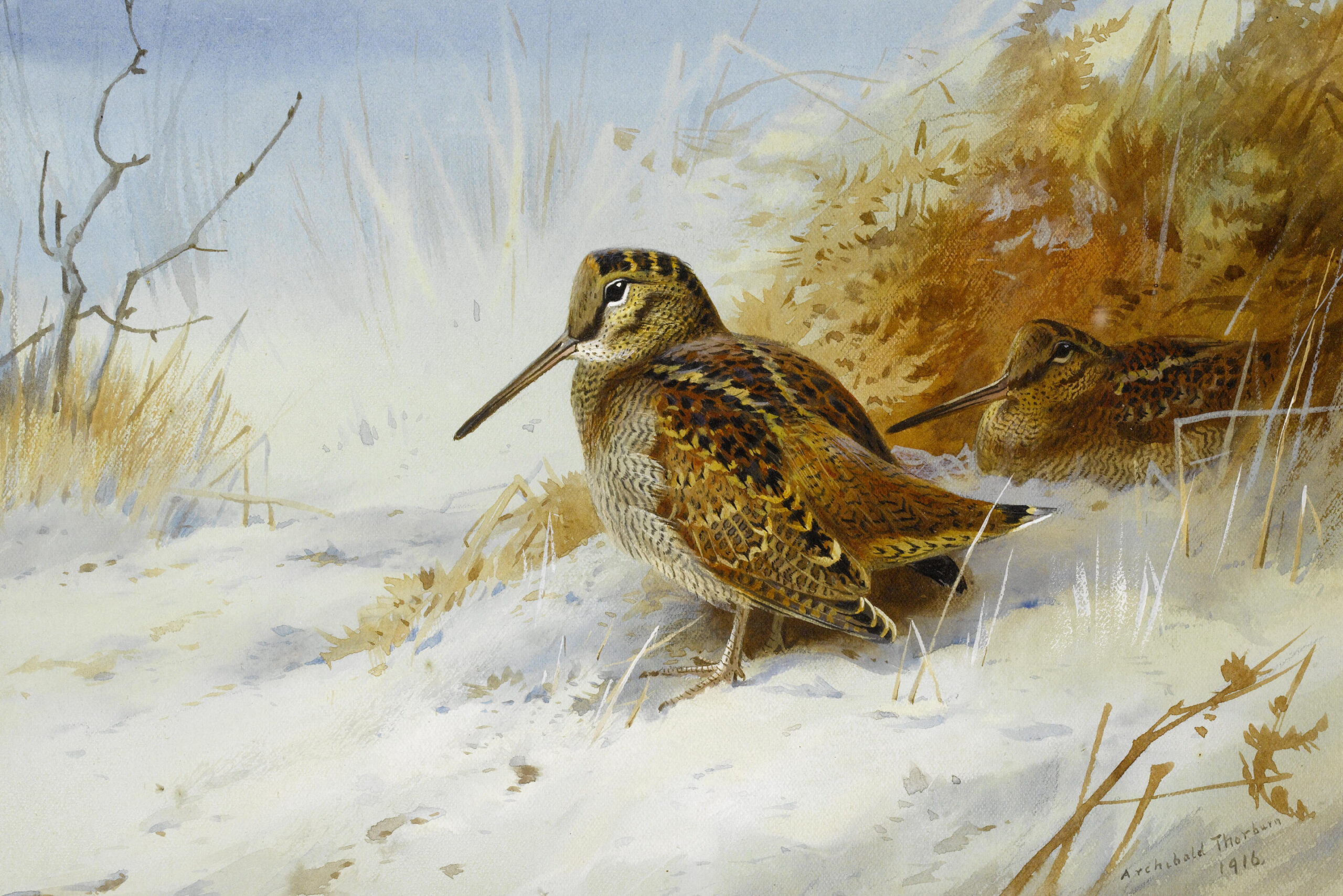
The story began with a handful of fossils excavated in 1984 from a cave in Haiti. Researchers at the Florida Museum of Natural History initially identified the remains as belonging to a woodcock, a medium-sized shorebird with a long, slightly curved bill and a distinctive bobbing walk.
In 2015, scientists formally identified the fossil bird as a woodcock. But a new analysis of its ancient DNA has overturned that classification. The bird was actually a snipe, a close relative that can look remarkably similar.
The correction matters for more than the name of an extinct Caribbean bird. By comparing DNA from the fossil with genetic material from living and extinct woodcocks and snipes, researchers reconstructed the group’s evolutionary history. Their results point to several surprising dispersal events across oceans, including journeys from Eurasia to South America and from South America to remote islands in the South Pacific.
The findings also raise a question: Could other extinct island birds, many of which disappeared after humans arrived, help explain how these species spread across the world?
Two closely related birds, one mistaken identity
Woodcocks and snipes belong to a closely related group of shorebirds. They diverged from a common ancestor about 25 million years ago, but their physical similarities can make identification difficult, particularly when scientists have only fossil bones to examine.
The Haitian bird added to the confusion because it had relatively short wings and large legs, features commonly found in birds that evolve on islands.
Both groups are known for their unusual feeding behavior. Woodcocks, for example, have long bills adapted for probing the soil for earthworms. Their characteristic bouncing movements may mimic the vibrations of falling rain, which can prompt earthworms to move toward the surface before the soil becomes waterlogged. The birds can then catch them with their slender bills.
The new genetic evidence established that the Haitian fossils belonged to a snipe rather than a woodcock. That identification gave researchers a reason to revisit the evolutionary relationships among the wider group.
Why do woodcocks and snipes settle on islands?
Woodcocks and snipes are part of a family of birds renowned for long-distance migration. Many shorebirds travel between Arctic breeding grounds and warmer wintering areas thousands of miles away.
“Shorebirds are the ultimate long-distance migrants,” said study coauthor David Steadman, the emeritus curator of ornithology at the Florida Museum. “It’s common for shorebirds to nest up in the Arctic tundra and winter in South America. There was recently a bristle-thighed curlew that was radio-tagged and showed up in New Zealand after flying 10,000 km (6,200 miles) without stopping.”
But woodcocks and snipes have an unusual habit among migratory shorebirds: Some of their ancestors stopped migrating and established permanent populations on islands.
Of the eight living woodcock species, six are restricted to islands. Their relatives have also diversified across the Caribbean, Japan, Indonesia, the western Pacific and the greater New Zealand region.
That pattern has prompted questions about whether the birds’ ability to travel long distances helped them colonize remote islands in the first place.
“Some people argue that it’s their migratory propensity that has led them to colonize islands. But there are a lot of migrant shorebirds that travel long distances. Woodcocks and snipes are the only ones setting up resident populations on islands. They’ve radiated on islands in the Caribbean, Japan, Indonesia, the western Pacific and the greater New Zealand area,” Steadman said.
To investigate how this unusual distribution developed, the researchers examined the evolutionary relationships of the group across a much broader range of species.
Museum collections help reconstruct millions of years of history
The research team assembled genetic material from museum specimens representing all but one of the 29 living woodcock and snipe species.
Jessica Oswald, then a postdoctoral researcher at the Florida Museum of Natural History, extracted and sequenced DNA from small tissue samples. She and her colleagues also recovered ancient DNA from the Haitian fossils with help from coauthor Brian Stucky.
The researchers included genetic material from another extinct bird, the South Island snipe. It disappeared in 1964 after black rats were introduced by humans to South and Stewart islands in New Zealand.
They combined the genetic information with the ages of fossil shorebirds to build a time-calibrated evolutionary tree. This type of analysis shows how different species are related and estimates when their evolutionary lineages diverged.
The resulting tree revealed a history of dispersal that was not what the researchers expected.
Snipes made some remarkable journeys across the oceans
The evolutionary reconstruction suggests that woodcocks and snipes began taking different routes around the world roughly 20 million years ago.
One or a few woodcocks appear to have traveled from Eurasia, where their relatives originated, to North America. That movement is relatively easy to explain geographically. Birds traveling from Asia could potentially have crossed through the region between modern-day Russia and Alaska, while those coming from Europe could have used Iceland and Greenland as possible stopping points.
Snipes followed a more surprising route. Around the same period, Eurasian snipes dispersed to South America, crossing westward over an entire ocean rather than following the more familiar north-south migration routes.
Their descendants eventually diversified into several species, including the extinct Caribbean snipe represented by the Haitian fossils.
The researchers identified another unexpected dispersal event about 7 million years later. South American snipes appear to have traveled southwest to islands in the Pacific, where they evolved into several distinct species.
The finding challenges the traditional classification of these Pacific birds.
Known as austral snipes, New Zealand snipes or tutukiwi in Māori, these birds look sufficiently different from their South American and Eurasian relatives that scientists placed them in a separate genus, Coenocorypha.
But the genetic analysis placed them firmly within a lineage dominated by South American snipes.
In other words, despite their distinctive appearance and remote location, the austral snipes are more closely connected to their South American relatives than their traditional classification might suggest.
The discovery could eventually prompt changes to the birds’ scientific classification. Researchers could eliminate the genus Coenocorypha and place its species in the existing genus Gallinago. Alternatively, they could retain Coenocorypha while creating two additional genera for related South American species.
The authors did not propose any taxonomic changes in the current study.
Could extinct island birds fill the gaps?
The genetic relationships raise a larger question about how snipes reached the South Pacific.
One explanation is that their ancestors made exceptionally long ocean crossings, dispersing directly from South America to the distant islands.
But Oswald suggested another possibility: The evolutionary journey may have involved intermediate island populations that no longer exist.
“One hypothesis is that perhaps there were many closely related species on islands across the Pacific that are now extinct, just like what has been found in rails,” she said.
Under this hypothesis, snipes may once have occupied a much wider network of Pacific islands. Those populations could have provided intermediate stages in the birds’ spread toward New Zealand and neighboring islands.
The problem is that many island birds disappeared before scientists had an opportunity to study them.
Humans have repeatedly driven island species to extinction through hunting and the introduction of animals such as rats and cats. Birds that evolved without terrestrial predators often lack effective defenses against newly arrived threats.
“People will eat anything,” Oswald said. “You get one group of explorers or whalers that stop at one of these islands, and they could wipe out the entire bird community in a weekend because they were hungry.”
Historical accounts suggest that hunting could devastate bird populations with astonishing speed. In a 1976 article in The New Yorker, naturalist Peter Matthiessen described 19th-century hunts in which gunners killed thousands of birds in a single day.
He noted that some shorebirds were remarkably unafraid of people. The Eskimo curlew, now extinct largely because of uncontrolled hunting, would sometimes circle back over hunters while calling to fallen members of its flock.
Other birds relied heavily on camouflage, even when it offered little protection against human hunters.
Island species could be especially vulnerable because they had never encountered people and had little reason to recognize them as a threat.
Hunting was not the only danger. Rats, cats and other invasive animals introduced by humans could also devastate native bird populations.
The Caribbean snipe appears to have suffered this fate. It disappeared sometime after the 17th century, although the precise circumstances of its extinction remain unclear. Six other extinct species provisionally assigned to Coenocorypha seem to have met a similar end.
Their disappearance leaves major gaps in the evolutionary history of the group. If those birds once occupied islands along the Pacific migration and dispersal routes, their fossils and genetic remains could help explain how snipes reached some of the most remote parts of the world.
The study was published in the Proceedings of the National Academy of Sciences.