More than 500 million years ago, bizarre worm-like animals called luolishaniids may have survived by filtering tiny organisms from seawater, according to a new Harvard-led fossil study. By measuring and statistically analyzing fossil feeding structures, researchers found strong evidence that these extinct creatures used a suspension-feeding strategy similar in scaling pattern to modern filter-feeding marine animals.
When people imagine ancient ocean predators, they often picture sharp teeth or armored shells. But in the Cambrian seas, survival may have depended on something far subtler: delicate, comb-like limbs built for trapping microscopic prey.
A new study from researchers at Harvard University suggests that luolishaniids—strange, soft-bodied marine animals from the Cambrian period—likely fed by filtering tiny organisms from seawater. Their work, published in Biology Letters, offers the strongest statistical support yet that these creatures were true suspension feeders, using a feeding strategy that echoes patterns seen in modern marine life.
A Cambrian mystery hiding in museum fossils
The Cambrian period was a time when oceans were packed with experimental body designs, many of which disappeared long ago. This burst of evolutionary innovation, known as the Cambrian explosion, shaped the foundations of animal life that still exists today.
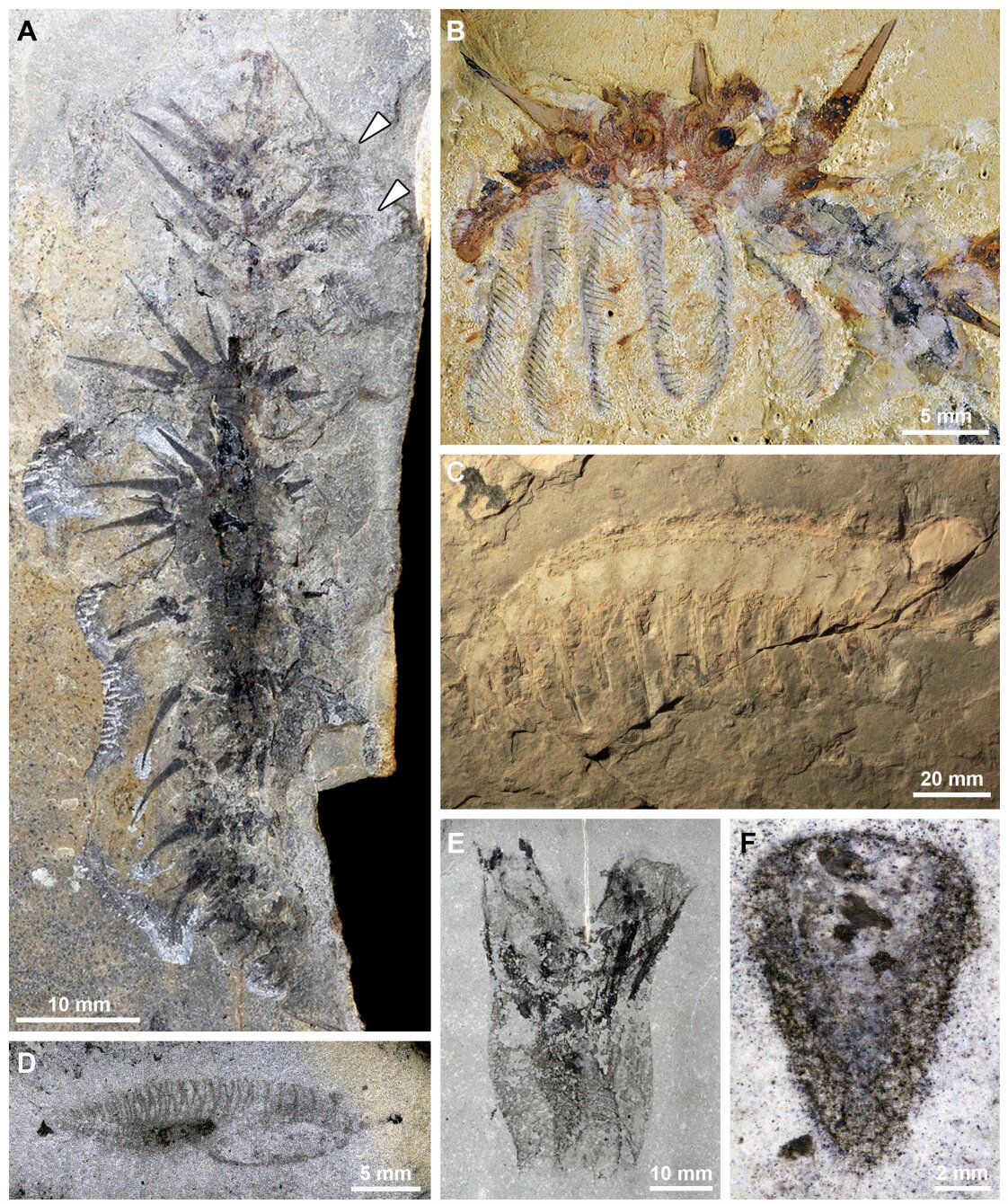
Among the more puzzling animals from this era are luolishaniids. These were worm-like, soft-bodied creatures that belonged to an extinct group called lobopodians. Scientists suspect they may be related in some way to modern invertebrates such as velvet worms.
But understanding how luolishaniids lived has been difficult. Unlike animals with hard skeletons or shells, they lacked mineralized body parts, meaning their fossils are rare and preservation is often incomplete. That scarcity has made it harder to confidently determine their feeding behavior.
Despite these challenges, researchers Jared C. Richards and Javier Ortega-Hernández took a fresh look at luolishaniids by examining fossils housed across multiple paleontology museums and research institutes.
The big question: were luolishaniids filter feeders?
For years, scientists have suspected luolishaniids may have been suspension feeders—animals that collect food from water currents by trapping tiny organisms such as plankton.
The reason comes down to anatomy. Fossils show that luolishaniids had several pairs of front appendages that were covered in fine, comb-like structures known as setules. In modern animals, similar structures are often linked to filter feeding.
But until now, much of the argument was based on appearance alone.
As Richards and Ortega-Hernández explained, luolishaniids represent the only known Cambrian soft-bodied, free-living seafloor animals that were believed to feed this way, yet the evidence had largely remained qualitative.
The researchers set out to test the hypothesis directly: were those setule-covered limbs truly adapted for suspension feeding?
Measuring ancient feeding tools, not just describing them
Instead of relying solely on visual interpretation, the Harvard researchers took a more quantitative approach.
They carefully measured the spacing between the hair-like setules on the fossil appendages—essentially the “mesh size” of the filtering structures. Then they compared those measurements to the overall body length of the animals.
This allowed them to test whether luolishaniids followed an expected biological pattern: if an animal grows larger, its feeding structures should scale in a predictable way depending on what it eats and how it captures food.
Their analysis revealed a clear result.
They found a positive and statistically significant relationship between body length and the spacing of the filtering mesh. In other words, larger luolishaniids had wider mesh spacing, while smaller ones had tighter spacing.
That relationship strongly supports the idea that these appendages were not random body ornaments, but functional feeding tools.
A predator-prey pattern that looks surprisingly modern
The team didn’t stop at body size and mesh spacing. They also compared luolishaniid size patterns to the size of potential prey in Cambrian oceans.
According to the researchers, the body size relationship between luolishaniids and Cambrian mesoplankton prey matches the kind of predator–prey scaling seen in modern suspension feeders.
This was a key breakthrough.
Richards and Ortega-Hernández described their results as the first statistically supported example of a modern-like predator–prey scaling relationship in Cambrian soft-bodied animals.
Despite the strange appearance of luolishaniids, the researchers argue that their ecological role may have been far less alien than it seems. Their feeding behavior, they suggest, may have followed rules still seen in marine ecosystems today.
Confirming luolishaniids as early suspension-feeding specialists
Taken together, the fossil measurements and statistical tests point toward one strong conclusion: luolishaniids likely sustained themselves through suspension feeding, filtering tiny organisms from seawater.
This supports long-standing interpretations, but with something earlier work lacked—quantitative evidence.
The researchers emphasized that this helps resolve a broader question in paleontology: how much did the rise of filter-feeding animals during the early Paleozoic influence soft-bodied organisms?
Hard-shelled filter feeders are more commonly preserved in fossils, while soft-bodied animals often vanish from the record. That imbalance makes it difficult to trace how feeding strategies evolved across different groups.
Luolishaniids, however, provide a rare window into the non-biomineralized side of this evolutionary story.
What this could mean for the evolution of marine ecosystems
The study does more than clarify what luolishaniids ate. It also suggests that complex ecological roles—like suspension feeding on drifting prey—were already established among soft-bodied animals during the Cambrian.
That matters because the Cambrian explosion is often framed as a time when body shapes evolved rapidly, but this research highlights that feeding strategies and ecological interactions were also becoming structured in recognizable ways.
The findings also offer evidence that even the most unusual Cambrian creatures may have operated within biological constraints that still shape life today.
As the researchers noted, luolishaniids may look uncanny, but their adaptations and lifestyle appear to share ecological attributes with modern marine invertebrates.
Why This Matters
This study strengthens the case that filter feeding—a major survival strategy in today’s oceans—was already being used by soft-bodied animals more than 500 million years ago. By showing a statistically supported link between body size and feeding structure design, the research adds rare quantitative clarity to one of the Cambrian fossil record’s most difficult mysteries.
Understanding how early animals captured food helps scientists build a clearer picture of how marine ecosystems formed, how predator–prey relationships developed, and how modern feeding strategies may have deep evolutionary roots. In short, luolishaniids aren’t just strange Cambrian leftovers—they may represent an early chapter in the story of how ocean life learned to feed efficiently, at scale, in a changing world.
Study Details
Jared C. Richards et al, Predator–prey scaling laws support a suspension-feeding lifestyle in Cambrian luolishaniid lobopodians, Biology Letters (2026). DOI: 10.1098/rsbl.2025.0650