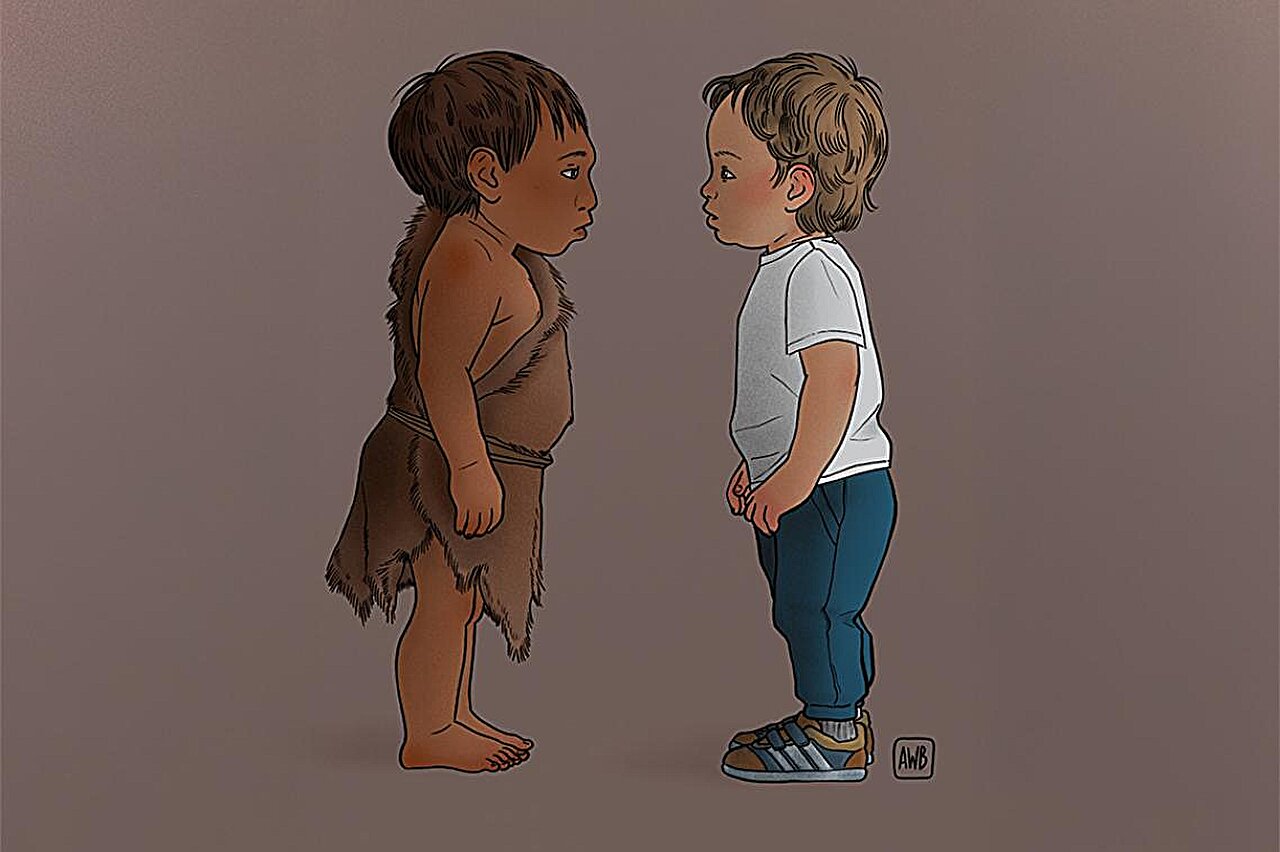
Ancient baby teeth and bones dating back 50,000–75,000 years are offering an unusually detailed look at how Neanderthal children developed. Researchers found that although some bones showed signs of slightly more advanced growth than those of modern human infants, the overall developmental pathway was remarkably similar, while unusual defects preserved in baby teeth may record stress experienced before or shortly after birth.
For decades, tiny fragments of Neanderthal infants sat largely silent in a museum collection. Now, thanks to advanced imaging technology, those rare remains are helping scientists answer one of the most enduring questions about our closest evolutionary relatives: How did Neanderthal children grow during the earliest stages of life?
An international team led by researchers from the University of Queensland analyzed ancient infant bones and teeth recovered from Sesselfelsgrotte in Germany. Their findings, published in Royal Society Open Science, suggest that Neanderthal development closely mirrored that of modern humans, despite some subtle differences.
Rare Remains Offer a Window Into Early Neanderthal Life
The remains were originally unearthed during excavations in the 1960s and 1970s at Sesselfelsgrotte, Germany. However, it was only about two decades ago that scientists confirmed the specimens belonged to Neanderthals.
According to skeletal histologist Dr. Justyna Miszkiewicz, the collection is exceptionally rare. Researchers believe the bones may have come from a potentially unborn Neanderthal baby, while the molar teeth likely belonged to two different children.
Because infant Neanderthal remains are uncommon, even these small fragments provide valuable clues about the species that once lived alongside modern humans.
Neanderthals were a separate species from Homo sapiens, and the two groups coexisted for approximately 5,000 years.
Virtual Imaging Revealed Hidden Growth Patterns
Studying such fragile specimens presents a challenge, as traditional methods can risk damaging irreplaceable material.
To overcome this, the team used micro-computed tomography (micro-CT), a noninvasive imaging technique that allowed them to examine the internal structure of the bones and teeth in remarkable detail.
The scans created what researchers described as a form of “virtual microanatomy,” enabling them to identify microscopic patterns inside the ancient remains without physically altering them.
Within the bones, the researchers found tissue structures characteristic of a rapidly growing fetal skeleton. These patterns provided important evidence about how Neanderthal infants developed before and around birth.
Some Bones Appeared More Advanced Than Expected
The imaging revealed intriguing differences in certain long bones, including the femur and humerus.
Researchers observed regions with increased compactness and greater structural organization. These features suggested a level of growth that appeared more advanced than what is typically seen in a modern human baby at a comparable stage.
Yet the broader picture told a different story.
Despite these localized differences, the scientists concluded that the overall developmental trajectory of Neanderthals remained broadly similar to that of modern humans during early life.
The findings add to growing evidence that Neanderthals and modern humans may have shared more developmental characteristics than previously assumed.
Ancient Baby Teeth Recorded Signs of Early-Life Stress
The study also examined Neanderthal molars, which researchers identified as milk teeth that would normally be lost and replaced by adult teeth later in childhood.
Micro-CT scans uncovered unusual mineralization defects deep within the dentin, the calcified tissue located beneath tooth enamel.
These defects were consistent with interglobular dentin, a condition that forms when the normal mineralization process is interrupted.
According to co-lead researcher Dr. Ricardo Miguel Godinho of the University of Algarve, the defects may point to physiological challenges experienced during development.
While the researchers emphasized that they cannot determine the exact cause, the lesions could be associated with factors such as vitamin D deficiency, calcium deficiency, or impaired calcium absorption.
Clues Preserved From Before Birth
One of the most significant aspects of the dental findings is their timing.
The researchers noted that these tooth features likely formed sometime between the third trimester of pregnancy and the child’s second year of life. As a result, they may preserve evidence of physiological or metabolic stress occurring during an especially vulnerable period of development.
In effect, the teeth may function as biological records, capturing traces of challenges experienced before birth or during infancy tens of thousands of years ago.
Although the current study cannot definitively explain the source of those stresses, it provides a new avenue for investigating Neanderthal health and development.
Further Research Could Refine the Picture
The team cautions that additional high-resolution studies and multiple analytical approaches will be needed to better understand both Neanderthal growth patterns and the origins of the dental defects.
Future work may help researchers determine whether the observed features were common among Neanderthal children or unique to these individuals.
For now, the study demonstrates how modern imaging technologies can unlock information from even the smallest and most fragile traces of the ancient past.
Why This Matters
Understanding how Neanderthals grew during infancy helps scientists better understand the evolutionary relationship between Neanderthals and modern humans. The discovery that their early developmental trajectory was broadly similar to ours reinforces the biological connections between the two species.
At the same time, the unusual dental defects provide rare evidence of conditions experienced during the earliest stages of life, offering a glimpse into the health challenges faced by Neanderthal children 50,000–75,000 years ago. Together, these tiny bones and teeth are helping researchers build a clearer picture of a species that shared part of its history with our own.