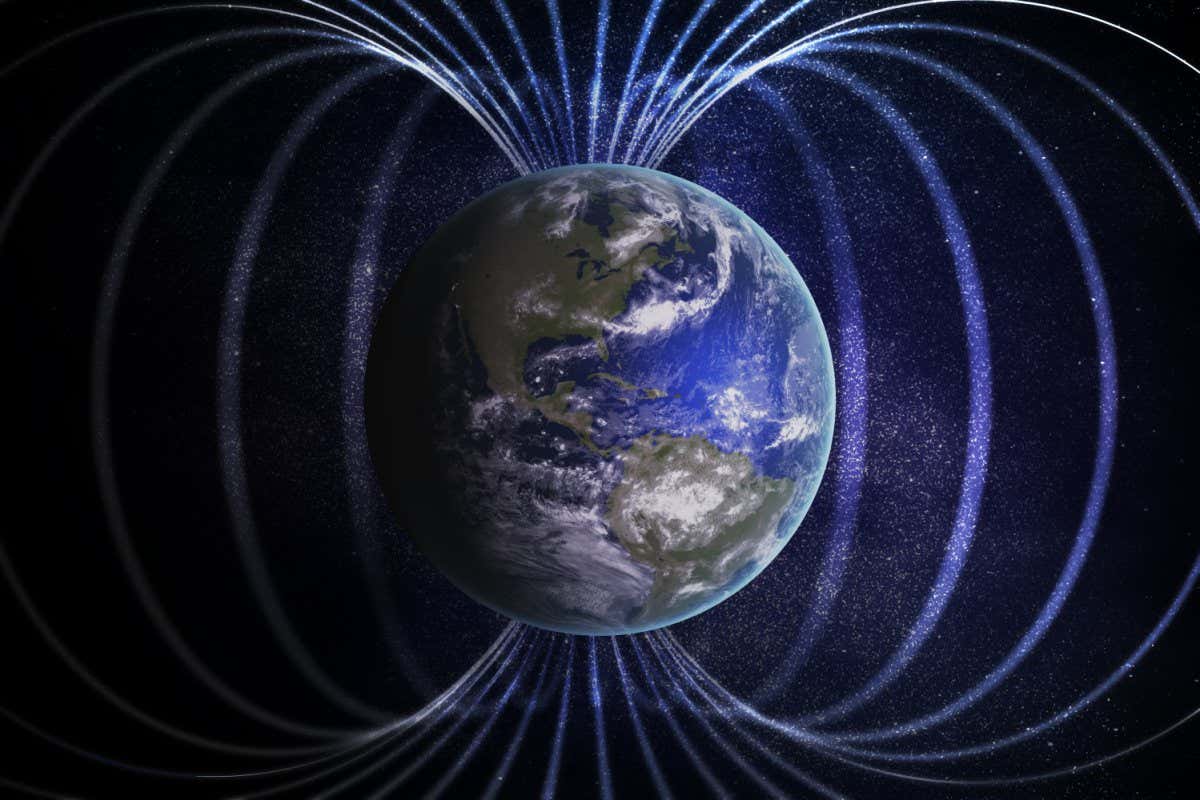
Invisible, silent, and largely unnoticed, the Earth’s magnetic field surrounds the planet like a vast, living cocoon. It does not announce itself with color or sound, yet it works continuously, second by second, defending life on Earth from forces that would otherwise make the planet hostile, barren, and dangerous. This magnetic shield is generated deep within the Earth, far below our feet, and extends far into space, interacting with solar and cosmic phenomena on a scale that is difficult to imagine.
To understand the importance of the Earth’s magnetic field is to understand how fragile life truly is, and how dependent it is on planetary-scale physics. Without this field, Earth would not simply be a slightly harsher place. It would be fundamentally transformed, its atmosphere stripped away, its surface irradiated, and its capacity to support complex life severely compromised. The magnetic field is not a luxury of nature; it is a prerequisite for the world as we know it.
The following five mechanisms reveal how the Earth’s magnetic field protects us constantly, quietly shaping the conditions that allow oceans to remain liquid, air to stay bound to the planet, and life to flourish under a sky that is far calmer than the violent space beyond it.
1. It Deflects the Solar Wind and Prevents Atmospheric Erosion
The Sun is not a gentle presence. Along with light and heat, it continuously emits a stream of charged particles known as the solar wind. This wind consists primarily of electrons and protons moving at speeds of hundreds of kilometers per second. Left unchecked, such a stream would collide directly with Earth’s atmosphere, gradually stripping it away into space.
The Earth’s magnetic field acts as a vast electromagnetic barrier against this onslaught. When charged particles from the solar wind approach Earth, they encounter the magnetic field and are forced to change direction. Instead of slamming into the atmosphere head-on, most of these particles are diverted around the planet, flowing along magnetic field lines and streaming past Earth into space.
This deflection is not a one-time event but a continuous process. Every second, trillions of charged particles are redirected by the magnetic field, preserving the integrity of the atmosphere. The importance of this protection becomes starkly clear when compared to Mars. Mars once had liquid water on its surface and a thicker atmosphere, but it lost most of its magnetic field billions of years ago. Without that protection, the solar wind gradually stripped away much of its atmosphere, transforming Mars into the cold, thin-aired world we see today.
On Earth, the magnetic field ensures that nitrogen, oxygen, carbon dioxide, and water vapor remain gravitationally bound to the planet. This atmospheric retention is essential for breathing, weather, climate regulation, and the greenhouse effect that keeps Earth warm enough for liquid water. The magnetic field does not merely shield the atmosphere; it preserves the very medium in which life exists.
2. It Shields Life from Harmful Cosmic and Solar Radiation
Beyond the solar wind lies a deeper danger: high-energy radiation from space. Cosmic rays—charged particles accelerated to extreme energies by distant supernovae and other cosmic events—constantly bombard the solar system. In addition, the Sun itself can unleash powerful bursts of radiation during solar flares and coronal mass ejections.
The Earth’s magnetic field serves as a critical line of defense against this radiation. Charged particles entering the vicinity of Earth experience a force that alters their trajectories, preventing many of them from reaching the surface. The stronger the particle’s charge and the lower its energy, the more effectively it is deflected. This process dramatically reduces the radiation dose experienced at ground level.
Without this magnetic shielding, life on Earth would be exposed to radiation levels far higher than those compatible with complex biological systems. Ionizing radiation can damage DNA, disrupt cellular processes, and increase mutation rates. While some mutations drive evolution, excessive radiation overwhelms biological repair mechanisms, leading to widespread cell death and genetic instability.
The atmosphere also plays a role in absorbing radiation, but the magnetic field acts as the first filter, reducing the intensity of radiation before it ever reaches the air. This layered defense is crucial. The magnetic field ensures that Earth’s surface remains a relatively calm environment in a universe that is, by its nature, violent and energetic.
Even today, astronauts in low Earth orbit must take radiation exposure seriously, and missions beyond the protective reach of the magnetosphere face significant challenges. The fact that life thrives on Earth’s surface, largely unaware of the constant cosmic bombardment beyond the magnetic shield, is a testament to the field’s protective power.
3. It Preserves the Ozone Layer by Stabilizing the Upper Atmosphere
The ozone layer is one of Earth’s most vital protective systems. Located in the stratosphere, ozone absorbs the majority of the Sun’s harmful ultraviolet radiation, preventing it from reaching the surface in destructive quantities. While ozone chemistry is primarily governed by atmospheric processes, the magnetic field plays an indirect but crucial role in maintaining the conditions that allow the ozone layer to exist.
When high-energy charged particles penetrate the upper atmosphere, they can trigger chemical reactions that break apart atmospheric molecules, including ozone. By deflecting a large fraction of these particles, the magnetic field reduces the frequency and intensity of such disruptions. This stabilizing influence helps maintain the delicate balance of ozone production and destruction.
At the polar regions, where magnetic field lines converge, some charged particles do enter the atmosphere, producing auroras. These spectacular displays of light are visible evidence of the interaction between the magnetic field and solar particles. Yet even here, the energy is largely dissipated high in the atmosphere, far above the ozone layer’s most sensitive regions.
The preservation of the ozone layer has profound implications for life. Ultraviolet radiation can damage proteins, impair photosynthesis, and cause severe harm to living tissues. The magnetic field’s role in protecting ozone is therefore another layer of defense that operates continuously, supporting ecosystems from the deepest oceans to the highest forests.
4. It Stabilizes Climate by Supporting Long-Term Atmospheric Retention
Climate stability depends on the long-term presence of an atmosphere with a consistent composition and pressure. While weather fluctuates daily and seasonally, the overall climate system relies on the ability of the planet to retain heat, circulate air, and sustain oceans. The Earth’s magnetic field contributes to this stability by protecting the atmosphere over geological timescales.
If atmospheric gases were gradually stripped away by solar wind interactions, surface pressure would decrease, temperatures would drop, and liquid water would eventually evaporate or freeze. The greenhouse effect, which depends on gases like carbon dioxide and water vapor, would weaken, pushing Earth toward a colder, more hostile state.
By preventing large-scale atmospheric erosion, the magnetic field allows Earth’s climate system to persist for billions of years. This long-term stability is essential for biological evolution. Complex life does not arise overnight; it requires immense spans of time during which environmental conditions remain within certain bounds.
The magnetic field also interacts with atmospheric circulation indirectly. By shaping the structure of the magnetosphere, it influences how energy from the Sun is transferred into the upper atmosphere. This affects ionospheric dynamics, which in turn can influence atmospheric coupling processes that extend downward.
Although the magnetic field is not the primary driver of climate, its role as a guardian of atmospheric integrity makes it a silent partner in Earth’s long-term habitability. Without it, climate as we know it would be impossible to sustain.
5. It Protects Modern Technology and Human Infrastructure
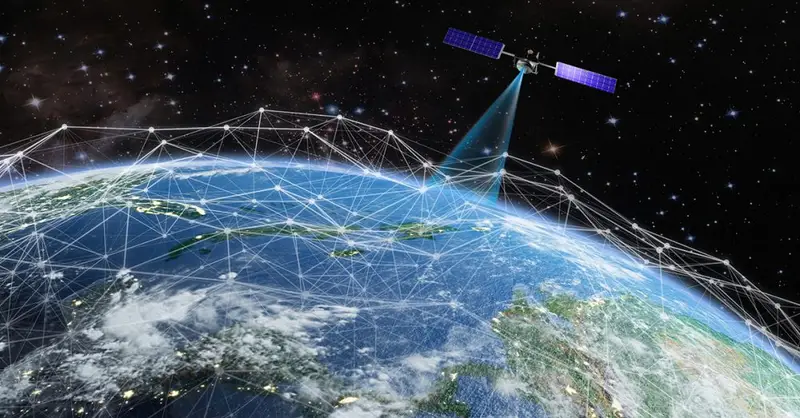
In the modern world, the Earth’s magnetic field has taken on a new role: safeguarding the technological systems upon which civilization depends. Satellites, power grids, communication networks, and navigation systems are all vulnerable to disturbances caused by solar activity.
When powerful solar storms reach Earth, they can induce electrical currents in long conductors, disrupt satellite electronics, and interfere with radio communications. The magnetic field absorbs and redistributes much of this energy, reducing the severity of these effects. While geomagnetic storms do occur, their impact is far less destructive than it would be in the absence of a global magnetic shield.
The magnetosphere acts as a buffer zone, where solar energy is spread out and dissipated before it can reach critical systems. This protection is not absolute, but it significantly lowers the risk of catastrophic failure. Events that could otherwise cripple global infrastructure are often reduced to manageable disturbances.
Beyond technology, the magnetic field also enables navigation. For centuries, humans have used Earth’s magnetism to find direction, crossing oceans and continents with the aid of a compass. Even today, many animals rely on the magnetic field for migration, demonstrating that its influence extends into the biological fabric of the planet.
In this sense, the magnetic field protects not only our physical bodies but also the complex technological and ecological systems that define modern life. It is an unseen foundation upon which much of human progress rests.
Conclusion: A Planetary Shield We Rarely Notice
The Earth’s magnetic field is easy to forget because it is invisible and omnipresent. It does not demand attention, yet it works tirelessly, shaping the environment in which life has evolved and continues to thrive. Every second, it deflects solar wind, filters radiation, preserves the atmosphere, stabilizes climate, and shields both biology and technology from cosmic danger.
Understanding the magnetic field deepens our appreciation of Earth as a finely balanced system. It reveals that habitability is not guaranteed by distance from the Sun alone, nor by the presence of water or air in isolation. Instead, it emerges from the interaction of many physical processes, working together across scales from the atomic to the planetary.
As we explore other worlds and search for life beyond Earth, the lesson of the magnetic field becomes increasingly clear. A planet’s ability to protect itself from space may be just as important as its ability to host life in the first place. In recognizing the quiet power of Earth’s magnetic shield, we gain not only scientific insight but a renewed sense of gratitude for the forces that make our existence possible.