For most of human history, the brain has been a silent organ. It generates thoughts, memories, intentions, emotions, and decisions—yet its activity has remained hidden behind the barrier of the skull. The only way to understand another person’s mind has been through language, behavior, or indirect measurement. Even science, with all its instruments, has long faced the same fundamental limitation: the brain could be observed, but never directly communicated with in real time.
Brain-computer interfaces are beginning to change that.
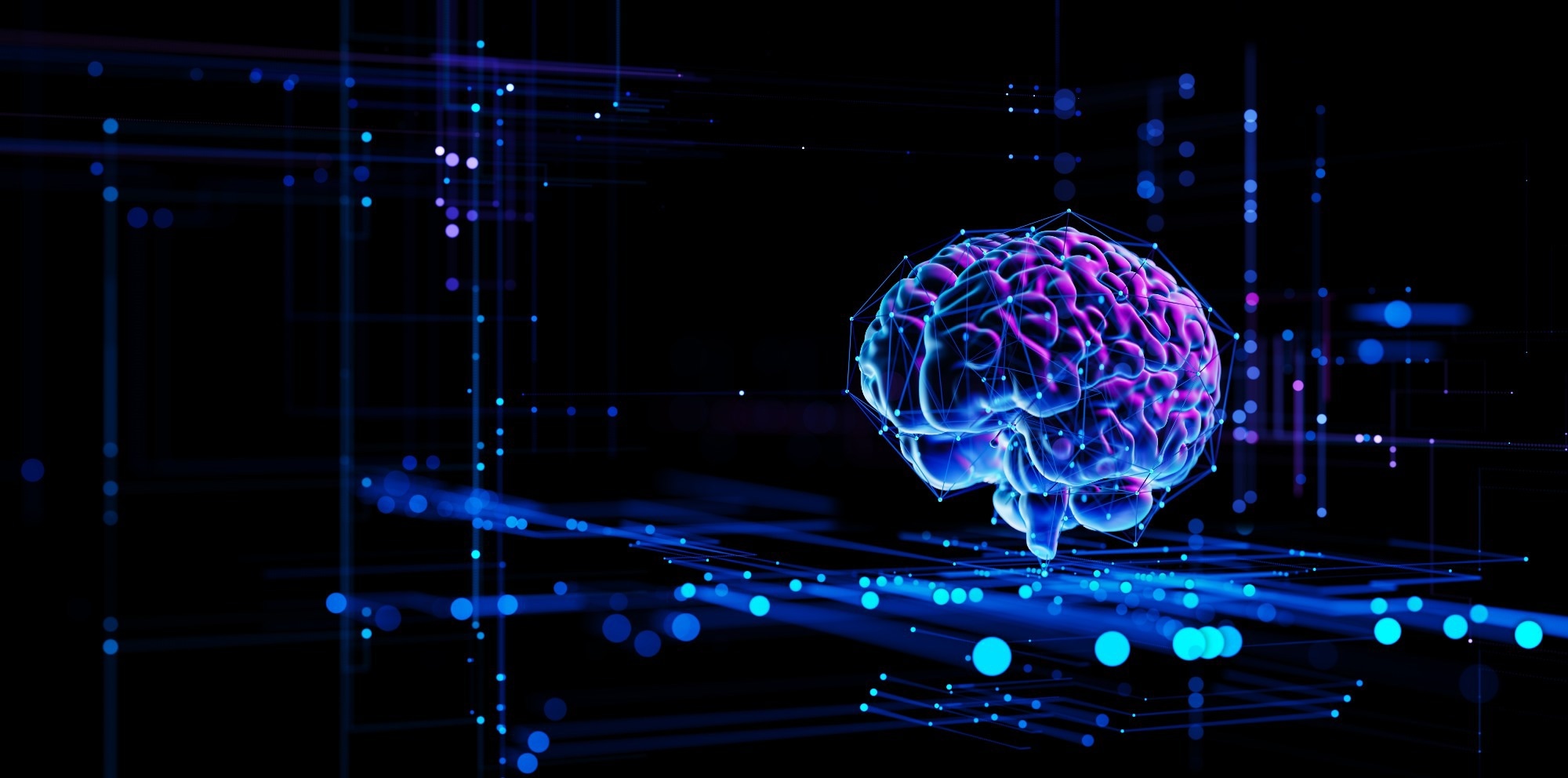
A brain-computer interface (BCI) is a system that enables direct communication between neural activity and external technology. Instead of muscles translating intention into action—speaking, typing, moving—electrical patterns in the brain can be detected, interpreted, and used to control devices or transmit information. Signals that once remained internal can now interact with machines, digital environments, and potentially other minds.
This is not science fiction. Clinical experiments already allow paralyzed individuals to move robotic limbs using thought. Neural implants can restore partial hearing. Researchers have demonstrated the ability to decode imagined speech from brain signals. Memory formation, sensory perception, and emotional regulation are increasingly measurable and modifiable through neural technology.
The implications extend far beyond medicine.
Brain-computer interfaces are not simply tools. They represent a new category of human–technology relationship. For the first time, machines are not merely extensions of our physical actions—they are becoming extensions of our neural processes. Technology is moving from the external world into the biological core of identity.
This transformation is likely to redefine what it means to communicate, to learn, to heal, and even to be human.
The following five developments represent the most profound ways brain-computer interfaces may reshape human existence in the coming century.
1. The End of Physical Barriers to Communication
Human communication has always depended on physical translation. Thoughts must become words. Words must become sound, writing, or gesture. Every step introduces delay, distortion, and limitation.
Brain-computer interfaces could remove these barriers.
When neural signals associated with language are decoded directly, communication can occur without speech or movement. Early experiments have already demonstrated that individuals who cannot speak due to paralysis can generate words on a screen through neural activity alone. Algorithms interpret patterns in motor and language-processing regions of the brain, translating them into text or synthetic speech.
The scientific foundation of this capability lies in neural encoding. Thoughts are not abstract in the brain; they are physical patterns of electrical activity distributed across networks of neurons. If those patterns can be detected with sufficient precision, they can be mapped to linguistic meaning.
Research teams at institutions such as Stanford University have demonstrated decoding systems that reconstruct intended sentences from neural signals with increasing accuracy. Machine learning models identify consistent activation patterns associated with phonemes, words, or semantic intention. Over time, these models adapt to individual neural signatures, improving performance.
The long-term implications are extraordinary.
Communication may become instantaneous and continuous. Language may shift from sequential expression to simultaneous conceptual transmission. Instead of describing an experience, a person might transmit the neural representation of that experience directly.
This could fundamentally alter human relationships. Misunderstanding often arises because language compresses complex mental states into limited symbols. Direct neural communication could preserve nuance—emotion, imagery, and context transmitted together.
There are also profound implications for disability. Individuals with motor impairments, speech disorders, or neurodegenerative conditions could regain full communicative capacity. Silence imposed by injury would no longer equal isolation.
Yet the transformation is not only therapeutic. It is structural. Communication itself may evolve from symbolic exchange into neural interaction. The boundary between internal thought and external expression would dissolve.
Human minds, historically separated by biological constraints, could become technologically connected.
2. The Transformation of Medicine and Neurological Healing
Medicine has always struggled with the brain because the brain is both delicate and complex. Neurological disorders—paralysis, epilepsy, Parkinson’s disease, depression, memory loss—often resist conventional treatment because they arise from dysfunctional neural signaling rather than structural damage alone.
Brain-computer interfaces offer a fundamentally different approach: direct modulation of neural circuits.
Instead of treating symptoms indirectly through medication or surgery, BCIs can monitor and adjust brain activity in real time. Neural implants can detect abnormal firing patterns and deliver corrective stimulation precisely when needed.
This approach is already in clinical use for some conditions. Deep brain stimulation, for example, reduces tremors in Parkinson’s disease by modulating activity in motor circuits. More advanced BCIs expand this principle by incorporating adaptive feedback systems that learn from ongoing neural activity.
Research programs supported by organizations such as DARPA have developed closed-loop neural interfaces capable of monitoring brain states continuously and delivering targeted stimulation to restore functional balance.
The scientific mechanism underlying these therapies is neuroplasticity—the brain’s ability to reorganize itself. When neural pathways are stimulated or inhibited in specific patterns, the brain can relearn lost functions or compensate for damaged regions.
Experimental systems have already enabled individuals with spinal cord injuries to control prosthetic limbs using cortical signals. In some cases, neural interfaces have even restored partial voluntary movement by bypassing damaged pathways and directly stimulating muscles or spinal circuits.
Mental health treatment may also be transformed. Depression, anxiety, and post-traumatic stress involve dysregulated neural networks. BCIs could identify pathological activity patterns and intervene dynamically, stabilizing emotional states without systemic drug effects.
Memory disorders represent another frontier. Research into hippocampal signal patterns suggests that artificial stimulation sequences can support memory encoding. Future systems may assist individuals experiencing cognitive decline by reinforcing neural processes required for memory formation.
Medicine would no longer treat the brain from outside. It would collaborate with the brain internally.
Disease management would shift from episodic intervention to continuous neural regulation. Neurological suffering that has defined human vulnerability for millennia may become increasingly manageable—or preventable.
3. The Emergence of Cognitive Augmentation
Human intelligence is constrained by biology. Memory capacity, processing speed, attention span, and sensory bandwidth all have natural limits shaped by evolution.
Brain-computer interfaces may allow those limits to expand.
Cognitive augmentation refers to the enhancement of mental abilities through technological integration. BCIs could provide external memory storage accessible directly through neural signals. Information retrieval might become as immediate as recollection. Complex calculations could be performed by external processors linked to neural activity.
This possibility is grounded in the fact that cognition already depends on distributed systems. The brain integrates sensory input, internal memory, and environmental tools. Written language, computers, and digital networks already extend cognition outward. BCIs would simply close the loop, making external systems part of neural processing itself.
Research laboratories, including teams at Massachusetts Institute of Technology, are exploring how neural signals can interact with machine learning systems to enhance decision-making and pattern recognition. Human intuition and computational precision may merge into hybrid intelligence.
Sensory augmentation is equally transformative. BCIs could introduce entirely new forms of perception. Signals from infrared sensors, remote cameras, or environmental monitors could be translated into neural stimulation patterns interpretable as sensory experience.
Humans might perceive wavelengths of light beyond natural vision, detect electromagnetic fields, or experience spatial awareness across distant environments. Perception would no longer be limited to biological receptors.
Learning itself may change. Instead of acquiring skills through repetition alone, neural interfaces might guide brain activity into optimal learning states. Memory consolidation could be accelerated. Educational time scales could shrink dramatically.
The concept of intelligence would shift from fixed biological capacity to expandable technological integration.
Human cognition would become an evolving system rather than a stable trait.
4. The Redefinition of Identity and Conscious Experience
Perhaps the most profound impact of brain-computer interfaces lies not in what humans can do, but in what humans are.
Identity has traditionally been anchored in the distinction between mind and world. Thoughts are internal. Technology is external. The boundary between them defines personal autonomy.
BCIs blur this boundary.
When external devices process neural information, store memory, or influence perception, the location of the self becomes ambiguous. If part of cognition occurs in a technological system, is that system part of the individual?
Philosophers refer to this as the extended mind hypothesis—the idea that cognitive processes can include external components when those components function as integrated parts of mental activity. Brain-computer interfaces make this hypothesis physically real.
Emotional experience may also become modifiable. Neural stimulation can influence mood, attention, and motivation. If emotional states can be adjusted deliberately, the traditional distinction between authentic feeling and technological intervention becomes complex.
Questions of agency arise. If a neural interface predicts intention before conscious awareness and initiates action, who is responsible—the biological brain, the algorithm, or their interaction?
Some researchers and innovators envision direct integration between neural activity and artificial intelligence systems. Companies such as Neuralink, founded by Elon Musk, pursue high-bandwidth neural interfaces designed to enable continuous interaction between brains and computational systems.
If such integration becomes widespread, consciousness itself may become partially hybrid—biological and digital processes interacting seamlessly.
Human identity has historically been shaped by memory, perception, and continuity of experience. If these processes become technologically mediated, identity may become dynamic, configurable, and distributed.
The self would no longer be confined to neural tissue alone.
5. The Restructuring of Society and Human Evolution
Technological changes do not remain individual. They reshape social structure.
Brain-computer interfaces could alter education, labor, economics, and governance. Enhanced cognition may change what counts as expertise. Direct neural communication could transform collaboration. Cognitive augmentation might accelerate innovation cycles beyond historical precedent.
Inequality may become biologically embedded if neural enhancement technologies are not universally accessible. Societies may confront ethical questions about consent, privacy, and neural data ownership.
Neural signals are deeply personal—revealing attention, emotional response, and potentially intention. Protecting cognitive privacy may become as essential as protecting physical safety.
Cultural norms surrounding individuality may evolve. Collective neural interaction could enable shared cognitive environments, collaborative thought spaces, or distributed problem-solving networks.
On evolutionary timescales, brain-computer interfaces may represent a new stage of human development. Biological evolution operates through genetic change across generations. Technological integration allows functional transformation within a single lifetime.
Human adaptation may shift from biological selection to technological modification.
The species may become defined not only by genetic inheritance but by technological symbiosis.
Humanity would no longer evolve solely through natural processes. It would actively shape its own cognitive architecture.
The Future of the Human Brain
Brain-computer interfaces represent more than innovation. They represent a turning point in the relationship between mind and matter.
For thousands of years, humans have shaped the external world through tools, machines, and infrastructure. Now technology is entering the internal domain of thought itself.
The brain, once inaccessible except through indirect observation, is becoming an interactive system—measurable, modifiable, and increasingly integrated with computational environments.
This transformation carries immense promise and profound uncertainty. It offers the possibility of healing neurological suffering, expanding cognition, deepening communication, and reshaping human potential. It also challenges long-standing assumptions about identity, autonomy, and the boundaries of the self.
Humanity stands at the threshold of a new phase of existence—one in which the distinction between biological and technological intelligence may gradually dissolve.
The question is no longer whether machines will become more human-like.
It is whether humans will become something fundamentally new—beings whose thoughts extend beyond biology, whose perception reaches beyond natural limits, and whose consciousness may one day span both neural and digital worlds.