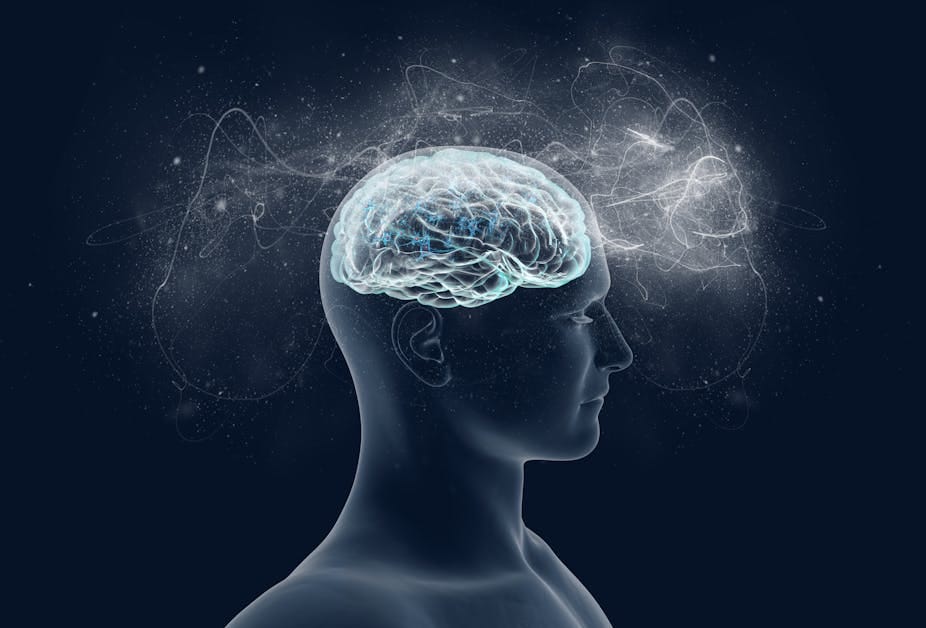
For much of human history, people believed personality and emotional disposition were largely fixed. Some individuals were simply “born happy,” others prone to worry, melancholy, or stress. This belief was comforting in its simplicity, but modern neuroscience has revealed something far more hopeful: the human brain is constantly changing.
This capacity for change is called neuroplasticity—the brain’s ability to reorganize itself by forming new neural connections throughout life. Every thought, behavior, and emotional experience leaves physical traces in neural circuitry. Repeated experiences strengthen certain pathways while others weaken. Over time, patterns of thinking and feeling become biologically embedded.
Happiness, therefore, is not merely an emotion that appears randomly. It is strongly influenced by learned patterns of attention, interpretation, and behavior. These patterns can be reshaped. Even small, repeated actions—tiny habits—can gradually alter neural wiring, influencing mood regulation, stress response, and emotional resilience.
The science behind this idea traces back to the work of Donald Hebb, who proposed a principle now summarized as: neurons that fire together wire together. When certain mental states occur repeatedly, the neural circuits that produce them become more efficient and more likely to activate again.
Happiness is not just a feeling—it is a trained pattern of brain activity.
Modern research in affective neuroscience, behavioral psychology, and cognitive science demonstrates that small daily practices can shift emotional baselines. These practices do not rely on dramatic life changes. Instead, they rely on consistency, repetition, and attentional focus.
The following ten tiny habits are grounded in scientific understanding of brain function. Each one works by influencing specific neural processes—reward pathways, stress regulation systems, attention networks, or social bonding circuits. Practiced regularly, they can gradually reshape how the brain generates emotional experience.
1. Pause to Notice Something Pleasant
The human brain evolved to detect threats more quickly than rewards. This survival-oriented bias, often called the negativity bias, ensures rapid response to danger. However, it also means that positive experiences often pass through awareness without leaving strong neural traces.
Intentionally pausing to notice something pleasant—even for a few seconds—changes this pattern.
When attention rests on a positive sensory or emotional experience, neural activity increases in regions associated with reward processing, particularly pathways involving dopamine signaling. If attention is sustained long enough, the brain encodes the experience more deeply. Over time, this strengthens networks associated with positive emotional recall.
Research in affective neuroscience, including work by Richard J. Davidson, shows that deliberate attention to positive stimuli can measurably alter activity in brain regions linked to emotional regulation.
The key mechanism is attentional amplification. The brain treats attended experiences as more important. By consciously noticing small positive moments—warm sunlight, a pleasant sound, a comforting memory—you train neural circuits to register and prioritize well-being.
This habit requires only seconds, but repeated daily, it gradually counterbalances the brain’s threat-detection bias.
2. Take Slow, Deep Breaths With Awareness
Breathing is one of the few bodily processes that operates both automatically and voluntarily. Because of this dual control, breath provides direct access to the nervous system’s regulatory mechanisms.
Slow, deep breathing activates the parasympathetic nervous system, which promotes relaxation and recovery. Specifically, it stimulates the vagus nerve, reducing heart rate and dampening stress responses.
Chronic stress maintains elevated cortisol levels, which can impair mood regulation and reduce sensitivity to reward. Regular slow breathing lowers physiological arousal, creating conditions more favorable for positive emotional experience.
Brain imaging studies show that controlled breathing influences activity in the amygdala, a structure involved in emotional reactivity. Reduced amygdala activation corresponds with improved emotional stability and reduced anxiety.
From a neuroplastic perspective, each instance of regulated breathing reinforces neural pathways associated with calm response. Over time, the brain becomes more efficient at shifting from stress activation to relaxation.
This habit rewires emotional baseline by repeatedly teaching the nervous system that safety—not threat—is the default state.
3. Express Genuine Gratitude Out Loud
Gratitude is more than a social courtesy. It is a cognitive-emotional process that reshapes how the brain interprets experience.
When individuals express gratitude, brain imaging studies show activation in regions associated with moral cognition, reward processing, and social bonding. Dopamine and serotonin activity increases, reinforcing feelings of satisfaction and connection.
The psychological mechanism involves reframing attention toward beneficial aspects of experience. Instead of focusing on deficiency or unmet desire, gratitude directs awareness toward existing resources and support.
Research associated with Barbara Fredrickson demonstrates that positive emotional states broaden cognitive processing, increasing creativity, resilience, and social openness.
Speaking gratitude aloud enhances neural encoding because verbalization engages additional brain networks, including language centers and motor planning systems. This multisystem activation strengthens memory consolidation.
Repeated gratitude expression gradually trains the brain to detect supportive elements of reality more efficiently. Over time, this alters interpretive bias—how events are evaluated emotionally.
The brain becomes more likely to perceive abundance rather than scarcity.
4. Move Your Body Briefly but Frequently
Physical movement directly affects brain chemistry. Even short bursts of activity increase blood flow, oxygen delivery, and release of neurotransmitters such as dopamine, serotonin, and endorphins.
Movement also stimulates production of brain-derived neurotrophic factor (BDNF), a protein that supports neuron growth and synaptic plasticity. BDNF enhances learning, memory, and emotional resilience.
Regular physical activity modifies connectivity in brain regions involved in mood regulation, including the prefrontal cortex and hippocampus. These areas play central roles in emotional balance and stress adaptation.
Importantly, the neurological benefits do not require intense exercise. Brief, consistent movement—stretching, walking, or light activity—provides cumulative effects.
Each instance of movement reinforces the brain’s association between physical activation and positive internal states. Over time, this creates a feedback loop: movement improves mood, improved mood increases likelihood of movement.
The brain learns that action leads to emotional reward.
5. Name Your Emotions Precisely
Emotions often feel overwhelming when they are vague. Neuroscience shows that labeling emotional states reduces their intensity—a process known as affect labeling.
When individuals identify and name what they are feeling, activity increases in the prefrontal cortex, the region involved in cognitive control. At the same time, activity in the amygdala decreases.
This shift reflects top-down regulation. The brain moves from reactive mode to interpretive mode. Emotional experience becomes something observed rather than something that dominates awareness.
Language provides structure. Precise naming—such as distinguishing frustration from disappointment or anxiety from anticipation—creates neural clarity. It organizes emotional signals into categories the brain can manage.
Repeated emotional labeling strengthens regulatory pathways, improving long-term emotional stability.
Happiness is not simply the presence of positive emotions but the capacity to process negative ones without being overwhelmed. Naming emotions trains this capacity.
6. Make Brief Eye Contact and Smile at Someone
Humans are deeply social organisms. The brain contains specialized systems for detecting faces, interpreting expressions, and responding to social cues.
Even brief positive social interactions activate reward circuitry and release oxytocin, a hormone associated with trust and bonding. These interactions also reduce stress responses and increase feelings of safety.
Neuroscientific research shows that reciprocal eye contact synchronizes neural activity between individuals. This phenomenon, sometimes called interpersonal neural coupling, enhances emotional connection.
Smiling—even when initially deliberate—can trigger feedback signals from facial muscles to emotion-processing centers. This mechanism, often described as facial feedback, influences internal emotional state.
Repeated positive micro-interactions train the brain to associate social contact with reward rather than threat. This shifts social expectation, increasing openness and reducing defensive vigilance.
Happiness is strongly correlated with perceived social connection, and even minimal interactions contribute to that perception.
7. Practice Single-Task Attention
Modern environments encourage constant distraction. Rapid switching between tasks fragments attention and elevates cognitive load, increasing stress and reducing satisfaction.
Sustained attention, by contrast, stabilizes neural activity. When the brain focuses on a single task, networks responsible for executive control and sensory integration operate more efficiently.
Focused attention also reduces activity in the brain’s default mode network, which is associated with rumination and self-referential thinking. Excessive rumination correlates strongly with anxiety and depression.
Training attention through deliberate single-tasking strengthens neural pathways for concentration. This improves cognitive clarity and reduces emotional volatility.
Happiness is supported by presence—full engagement with current experience rather than constant mental fragmentation.
8. Recall a Positive Memory in Sensory Detail
Memory recall reactivates many of the same neural patterns that occurred during the original experience. When a positive memory is vividly reconstructed—visual details, sounds, physical sensations—the brain partially re-experiences the emotional state.
This process engages the hippocampus, which organizes memory retrieval, and reward-related circuits that respond to emotionally meaningful recollection.
Repeated recall strengthens memory traces, making positive experiences more accessible in the future. This counters the natural tendency for negative memories to dominate recall due to survival-related encoding bias.
By rehearsing positive memories, individuals reinforce neural networks associated with safety, pleasure, and connection.
The brain becomes more efficient at generating positive emotional states internally, independent of immediate external conditions.
9. Perform One Small Act of Kindness
Prosocial behavior activates reward pathways in the brain. Giving support, offering help, or performing kind acts increases dopamine activity and stimulates regions associated with social cognition.
Neuroscientific research indicates that altruistic behavior engages neural circuits overlapping with those activated by receiving rewards. In other words, helping others is intrinsically reinforcing.
Kindness also enhances social trust, which reduces chronic vigilance and stress responses. When individuals perceive themselves as contributors to others’ well-being, their sense of meaning and social belonging increases.
Meaning is a critical component of long-term happiness. It engages motivational systems that sustain positive emotional tone even during difficulty.
Repeated acts of kindness train the brain to associate social engagement with reward, strengthening prosocial orientation.
10. End the Day by Noticing What Went Well
Memory consolidation occurs during sleep, but what gets consolidated depends partly on what the brain processes just before rest.
Reflecting briefly on positive events at the end of the day biases memory encoding toward beneficial experiences. This strengthens long-term recall of supportive moments.
Nighttime reflection also influences emotional forecasting—the brain’s expectation of future experience. When recent memory emphasizes positive outcomes, anticipatory networks become more optimistic.
Over time, this shifts baseline mood and expectation patterns.
The brain learns to scan daily life for evidence of stability, progress, and well-being.
The Cumulative Power of Small Change
Each of these habits is individually simple. None requires dramatic lifestyle transformation. Yet their power lies in repetition.
Neural change is incremental. Synaptic strength adjusts gradually. Circuits reorganize through consistent activation. Emotional baseline shifts through accumulated micro-experiences.
Happiness is not installed suddenly—it is cultivated biologically through practice.
The Emotional Architecture of the Brain
Understanding why tiny habits matter requires recognizing that emotional life emerges from interacting neural systems. Reward pathways generate pleasure. Threat systems detect danger. Memory networks shape interpretation. Attention determines what becomes conscious experience.
Habits influence these systems continuously. Each moment of awareness, breath, movement, connection, or reflection alters neural activity.
Over time, patterns stabilize. Emotional experience becomes structured by practiced pathways.
Why Consistency Matters More Than Intensity
Large emotional events produce strong but temporary neural activation. Small repeated experiences produce lasting structural change.
This principle reflects basic learning mechanisms. Frequent reinforcement strengthens synaptic efficiency more reliably than rare intensity.
Tiny habits succeed because they are sustainable. Sustainability ensures repetition. Repetition ensures rewiring.
The Biological Reality of Happiness
Happiness is not an abstract concept. It corresponds to measurable physiological states—balanced neurotransmitter activity, regulated stress response, integrated neural communication.
These states are shaped by behavior.
The brain is not merely the source of experience—it is shaped by experience. Tiny daily habits provide the raw material from which emotional life is constructed.
The Lifelong Capacity for Change
Neuroplasticity persists across the lifespan. While learning rates vary, the brain never becomes completely fixed. New connections form, old ones weaken, patterns reorganize.
This means emotional patterns remain modifiable. Even long-standing habits of thought and feeling can gradually change through consistent practice.
The capacity for happiness is not predetermined. It is continually constructed.
Living With Intention in a Plastic Brain
To understand that the brain rewires itself through daily experience is to recognize profound responsibility. Every moment of attention shapes neural structure. Every repeated behavior influences emotional future.
Tiny habits are not trivial. They are biological training signals.
By choosing small practices that reinforce calm, connection, appreciation, and awareness, individuals actively sculpt the neural architecture of their emotional lives.
Happiness as a Skill
Skills develop through practice. Happiness operates similarly. It emerges from trained patterns of perception, interpretation, and response.
Tiny habits are the exercises through which this skill develops.
Over weeks, months, and years, these practices do more than improve mood. They reshape the brain’s default functioning. They alter baseline expectation, emotional resilience, and capacity for joy.
The Quiet Transformation
Neural change is invisible in daily experience. There is rarely a dramatic moment when happiness suddenly appears. Instead, there is gradual easing of tension, quicker recovery from stress, greater sensitivity to positive experience.
The transformation is subtle—but cumulative and profound.
The Brain Learns What We Repeatedly Live
Ultimately, the brain becomes what it repeatedly does. Attention trains perception. Behavior trains emotion. Experience trains structure.
Tiny habits are small signals with large consequences.
Practiced consistently, they do not merely change how we feel. They change what our brains are capable of feeling.
And in that biological possibility lies one of the most hopeful discoveries of modern science: happiness is not just something that happens to us—it is something our brains can learn to create.