The Solar System feels eternal when viewed from a human lifetime. The Sun rises with dependable rhythm, planets trace their familiar paths, and the stars above seem like silent decorations fixed forever in the night. Yet the truth is far more unsettling. Our cosmic neighborhood is not protected by any invisible shield. It exists inside a galaxy filled with violent forces, drifting debris, and gravitational chaos. Space is not calm—it is simply quiet.
Astronomers know that the Solar System is not guaranteed to survive forever. In fact, destruction is not just possible; it is inevitable, given enough time. Some threats are unimaginably distant, stretching billions of years into the future. Others are rare but real, lurking in the unpredictable motion of objects beyond Neptune or in the restless heart of the Milky Way itself.
The universe does not “intend” to destroy us, but it doesn’t care whether we exist. The laws of physics continue with relentless consistency, and those laws allow for catastrophic events—events powerful enough to unravel the architecture of our entire planetary system.
Below are five cosmic events that could, one day, destroy the Solar System. They are scientifically grounded possibilities, not science fiction. Some are guaranteed to happen eventually, while others are low-probability disasters that could strike without warning.
1. The Sun’s Transformation Into a Red Giant
The most certain cosmic catastrophe facing our Solar System is not an external invasion from deep space. It is the slow, inevitable evolution of the Sun itself.
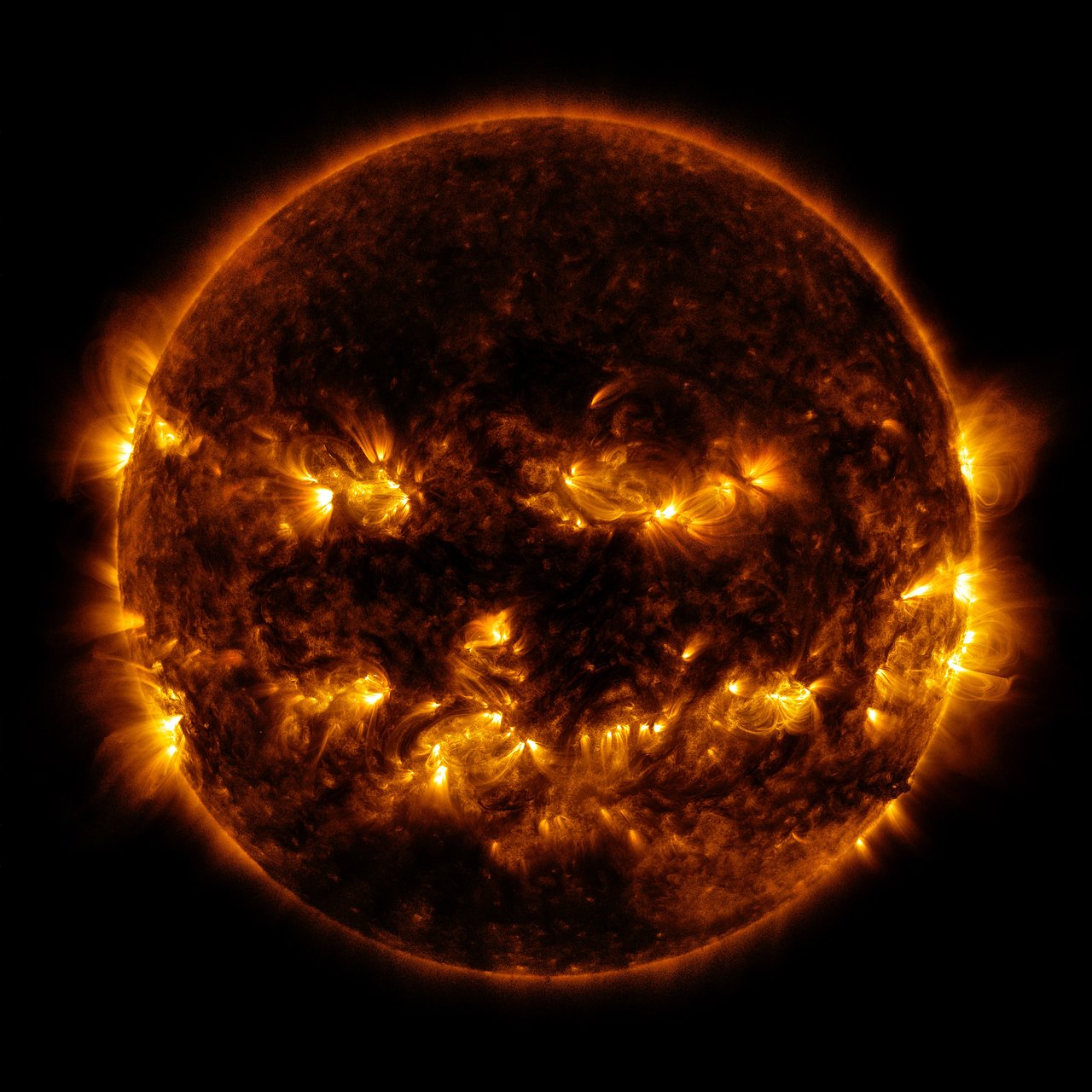
Right now, the Sun is a stable main-sequence star. It produces energy through nuclear fusion, converting hydrogen into helium in its core. This fusion creates outward pressure that balances the inward crush of gravity. It is a delicate equilibrium, and it is the reason the Sun shines steadily.
But the Sun is not infinite. It contains a limited supply of hydrogen fuel. Over billions of years, that fuel is gradually depleted. As hydrogen in the core runs low, fusion slows, and gravity begins to compress the core more tightly. The core heats up as it contracts, and that rising temperature triggers fusion in surrounding layers of hydrogen outside the core.
This is the beginning of the Sun’s red giant phase.
As this transformation accelerates, the Sun will expand dramatically. Its outer layers will swell outward, potentially engulfing the inner planets. Mercury and Venus are expected to be consumed, and Earth’s fate is uncertain—either swallowed directly or turned into a scorched, airless rock long before physical contact occurs.
Even if Earth escapes being physically engulfed, the red giant Sun will increase in brightness and heat to such an extreme degree that Earth’s oceans would boil away, the atmosphere would be stripped, and the planet would become uninhabitable.
But the destruction does not stop with the inner planets.
As the Sun expands, it will lose mass through powerful stellar winds. This mass loss will weaken the Sun’s gravitational grip on the outer planets. When a star loses mass, planetary orbits can expand and destabilize. The Solar System’s orderly structure could shift into a more chaotic configuration.
Eventually, after shedding its outer layers, the Sun will collapse into a white dwarf—a dense, dim stellar remnant. By then, the Solar System as we know it will be gone, either destroyed or radically altered beyond recognition.
This is not a hypothetical threat. It is a certainty. The Sun itself is a countdown clock.
2. A Rogue Star Passing Too Close to the Solar System
Space may seem empty, but the Milky Way is filled with stars moving at enormous speeds, each orbiting the galactic center in its own gravitational dance. Over long time scales, close encounters between stars become possible.
A rogue star passing near the Solar System would not need to collide with the Sun to cause disaster. Gravity alone could be enough.
If a star passed within a few thousand astronomical units—still far beyond Neptune—it could significantly disturb the Oort Cloud, the vast sphere of icy bodies thought to surround the Solar System at extreme distances. Such a gravitational disturbance could send a wave of comets plunging inward toward the inner Solar System.
That would create a prolonged era of bombardment, where Earth and other planets might face repeated impacts over millions of years. A single large comet impact could trigger global catastrophe. Many impacts could sterilize planets entirely.
But an even closer stellar encounter could directly destabilize planetary orbits.
The planets are held in place by the Sun’s gravity, but their stability depends on the Solar System remaining relatively isolated. If another star passed close enough, it could tug on planets like Jupiter and Saturn, shifting their orbits. That would create a ripple effect throughout the system, because the gas giants dominate the gravitational structure of the Solar System.
A slight change in Jupiter’s orbit could send asteroids and comets into new trajectories. It could destabilize Mars, Earth, and Venus. It could trigger orbital resonances that grow over time, turning the Solar System into a chaotic battlefield of gravitational interactions.
In the worst-case scenario, planets could be ejected into interstellar space. Earth could become a rogue planet, wandering frozen and dark, no longer warmed by the Sun.
Such events are extremely rare in the present-day Milky Way environment, but over billions of years, the probability increases. The Solar System is not locked into a safe zone forever. It is traveling through a galaxy filled with moving masses, and gravity has a long reach.
3. A Nearby Supernova or Gamma-Ray Burst
Not all stars die peacefully like the Sun will. Massive stars—those far heavier than our Sun—end their lives in spectacular explosions called supernovae. These explosions can briefly outshine entire galaxies and release vast amounts of radiation and high-energy particles into space.
If a supernova occurred close enough to the Solar System, it could have devastating effects.
The danger would not come from the explosion’s physical debris reaching us, because that material spreads out and thins across space. The true threat is radiation. A nearby supernova would unleash intense bursts of gamma rays, X-rays, and cosmic rays. This radiation could damage planetary atmospheres, strip away ozone layers, and bombard surfaces with lethal energy.
For Earth, a nearby supernova could trigger mass extinction by collapsing the protective atmospheric shield that blocks ultraviolet radiation. Without ozone, the Sun’s UV rays would reach the surface at deadly levels, damaging ecosystems and potentially wiping out much of life.
Even if the Solar System itself remained gravitationally intact, its biospheres could be destroyed.
More terrifying than a supernova is a gamma-ray burst, one of the most energetic events known in the universe. Gamma-ray bursts are believed to occur when certain massive stars collapse into black holes or when neutron stars merge. They emit narrow beams of gamma radiation that can travel across galaxies.
If a gamma-ray burst were aimed directly at Earth from relatively nearby, the consequences could be catastrophic. Gamma rays could shred atmospheric molecules, trigger chemical reactions that destroy ozone, and bathe the planet in radiation. It would not necessarily “blow up” Earth, but it could render it lifeless.
For the Solar System as a whole, such radiation events could also damage atmospheres of other planets and moons, alter chemical compositions, and potentially sterilize entire worlds.
While supernovae and gamma-ray bursts are rare in our region of the galaxy, they are real phenomena. The Milky Way has experienced countless supernova explosions, and it will experience countless more. The question is not whether they happen—it is whether one happens close enough to matter.
4. A Collision With a Massive Interstellar Object or Planetary Body
The Solar System is not sealed off from the rest of space. Interstellar objects occasionally pass through our region, moving at high speeds. Most are small—asteroid-sized—and pass harmlessly through. But the universe is vast, and rare events become inevitable given enough time.
A truly massive interstellar object, such as a rogue planet or a large brown dwarf, could pass through or near the Solar System. Such a visitor would not need to directly strike a planet to cause destruction.
Its gravitational influence alone could destabilize planetary orbits. If a rogue planet passed close to Jupiter, for example, the resulting gravitational exchange could alter Jupiter’s orbit, which would then affect every other planet. Jupiter’s gravity acts like a structural pillar in the Solar System. Move it, and the entire architecture can collapse.
But direct collisions are also possible.
If a planet-sized body collided with Earth, the energy released would be beyond any natural disaster in human history. It would vaporize oceans, melt the crust, and eject vast amounts of material into space. The planet could be transformed into a molten ruin. The Moon itself is believed to have formed from a massive collision early in Earth’s history, proving that such impacts are physically plausible.
A collision involving one of the gas giants would be even more dramatic. While Jupiter is enormous, a high-speed impact from a sufficiently massive body could disturb its moons, disrupt its atmosphere, and scatter debris throughout the Solar System.
If a large enough body struck the Sun itself, it would not “destroy” the Sun in the way explosions destroy objects, because the Sun is far too massive. But the collision could alter solar activity temporarily, generate intense radiation bursts, and possibly disrupt planetary environments.
The Solar System has experienced colossal impacts before. In its early formation, collisions were common. Most of the debris has been cleared out, but the galaxy remains full of wandering objects. A rare but massive impact remains a genuine long-term threat.
5. The Milky Way’s Central Black Hole and Galactic Chaos
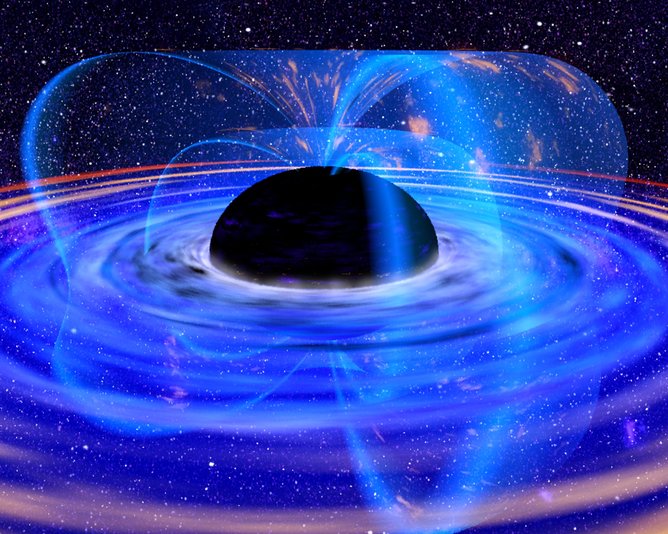
At the heart of the Milky Way lies a supermassive black hole, known as Sagittarius A*. It contains millions of times the mass of the Sun, packed into a region smaller than our Solar System. Right now, it is relatively quiet, consuming matter at a low rate.
But black holes are not always calm.
If Sagittarius A* were to enter a more active feeding phase—perhaps by capturing a large gas cloud or tearing apart a star—it could become an active galactic nucleus, releasing powerful jets of radiation and high-energy particles.
Such activity could have serious consequences across large portions of the galaxy. The closer you are, the worse the impact. While our Solar System is far from the galactic center, extremely powerful activity could still affect cosmic ray levels, radiation environments, and potentially planetary atmospheres over long periods.
Even without dramatic black hole feeding events, the Solar System faces another inevitable galactic-scale catastrophe: gravitational disruption caused by the Milky Way’s long-term evolution.
The Solar System orbits the galactic center roughly once every couple hundred million years. Over billions of years, it passes through spiral arms, dense star regions, and clouds of gas and dust. Each passage increases the chance of gravitational disturbances, comet showers, or encounters with massive objects.
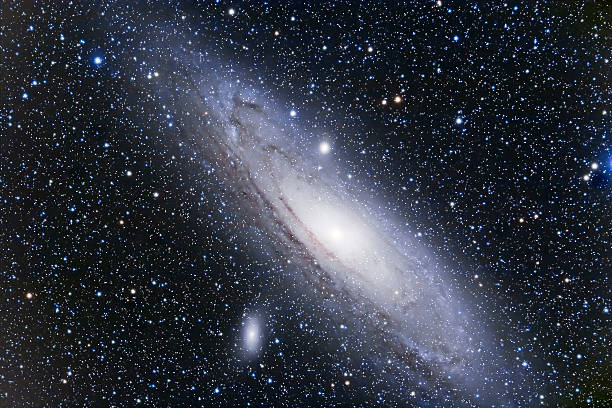
Even more dramatic is the future collision between the Milky Way and the Andromeda galaxy.
Galactic collisions do not usually involve stars smashing into each other, because the distances between stars are enormous. But the gravitational effects are immense. The structure of both galaxies will be distorted, stars will be thrown into new orbits, and the overall gravitational environment will become far more chaotic.
During such a collision, the Solar System could be displaced into a different region of the newly formed galaxy. It could be pulled closer to dense star regions, increasing the risk of close stellar encounters. It could be ejected into intergalactic space, drifting alone in darkness. It could even pass closer to dangerous radiation zones.
The Solar System’s destruction might not come from a single dramatic explosion. It could come from slow gravitational chaos as the galaxy reshapes itself.
In the long view of cosmic time, galaxies are not stable cities of stars. They are dynamic, colliding, evolving structures—and our Solar System is just one small passenger caught inside their tides.
The Uncomfortable Truth: Destruction Is Built Into the Universe
The idea that our Solar System could be destroyed may feel terrifying, but it is also strangely liberating. Physics teaches that nothing lasts forever—not planets, not stars, not galaxies. The universe is not designed for permanence. It is designed for change.
Some of these cosmic threats are guaranteed, like the Sun’s eventual transformation into a red giant. Others are probabilistic, like rogue star encounters or nearby supernovae. But taken together, they reveal a reality that is difficult to ignore: our Solar System is not a permanent home. It is a temporary structure built from gravity, motion, and time.
And yet, there is another side to this truth.
The same universe capable of destruction is also capable of creation. The elements in your body were forged in ancient stellar explosions. The Earth itself was shaped by impacts and heat. The Solar System was born from chaos, and it has survived for billions of years in a galaxy filled with danger.
Cosmic destruction is not an exception to nature. It is part of the cycle.
One day, far in the future, the Solar System will end. Whether by the swelling of the Sun, the pull of a passing star, a catastrophic explosion, or the shifting gravity of galaxies, its final chapter will arrive.
But until then, it remains one of the most extraordinary islands of structure in the known universe—a fragile, beautiful arrangement of worlds, suspended in darkness, protected only by the temporary balance of celestial motion.
And that balance, as physics reminds us, is never truly permanent.