Black holes are often described as the ultimate cosmic enigmas. They swallow light, warp time, and tear matter apart with gravity so intense that not even photons can escape. They seem like the final boundary of what can be known. Yet in the vast landscape of modern science, black holes are no longer the most mysterious things in existence. We can measure their mass, watch stars orbit them, and even capture images of their shadows. They are strange, but they are described by equations that work.
Beyond them lies a deeper ocean of uncertainty. There are phenomena that do not merely bend our understanding but threaten to break it. These are the puzzles that hide behind black holes, around them, and even inside the structure of reality itself. They are the questions for which we do not yet have complete theories, the ones that whisper that our picture of the universe is still unfinished.
What follows are ten things more mysterious than a black hole. Each of them touches the edges of physics and philosophy, each of them reshapes how we think about space, time, and existence. Black holes may be dark, but these mysteries are darker still, because they are places where our knowledge truly ends and our imagination must begin.
1. Dark Matter: The Invisible Architecture of the Universe
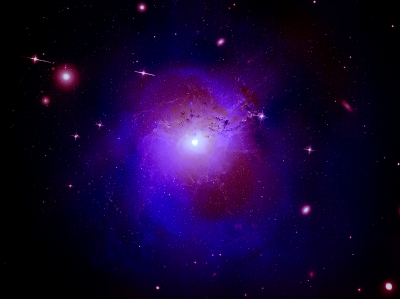
Dark matter is not a hole in space, but it behaves like a ghost that shapes everything without being seen. Galaxies rotate too fast for their visible mass to hold them together. Clusters of galaxies bend light more strongly than their stars and gas can explain. Something unseen is pulling on everything, sculpting the cosmic web like invisible hands.
What makes dark matter more mysterious than a black hole is that we do not know what it is made of. A black hole, however extreme, is still a prediction of general relativity and can be described as collapsed matter. Dark matter, by contrast, refuses to reveal its identity. It does not emit light, absorb light, or reflect light. It interacts primarily through gravity, and perhaps through forces we have not yet discovered.
Scientists have proposed many candidates: exotic particles, weakly interacting massive particles, axions, sterile neutrinos. None have been confirmed. Detectors buried deep underground listen for faint whispers of dark matter passing through Earth, yet silence persists. Particle accelerators search for signs of it being created, yet it remains elusive.
Dark matter is not a curiosity at the edges of the universe. It makes up about eighty-five percent of all matter. Every galaxy, including our own, is embedded in a halo of it. Without dark matter, stars would not clump together as they do, and galaxies might never have formed. This means that everything we see depends on something we cannot see. The universe is built on a foundation that is still unknown.
A black hole hides what falls into it. Dark matter hides itself everywhere, all the time. That makes it more mysterious, because it is not a single object but a pervasive presence shaping the entire cosmos.
2. Dark Energy: The Force That Pushes the Universe Apart
If dark matter holds galaxies together, dark energy tears the universe apart. Observations of distant supernovae reveal that cosmic expansion is accelerating. Space itself is stretching faster and faster, as if driven by a hidden pressure that works against gravity. This unknown cause of acceleration is called dark energy.
What is terrifying and fascinating about dark energy is not just that we do not know what it is, but that it dominates the universe. Roughly seventy percent of all cosmic energy appears to be in this form. Black holes are massive, but they are local. Dark energy fills all of space. It is not something you can point to. It is something that exists everywhere at once.
Some theories suggest that dark energy is a property of empty space itself, a vacuum energy that pushes outward. Others propose new fields or modifications of gravity. None of these explanations have been confirmed. Measurements only tell us what dark energy does, not what it is.
Its future implications are equally mysterious. If dark energy remains constant, galaxies will drift apart until the night sky empties. If it grows stronger, it could eventually tear apart galaxies, stars, planets, and even atoms in a scenario known as the Big Rip. If it weakens, cosmic expansion could slow or reverse.
A black hole represents a collapse of space and time into a point of infinite density. Dark energy represents the opposite, a stretching of space that may never end. Both are extreme, but dark energy governs the destiny of the entire universe. It is a mystery not of collapse, but of expansion, and its consequences reach into the far future of everything that exists.
3. The Nature of Time
Time feels simple. It flows forward, carrying moments from past to future. Yet physics tells a stranger story. At fundamental levels, many laws of nature do not distinguish between past and future. Equations work the same whether time runs forward or backward.
So why does time seem to have a direction? Why do we remember yesterday but not tomorrow? Why does entropy increase, making order decay into disorder? These questions lie at the heart of the mystery of time.
Relativity shows that time is flexible. Clocks tick at different rates depending on speed and gravity. Two observers can disagree about whether events happen at the same time. This alone makes time stranger than it appears. But quantum physics deepens the puzzle. In some interpretations, time is not fundamental at all, but emerges from deeper relationships between particles.
Black holes distort time near their edges, slowing it to a crawl. But even there, time remains a measurable quantity. The true mystery is not how time bends, but what time is. Is it a dimension like space? Is it an illusion created by memory and entropy? Is it woven into the fabric of the universe, or is it a byproduct of deeper laws?
If time itself is not fundamental, then black holes are not the strangest things in existence. The strangest thing is the river of moments we experience every day without understanding its source.
4. Quantum Entanglement: Spooky Connections Across Space
Quantum entanglement links particles so deeply that measuring one instantly affects the state of the other, no matter how far apart they are. Two particles created together can behave like a single system even when separated by light-years.
This does not allow faster-than-light communication, but it does challenge classical ideas of separateness. How can one particle know what happens to another? What does “distance” mean when quantum states are shared across space?
Black holes confuse us by hiding information. Entanglement confuses us by spreading information in ways that defy intuition. It suggests that the universe is not built from independent pieces but from interconnected wholes.
Experiments have repeatedly confirmed entanglement. It is not speculation. It is real, and it is used in technologies like quantum cryptography and quantum computing. Yet its meaning remains obscure. Does entanglement imply that space itself is emergent from quantum relationships? Are distant particles truly separate objects, or are they manifestations of a deeper unity?
If black holes are regions where information seems to vanish, entanglement is the phenomenon where information seems to be shared without limit. One hides knowledge, the other distributes it across the cosmos. Together, they point toward a deeper theory that we do not yet possess.
5. The Quantum Vacuum: Something From Nothing
Empty space is not empty. Even in the absence of matter and light, quantum fields fluctuate. Particles and antiparticles appear and disappear in fleeting moments. Energy ripples through what we call nothingness.
This quantum vacuum has measurable effects. It influences the forces between objects, contributes to the mass of particles, and may be linked to dark energy. It is a restless sea beneath reality.
The mystery lies in how something can arise from nothing. These fluctuations are not caused by external forces. They are inherent to the structure of reality. They suggest that existence does not require substance in the classical sense.
Black holes may represent the extreme presence of gravity, but the vacuum represents the extreme absence of matter. Yet even that absence is active. This challenges our everyday idea that nothingness is simple and inert.
If the universe began with a vacuum fluctuation, then existence itself may be rooted in the instability of nothing. That is a deeper mystery than any collapsed star.
6. The Origin of the Universe
We can trace cosmic history back to a hot, dense beginning known as the Big Bang. We can measure radiation left over from that time and see galaxies moving apart. But what came before? What caused the beginning?
Physics breaks down at the earliest moments. Our equations describe expansion, but not origin. Was there a prior universe? Did time itself begin at that point? Was the universe born from a quantum event?
A black hole has a singularity where known physics fails. The origin of the universe is a singularity for all of existence. It is not just one object with unknown interior; it is the boundary of all time and space.
Some theories suggest cycles of expansion and contraction. Others propose multiple universes, with ours as one bubble among many. Others claim the question of “before” is meaningless because time itself emerged with the universe.
We do not know which, if any, of these ideas is correct. The beginning of the universe is a mystery that contains all other mysteries within it.
7. Consciousness
Physics describes matter and energy, but it does not explain experience. How does a collection of neurons give rise to awareness? Why is there something it feels like to be alive?
Black holes challenge our understanding of gravity. Consciousness challenges our understanding of reality itself. It connects the physical world with subjective experience.
Some scientists believe consciousness is an emergent property of complex systems. Others think it may involve quantum processes. Still others argue that it is fundamentally beyond physical explanation.
Whatever its nature, consciousness is a phenomenon that cannot be separated from observation. We study the universe from inside it, using minds that are themselves products of physical laws.
The mystery of consciousness is not far away in space. It is present in every thought. That makes it more intimate and, in a sense, more mysterious than any cosmic object.
8. The Multiverse
Our universe may not be the only one. Some theories of inflation and quantum mechanics suggest that many universes could exist, each with different physical laws.
If this is true, then our cosmos is just one bubble in a vast foam of realities. Constants like the strength of gravity or the charge of the electron might vary from universe to universe.
This idea is difficult to test, which makes it controversial. Yet it arises naturally from mathematical theories that describe known phenomena.
A black hole is a strange object within our universe. A multiverse would be a strange context for all universes. It would mean that what we call physical law is not unique, but local.
Such a vision transforms mystery into scale. Instead of asking why our universe is the way it is, we would ask why we find ourselves in this particular one.
9. The Unification of Forces
Nature is governed by four fundamental forces: gravity, electromagnetism, and the strong and weak nuclear forces. We have successful theories for each, but they do not fit together perfectly.
Gravity resists quantization. Quantum theory resists being merged with spacetime curvature. A complete theory that unifies all forces has not yet been found.
Black holes sit at the intersection of gravity and quantum mechanics, making them laboratories for unification. But the true mystery is the absence of a final theory.
Are all forces manifestations of a single underlying interaction? Are particles vibrations of tiny strings? Are space and time emergent from deeper structures?
Until we know, our picture of reality remains fragmented. The lack of unity is itself a mystery, showing that our knowledge is still incomplete.
10. Why There Is Something Rather Than Nothing
This is the deepest mystery of all. Physics can describe how things change, but it does not explain why there is anything to describe.
Why does the universe exist? Why do laws of nature exist at all? Why is there matter, energy, space, and time instead of absolute nothingness?
Some argue that existence is necessary. Others suggest that nothingness is unstable and inevitably gives rise to something. Still others see the question as philosophical rather than scientific.
A black hole is a region where known laws collapse. This question is about why laws exist in the first place.
It is the ultimate riddle, the one that frames all others.
The True Frontier of Mystery
Black holes are dramatic and powerful, but they are not the final secrets of nature. They are signposts pointing toward deeper questions about space, time, matter, and meaning.
Dark matter and dark energy shape the universe without revealing their identities. Time flows without explaining itself. Entanglement binds distant particles. The vacuum seethes with activity. The universe has a beginning with no known cause. Consciousness emerges from matter. The multiverse may extend beyond our horizon. Forces resist unification. Existence itself defies explanation.
These are the mysteries that lie beyond the event horizon of human understanding. They remind us that science is not a finished story but an unfolding one. Each discovery opens new questions. Each answer reveals new depths.
In this sense, black holes are not the darkest mysteries. They are lanterns illuminating the path toward mysteries even greater, inviting us to keep looking, keep questioning, and keep wondering at a universe that refuses to be simple.