Diamonds have long ruled the public imagination as the ultimate symbol of rarity, luxury, and value. Their sparkle dominates jewelry counters, and their name has become shorthand for permanence and wealth. Yet beyond the familiar brilliance of diamonds lies a far more mysterious and exclusive world—one inhabited by gemstones so rare that most people will never see them in person, let alone own them. Some exist in only a handful of known specimens. Others are found in just one location on Earth. Many are so scarce that their value cannot even be reliably measured, because there is no real market for something almost no one can buy.
These gemstones are not merely expensive; they are geological miracles. Each one represents an improbable combination of pressure, temperature, chemistry, and time. They are the result of Earth’s deepest processes, frozen into crystalline form. Their rarity makes diamonds seem almost common by comparison.
What follows is a journey into the hidden elite of the gemstone world: ten of the rarest gemstones on Earth, each more valuable than diamonds not just in price, but in story, scarcity, and scientific wonder.
1. Painite
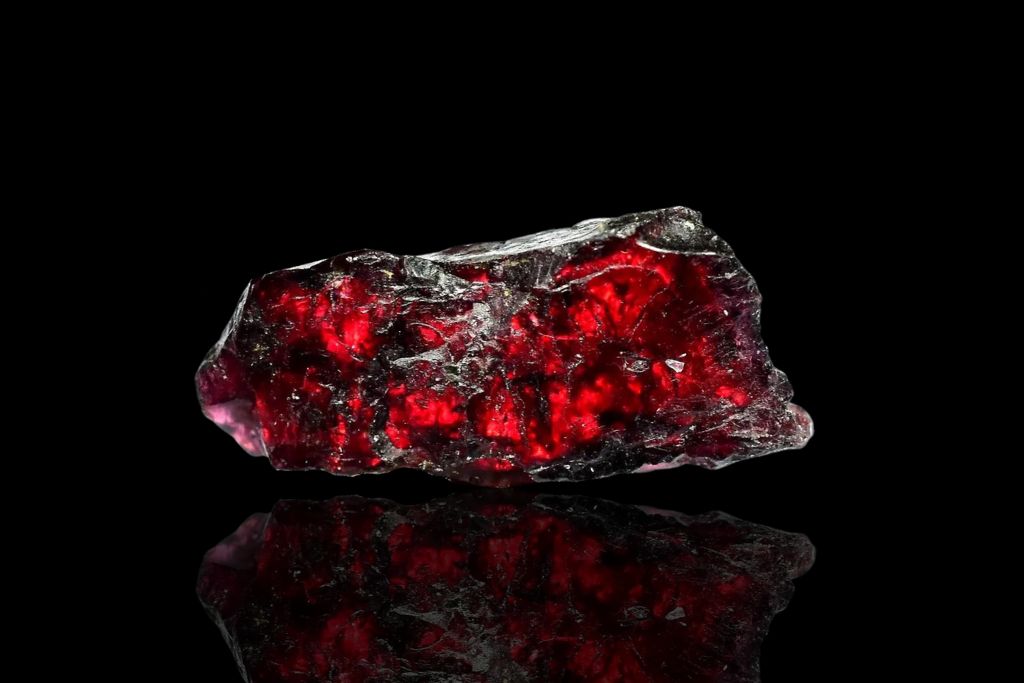
For decades, painite was considered the rarest mineral on Earth. Discovered in the 1950s in Myanmar, this gemstone puzzled scientists for years. Only two crystals were known for a long time, and museums treated them as geological oddities rather than gemstones.
Painite is a borate mineral containing calcium, zirconium, aluminum, and boron—an extremely unusual chemical combination. Its formation requires a very specific geological environment, which is why it appears in only a tiny region of the planet. The crystals often display a rich brownish-red to orange-red hue, with an earthy depth that feels almost ancient.
Even after additional discoveries in Myanmar, painite remains extraordinarily rare. High-quality, facetable specimens are still scarce, and most known samples are small. Because of its rarity, painite has sold for prices far exceeding diamonds of similar size, when it is available at all.
Painite is valuable not just because it is rare, but because it represents a mineralogical improbability. It exists because Earth, in one particular place, briefly got everything exactly right.
2. Red Beryl (Bixbite)
Beryl is a family of gemstones that includes emerald and aquamarine, stones that are already prized and valuable. Red beryl, however, stands apart as something almost mythical. Also known as bixbite, this gemstone is found almost exclusively in one area of Utah in the United States.
What makes red beryl so rare is the precise chemistry required for its formation. Beryllium must be present, along with trace amounts of manganese, in a volcanic environment that allows crystals to grow without being destroyed. These conditions are so specific that red beryl occurs in only a handful of small pockets.
The result is a gemstone with a deep raspberry-red color that rivals, and often surpasses, the beauty of rubies. Yet unlike rubies, red beryl is thousands of times rarer. Fine specimens can command prices far higher than diamonds, and stones larger than one carat are exceptionally uncommon.
Red beryl feels like a secret the Earth almost never tells—a gemstone that exists on the edge of possibility.
3. Alexandrite
Alexandrite is not only rare; it is magical. Discovered in Russia’s Ural Mountains in the 19th century, this gemstone is famous for its remarkable color-changing ability. In daylight, it appears green or bluish-green. Under incandescent light, it shifts to red or purplish-red.
This dramatic transformation is due to the presence of chromium and the way alexandrite absorbs light. It is one of the most scientifically fascinating optical effects found in gemstones, and reproducing it naturally is extraordinarily difficult.
High-quality alexandrite is rare because it requires a precise balance of elements and geological conditions. While deposits have been found in other countries, including Brazil and Sri Lanka, the finest stones remain scarce.
Large, vivid alexandrites with strong color change are worth far more than diamonds of similar size. Their value lies not just in scarcity, but in their ability to seem alive—changing personality with the light, as if responding to its surroundings.
4. Taaffeite
Taaffeite occupies a unique place in gemology because it was discovered accidentally. In the 1940s, a gem dealer noticed that a stone he had assumed was spinel showed unusual optical properties. Further study revealed that it was an entirely new mineral, unknown to science at the time.
Taaffeite is incredibly rare, even today. It is found only in a few locations, often mixed with other gemstones, and is almost never discovered intentionally. Its colors range from pale lavender to deep violet, sometimes with a soft gray or pink undertone.
What makes taaffeite especially valuable is not just its scarcity, but its scientific importance. It stands as one of the few gemstones first identified from a cut and polished specimen rather than a raw crystal.
Fine taaffeite gemstones can sell for prices far exceeding diamonds, and many collectors consider them priceless due to their rarity and historical significance.
5. Musgravite
Musgravite is closely related to taaffeite and was once thought to be nearly identical. For many years, only a few specimens were known, discovered in Australia’s Musgrave Ranges, which gave the gemstone its name.
Musgravite is extremely rare, with gem-quality specimens being almost nonexistent. Its colors range from grayish-green to olive, with some stones showing a subtle violet tint. The stone’s hardness and brilliance make it suitable for jewelry, but its scarcity means it is rarely used.
For collectors, musgravite represents the pinnacle of rarity. When gem-quality stones appear on the market, their prices can reach extraordinary levels, often surpassing the value of diamonds many times over.
Musgravite is a reminder that some of Earth’s greatest treasures exist far from the spotlight, known only to those who seek the rarest of the rare.
6. Grandidierite
Grandidierite is a gemstone that seems almost unreal. Its color ranges from blue-green to teal, often with a soft, ethereal glow. First discovered in Madagascar, it remains one of the rarest gemstones suitable for faceting.
What makes grandidierite so scarce is its extreme difficulty to form in transparent, gem-quality crystals. Most specimens are opaque or heavily included, making clean stones exceptionally rare.
When high-quality grandidierite does appear, it commands astonishing prices. Some specimens have sold for amounts far beyond diamonds, driven by intense collector demand and minimal supply.
Grandidierite feels like a fragment of ocean captured in crystal—a gemstone that carries both calm and mystery in its depths.
7. Jadeite (Imperial Jade)
Jadeite is often misunderstood because jade is commonly associated with cultural value rather than monetary worth. Yet imperial jadeite, the finest and rarest form of jade, is among the most valuable gemstones on Earth.
Found primarily in Myanmar, imperial jadeite displays a vivid, translucent green caused by chromium. Its value is determined not by sparkle, but by color, texture, and translucency. The finest jadeite seems to glow from within, as if lit by its own inner light.
Large, flawless pieces of imperial jadeite have sold for millions, surpassing diamonds of comparable size by a wide margin. In some cultures, jadeite is considered more precious than gold, symbolizing purity, immortality, and power.
Imperial jadeite’s rarity is not just geological but cultural, shaped by centuries of reverence and limited supply.
8. Black Opal
Opals are already known for their mesmerizing play of color, but black opals represent the rarest and most valuable expression of this phenomenon. Found primarily in Lightning Ridge, Australia, black opals display vivid flashes of red, blue, green, and violet against a dark background.
The darkness of the body color enhances the intensity of the spectral display, making black opals especially striking. Their formation requires a delicate balance of silica-rich water, time, and stable geological conditions.
Fine black opals are extraordinarily rare, and large stones with intense color play can be worth more than diamonds. Each black opal is unique, its patterns impossible to replicate, making it a natural work of art.
Black opals feel alive, shifting and shimmering as they move, reminding us that beauty in nature is often fleeting and unrepeatable.
9. Benitoite
Benitoite is a gemstone that shines brightest under ultraviolet light, glowing an intense blue that seems almost electric. Discovered in California in the early 20th century, it remains the official state gem of California—and one of the rarest gemstones in the world.
Gem-quality benitoite has been found almost exclusively in a single location, which is now closed to mining. This limited source ensures that existing stones will only grow rarer over time.
In daylight, benitoite displays a vivid sapphire-like blue, often with exceptional brilliance. High-quality specimens can exceed diamonds in value, especially given their limited availability and scientific importance.
Benitoite stands as a reminder that even in a modern world, nature still holds secrets that appear briefly and then vanish.
10. Serendibite
Serendibite is so rare that for many years it was known only from opaque specimens unsuitable for gemstones. Named after “Serendib,” an ancient name for Sri Lanka, this mineral exists in just a few locations worldwide.
Transparent, gem-quality serendibite is almost unheard of. When such stones do appear, they are typically small and dark, with deep green or bluish-black tones. Their rarity places them among the most valuable gemstones on Earth.
Serendibite’s value lies not in flamboyance but in exclusivity. It is a gemstone for collectors who understand that true rarity often whispers rather than shouts.
Why These Gemstones Matter More Than Diamonds
Diamonds are valuable, but they are not truly rare. Modern mining and controlled distribution have shaped their image far more than geology alone. The gemstones in this list exist beyond marketing, beyond mass production. Their scarcity is absolute, defined by nature rather than industry.
Each of these stones is a geological miracle, formed under conditions that may never occur again. They remind us that Earth is not just a source of resources, but a creator of wonders shaped by time, pressure, and chance.
To hold one of these gemstones is to hold a fragment of Earth’s deepest history—a story written not in words, but in crystal. They are more than beautiful objects. They are reminders that rarity, in its purest form, is about existence itself.