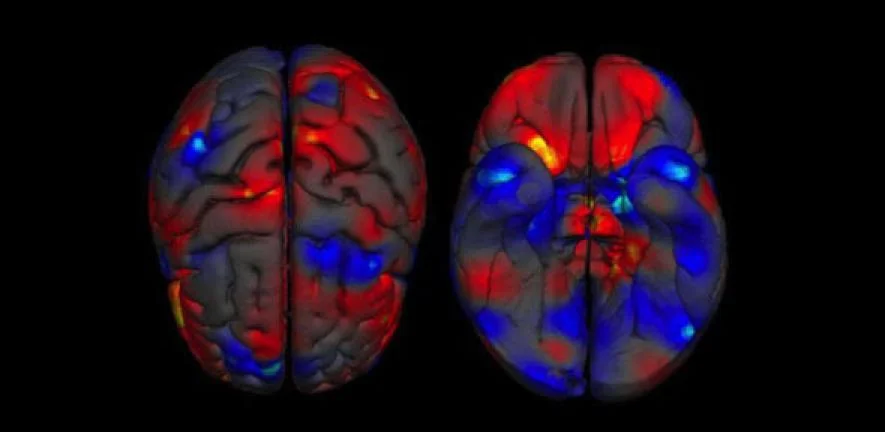
The human brain is often described as the most complex object in the known universe. It weighs about as much as a small melon, yet it generates thoughts, emotions, memories, creativity, love, fear, and identity. For centuries, scientists wondered whether male and female brains were fundamentally different or essentially the same. The truth, revealed by modern neuroscience, is far more subtle, fascinating, and emotionally rich than either extreme.
Male and female brains are not opposites, nor is one “better” than the other. They are variations on a shared biological theme, shaped by genetics, hormones, development, and lived experience. The differences that exist are statistical, not absolute. Overlap between individuals is enormous, and culture plays a powerful role in shaping behavior. Still, certain patterns appear again and again across populations, offering insight into how sex-linked biology can influence cognition, emotion, and behavior.
Understanding these differences is not about reinforcing stereotypes. It is about appreciating diversity within humanity and recognizing how biology and experience intertwine to create unique minds. Here are six scientifically supported, often surprising differences between the male and female brain—and why they matter.
1. Brain Size and Structure Are Different, but Not in the Way People Assume
One of the most commonly cited differences between male and female brains is size. On average, male brains are larger in total volume than female brains. This fact has been misused historically to imply intellectual superiority, but modern neuroscience firmly rejects that interpretation. Brain size does not correlate with intelligence. If it did, elephants and whales would far surpass humans.
The difference in size largely reflects differences in average body size. Larger bodies require more neurons to control muscles and process sensory input. When brain size is adjusted for body size, the difference becomes far less meaningful.
What is more interesting is how brain tissue is distributed. Studies using MRI imaging show that female brains tend to have a higher proportion of gray matter relative to total brain volume, while male brains often have more white matter. Gray matter consists mainly of neuron cell bodies and is associated with information processing, decision-making, and memory. White matter consists of long-range connections that link different brain regions, facilitating communication across distant areas.
This does not mean women “think better” or men “connect better” in any simple sense. Rather, it suggests different organizational strategies. Female brains often show denser local connectivity, while male brains tend to emphasize longer-distance connections. These patterns may contribute to differences in multitasking, spatial processing, or problem-solving styles, but they do not determine ability or intelligence.
Emotionally, this difference reminds us that the brain is not a single machine with one optimal design. It is a flexible system that can be organized in multiple effective ways to achieve similar outcomes.
2. Hormones Shape the Brain Long Before Birth
One of the most powerful influences on brain differences begins before a person is even born. During prenatal development, sex hormones such as testosterone and estrogen play a crucial role in shaping neural circuits. These hormones act as biological sculptors, subtly influencing how neurons grow, connect, and specialize.
In typical male development, higher levels of prenatal testosterone affect regions involved in spatial processing, motor control, and certain aspects of social behavior. In typical female development, lower prenatal testosterone exposure allows different patterns of connectivity to emerge, particularly in areas related to language, emotion processing, and social cognition.
These hormonal effects do not dictate destiny. They create tendencies, not fixed outcomes. Experience, education, trauma, culture, and personal choices can all reshape the brain through neuroplasticity. However, prenatal hormonal influences help explain why some cognitive and behavioral differences appear early in life, even before strong cultural conditioning.
Importantly, hormone effects continue throughout life. Puberty, pregnancy, menopause, and aging all bring hormonal changes that reshape the brain in measurable ways. The female brain, in particular, shows remarkable adaptability across hormonal transitions, highlighting its dynamic nature.
This biological reality adds emotional depth to discussions of brain differences. It shows that the brain is not a static organ but a living system, constantly rewritten by chemistry, experience, and time.
3. Emotional Processing and Regulation Show Distinct Patterns
Emotion is often treated as a purely psychological phenomenon, but it is deeply rooted in brain biology. Male and female brains show differences in how emotions are processed, experienced, and regulated, though the differences are often misunderstood.
Neuroimaging studies suggest that women, on average, show greater activation in brain regions associated with emotional awareness and empathy, such as parts of the limbic system and prefrontal cortex. This may contribute to a stronger ability to identify emotions in others and articulate one’s own emotional states.
Men, on average, may show stronger activation in regions linked to action-oriented responses to emotional stimuli. This can manifest as a tendency to externalize stress or seek solutions rather than verbal expression. Neither approach is superior. They reflect different strategies for navigating emotional landscapes.
Crucially, these patterns exist alongside enormous overlap. Many men are deeply emotionally expressive, and many women process emotions internally. Social expectations often amplify small biological differences, shaping behavior in ways that feel natural but are not inevitable.
Emotionally, this difference matters because misunderstanding it can lead to conflict. When one person seeks empathy and another seeks resolution, both may feel unheard. Recognizing that brains may be wired to approach emotion differently can foster compassion rather than judgment.
4. Language and Communication Networks Develop Differently
Language is one of humanity’s defining traits, and the brain systems that support it show intriguing sex-linked patterns. On average, female brains tend to develop language-related networks earlier and often show more bilateral activation during language tasks. This means both hemispheres of the brain may be involved in processing speech and comprehension.
Male brains, on average, are more likely to localize language functions in a single hemisphere, usually the left. This difference does not imply better or worse language ability. It suggests different neural strategies for achieving communication.
These patterns may help explain why women, on average, tend to develop verbal skills slightly earlier in childhood and may be more comfortable expressing complex emotional experiences verbally. Men, on average, may rely more heavily on contextual cues or nonverbal communication.
However, the brain’s plasticity ensures that language skills are highly trainable. Education, reading habits, bilingualism, and social interaction can dramatically reshape language networks in any brain.
The emotional significance of this difference lies in connection. Communication is how humans bond, resolve conflict, and share meaning. Understanding that brains may approach language differently can deepen patience and improve relationships.
5. Spatial Processing and Navigation Use Different Neural Strategies
Spatial abilities, such as mental rotation, navigation, and map-reading, have long been associated with sex differences. On average, males perform slightly better on certain spatial tasks, particularly those involving mental rotation of objects. Females, on average, may excel in tasks involving memory for object locations and landmarks.
Neuroscience reveals that these differences are not simply about skill level but about strategy. Male brains often rely more heavily on geometric cues and directional information, engaging regions such as the hippocampus differently. Female brains are more likely to integrate contextual and landmark-based information, drawing on memory and environmental detail.
These strategies reflect evolutionary pressures rather than modern necessity. In ancestral environments, different survival roles may have favored different navigation styles. Today, technology has largely erased the practical need for these differences, but the neural tendencies remain.
Importantly, training can eliminate these differences entirely. Video games, navigation practice, and spatial education can dramatically improve spatial skills in any brain, regardless of sex.
Emotionally, this finding challenges the myth of “natural talent.” It shows that what we call ability is often a combination of predisposition and practice, not a fixed trait written into the brain.
6. Stress Responses Are Biologically Distinct
Stress is unavoidable in human life, and the brain plays a central role in how stress is perceived and managed. Male and female brains show measurable differences in stress response systems, particularly in how the hypothalamic-pituitary-adrenal (HPA) axis is activated.
On average, men may exhibit a more pronounced fight-or-flight response to acute stress, characterized by increased adrenaline and physiological arousal. Women, on average, are more likely to engage a tend-and-befriend response, involving social bonding and emotional support as a way to manage stress.
Hormones such as estrogen and oxytocin play a significant role in shaping these responses. Oxytocin, often called the “bonding hormone,” is particularly influential in promoting social connection during stress in female brains.
These patterns do not mean men cannot seek support or women cannot respond aggressively to stress. They reflect tendencies shaped by biology and reinforced by social learning.
Understanding these differences has profound implications for mental health. Anxiety, depression, and stress-related disorders often manifest differently in men and women. Tailoring treatment approaches to these differences can improve outcomes and reduce stigma.
Emotionally, this difference highlights something deeply human: the brain does not experience stress in isolation. It responds in ways shaped by biology, history, and the need for survival through connection or action.
The Overlap That Matters More Than the Differences
After exploring these six differences, it is essential to step back and see the bigger picture. The most important scientific truth about male and female brains is not how they differ, but how much they overlap. For nearly every trait, ability, or behavior, the variation within each sex is far greater than the average difference between sexes.
Brains are mosaics. Each individual brain is a unique blend of traits, shaped by genes, hormones, upbringing, culture, education, trauma, and personal choice. No brain is purely “male” or “female” in function. Most brains contain a mixture of characteristics traditionally associated with both.
Modern neuroscience increasingly rejects rigid categories. Instead, it embraces complexity and individuality. Sex-linked differences exist, but they do not define destiny, intelligence, or worth.
Why Understanding Brain Differences Should Bring Empathy, Not Division
When misunderstood, discussions of brain differences can fuel stereotypes and inequality. When understood correctly, they can foster empathy, better communication, and more effective education and healthcare.
Recognizing that brains may approach emotion, language, stress, or problem-solving differently allows us to meet people where they are rather than forcing them into a single mold. It encourages curiosity instead of judgment and collaboration instead of competition.
The human brain evolved not to fit neatly into categories, but to adapt. Male and female brains represent two overlapping paths through the same biological landscape, each shaped by millions of years of survival and centuries of culture.
In the end, the most surprising truth is this: the brain’s greatest strength is not how it differs between sexes, but how endlessly flexible, creative, and capable it is in every human being.