Human civilization often feels permanent. Cities rise, technologies advance, and generations pass believing that tomorrow will resemble today. Yet the universe tells a very different story. Space is not quiet or gentle. It is a place of colossal forces, explosive transformations, and invisible radiation capable of sterilizing entire planets.
Earth has been remarkably fortunate. For billions of years our planet has avoided the worst of the cosmos. But survival has never been guaranteed. Geological records reveal that life on Earth has faced extinction many times, often due to catastrophic events. While many of these disasters originate from within our planet, others come from the vast darkness beyond our atmosphere.
Astronomers studying the cosmos have identified several types of cosmic events powerful enough to wipe out humanity—or even all complex life on Earth—sometimes with little or no warning. These are not science fiction scenarios. They are real phenomena observed throughout the universe.
Below are ten of the most terrifying cosmic events that could end human civilization without warning.
1. Asteroid Impact
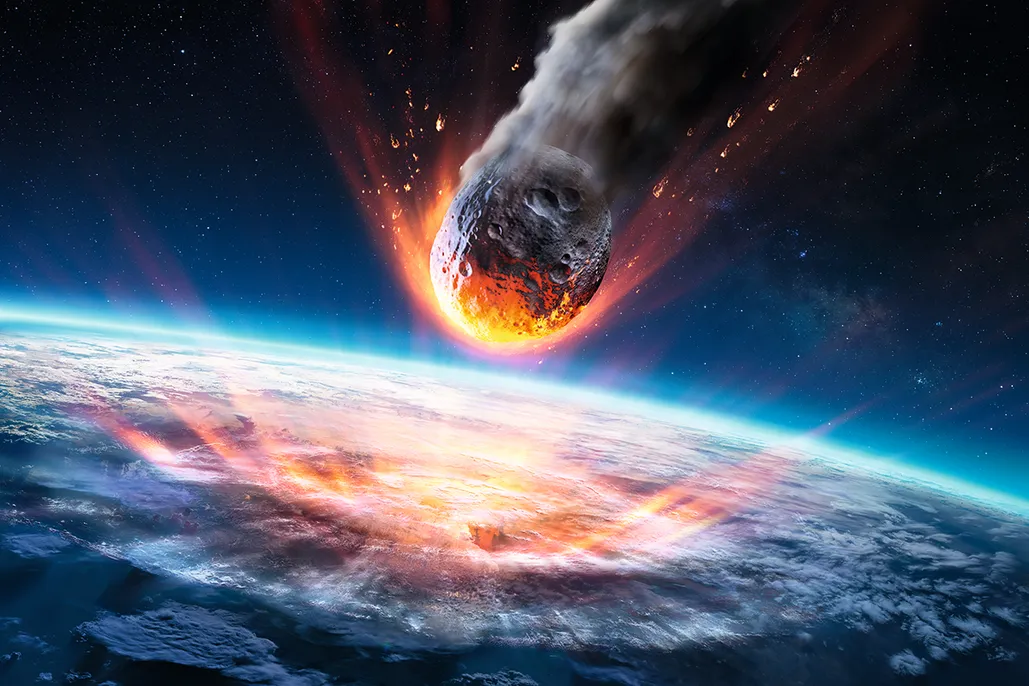
One of the most familiar cosmic threats is also one of the most devastating. Asteroids—rocky remnants left over from the formation of the solar system—occasionally cross Earth’s orbital path.
Sixty-six million years ago, a massive asteroid roughly 10 kilometers wide struck what is now the Yucatán Peninsula. The impact unleashed energy equivalent to billions of nuclear bombs. It blasted debris into the atmosphere, ignited global wildfires, and triggered a long-lasting climate catastrophe.
Dust and aerosols filled the atmosphere, blocking sunlight and collapsing ecosystems. This event is widely believed to have caused the extinction of the dinosaurs along with about 75 percent of all species on Earth.
While most large asteroids have already been mapped, smaller objects capable of regional or global destruction still exist. A kilometer-scale asteroid could devastate civilization even if it did not cause complete extinction.
The most frightening aspect is that some asteroids approach from the direction of the Sun, making them extremely difficult to detect until they are dangerously close. With little warning time, humanity might have few options for defense.
2. Gamma-Ray Burst
Gamma-ray bursts are the most energetic explosions known in the universe. They occur when massive stars collapse into black holes or when neutron stars collide. For a brief moment, they release more energy than the Sun will produce in its entire lifetime.
These bursts produce narrow jets of gamma radiation that travel across vast distances at nearly the speed of light. If one of these jets were aimed directly at Earth from within our galaxy, the consequences could be catastrophic.
Gamma rays would interact with Earth’s atmosphere, breaking apart nitrogen and oxygen molecules. This process could severely damage the ozone layer that protects life from ultraviolet radiation. Without that shield, intense UV light from the Sun would reach the surface, devastating ecosystems and triggering mass extinctions.
Fortunately, gamma-ray bursts are rare in galaxies like ours. However, astronomers have identified candidate stars capable of producing such events. If one occurred within a few thousand light-years and pointed toward Earth, it could strike without warning.
Unlike asteroids, which give us some time to react, a gamma-ray burst would arrive at light speed.
3. Nearby Supernova Explosion
Stars are not eternal. Massive stars end their lives in spectacular explosions known as supernovae. These explosions can briefly outshine entire galaxies and release enormous quantities of radiation and energetic particles.
If a supernova occurred within roughly 30 to 50 light-years of Earth, the radiation could significantly impact our planet. High-energy cosmic rays from the explosion could strip away portions of Earth’s atmosphere and damage the ozone layer.
Even if the immediate radiation did not wipe out life, long-term exposure to increased ultraviolet radiation could devastate marine ecosystems, disrupt food chains, and cause widespread biological damage.
Evidence from radioactive isotopes found in ocean sediments suggests that supernovae may have occurred near Earth in the distant past. Fortunately, none of the currently known nearby stars appear close enough to pose an immediate threat.
But the galaxy is vast and dynamic. Stars evolve, move, and sometimes die violently.
4. Rogue Black Hole Passing Through the Solar System
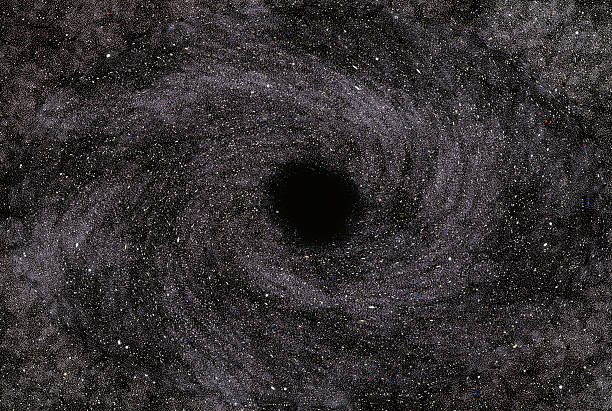
Black holes are among the most extreme objects in the universe. Formed from the collapse of massive stars, they possess gravitational fields so strong that nothing—not even light—can escape once it passes the event horizon.
Most black holes are located far away, but some wander through the galaxy alone. These so-called rogue black holes travel silently through interstellar space, invisible unless they interact with surrounding matter.
If a rogue black hole passed through our solar system, its gravitational influence could disrupt planetary orbits. Even a relatively small black hole could dramatically alter the delicate gravitational balance that keeps planets in stable paths around the Sun.
Planets might be ejected from the solar system or sent into chaotic trajectories. Earth’s orbit could shift dramatically, leading to catastrophic climate changes or even collision with another planetary body.
The terrifying part is that a rogue black hole would be extremely difficult to detect before it approached.
5. Solar Superflare
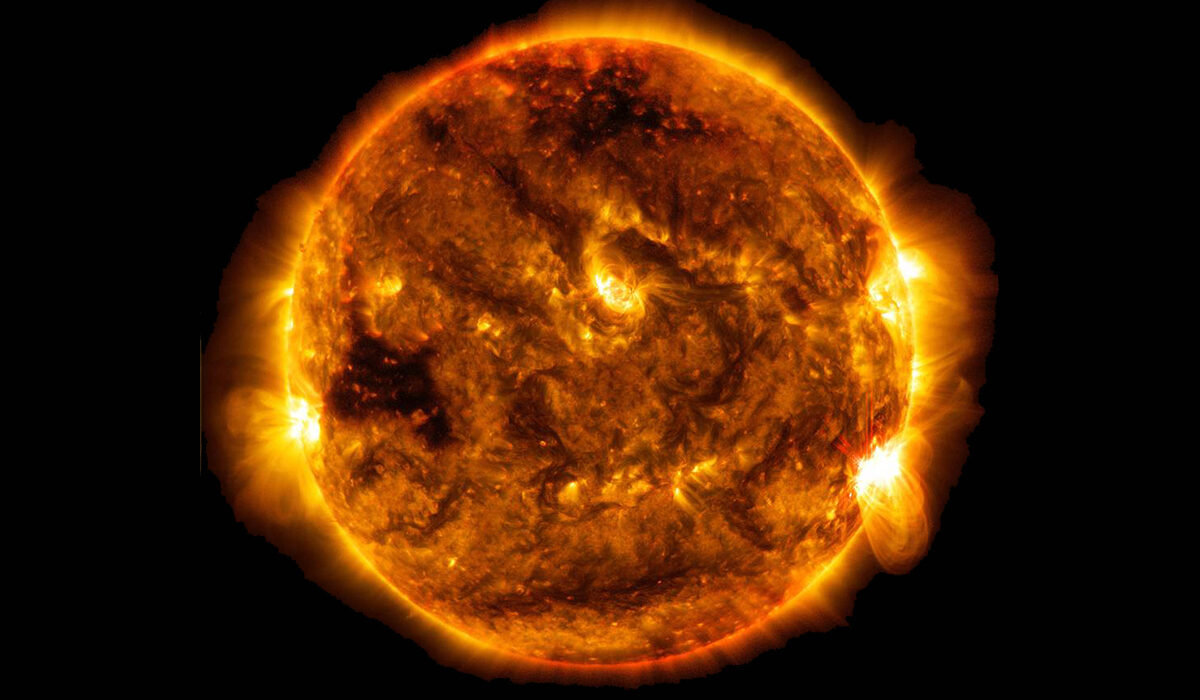
Our Sun is generally stable compared to many other stars, but it is still capable of powerful eruptions. Solar flares and coronal mass ejections release enormous amounts of charged particles and radiation.
Occasionally, stars similar to the Sun produce events known as superflares—eruptions hundreds or thousands of times more energetic than typical solar flares.
If such a superflare occurred on the Sun, it could have devastating consequences for Earth’s technological infrastructure. Satellites could be destroyed, electrical grids could collapse, and communication systems could fail worldwide.
While a solar superflare might not immediately extinguish life, the sudden collapse of modern technology could trigger global chaos. Food supply chains, medical systems, and essential infrastructure could fail rapidly.
In a world deeply dependent on electronics and global connectivity, such an event could threaten the survival of modern civilization.
6. Interstellar Object Collision
In recent years, astronomers have detected objects passing through our solar system from interstellar space. These visitors, such as the mysterious object known as ʻOumuamua, originate from other star systems.
Most interstellar objects pass harmlessly through the solar system. But if a large one were on a collision course with Earth, the consequences could be catastrophic.
Unlike typical asteroids that orbit the Sun and can be tracked over time, interstellar objects travel at extremely high speeds and may only be detected shortly before their closest approach.
A large interstellar object could strike Earth with far greater kinetic energy than most known asteroids. The speed of impact would amplify its destructive potential dramatically.
The universe is filled with debris from planetary formation, and some of it inevitably wanders through our cosmic neighborhood.
7. Neutron Star Collision Nearby
Neutron stars are the dense remnants of massive stars that exploded as supernovae. A single teaspoon of neutron star matter would weigh billions of tons on Earth.
When two neutron stars orbit each other in a binary system, they gradually spiral closer due to gravitational wave emission. Eventually they collide in a titanic explosion known as a kilonova.
These events release enormous bursts of gamma rays and produce heavy elements like gold and platinum. They are among the most energetic events in the universe.
If such a collision occurred close enough to Earth and directed radiation toward us, the effects could resemble those of a gamma-ray burst. Intense radiation could damage Earth’s atmosphere and biosphere.
Fortunately, no known neutron star binaries are currently close enough to pose an immediate threat. But the galaxy contains millions of neutron stars, many of which remain undiscovered.
8. Vacuum Decay
Some cosmic dangers are not physical objects but rather fundamental properties of the universe itself. One of the most unsettling theoretical possibilities is vacuum decay.
According to quantum field theory, the vacuum of space is not truly empty. It contains energy fields that define the properties of particles and forces. It is possible that the universe exists in a metastable state—stable for now, but not the lowest possible energy configuration.
If a more stable state exists, a quantum event could trigger a transition known as vacuum decay. This would create a bubble of true vacuum expanding outward at nearly the speed of light.
Inside this bubble, the laws of physics could change dramatically. Fundamental constants might shift, atoms might no longer hold together, and matter as we know it could cease to exist.
The bubble would expand across the universe, destroying everything in its path. And because it travels at light speed, there would be no warning.
While this scenario remains purely theoretical, it arises naturally from certain interpretations of modern particle physics.
9. Passing Through a Dense Interstellar Cloud
Our solar system moves through the galaxy, orbiting the center of the Milky Way roughly every 230 million years. Along this journey, it occasionally encounters regions of higher-density interstellar gas and dust.
If the solar system passed through a particularly dense molecular cloud, the increased concentration of particles could interact with the Sun’s outer atmosphere and alter the heliosphere—the protective bubble created by the solar wind.
A weakened heliosphere might allow more cosmic radiation to reach Earth. Over long periods, this could influence climate, atmospheric chemistry, and biological mutation rates.
Some researchers speculate that past encounters with dense interstellar clouds may have contributed to climatic shifts or mass extinctions on Earth.
Though not an instant catastrophe, such an event could create long-term environmental stress for life on our planet.
10. Galactic Core Activity
At the center of the Milky Way lies a supermassive black hole with a mass millions of times that of the Sun. Today it is relatively quiet, but observations of other galaxies show that supermassive black holes can become extremely active.
When large amounts of matter fall into such a black hole, it can generate enormous jets of radiation extending thousands of light-years into space. These active galactic nuclei can flood surrounding regions with intense energy.
If the Milky Way’s central black hole became highly active and directed powerful jets toward our region of the galaxy, the resulting radiation could affect planetary environments across vast distances.
Fortunately, Earth is located far from the galactic center, and there is no evidence that such an event is imminent. Still, the dynamic nature of galaxies reminds us that even enormous structures evolve over time.
Living on the Edge of Cosmic Uncertainty
The universe is not designed for our comfort. It is a place of immense energy and constant transformation. Stars explode. Black holes collide. Radiation sweeps across space.
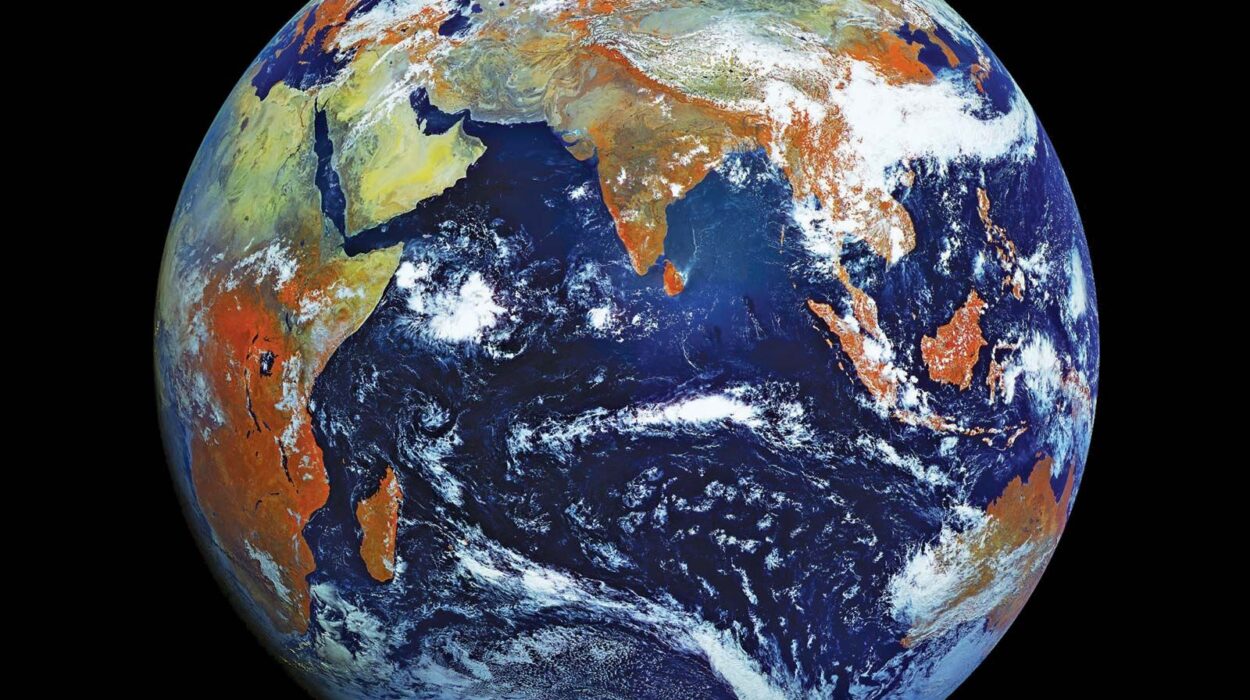
And yet, against these cosmic odds, life emerged on a small blue planet orbiting an ordinary star. For billions of years, Earth has avoided the worst disasters the cosmos can deliver.
This does not mean we are safe forever. It simply means we have been lucky.
Understanding cosmic threats is not an exercise in fear but an act of preparation. By studying asteroids, mapping the galaxy, monitoring stellar activity, and exploring the laws of physics, humanity gains knowledge that may one day help us survive.
Perhaps we will develop technologies to deflect asteroids or shield our planet from radiation. Perhaps we will spread beyond Earth, ensuring that life continues even if catastrophe strikes one world.
The universe may be dangerous, but it is also full of wonder. And as long as humanity continues to explore and understand it, we stand a better chance of enduring whatever cosmic events the future may hold.