Non-avian dinosaurs became extinct about 66 million years ago primarily because a massive asteroid struck Earth near what is now the Yucatán Peninsula in Mexico. The impact triggered a global environmental catastrophe, throwing dust, soot, and sulfur-rich material into the atmosphere, disrupting sunlight, cooling the planet, and collapsing food webs. These changes made survival extremely difficult for many plants and animals, ultimately driving all non-avian dinosaurs to extinction.
The asteroid impact was the decisive trigger, but the extinction was not simply a matter of a large rock hitting the ground. The consequences unfolded through a chain of physical and biological events that transformed Earth’s environment. Understanding those events also helps explain why some animals survived while others disappeared.
The asteroid that changed Earth’s history
The impact occurred at the end of the Cretaceous Period, marking the boundary between the Cretaceous and Paleogene periods. Scientists call this boundary the K–Pg boundary. It records one of the most consequential mass extinctions in Earth’s history.
The asteroid is estimated to have been roughly 10 kilometers (about 6 miles) across. It struck a shallow marine region near the present-day Gulf of Mexico, creating the Chicxulub impact crater, which measures approximately 180 kilometers (110 miles) across.
The collision released an extraordinary amount of energy. It excavated and vaporized rock, generated powerful shock waves, triggered earthquakes, and sent debris high into the atmosphere. Near the impact site, the immediate destruction was immense. Far beyond that region, however, the most consequential effects came from the material the collision injected into the atmosphere.
Evidence for the impact includes the Chicxulub crater, a globally distributed layer enriched in iridium, and shocked minerals formed under the extreme pressures of an impact. Iridium is relatively rare in Earth’s crust but occurs in greater concentrations in many asteroids. The worldwide appearance of this unusual layer at the same geological boundary where the extinction occurred provides a powerful connection between the impact and the disappearance of numerous species.
How the impact disrupted the global climate
The initial collision was devastating, but its worldwide consequences depended on what happened next. The impact blasted enormous quantities of pulverized rock, vaporized material, and sulfur-bearing gases into the atmosphere. Fires across affected regions also contributed soot to the atmosphere.
Some of these particles and aerosols spread around the planet, reducing the amount of sunlight reaching Earth’s surface. The resulting darkness and cooling are often described as an impact winter.
Sulfur dioxide released from vaporized sulfur-rich rocks could form sulfate aerosols, which reflect sunlight back into space. Fine dust and soot also reduced incoming sunlight, although their effects depended on their size, composition, and how long they remained suspended in the atmosphere. The precise contribution of each material is still being investigated.
The resulting environmental disruption was severe. With less sunlight reaching the surface, temperatures fell, and photosynthesis—the process plants and algae use to convert sunlight into chemical energy—declined sharply. The length and intensity of the darkest period remain uncertain, but the disruption was sufficient to undermine food production across many ecosystems.
The atmosphere and oceans did not respond in exactly the same way. Atmospheric cooling could develop relatively quickly, while changes in ocean temperature, chemistry, and biological productivity unfolded over different timescales. These overlapping effects placed widespread stress on organisms both on land and in the sea.
Why the collapse of food webs was so destructive
The most important biological consequence of the impact was the disruption of food webs: the interconnected relationships through which organisms obtain energy by eating plants, algae, or other animals.
On land, many food webs depended on plants that required sunlight to grow. When photosynthesis declined, plant productivity fell, reducing the food available to herbivores. As plant-eating animals became scarce or died, carnivores lost their prey. Large animals often needed substantial amounts of food, making it especially difficult for them to survive prolonged shortages.
Aquatic ecosystems faced a related problem. Many marine food webs begin with microscopic photosynthetic organisms called phytoplankton. These organisms form the base of numerous food chains, supporting small animals, fish, and larger predators. Reduced sunlight and disrupted ocean conditions damaged this foundation, contributing to widespread marine extinctions.
The catastrophe therefore spread through ecosystems rather than affecting only organisms directly exposed to the impact. An animal could live far from the crater and still perish because its food supply had collapsed.
This helps explain why the extinction was so selective. Survival depended not only on an organism’s size or strength but also on its diet, habitat, reproductive biology, and ability to endure periods of environmental instability.
Why non-avian dinosaurs disappeared while some animals survived
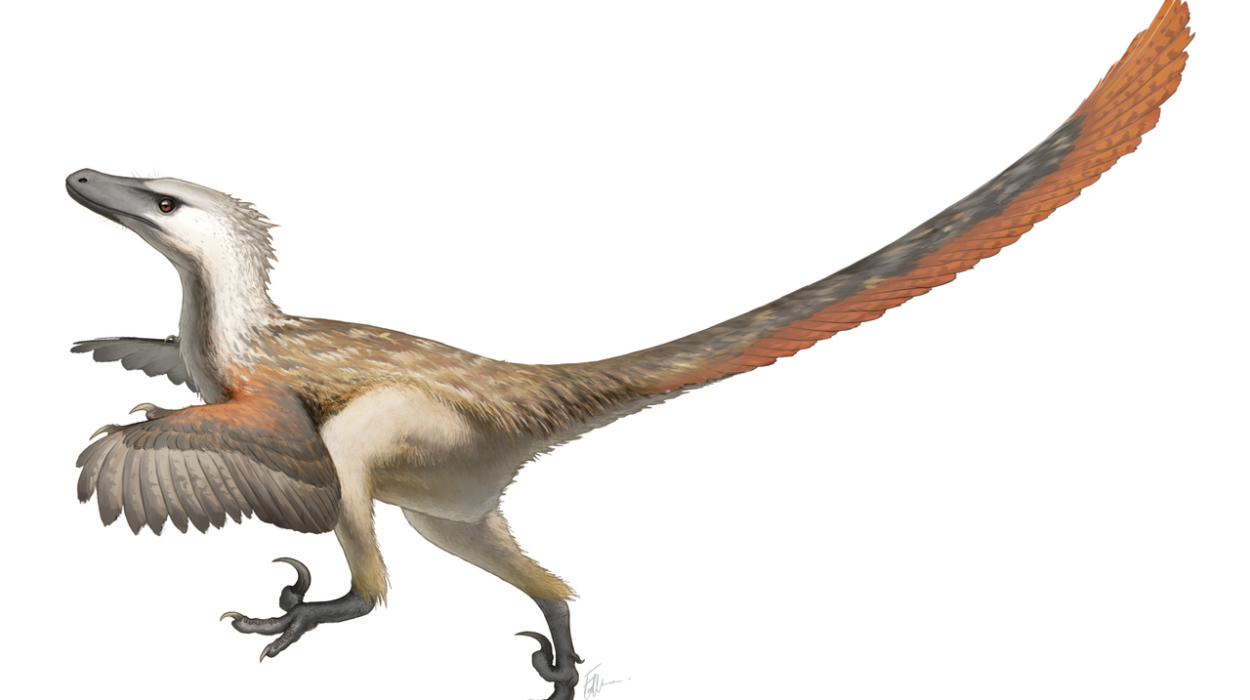
The extinction eliminated all non-avian dinosaurs, but it did not eliminate every dinosaur lineage. Birds are the surviving branch of the dinosaur family tree, descended from small, feathered theropod dinosaurs. They are therefore living dinosaurs, even though the familiar non-avian groups—including tyrannosaurs, horned dinosaurs, and the enormous long-necked sauropods—vanished.
Many non-avian dinosaurs were large-bodied animals with substantial food requirements. Large herbivores depended on enough vegetation to sustain them, while large predators depended on prey populations that could support their energy needs. When ecosystems lost their productivity, these animals faced a serious disadvantage.
Body size alone, however, does not fully explain the extinction. The catastrophe also affected many small organisms, and not every large animal group disappeared. Some animals survived because their ecological requirements, diets, or life histories allowed them to endure the disruption.
Small mammals, for example, included species capable of exploiting varied food sources. Some could eat insects, seeds, or other foods that remained available even when plant productivity declined. Seeds and organic material in sheltered environments may have provided important resources during periods of scarcity.
Certain freshwater ecosystems may also have offered temporary advantages. Rivers, lakes, and wetlands receive organic material from surrounding landscapes, and some of their food webs can persist on stored or decaying matter when sunlight-driven production falls. Animals that could shelter, feed opportunistically, or survive for extended periods with limited food may have had better odds.
These possibilities help explain survival patterns, but scientists cannot assign a single survival strategy to every group. The extinction unfolded across diverse habitats, and different biological traits mattered in different settings.
Did volcanic eruptions also contribute to the extinction?
The asteroid impact is widely recognized as the principal cause of the end-Cretaceous mass extinction, but it was not the only major environmental disturbance occurring around that time.
In what is now western India, enormous volcanic eruptions produced the Deccan Traps, an extensive region of layered lava. These eruptions occurred over an extended period around the end of the Cretaceous and the beginning of the Paleogene. Volcanism can influence climate by releasing gases such as carbon dioxide and sulfur dioxide, which affect the atmosphere in different ways.
Carbon dioxide contributes to long-term warming by trapping heat in the atmosphere. Sulfur dioxide can form reflective aerosols that produce temporary cooling. Depending on the timing and amount of emissions, volcanic activity can therefore cause substantial environmental fluctuations.
Scientists continue to investigate how Deccan volcanism affected climate, ecosystems, and the resilience of species before and after the asteroid impact. Volcanic activity may have stressed some environments or influenced the conditions under which the extinction unfolded.
However, the global extinction pattern, the geological evidence at the K–Pg boundary, and the Chicxulub crater strongly support the asteroid impact as the immediate cause of the catastrophic biological collapse. Volcanism is best understood as a potentially important contributing factor rather than an equally established alternative explanation.
How scientists reconstructed the extinction
The explanation for the extinction emerged from several independent lines of evidence. No single fossil or geological feature tells the entire story, but together they reveal a consistent sequence of events.
One key discovery was the thin, iridium-rich layer found at the K–Pg boundary in rocks around the world. Its unusual chemistry suggested that material from outside Earth had been deposited across the planet. The layer also contains evidence of the violent environmental disturbance associated with the extinction.
Researchers identified shocked quartz, a mineral whose microscopic structure can be altered by the extreme pressures generated during major impacts. They also documented tiny glassy particles formed from molten material thrown into the atmosphere and subsequently cooled. These findings supported the conclusion that a large impact had occurred.
The Chicxulub crater provided the geographic and physical evidence needed to connect the impact to a specific location. Its age corresponds closely to the extinction boundary, strengthening the link between the collision and the biological crisis.
Fossils provide the biological record. By comparing organisms found in rocks below and above the boundary, paleontologists can determine which groups disappeared, which survived, and how ecosystems changed. The abrupt loss of numerous species across different environments indicates that the event was much more than a gradual replacement of one animal community by another.
There are still important uncertainties. Scientists continue to refine estimates of the amount of dust, sulfur, and soot released by the impact, how long severe darkness persisted, and how different ecosystems responded. The relative contributions of impact-related cooling, fires, ocean changes, and volcanic activity remain active areas of research. These questions concern the precise sequence and severity of events, not the fundamental evidence that the asteroid impact played the central role.
What happened to life after the extinction?
The extinction at the end of the Cretaceous eliminated approximately three-quarters of Earth’s species, although the exact proportion varies with how the fossil record is interpreted. The loss affected marine organisms as well as terrestrial animals, including groups that had dominated their environments for millions of years.
Yet the extinction did not end life on Earth. Many lineages survived, including birds, mammals, crocodilians, turtles, amphibians, and numerous fish and invertebrates. Their survival preserved the evolutionary foundations from which later ecosystems developed.
In the aftermath, surviving organisms encountered environments with fewer competitors and many unoccupied ecological roles. Over time, evolutionary diversification produced new forms and expanded the ecological importance of groups that had previously played more limited roles.
Mammals had existed alongside non-avian dinosaurs for a long time, but they generally occupied a more restricted range of ecological roles during much of the Mesozoic Era. After the extinction, mammals diversified into a wider variety of body sizes, diets, and habitats. Eventually, their descendants included large grazing animals, marine mammals, primates, and humans.
This expansion was not immediate. Ecosystems took time to recover, and the pace of recovery varied among regions and groups. The disappearance of dominant species created opportunities, but evolution did not follow a predetermined path toward modern animals.
Birds also diversified after the extinction, continuing the evolutionary history of dinosaurs into the present. Their survival demonstrates that the end-Cretaceous event did not erase the entire dinosaur lineage; it eliminated its non-avian branches while leaving one extraordinarily successful branch alive.
Why the extinction matters today
The end-Cretaceous extinction illustrates how a sudden physical event can transform the living world by changing the conditions that sustain ecosystems. The asteroid did not need to kill every organism directly. By disrupting the atmosphere, climate, and production of food, it set off a chain reaction that reached organisms across the planet.
The event also shows that survival depends on ecological relationships. An animal’s ability to withstand a particular temperature or environmental condition matters, but so does its dependence on other species. When the organisms at the base of a food web decline, the effects can spread to animals that never encounter the original disturbance.
Finally, the extinction provides a clear example of the difference between immediate causes and longer-term consequences. The asteroid impact initiated the crisis; atmospheric changes and food-web collapse drove much of the biological destruction; and the survivors subsequently diversified in the altered world.
Non-avian dinosaurs did not disappear because they had become evolutionarily outdated or because mammals were inherently superior. They disappeared because an extraordinary environmental catastrophe overwhelmed the ecosystems on which they depended. Their extinction reshaped the course of evolution, leaving birds as the living descendants of dinosaurs and opening the way for mammals to become far more prominent in Earth’s later history.