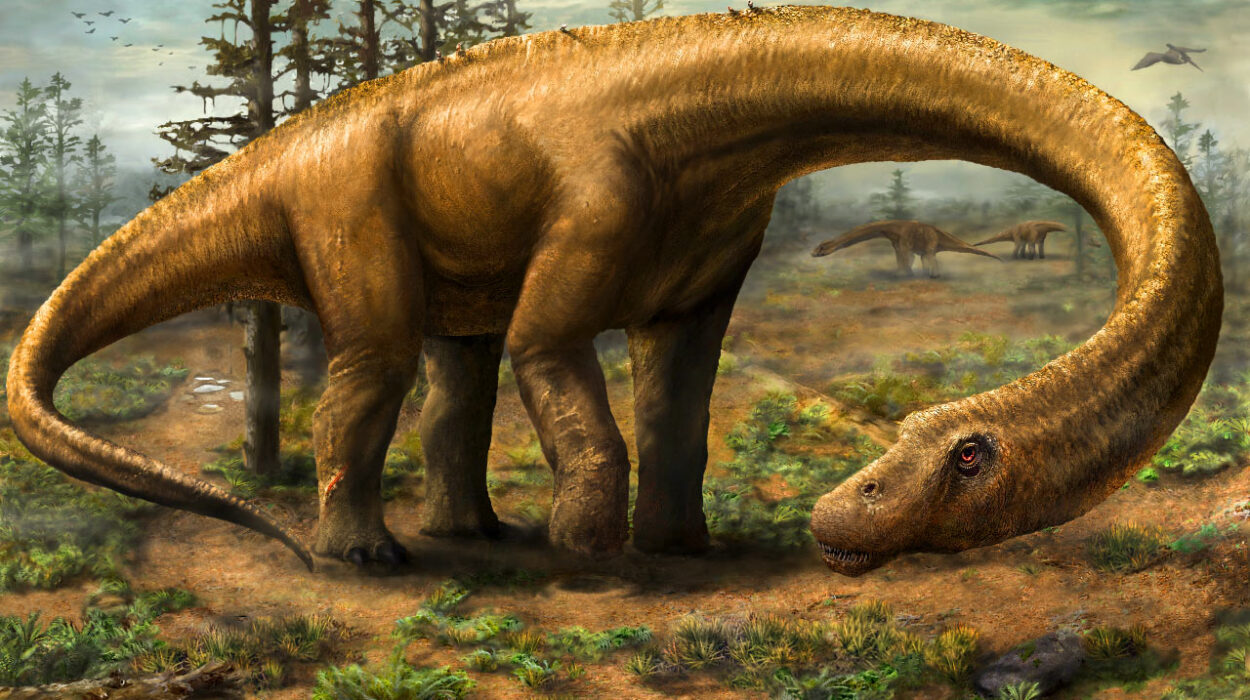
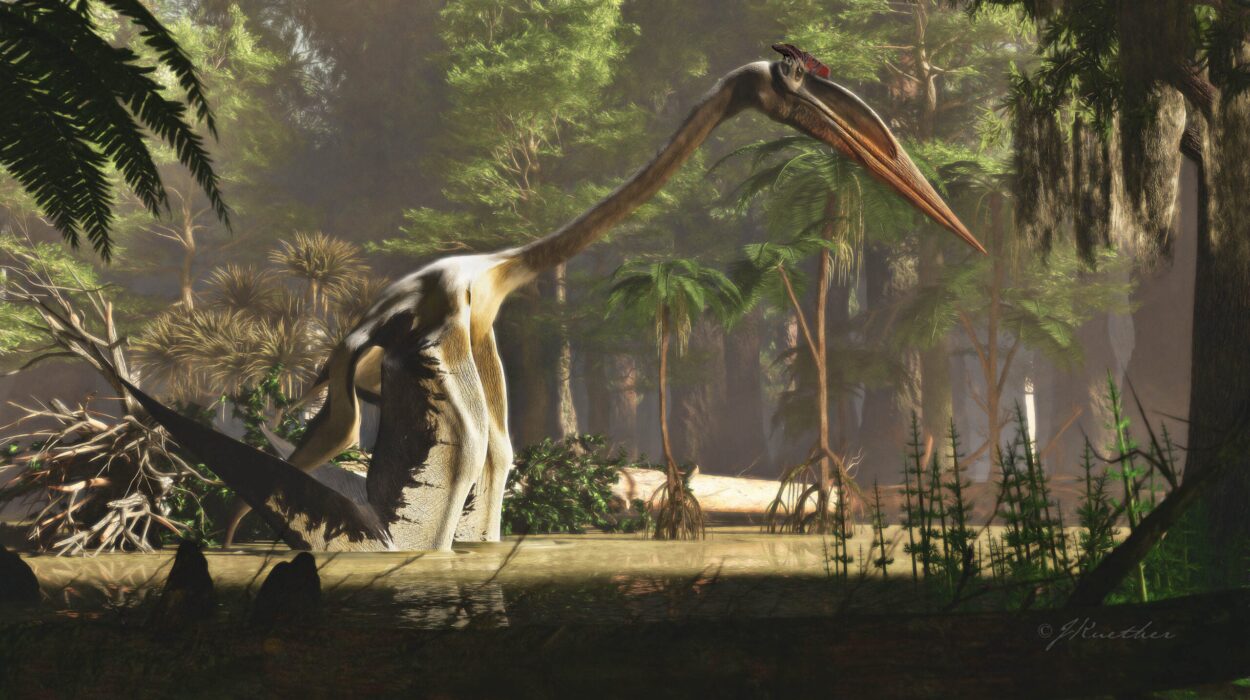
The biggest dinosaurs discovered in North America included enormous long-necked plant eaters such as Alamosaurus, Supersaurus, and Diplodocus, along with massive meat-eaters such as Tyrannosaurus rex. Among them, Alamosaurus is one of the strongest candidates for the largest dinosaurs known from North America, although incomplete fossils make exact comparisons difficult. Some specimens of Supersaurus also suggest extraordinary lengths, potentially exceeding those of most other dinosaurs discovered on the continent.
These giants lived at different times and in different environments, from Jurassic floodplains filled with towering sauropods to the Cretaceous landscapes where Alamosaurus and T. rex lived. Their fossils reveal how dinosaurs evolved enormous bodies, how they obtained enough food to sustain them, and why determining which species was truly the biggest remains a scientific challenge.
The largest dinosaurs found in North America
Size comparisons depend on several measurements. Length describes the distance from the head to the end of the tail, while body mass estimates how much an animal weighed. Height is another useful measurement, but a dinosaur with a long, low-slung body could be longer than a taller animal without weighing more.
Fossils rarely preserve an entire giant dinosaur. Paleontologists often reconstruct bodies from partial skeletons, sometimes using related species to estimate missing bones. Consequently, published size estimates can differ substantially, particularly for animals represented by incomplete remains.
The following dinosaurs stand out among the largest known from North America.
Alamosaurus was one of North America’s largest dinosaurs
Alamosaurus was a colossal, long-necked sauropod that lived in western North America during the Late Cretaceous, roughly 70 million years ago. Its fossils have been found in the southwestern United States, including Texas, New Mexico, and Utah.
Like other sauropods, Alamosaurus had a long neck, a lengthy tail, four sturdy legs, and a relatively small head. It belonged to the titanosaur group, a diverse family of sauropods that included some of the largest land animals ever to exist. Titanosaurs were especially prominent in the Southern Hemisphere, but Alamosaurus demonstrates that enormous members of this group also inhabited North America.
Its size is difficult to determine precisely because the fossil record is incomplete. Estimates vary, but exceptionally large individuals may have reached lengths of roughly 80 feet or more, with the largest reconstructions suggesting body masses of many tens of tons. These figures should be treated as estimates rather than exact measurements of a fully preserved animal.
Alamosaurus lived near the end of the dinosaur age, when much of western North America consisted of coastal plains, river systems, and seasonal floodplains. Its enormous size would have helped protect it from many predators, while its long neck allowed it to reach vegetation across a broad feeding area.
Supersaurus may have been among the longest dinosaurs
Supersaurus was a giant sauropod that lived during the Late Jurassic, approximately 150 million years ago. Its remains have been discovered in the western United States, particularly Colorado.
It belonged to the diplodocid family, which included several exceptionally long dinosaurs. Diplodocids had elongated necks, whip-like tails, relatively narrow bodies, and long, low-slung frames. Their anatomy favored extraordinary length without necessarily producing the greatest body mass among sauropods.
Estimates for Supersaurus vary, but some reconstructions place its length at approximately 100 feet or more. This would make it one of the longest dinosaurs known from North America and potentially one of the longest dinosaurs ever discovered. However, the available fossils do not establish a precise maximum length, and estimates depend on how incomplete bones are interpreted.
Its extraordinary proportions were possible because much of its length came from its neck and tail. A long body does not automatically mean an animal weighed more than a shorter, more heavily built dinosaur.
The environment in which Supersaurus lived supported a diverse community of dinosaurs. Rivers and floodplains provided water and vegetation, while the surrounding landscape contained other enormous sauropods and large predators. These ecosystems demonstrate that multiple giant herbivores could coexist, although their feeding habits and preferred vegetation may have differed.
Diplodocus combined extraordinary length with a relatively light build
Diplodocus is among the most recognizable dinosaurs ever discovered. It lived during the Late Jurassic, roughly 154 to 152 million years ago, and its fossils are particularly associated with the Morrison Formation, a vast geological deposit extending across parts of the western United States.
This dinosaur had a long, slender neck, an exceptionally extended tail, and a relatively narrow body. Some species and large individuals are estimated to have reached approximately 80 to 90 feet in length, although estimates vary with the specimen and reconstruction.
Despite its enormous length, Diplodocus was not necessarily as heavy as more compact sauropods. Its long vertebral column and relatively slender limbs created a different body plan from the deep-bodied, heavily built giants that could carry greater mass.
Its tail likely served several functions, including balance and possibly communication or defensive behavior. Researchers have also investigated whether diplodocids could move their tails rapidly enough to produce a cracking sound, but the extent to which they used their tails in this way remains uncertain.
Diplodocus fed on plants, using its peg-like teeth to strip vegetation rather than grind it thoroughly. Its long neck helped it reach foliage across a wide area, reducing the need to move its entire body as frequently while feeding.
Apatosaurus and Brontosaurus were massive Jurassic herbivores
Apatosaurus and Brontosaurus were other enormous sauropods from the Late Jurassic of North America. Their fossils, like those of Diplodocus, are closely associated with the Morrison Formation.
These dinosaurs belonged to a different branch of sauropods from the slender-bodied diplodocids. They generally had broader bodies and more robust limbs, giving them a stockier appearance.
Apatosaurus commonly reached lengths of around 70 to 75 feet, depending on the species and individual. Large Brontosaurus specimens were also exceptionally long and heavy. Their exact dimensions vary, and comparisons are complicated by the fact that complete skeletons are uncommon.
For much of the 20th century, Brontosaurus was treated as a synonym of Apatosaurus, meaning scientists considered the two names to refer to the same genus. Later anatomical studies revived Brontosaurus as a distinct genus, although the classification has been debated. The episode illustrates how scientific interpretations change when researchers reevaluate fossil anatomy.
Both dinosaurs had long necks and tails supported by massive bodies and strong limbs. Their size allowed them to process large quantities of vegetation, while their long necks offered access to food distributed across different heights and distances.
Their enormous bodies also created mechanical challenges. Bones had to support considerable weight, muscles had to move heavy limbs, and the circulatory system had to supply tissues throughout a large body. Sauropod skeletons evolved a combination of strength and lightweight construction that helped make such proportions possible.
Brachiosaurus was tall as well as enormous
Brachiosaurus was a large sauropod that lived during the Late Jurassic. Its fossils were discovered in western North America, including Colorado, and it became famous for its unusually long front legs and elevated shoulders.
Unlike the low-slung body plan of Diplodocus, Brachiosaurus had front limbs longer than its hind limbs. This gave its torso a pronounced upward slope toward the shoulders and positioned its neck high above the ground.
Large individuals are estimated to have reached roughly 70 feet in length, with their heads potentially rising more than 40 feet above the ground in some reconstructions. Estimates vary, and the tallest possible posture depends on how the neck and limbs are reconstructed.
Its distinctive anatomy has led scientists to investigate how it fed. The long neck and elevated head may have helped it exploit vegetation unavailable to many other herbivores. However, it is too simple to assume that Brachiosaurus always fed at the tops of trees. Neck movement, feeding posture, and the range of vegetation it consumed remain subjects of scientific investigation.
The animal’s mass placed substantial demands on its skeleton. Its long, column-like limbs helped support its body, while air-filled spaces in parts of its vertebrae reduced skeletal weight without eliminating the strength needed to support its neck and torso.
Tyrannosaurus rex was one of the largest land predators
The largest dinosaurs in North America were not all plant eaters. Tyrannosaurus rex, which lived near the end of the Cretaceous Period, was one of the biggest terrestrial predators known to science.
Its fossils have been discovered across western North America, including Montana, Wyoming, the Dakotas, and other parts of the region. The species lived approximately 68 to 66 million years ago, shortly before the mass extinction that eliminated all non-avian dinosaurs.
Large T. rex individuals reached around 40 feet in length, with some estimates approaching 43 feet. The largest known specimens have been estimated to weigh roughly 8 to 10 tons or more, depending on the reconstruction method. These estimates remain subject to uncertainty because body mass cannot be measured directly from fossilized bones.
Its enormous skull contained powerful jaws and large, thick teeth adapted to crushing and tearing flesh. Its robust hind limbs supported a heavy body, while its relatively small forelimbs were strong despite their short length.
T. rex was not the longest dinosaur on this list, but it was much more heavily built than the long, slender sauropods. This distinction shows why body length alone cannot determine which dinosaur was largest.
As an apex predator, T. rex occupied a different ecological role from the giant herbivores. It likely hunted large animals and could also have scavenged carcasses when opportunities arose. Its powerful bite allowed it to process substantial amounts of food, but the details of its hunting behavior remain difficult to reconstruct from fossils alone.
How did these dinosaurs grow so large?
The enormous size of sauropods resulted from a combination of evolutionary adaptations, efficient feeding, and changes in how their bodies developed.
One important feature was their respiratory system. Like modern birds, sauropods had air sacs connected to parts of their skeletons. These air sacs helped ventilate the lungs and created spaces within some bones, reducing skeletal weight. This did not make their skeletons fragile; rather, the bones retained structural support while avoiding some of the weight associated with solid bone.
Their long necks also helped them obtain food efficiently. A large animal needs substantial amounts of energy, and moving an entire body repeatedly to reach new plants can be costly. By extending the neck, a sauropod could feed across a broad area while keeping its feet relatively stationary.
Sauropods also had small heads relative to their bodies, which helped limit the weight carried at the end of a long neck. Their teeth were generally suited to cropping vegetation, and food processing relied heavily on the digestive system rather than extensive chewing.
Growth was another important factor. Fossil evidence indicates that many sauropods grew rapidly, especially during their earlier years. Fast growth could reduce the period during which young animals were especially vulnerable to predators. Their ultimate size, however, depended on species-specific growth patterns, inherited anatomy, and the conditions in which they lived.
No single adaptation explains the evolution of giant dinosaurs. Their size emerged from the interaction of anatomy, physiology, food availability, reproduction, and ecological pressures over millions of years.
Why scientists cannot always identify the biggest dinosaur with certainty
Fossil evidence is incomplete, and the largest dinosaurs are especially difficult to reconstruct because their skeletons were enormous and often became scattered or damaged before burial.
A single vertebra or leg bone can reveal that an animal was very large, but it rarely provides enough information to determine its exact length or mass. Paleontologists estimate missing dimensions by comparing the fossil with more complete specimens or closely related species.
Different methods can produce different results. Length estimates depend on the proportions assigned to missing sections of the body, while mass estimates depend on assumptions about body shape, muscle, organs, and other soft tissues that rarely fossilize.
Mass can be particularly difficult to calculate. Two dinosaurs of equal length may have very different weights because one has a slender frame and the other a broad torso and thick limbs. Researchers may use measurements of limb bones, skeletal reconstructions, and three-dimensional models to estimate how much weight an animal could have carried.
The fossil record also contains gaps. A dinosaur that appears smaller in the available collection might have grown larger than the best-preserved specimens indicate. Conversely, a reconstruction based on unusually large bones may exaggerate the proportions of the entire animal.
For these reasons, scientists generally distinguish between the largest well-supported specimens and estimates of the maximum size a species might have reached. Claims that one dinosaur was definitively the largest should be treated cautiously when the comparison depends on incomplete remains.
What North America’s giant dinosaurs reveal about prehistoric ecosystems
The largest dinosaurs discovered in North America lived in different geological periods, and they did not all share the same environment.
During the Late Jurassic, approximately 150 million years ago, the western interior of the continent supported diverse communities of sauropods, including Diplodocus, Apatosaurus, Brontosaurus, Brachiosaurus, and Supersaurus. These animals coexisted with smaller plant eaters, predators, and many other organisms.
Their variety suggests that several enormous herbivores could occupy the same broad region without relying on precisely the same resources. Differences in neck length, body proportions, teeth, and feeding behavior may have helped reduce competition for food. However, the exact diets and feeding ranges of individual species are not always known.
By the Late Cretaceous, western North America had changed considerably. A large inland sea divided much of the continent, and coastal plains, river systems, and floodplains supported different dinosaur communities. Alamosaurus lived in this later world, alongside other herbivores and predators that included Tyrannosaurus rex in parts of its range.
These changing ecosystems show that giant dinosaurs were not a single group of animals that all lived together. They belonged to different lineages, occupied different ecological roles, and appeared at different points in Earth’s history.
Their fossils also help scientists reconstruct ancient climates, landscapes, and food webs. The rocks that preserve dinosaur bones can contain pollen, plant fossils, shells, and other evidence that reveals the environments in which these animals lived.
Which dinosaur was the biggest in North America?
There is no universally established winner because the answer depends on how size is measured and which fossil reconstructions are accepted.
For sheer length, Supersaurus is one of the strongest candidates among dinosaurs discovered in North America, with some estimates placing exceptionally large individuals at around 100 feet or more. Its incomplete remains make the precise figure uncertain.
For overall bulk, Alamosaurus is a leading candidate. Its estimated mass could have reached many tens of tons, although its incomplete fossil record prevents a definitive ranking against all other giant sauropods.
Diplodocus was another extraordinary contender for length, while Apatosaurus, Brontosaurus, and Brachiosaurus demonstrate how different body shapes allowed sauropods to achieve enormous size in different ways. Among predators, Tyrannosaurus rex was one of the largest land carnivores known, but it was substantially shorter and lighter than the biggest sauropods.
The clearest conclusion is that North America was home to some of the most enormous land animals ever to live. Their fossils preserve evidence of extraordinary evolutionary adaptations, and continued discoveries may refine estimates of their size. Until more complete specimens become available, the title of biggest dinosaur will remain a question best answered by distinguishing length, mass, and the uncertainty inherent in reconstructing animals from fossils.