Dinosaurs were a diverse group of reptiles that lived for more than 160 million years, from the Triassic Period to the end of the Cretaceous Period. They ranged from small, feathered animals that could fit in a person’s arms to enormous plant-eaters that weighed many tons. Although most dinosaurs disappeared about 66 million years ago, one branch survived and evolved into modern birds.
Dinosaurs belonged to a group of animals called archosaurs, which also includes crocodilians and their extinct relatives. They were distinguished by features of their skeletons, particularly the structure of their hips and limbs. Unlike other prehistoric reptiles such as pterosaurs and plesiosaurs, dinosaurs were primarily land animals, although some could swim or spend considerable time near water.
Understanding dinosaurs involves more than recognizing familiar species such as Tyrannosaurus rex or Triceratops. Their evolutionary history reveals how animals adapted to changing environments, developed different ways of moving and feeding, and eventually gave rise to the birds living today.
What makes an animal a dinosaur?
Dinosaurs were not simply large reptiles that lived millions of years ago. They formed a specific evolutionary group defined by shared anatomical characteristics inherited from common ancestors.
One important feature is the arrangement of their hip bones and legs. In dinosaurs, the legs generally extended beneath the body rather than sprawling outward to the sides as in many modern lizards. This arrangement supported more efficient movement on land and helped many species walk or run with their bodies held above their feet.
Dinosaurs also had distinctive features in their ankle and hip joints, along with other skeletal characteristics that distinguish them from closely related reptiles. Scientists identify these traits by studying fossils and comparing the anatomy of extinct and living animals.
Not every dinosaur was enormous, scaly, or fearsome. Some were small and lightly built, and many had feathers. Some ate plants, others hunted animals, and still others were omnivores that consumed a mixture of foods.
The term dinosaur does not include every prehistoric reptile. Pterosaurs, for example, were flying reptiles that lived during much of the same period as dinosaurs, but they belonged to a separate evolutionary group. Marine reptiles such as ichthyosaurs, plesiosaurs, and mosasaurs were also distinct from dinosaurs, even though they are often associated with the prehistoric world.
When did dinosaurs live?
Dinosaurs first appeared during the Triassic Period, approximately 230 million years ago. They survived major environmental changes and diversified throughout the Jurassic and Cretaceous periods before a mass extinction eliminated all non-avian dinosaurs about 66 million years ago.
Their history is part of the Mesozoic Era, often called the Age of Dinosaurs. This era lasted from about 252 million to 66 million years ago and is divided into three periods.
The Triassic Period (about 252–201 million years ago) was a time of recovery and ecological change following the largest known mass extinction in Earth’s history. Early dinosaurs appeared during this period, probably around 230 million years ago. They initially shared ecosystems with many other reptile groups and were not immediately the dominant land animals everywhere.
The Jurassic Period (about 201–145 million years ago) saw dinosaurs become major components of terrestrial ecosystems. Large long-necked sauropods flourished, as did several groups of meat-eating dinosaurs. Stegosaurus and Allosaurus are among the best-known dinosaurs associated with this period.
The Cretaceous Period (about 145–66 million years ago) brought further diversification. Tyrannosaurus rex, Triceratops, Ankylosaurus, and many feathered dinosaurs lived during this period. Flowering plants also diversified, changing vegetation and creating new ecological opportunities for herbivorous animals and the predators that fed on them.
These dates are approximate because geological boundaries are established through multiple lines of evidence, and scientific estimates can be refined as new discoveries are made.
The end of the Cretaceous Period marks one of the most significant turning points in dinosaur history. An asteroid struck the region of what is now the Yucatán Peninsula in Mexico, triggering environmental changes that disrupted ecosystems worldwide. The resulting mass extinction eliminated all non-avian dinosaurs, along with many other organisms. Birds, however, survived.
The major types of dinosaurs
Scientists traditionally divide dinosaurs into two major groups based on the structure of their hips: Saurischia and Ornithischia. These names refer to different arrangements of the pelvic bones, not simply to whether an animal walked on two legs or four.
This classification also illustrates why familiar labels can be misleading. Birds evolved from saurischian dinosaurs, even though their hip anatomy and many other features changed considerably during evolution.
Saurischian dinosaurs
Saurischia includes two major lineages: sauropodomorphs and theropods. Together, they encompass some of the largest land animals that ever lived and the evolutionary ancestors of modern birds.
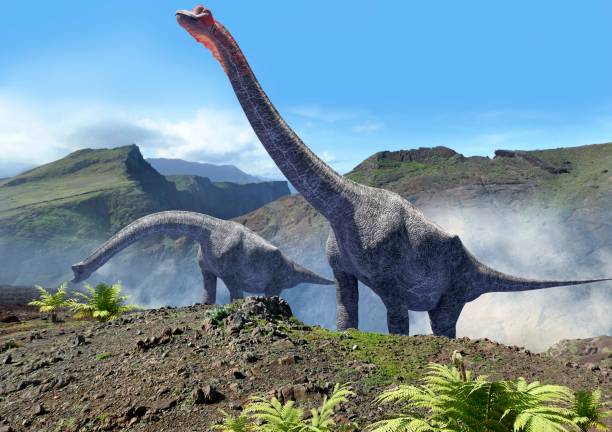
Sauropodomorphs included the long-necked sauropods, which were among the most recognizable dinosaurs. These animals generally had small heads, long necks, long tails, and four sturdy legs. Their body plans helped support enormous digestive systems and allowed many species to reach vegetation that other herbivores could not easily access.
Examples include Diplodocus, Brachiosaurus, and Apatosaurus. Although these animals shared a general body plan, they differed in proportions, feeding adaptations, and evolutionary relationships. Some had relatively long necks suited to feeding across broad areas, while others had features that helped them reach higher vegetation.
Theropods were primarily meat-eating dinosaurs, although some later species evolved diets that included plants or a broader range of foods. They generally had three main weight-bearing toes on each foot and often possessed sharp teeth and grasping forelimbs. Their size varied dramatically.
Tyrannosaurus rex was a large predator with powerful jaws, strong hind limbs, and relatively short forelimbs. Velociraptor was much smaller and had feathers, a long tail, and a distinctive curved claw on each foot. Other theropods evolved different combinations of teeth, claws, body sizes, and feeding strategies.
Birds evolved within the theropod lineage. Fossils show that many non-avian theropods had feathers, and scientists recognize birds as living dinosaurs rather than merely descendants of a group that has gone extinct.
Ornithischian dinosaurs
Ornithischia included many familiar plant-eating dinosaurs with specialized teeth, beaks, horns, plates, armor, or elaborate head structures. Despite the name, which means “bird-hipped,” ornithischians were not the ancestors of birds. Their hip arrangement evolved independently of the bird lineage’s later anatomical changes.
Ornithischians included several major groups with different adaptations for feeding and defense.
Stegosaurs, including Stegosaurus, had rows of plates or spikes along their backs and tails. Their teeth were suited to processing plant material, and their relatively small heads contrasted with their large bodies. The precise functions of their back plates remain a subject of scientific investigation, although display and temperature regulation have both been considered.
Ankylosaurs, including Ankylosaurus, had broad bodies protected by extensive bony armor embedded in their skin. Some species also had heavy tail clubs. These structures likely helped defend them against predators, although their effectiveness and use may have varied among species.
Ceratopsians, including Triceratops, were characterized by beaks and, in many species, horns and bony frills extending from the skull. These features may have served several functions, including defense, display, and competition among members of the same species.
Ornithopods, including Iguanodon and the hadrosaurs, were generally plant-eaters with varied body sizes and feeding adaptations. Hadrosaurs, often called duck-billed dinosaurs, had broad snouts and complex teeth arranged in dental batteries. These tightly packed teeth formed grinding surfaces that helped break down tough plant material.
Pachycephalosaurs were small to medium-sized plant-eating or possibly omnivorous dinosaurs known for thickened skull roofs. Their skulls may have been used in display or social competition, but the extent to which they engaged in head-to-head combat remains uncertain.
These groups demonstrate that dinosaurs evolved an extraordinary range of anatomical solutions to the challenges of eating, moving, defending themselves, and reproducing.
What were the main characteristics of dinosaurs?
Despite their diversity, dinosaurs shared several evolutionary features. Their anatomy, growth patterns, and behavior varied considerably, so no single physical description applies to every species.
Body structure and movement
Many dinosaurs held their legs beneath their bodies, allowing them to support their weight without the strongly outward-sprawling posture seen in many modern lizards. This arrangement was particularly important for large terrestrial animals because it helped support substantial body mass during movement.
Some dinosaurs walked primarily on two legs, while others moved on all four. Theropods were generally bipedal, meaning they walked on their hind limbs. Many sauropods and heavily built ornithischians were quadrupedal, meaning they used all four limbs for locomotion.
Other species could change their posture or use their limbs differently during feeding and movement. Dinosaur locomotion depended on body size, limb proportions, muscle arrangement, and the demands of their environment.
Tails also played important roles. In many bipedal dinosaurs, a long, muscular tail helped balance the body while moving. In other groups, tails may have served as defensive weapons, as in ankylosaurs, or contributed to stability and movement in other ways.
Size and physical appearance
Dinosaurs varied enormously in size. Some small species were comparable in mass to modern birds, while the largest sauropods reached lengths of many meters and weighed many tons.
Size influenced nearly every aspect of dinosaur biology, including food requirements, growth rates, movement, and vulnerability to predators. Large herbivores needed substantial amounts of vegetation, while large predators required enough prey to sustain their energy demands.
Their appearance was equally varied. Some had scales, others had feathers, and some possessed a combination of different skin coverings. Fossils of feathered dinosaurs provide direct evidence that feathers evolved before the origin of modern birds.
In some exceptionally preserved fossils, scientists can examine structures associated with pigments. These discoveries have allowed researchers to infer aspects of coloration in certain species, although the exact colors and patterns of most dinosaurs remain unknown.
Teeth, beaks, and feeding adaptations
Dinosaur teeth and skulls provide important clues about diet. Meat-eating species often had teeth suited to gripping, cutting, or tearing animal tissue. Plant-eating species frequently had broad or specialized teeth that helped process vegetation.
Sauropods generally swallowed plant material with limited chewing, relying heavily on their digestive systems to break it down. Many ornithischians, by contrast, had more elaborate chewing or grinding adaptations.
Some dinosaurs lacked teeth at the front of their mouths and instead had beaks for cropping food. Others possessed complex tooth arrangements that allowed repeated grinding as older teeth wore down and were replaced.
These differences reflect the diversity of food sources available in prehistoric ecosystems. Plant-eating dinosaurs consumed different kinds of vegetation, while predators varied in the size and type of prey they could capture. Some dinosaurs may have been omnivorous, taking advantage of both plant and animal foods.
Feathers, scales, and temperature regulation
Dinosaur fossils preserve evidence of scales, feather-like structures, and fully developed feathers. Feathers were especially widespread among theropods, including many species that were not capable of flight.
In birds, feathers provide insulation, support flight, and serve roles in communication and display. Early feathers in non-avian dinosaurs may have helped with insulation, visual signaling, or other functions before some lineages evolved powered flight.
The question of dinosaur body temperature is more complex than a simple distinction between cold-blooded and warm-blooded animals. Many dinosaurs appear to have had relatively high metabolic rates, and evidence from bone growth, anatomy, and other biological indicators suggests that at least some maintained body temperatures differently from typical modern reptiles.
Scientists do not assume that every dinosaur regulated temperature in exactly the same way. Body size, growth, activity, and evolutionary relationships likely influenced how individual species managed heat.
What did dinosaurs eat?
Dinosaur diets ranged from plants to animal prey, with some species likely consuming a mixture of foods. Their feeding habits shaped their teeth, jaws, digestive systems, and ecological roles.
Herbivorous dinosaurs consumed vegetation such as ferns, conifers, cycads, and other plants common during the Mesozoic Era. Flowering plants became increasingly diverse during the Cretaceous, adding new food sources to many ecosystems.
Large sauropods could reach vegetation with their long necks, while smaller herbivores often fed closer to the ground. Some ornithischians had specialized teeth and jaws for processing plant material, enabling them to exploit foods that other dinosaurs could not use as efficiently.
Carnivorous dinosaurs hunted other animals or scavenged carcasses when opportunities arose. Large theropods could prey on substantial animals, while smaller species may have targeted insects, small vertebrates, or other accessible food sources. The exact diet of a species is not always easy to establish, but teeth, jaw mechanics, fossilized stomach contents, and bite marks on bones can provide evidence.
Not all dinosaurs fit neatly into herbivore and carnivore categories. Some theropods had teeth or other anatomical features consistent with diets that included plant material or a wide variety of foods. Because direct evidence of diet is often incomplete, scientists distinguish between well-supported conclusions and possibilities inferred from anatomy.
How did dinosaurs reproduce and grow?
Dinosaurs reproduced by laying eggs. Fossilized eggs, nests, embryos, and hatchlings provide evidence of their reproductive biology and reveal that some species invested considerable effort in nesting and raising young.
The eggs of different dinosaurs varied in shape, size, and shell structure. Some fossils preserve eggs arranged in nests, while others contain embryos that help scientists study development before hatching.
Evidence of parental care differs among species. Certain fossils suggest that some dinosaurs guarded nests or remained with their young, and nesting sites have revealed patterns consistent with group nesting in some species. However, parental behavior cannot be confidently reconstructed for every dinosaur.
Dinosaur growth can be studied through fossilized bones. Like trees, bones may preserve growth marks that record changes in development over time, although interpreting these marks requires care. Bone structure can reveal whether an animal grew rapidly, how its growth changed as it matured, and whether it had reached skeletal maturity.
Many dinosaurs grew quickly compared with typical modern reptiles. Some species reached large body sizes through sustained periods of growth, while others remained small throughout life. Growth patterns varied among groups and were influenced by their biology and environment.
These findings also help scientists estimate the ages of individual dinosaurs, although exact ages and lifespans are often difficult to determine.
Where did dinosaurs live?
Dinosaurs inhabited a wide range of terrestrial environments, including forests, floodplains, river valleys, coastal plains, and regions with seasonal climates. Their fossils have been discovered on every modern continent, including Antarctica.
Their global distribution reflects the changing geography of Earth during the Mesozoic Era. Early in dinosaur history, much of the world’s land was joined in the supercontinent Pangaea. As this landmass broke apart, continents gradually moved toward their present positions, creating new geographic barriers and opportunities for dinosaur populations to evolve separately.
Climate also shaped dinosaur habitats. During much of the Mesozoic Era, global climates differed from those of today, and many regions experienced conditions unlike their modern environments. Nevertheless, dinosaurs occupied diverse habitats rather than a single uniform prehistoric landscape.
Fossil discoveries from different continents reveal that dinosaur communities changed over time. Some groups spread widely, while others were restricted to particular regions. These patterns help scientists investigate how geography, climate, competition, and evolution influenced dinosaur diversity.
How do scientists study dinosaurs?
Most knowledge of dinosaurs comes from fossils, which include mineralized bones, teeth, eggs, footprints, and traces of other biological activity. Fossils preserve only part of an animal’s life, so scientists combine different types of evidence to reconstruct how dinosaurs lived.
Bones and teeth reveal anatomy, growth, and aspects of diet. Footprints provide information about movement, foot structure, and sometimes the direction or spacing of animals traveling across a surface. Trackways can help scientists estimate how animals moved, although precise speeds and behaviors are often uncertain.
Fossilized nests and eggs provide clues about reproduction, while preserved skin impressions reveal the texture and arrangement of external coverings. In rare cases, exceptionally preserved specimens retain feathers or microscopic structures associated with pigmentation.
Scientists also compare dinosaur fossils with living animals, especially birds and crocodilians. These comparisons help researchers interpret muscle attachments, movement, respiratory anatomy, and other biological features that bones alone may not reveal.
Dinosaur classification changes as new evidence emerges. A fossil once thought to represent a separate species may later be recognized as a different growth stage of a known species, while a newly discovered skeleton may reveal that an established group was more diverse than previously understood.
Scientific uncertainty is a normal part of this process. Fossils are incomplete, and many behaviors cannot be observed directly. Researchers test interpretations against anatomical evidence, geological context, and comparisons with other organisms rather than treating every reconstruction as certain.
Why did most dinosaurs become extinct?
Most dinosaurs disappeared during the mass extinction at the end of the Cretaceous Period, approximately 66 million years ago. This event eliminated all non-avian dinosaurs, along with many marine reptiles, flying reptiles, and other organisms.
The leading explanation centers on a large asteroid impact near the present-day Yucatán Peninsula. The collision released enormous energy, excavated the Chicxulub impact crater, and sent material into the atmosphere. Dust, aerosols, and other particles interfered with sunlight, disrupting photosynthesis and causing major changes in climate and food supplies.
The consequences spread through ecosystems. Plants and microscopic organisms that depended on sunlight were affected, reducing food available to herbivores and, in turn, to predators. The collapse of food webs contributed to widespread extinction on land and in the oceans.
Major volcanic activity in what is now India also occurred around this period and may have contributed to environmental stress. Scientists continue to investigate how volcanism, climate changes, and the asteroid impact interacted, but the impact is widely recognized as the principal trigger of the end-Cretaceous extinction.
Not every lineage disappeared. Some birds survived, as did mammals, crocodilians, turtles, and many other groups. Survival depended on a range of factors, including ecological flexibility, habitat, food availability, and other biological characteristics.
The extinction therefore did not end the entire dinosaur lineage. It ended the non-avian branches while leaving one branch alive.
Are birds really dinosaurs?
Yes. Modern birds are living avian dinosaurs, descended from small theropod dinosaurs. This relationship is supported by extensive fossil evidence and similarities in skeletal structure, feathers, eggs, and other anatomical features.
Feathered fossils have revealed that feathers existed in dinosaurs before the evolution of modern bird flight. Some non-avian dinosaurs had feathers suited to insulation or display, while the descendants that became birds developed increasingly specialized feathers and skeletal adaptations for flight.
Birds also retain many features associated with their dinosaur ancestors, including distinctive wrist bones, aspects of the shoulder and hip structures, and egg-laying reproduction. Their evolutionary history includes major changes in body size, skull structure, feathers, and flight-related anatomy.
Not all dinosaurs were ancestors of birds. Birds arose from one particular branch of theropods, while sauropods and ornithischians followed separate evolutionary paths. Most dinosaur species disappeared at the end of the Cretaceous, but the avian lineage survived and diversified.
This distinction matters because dinosaur extinction is often described as if the entire group vanished. In evolutionary terms, dinosaurs remain part of the living world. Every modern bird, from a hummingbird to an ostrich, belongs to that surviving lineage.
What the history of dinosaurs reveals about evolution
Dinosaurs thrived for more than 160 million years because their lineages evolved a wide range of adaptations to changing environments. Their history includes shifts in body size, locomotion, feeding strategies, protective structures, feathers, and reproductive behavior.
Their rise was not immediate, and their success did not make them immune to extinction. Environmental changes repeatedly reshaped dinosaur communities, favoring some groups while reducing opportunities for others. The asteroid impact at the end of the Cretaceous caused a particularly severe disruption, eliminating most dinosaur lineages but leaving birds to continue evolving.
Studying dinosaurs helps scientists understand how evolution produces biological diversity, how ecosystems respond to environmental change, and how mass extinctions alter the course of life. Their fossils also connect the distant geological past with the present, revealing that the birds around us are the living descendants of an ancient and remarkably diverse group of animals.