In the vast architecture of the universe, emptiness is not merely the absence of things. It is a structure, a presence, a defining feature that shapes everything else. When astronomers speak of “the void,” they are not referring to a simple nothingness, but to immense regions of space where matter is astonishingly scarce. These cosmic voids are the loneliest places in the universe, vast expanses where galaxies are few, stars are distant, and gravity itself seems to whisper rather than shout. To understand the void is to confront one of the most profound paradoxes of cosmology: that emptiness, rather than matter, may dominate the universe’s large-scale structure.
The idea of the void challenges human intuition. On Earth, emptiness is relative and temporary. Even the quietest desert is filled with air, life, and motion. In space, however, voids stretch across tens or even hundreds of millions of light-years, forming regions so underdense that they appear almost untouched since the earliest epochs of cosmic history. These regions are not errors in our maps of the universe; they are fundamental components of its design. Exploring them is essential for understanding how the universe evolved, how matter organizes itself, and why the cosmos looks the way it does today.
The Cosmic Web: How Voids Fit into the Universe
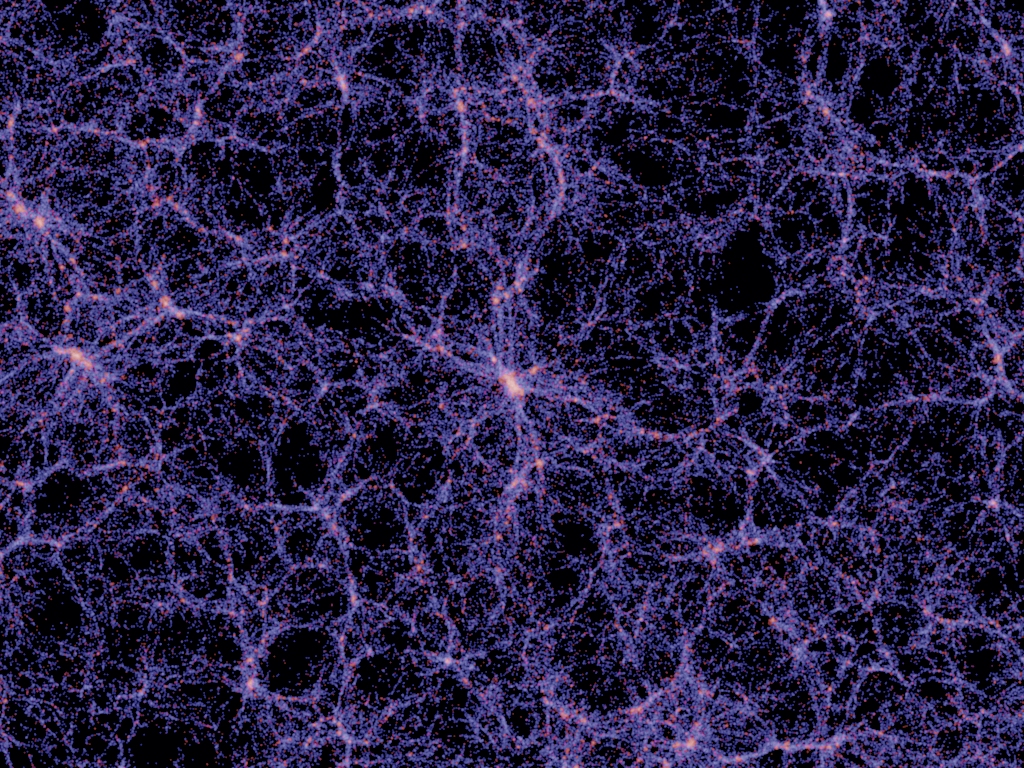
To appreciate what a void is, one must first understand the large-scale structure of the universe. On the grandest scales, matter is not distributed randomly. Instead, galaxies arrange themselves into an intricate network often described as the cosmic web. This web consists of dense filaments of galaxies, massive clusters where filaments intersect, flattened walls of matter, and, between them all, enormous empty regions known as voids.
The cosmic web emerged from tiny fluctuations in density present shortly after the Big Bang. In the early universe, matter was distributed almost uniformly, but slight variations in density allowed gravity to amplify differences over time. Regions that were slightly denser attracted more matter, growing into filaments and clusters. Regions that were slightly less dense lost matter to their surroundings, becoming emptier and emptier as the universe expanded. These underdense regions evolved into cosmic voids.
Voids are therefore not accidental gaps but the natural outcome of gravitational evolution. As matter flows outward toward denser regions, voids expand and become increasingly empty. Their growth is driven not by an outward force, but by the gravitational pull of surrounding structures. In this way, voids are shaped by what they lack as much as by what surrounds them.
Defining the Void: Emptiness with Structure
Despite their name, cosmic voids are not completely empty. They contain dark matter, diffuse gas, and occasional isolated galaxies. However, their density is far lower than the cosmic average. While galaxy clusters may contain thousands of galaxies packed into relatively small volumes, voids may contain only a handful of faint, widely separated galaxies across enormous distances.
The boundaries of voids are not sharply defined like the walls of a room. Instead, they are gradual transitions where galaxy density increases as one approaches filaments and walls. Voids often have roughly spherical or ellipsoidal shapes, though their exact geometry depends on the surrounding distribution of matter. Some voids merge with neighboring voids, forming vast supervoids that span a significant fraction of the observable universe.
Importantly, voids are dynamic environments. As the universe expands, voids grow larger and emptier. Galaxies within voids tend to drift toward their edges, pulled by the gravitational influence of surrounding structures. Over billions of years, this process enhances the contrast between dense regions and empty ones, making the cosmic web more pronounced.
The Loneliness of Space: Life Inside a Void
To imagine life inside a cosmic void is to imagine a universe stripped of spectacle. From within a void, the night sky would appear profoundly different from the one we see on Earth. Galaxies would be few and far between, appearing as faint smudges rather than brilliant spirals and glowing clusters. The rich tapestry of the Milky Way would be absent, replaced by long stretches of darkness punctuated only occasionally by distant light.
This loneliness is not merely aesthetic. The physical conditions inside voids differ from those in denser regions. Gas densities are lower, reducing the rate at which new stars can form. Galaxies that reside in voids tend to be smaller, less massive, and slower to evolve. They often retain large amounts of gas and exhibit simpler structures, suggesting that the quiet environment of a void preserves galaxies in a more primitive state.
From a scientific perspective, this makes void galaxies especially valuable. They offer a glimpse into how galaxies evolve in isolation, free from the disruptive influences of frequent interactions and mergers. In this sense, voids function as cosmic laboratories, allowing physicists and astronomers to study fundamental processes under extreme conditions.
The Physics of Emptiness: Matter, Energy, and Gravity
At first glance, one might assume that voids are regions where physics becomes irrelevant, where nothing happens because nothing is there. In reality, voids are deeply informative about the fundamental laws governing the universe. Their behavior is governed by gravity, dark matter, and dark energy, making them sensitive probes of cosmological theory.
Gravity plays a subtle role within voids. Because matter density is low, gravitational forces are weaker, and structures evolve more slowly. This relative simplicity allows physicists to test models of gravity on large scales. Deviations from expected void behavior could signal the need for modifications to general relativity or point toward new physical phenomena.
Dark energy, the mysterious component driving the accelerated expansion of the universe, also leaves its imprint on voids. As the universe expands faster, voids grow more rapidly, becoming emptier and larger. The rate at which voids expand and evolve can therefore provide indirect evidence about the nature of dark energy. In this way, the loneliest regions of space may hold clues to the universe’s most profound mysteries.
Dark Matter in the Void
Although voids are underdense in visible matter, they are not devoid of dark matter. Dark matter, which does not emit or absorb light but exerts gravitational influence, permeates all regions of the universe. In voids, its density is lower than average, but it still plays a crucial role in shaping structure.
Simulations of cosmic evolution show that dark matter forms a skeletal framework underlying the cosmic web. Even within voids, faint filaments of dark matter can exist, guiding the motion of gas and the formation of rare void galaxies. These delicate structures are difficult to observe directly, but their presence can be inferred through gravitational effects and detailed modeling.
Studying dark matter in voids is particularly important because these regions minimize the complexities associated with dense environments. The relative simplicity of voids allows physicists to isolate the effects of dark matter and test alternative theories that attempt to explain cosmic structure without invoking unseen matter. Thus, voids serve as critical testing grounds for fundamental physics.
The Largest Voids and the Scale of Emptiness
Some voids are so vast that they challenge human comprehension. Supervoids can span hundreds of millions of light-years, dwarfing even the largest galaxy clusters. These immense regions contain so little matter that they significantly influence the propagation of light across the universe.
When light from distant galaxies passes through a large void, it experiences subtle changes due to gravitational effects. These changes can affect measurements of cosmic expansion and the cosmic microwave background radiation. As a result, understanding the distribution and properties of large voids is essential for precision cosmology.
The existence of such enormous empty regions also raises questions about cosmic uniformity. While the universe is statistically homogeneous on very large scales, the presence of supervoids highlights the importance of understanding how structure emerges from randomness. Far from undermining cosmological models, these voids provide crucial evidence supporting theories of structure formation.
The Void and the Arrow of Time
Voids are not only spatial features but also temporal records. Their properties reflect the history of cosmic expansion and the flow of matter over billions of years. In this sense, voids preserve a memory of the universe’s past, encoded in their size, shape, and internal structure.
As the universe evolves, voids become increasingly empty, a process tied to the thermodynamic arrow of time. Matter flows from regions of lower gravitational potential to higher ones, increasing overall entropy. Voids, by losing matter to surrounding structures, exemplify this irreversible process. They are cosmic expressions of time’s forward march, expanding and deepening as the universe ages.
This temporal aspect makes voids valuable for studying cosmic evolution. By comparing voids at different distances, and therefore at different times in the universe’s history, astronomers can trace how emptiness itself evolves. Such studies deepen our understanding of how the universe transitions from its nearly uniform beginnings to its richly structured present.
Philosophical Reflections on Cosmic Emptiness
The void has long occupied a special place in human thought. Philosophers and theologians have debated the nature of nothingness for centuries, often associating emptiness with absence, loss, or fear. Cosmic voids invite a rethinking of these associations. In physics, emptiness is not meaningless; it is informative, dynamic, and essential.
From a philosophical perspective, voids challenge anthropocentric views of the universe. They remind us that most of cosmic space is inhospitable to life as we know it, vast beyond imagination, and largely indifferent to human concerns. Yet this realization can also inspire awe. The fact that such immense emptiness exists, structured by laws that human minds can comprehend, speaks to the profound reach of scientific understanding.
In contemplating voids, one confronts the tension between insignificance and meaning. Humanity occupies a tiny corner of a universe dominated by emptiness, yet through physics, we can map, model, and explain even the loneliest regions of space. This capacity to understand transforms emptiness into knowledge.
The Future of Void Research
As observational techniques improve, voids are becoming increasingly important in cosmological research. Large-scale galaxy surveys map the distribution of matter with unprecedented precision, revealing the detailed structure of voids across cosmic time. Advances in computational modeling allow physicists to simulate void evolution under different assumptions about gravity and dark energy.
Future research aims to use voids as precise tools for testing fundamental theories. By comparing observed void properties with theoretical predictions, physicists hope to constrain the nature of dark energy, test modifications of gravity, and refine models of cosmic evolution. In this context, voids are no longer seen as empty spaces to be ignored, but as rich sources of information.
There is also growing interest in the role of voids in shaping cosmic environments. Their influence on galaxy evolution, intergalactic gas, and large-scale flows of matter continues to be explored. Each new insight reinforces the idea that emptiness is an active participant in the universe’s story.
Conclusion: Emptiness as a Fundamental Feature of the Universe
The void is not a flaw in the universe’s design, nor a mere absence of matter. It is a fundamental feature, born from the same physical laws that create stars and galaxies. By studying voids, physics reveals that emptiness has structure, history, and significance. These loneliest places in space are silent witnesses to cosmic evolution, shaped by gravity, dark matter, and dark energy over billions of years.
In exploring the void, we expand our understanding of what it means for something to exist. The universe is not defined solely by what it contains, but also by what it lacks. Emptiness, far from being meaningless, provides contrast, context, and clarity. It frames the cosmic web, guides the flow of matter, and offers a unique window into the deepest laws of nature.
Ultimately, the study of the void is a reminder that physics is not only about objects and forces, but about relationships and patterns. In the loneliest regions of space, where matter thins and light fades, the universe speaks quietly but profoundly. Listening to that silence, physics finds meaning in emptiness and discovers that even nothing has a story to tell.