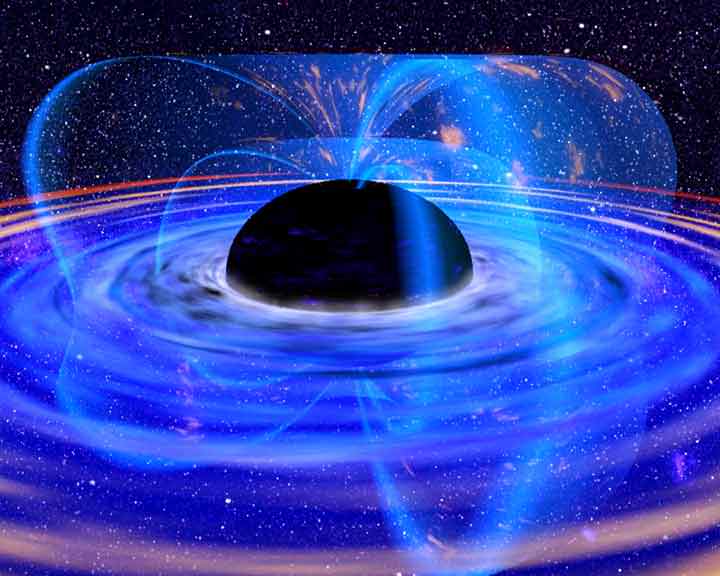
The universe is filled with objects so strange that they seem to belong more to science fiction than reality. Among these cosmic wonders, few are as mysterious and captivating as black holes. They are regions of space where gravity becomes so powerful that nothing—not even light—can escape their grasp. Black holes challenge our understanding of physics, bend space and time, and hide their deepest secrets behind invisible boundaries.
Yet one of the most surprising facts about black holes is that scientists can calculate their size.
This may sound impossible. After all, black holes are famous for swallowing light and concealing everything within them. How can something invisible have a measurable size?
The answer lies in a remarkable concept known as the Schwarzschild radius.
The Schwarzschild radius is one of the most important ideas in modern astrophysics. It provides a way to determine the size of a non-rotating black hole and marks the boundary beyond which escape becomes impossible. This invisible limit, known as the event horizon, separates the observable universe from a region forever hidden from view.
The story of the Schwarzschild radius is not merely about equations and measurements. It is a story about human curiosity, mathematical brilliance, and our effort to understand some of the most extreme objects in existence. It connects the life of a German physicist working during World War I to the modern study of supermassive black holes at the centers of galaxies.
Understanding the Schwarzschild radius means understanding how black holes form, how gravity behaves under extreme conditions, and how the universe itself can twist space and time into extraordinary shapes.
The Mystery of Black Hole Size
When people think about size, they usually imagine physical dimensions.
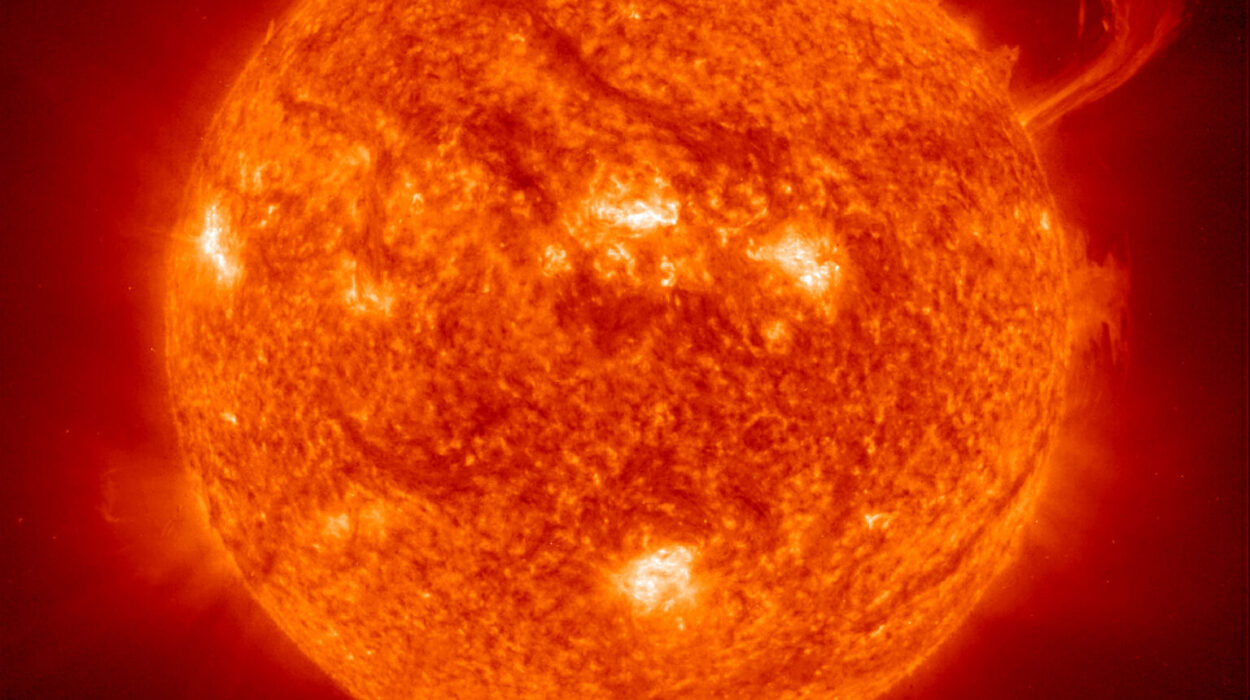
The Earth has a diameter of about 12,742 kilometers. The Moon measures roughly 3,474 kilometers across. The Sun spans approximately 1.39 million kilometers.
These objects have visible surfaces.
Black holes are different.
A black hole does not possess a solid surface like a planet or a star. Instead, it is defined by a boundary in space. Once something crosses this boundary, escape becomes impossible because the required escape velocity exceeds the speed of light.
Since light itself cannot escape, no information can travel outward from within this region.
This raises an intriguing question.
If a black hole has no visible surface, what exactly determines its size?
The answer is the Schwarzschild radius.
Who Was Karl Schwarzschild?
The Schwarzschild radius is named after Karl Schwarzschild, a brilliant German physicist and astronomer.
In 1915, Albert Einstein introduced his revolutionary theory of general relativity. This theory fundamentally changed humanity’s understanding of gravity.
Instead of describing gravity as a force acting across space, Einstein proposed that massive objects bend the fabric of space-time itself.
Objects move along paths determined by this curvature.
Einstein’s equations were incredibly complex.
Many scientists doubted that exact solutions could be found.
Remarkably, Schwarzschild succeeded in solving Einstein’s equations for a simple case: the gravitational field surrounding a perfectly spherical, non-rotating mass.
He accomplished this while serving on the Eastern Front during World War I.
His solution became one of the most important achievements in theoretical physics.
Although Schwarzschild died in 1916, only months after publishing his work, his contribution transformed our understanding of gravity and eventually led to the concept that bears his name.
Understanding Escape Velocity
To understand the Schwarzschild radius, it helps to begin with a familiar concept: escape velocity.
Escape velocity is the speed required to completely overcome the gravitational pull of an object.
Imagine throwing a ball upward.
If thrown gently, it rises and falls back to Earth.
Throw it harder, and it reaches a greater height before returning.
If you could throw it fast enough—about 11.2 kilometers per second—it would never come back.
That speed is Earth’s escape velocity.
Every object with mass has an escape velocity.
The larger and denser the object, the greater the escape velocity.
The Moon has a lower escape velocity than Earth.
The Sun has a much higher one.
Now imagine an object so dense that its escape velocity exceeds the speed of light.
Since nothing can travel faster than light, nothing could escape.
That object would be a black hole.
The distance from the center where this occurs defines the Schwarzschild radius.
Defining the Schwarzschild Radius
The Schwarzschild radius is the radius of a sphere around a mass where the escape velocity equals the speed of light.
If all the mass of an object is compressed within its Schwarzschild radius, a black hole forms.
This radius marks the location of the event horizon for a non-rotating black hole.
The event horizon is not a physical wall.
A spacecraft crossing it would not crash into anything.
Instead, it is a boundary in space-time.
Crossing it means entering a region from which return becomes impossible.
The Schwarzschild radius therefore provides a precise mathematical definition of the size of a black hole.
The Equation Behind the Radius
One reason the Schwarzschild radius is so fascinating is that its equation is surprisingly simple.
The radius depends on only three quantities:
The gravitational constant.
The speed of light.
The mass of the object.
The relationship shows that larger masses produce larger Schwarzschild radii.
Double the mass, and the Schwarzschild radius doubles as well.
This simplicity hides profound consequences.
A black hole’s size depends directly on its mass.
Nothing else is required.
Whether the black hole formed from a collapsing star or resides at the center of a galaxy, its Schwarzschild radius can be calculated from mass alone.
How Small Is Earth’s Schwarzschild Radius?
The Schwarzschild radius often surprises people because it reveals how extreme black hole formation truly is.
Earth contains an enormous amount of mass.
Yet Earth’s Schwarzschild radius is only about 9 millimeters.
That is less than the width of a marble.
If Earth’s entire mass could somehow be compressed into a sphere smaller than 9 millimeters across, it would become a black hole.
Of course, no known natural process could compress Earth to such an extent.
Still, the example illustrates the incredible densities required for black hole formation.
Black holes are not massive simply because they contain large amounts of matter.
They are massive because that matter becomes concentrated into extraordinarily small volumes.
The Sun’s Schwarzschild Radius
The Sun offers another illuminating example.
The Sun contains about 333,000 times Earth’s mass.
Yet its Schwarzschild radius is only about 3 kilometers.
Currently, the Sun’s actual radius is approximately 696,000 kilometers.
To become a black hole, the Sun would need to shrink from its present size to a sphere only a few kilometers wide.
Fortunately for life on Earth, the Sun lacks enough mass to collapse into a black hole when it dies.
Instead, it will eventually become a white dwarf.
This comparison demonstrates just how compact black holes truly are.
Why Black Holes Are Not Cosmic Vacuum Cleaners
Many people imagine black holes as giant cosmic vacuum cleaners sucking in everything nearby.
This popular image is misleading.
The Schwarzschild radius helps explain why.
Suppose the Sun were magically replaced by a black hole of equal mass.
The black hole’s Schwarzschild radius would be only about 3 kilometers.
However, Earth’s orbit would remain almost unchanged.
Gravity depends primarily on mass and distance.
From Earth’s location, the gravitational pull would be essentially identical.
The Earth would continue orbiting normally.
The difference would be that the Sun’s light and heat would disappear.
This thought experiment reveals that black holes are not gravitational monsters simply because they are black holes.
Their gravity becomes extraordinarily intense only near the Schwarzschild radius.
The Event Horizon
The Schwarzschild radius corresponds to one of the most famous features of a black hole: the event horizon.
The event horizon represents the point of no return.
Outside the event horizon, escape remains possible.
Inside it, every future path leads inward.
No rocket, no matter how powerful, could reverse the journey.
Even light cannot escape.
This boundary plays a central role in black hole physics.
It determines what can and cannot communicate with the outside universe.
Events occurring beyond the event horizon become permanently hidden from external observers.
In many ways, the event horizon is what truly makes a black hole a black hole.
Falling Toward a Black Hole
Imagine approaching a black hole.
From your perspective inside a spacecraft, crossing the Schwarzschild radius might initially seem uneventful, especially for a very large black hole.
There would be no visible sign marking the boundary.
No warning lights would flash.
No physical barrier would appear.
Yet something extraordinary would happen from the viewpoint of a distant observer.
As you approached the event horizon, the light you emitted would become increasingly redshifted.
Your clock would appear to run slower.
Your motions would seem to gradually freeze.
To distant observers, you would appear to approach the Schwarzschild radius more and more slowly without ever quite crossing it.
This strange effect arises from Einstein’s theory of general relativity.
Space and Time Near the Schwarzschild Radius
The Schwarzschild radius is not merely about gravity.
It also involves the structure of space and time themselves.
Einstein showed that gravity affects the passage of time.
Near massive objects, time flows more slowly.
This phenomenon is called gravitational time dilation.
Near the Schwarzschild radius, time dilation becomes extreme.
Clocks close to the event horizon tick far more slowly than clocks far away.
In theory, time appears to stop entirely at the event horizon from the perspective of distant observers.
This astonishing prediction has been confirmed in weaker forms through experiments involving Earth, satellites, and atomic clocks.
Black holes represent the ultimate expression of this effect.
The Formation of Stellar Black Holes
The Schwarzschild radius plays a crucial role in understanding black hole formation.
Massive stars spend millions of years balancing gravity against pressure generated by nuclear fusion.
Fusion creates outward pressure.
Gravity pulls inward.
As long as fusion continues, the star remains stable.
Eventually, the fuel runs out.
Without sufficient pressure to resist gravity, the core collapses.
If the remaining mass is large enough, the collapse becomes unstoppable.
The core shrinks below its Schwarzschild radius.
At that moment, a black hole forms.
The event horizon appears, sealing the interior from the outside universe.
The Schwarzschild radius marks the threshold between an ordinary object and a black hole.
Supermassive Black Holes
While stellar black holes form from collapsing stars, the universe also contains much larger examples.
Supermassive black holes reside at the centers of most large galaxies.
These objects contain millions or billions of times the Sun’s mass.
As mass increases, so does the Schwarzschild radius.
A black hole containing one million solar masses has a Schwarzschild radius of roughly three million kilometers.
A billion-solar-mass black hole possesses a radius measured in billions of kilometers.
Despite their enormous masses, these black holes still obey the same fundamental relationship discovered by Schwarzschild.
The equation works equally well for all black holes.
Sagittarius A* and Our Galactic Center
At the center of the Milky Way lies a supermassive black hole known as Sagittarius A*.
It contains approximately four million times the Sun’s mass.
Its Schwarzschild radius is roughly twelve million kilometers.
That may sound enormous.
Yet compared with the size of the Milky Way, it is astonishingly small.
The entire galaxy spans about 100,000 light-years.
This contrast highlights one of the great paradoxes of black holes.
They can contain extraordinary amounts of mass while occupying relatively compact regions.
Measuring Black Hole Sizes
Astronomers cannot directly observe black holes because they emit no light.
Instead, they infer black hole sizes using indirect methods.
One approach involves measuring the motions of nearby stars and gas.
The stronger the gravitational influence, the more massive the black hole.
Once the mass is known, the Schwarzschild radius can be calculated.
This simple connection allows scientists to estimate the sizes of black holes throughout the universe.
Even though black holes themselves remain invisible, their effects reveal their presence.
The Event Horizon Telescope
In 2019, humanity achieved a historic milestone.
The Event Horizon Telescope Collaboration released the first image of a black hole’s shadow.
The target was the supermassive black hole at the center of the galaxy Messier 87.
The image showed a bright ring surrounding a dark central region.
This dark area corresponds closely to the black hole’s event horizon and Schwarzschild radius.
For the first time, humanity observed evidence of a boundary predicted more than a century earlier.
The image represented a triumph for both theory and observation.
Karl Schwarzschild’s mathematical insight had become visible reality.
Rotating Black Holes and Beyond
The original Schwarzschild solution describes an idealized black hole that does not rotate.
Real black holes almost certainly spin.
Rotating black holes are described by a more advanced solution known as the Kerr metric.
These black holes possess more complicated structures.
Their event horizons differ slightly from the Schwarzschild case.
Additional features, such as the ergosphere, emerge.
Nevertheless, the Schwarzschild radius remains a crucial starting point.
It provides the foundation upon which more sophisticated black hole models are built.
The Relationship Between Mass and Size
One of the most counterintuitive aspects of black holes is how their average density changes with size.
Small black holes can possess extraordinarily high densities.
Supermassive black holes, however, may have average densities comparable to water or even lower.
This happens because the Schwarzschild radius grows linearly with mass while volume increases more rapidly.
As black holes become larger, their average density can actually decrease.
This surprising fact challenges many common assumptions about black holes.
The Schwarzschild radius reveals that size and density are not always related in intuitive ways.
The Schwarzschild Radius and Cosmic Imagination
The Schwarzschild radius occupies a unique place in science.
It represents a boundary where everyday intuition begins to fail.
Within this radius, gravity dominates so completely that space and time behave in ways unlike anything we experience on Earth.
The concept inspires countless questions.
What happens beyond the event horizon?
Can information escape?
Do singularities truly exist?
Might black holes connect to other regions of space-time?
Many of these questions remain unresolved.
The Schwarzschild radius stands at the edge of our current understanding.
Beyond it lies one of nature’s deepest mysteries.
Why the Schwarzschild Radius Matters
The Schwarzschild radius is far more than a mathematical curiosity.
It provides the fundamental measure of black hole size.
It explains when an object becomes a black hole.
It defines the event horizon.
It connects gravity, light, space, and time into a single elegant concept.
Without the Schwarzschild radius, modern black hole physics would not exist.
It serves as the bridge between Einstein’s theory of general relativity and the observable universe.
Through this concept, astronomers can estimate black hole dimensions, understand stellar collapse, and investigate some of the most extreme environments known.
Few scientific ideas have had such a profound impact on our view of the cosmos.
Conclusion
The Schwarzschild radius is the critical distance around a mass where the escape velocity equals the speed of light. If an object is compressed within this radius, it becomes a black hole. For non-rotating black holes, the Schwarzschild radius defines the event horizon—the invisible boundary beyond which nothing can return.
Born from Karl Schwarzschild’s remarkable solution to Einstein’s equations, this concept transformed our understanding of gravity and revealed how space and time behave under extreme conditions. From stellar black holes formed by dying stars to supermassive giants lurking at the centers of galaxies, the Schwarzschild radius provides a simple yet powerful way to determine black hole size.
More than a century after its discovery, the Schwarzschild radius remains one of the most important ideas in astrophysics. It helps scientists explore black holes, interpret observations, and investigate the deepest mysteries of the universe. In a cosmos filled with wonders, few concepts capture the imagination quite like the invisible boundary that marks the edge of the unknown.