Look up at the night sky and you are seeing a universe in motion. Stars are being born inside vast clouds of gas. Others are shining steadily in the prime of their lives. Some are exploding in spectacular cosmic deaths. And countless stars have already reached the final chapters of their existence.
Among the most fascinating of these stellar remnants is the white dwarf.
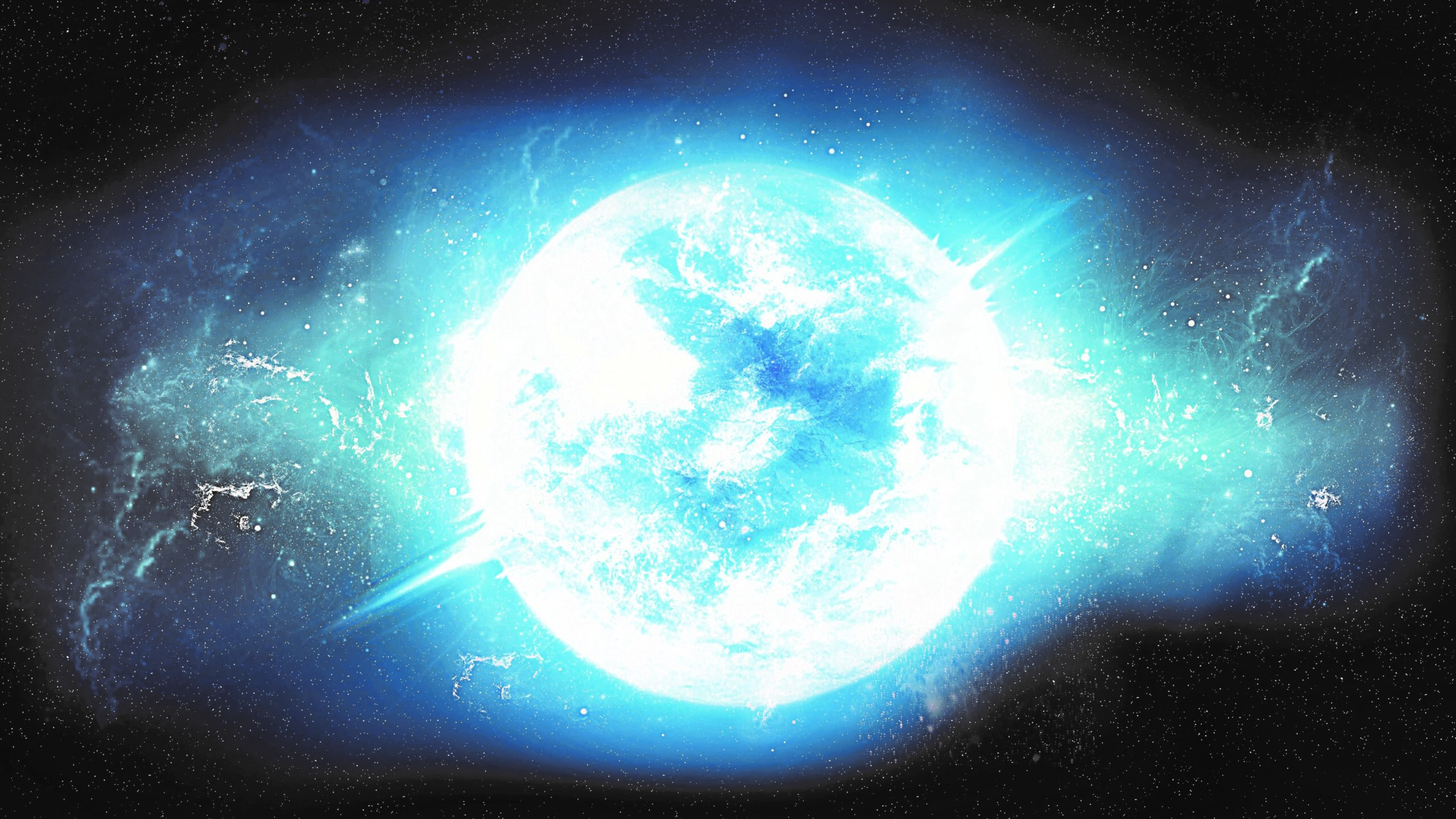
A white dwarf is not a giant star blazing with fresh nuclear energy. It is not a black hole swallowing everything around it. It is not a neutron star with extreme magnetic fields and rapid spins. Instead, a white dwarf is something quieter and, in many ways, more poetic. It is the glowing core left behind after a Sun-like star has exhausted its fuel and shed its outer layers into space.
Imagine a campfire at the end of the night. The flames are gone, but glowing embers remain. They are still hot and bright, slowly releasing the heat they accumulated during the fire’s lifetime. A white dwarf is somewhat like one of those cosmic embers—an incredibly hot stellar core that continues shining long after the star itself has died.
These strange objects are among the most common stellar remnants in the universe. They represent the future of our own Sun and offer astronomers a glimpse into the distant fate of countless stars. Although they are relatively small compared to ordinary stars, white dwarfs are among the densest objects known in the cosmos.
Understanding white dwarfs means understanding one of the most important stages in stellar evolution. It is a story of birth, transformation, collapse, survival, and an unimaginably slow fade into darkness.
The Life Story of a Star
To understand a white dwarf, we must first understand the life of the star that creates it.
Stars are born inside enormous clouds of gas and dust scattered throughout galaxies. Over time, gravity pulls this material together into dense regions. As more gas accumulates, pressure and temperature rise.
Eventually, the center becomes so hot that hydrogen atoms begin fusing into helium.
This process, called nuclear fusion, is what powers a star.
Fusion releases tremendous amounts of energy. That energy creates an outward pressure that balances the inward pull of gravity. As long as this balance exists, the star remains stable.
For billions of years, stars spend most of their lives in this phase, known as the main sequence.
Our Sun is currently in this stage.
However, no star can burn forever.
Eventually, the hydrogen fuel in the core begins to run out. The delicate balance that sustained the star for billions of years starts to change.
This is where the path toward becoming a white dwarf begins.
When a Star Runs Out of Fuel
As hydrogen disappears from the core, fusion slows down.
Without enough fusion energy pushing outward, gravity begins squeezing the core inward.
This compression raises temperatures dramatically.
The outer layers of the star respond by expanding outward. The star swells into a red giant, becoming far larger than it was during its main-sequence life.
In the future, our Sun will become a red giant.
Its outer atmosphere may expand beyond the current orbit of Mercury and possibly even Venus. Earth itself could become uninhabitable long before this expansion reaches its maximum extent.
Inside the red giant, new fusion reactions begin.
Helium fuses into heavier elements such as carbon and oxygen.
For a time, this provides a new source of energy.
But eventually, the helium fuel also becomes exhausted.
At this point, stars with masses similar to the Sun face a critical limitation.
They do not possess enough mass to continue fusing heavier elements efficiently.
The fusion engine shuts down.
The star is nearing its end.
The Birth of a White Dwarf
Without active fusion, the outer layers of the red giant become unstable.
Strong stellar winds carry enormous amounts of material away into space.
The star effectively sheds its outer atmosphere.
These expelled layers often create beautiful glowing shells known as planetary nebulae.
Despite the name, planetary nebulae have nothing to do with planets.
Early astronomers simply thought they resembled planets when viewed through small telescopes.
As the outer layers drift away, the hot core becomes exposed.
This naked core is the white dwarf.
What remains is primarily carbon and oxygen compressed into an extraordinarily small volume.
The star that once may have been millions of kilometers across now becomes an object roughly the size of Earth.
Yet it still contains much of the original star’s mass.
This creates one of the strangest objects in astronomy.
Why White Dwarfs Are White
The name “white dwarf” comes from both appearance and size.
When a white dwarf first forms, its surface temperature can exceed 100,000 degrees Celsius.
That is far hotter than the surface of the Sun.
At such temperatures, it glows intensely.
Much of its light appears white or bluish-white.
Although white dwarfs are extremely hot, they are also very small.
Their tiny size means they produce less total light than large stars despite having hotter surfaces.
This combination of small size and brilliant white appearance inspired the name.
Over time, however, white dwarfs cool.
Their color gradually changes as temperatures decrease.
Eventually they become yellowish, reddish, and much dimmer.
But this cooling process takes billions and billions of years.
A Star Packed Into the Size of Earth
One of the most astonishing characteristics of white dwarfs is their density.
Consider the Sun.
Its diameter is about 1.39 million kilometers.
A white dwarf formed from the Sun would be only slightly larger than Earth, roughly 12,000 kilometers across.
Imagine compressing nearly the entire mass of the Sun into a volume comparable to our planet.
The result is mind-boggling density.
A teaspoon of white dwarf material would weigh several tons on Earth.
Some estimates suggest a single teaspoon could weigh as much as an elephant or even more.
This density is so extreme that ordinary matter behaves in unusual ways.
The physics inside a white dwarf differs dramatically from anything we experience in daily life.
The Strange Physics of Electron Degeneracy
Normally, gravity causes objects to collapse inward unless some force resists it.
In ordinary stars, the pressure generated by nuclear fusion provides that resistance.
But white dwarfs no longer produce fusion energy.
So what keeps them from collapsing further?
The answer lies in quantum mechanics.
Inside a white dwarf, matter becomes so compressed that electrons are forced into extremely crowded conditions.
Quantum physics contains a rule known as the Pauli Exclusion Principle.
This principle states that certain particles cannot occupy exactly the same quantum state.
As electrons become packed together, they resist further compression.
This creates a pressure called electron degeneracy pressure.
Unlike ordinary gas pressure, electron degeneracy pressure does not depend on temperature.
Even if the white dwarf cools, this pressure remains.
It is powerful enough to support the star against gravity.
Without it, white dwarfs could not exist.
The Discovery of White Dwarfs
The first white dwarf discovered was a surprising mystery.
In the nineteenth century, astronomers studying the bright star Sirius noticed something unusual.
Sirius appeared to wobble slightly.
This suggested an unseen companion was orbiting it.
Eventually astronomers detected the companion directly.
It became known as Sirius B.
At first, scientists were puzzled.
Sirius B was faint despite having a temperature comparable to or even higher than many normal stars.
Its low brightness indicated it must be extremely small.
Yet calculations showed it possessed significant mass.
The combination seemed impossible.
Only later did physicists realize they were observing an entirely new type of stellar object.
White dwarfs had entered the scientific story.
The Chandrasekhar Limit
One of the most important discoveries about white dwarfs came from the Indian-American astrophysicist Subrahmanyan Chandrasekhar.
While still a young scientist, Chandrasekhar calculated that white dwarfs have a maximum possible mass.
If a white dwarf becomes too massive, electron degeneracy pressure can no longer support it.
This critical value is approximately 1.4 times the mass of the Sun.
Today it is known as the Chandrasekhar Limit.
This limit plays a crucial role in stellar evolution.
White dwarfs below the limit remain stable.
Those that exceed it face dramatic consequences.
The discovery fundamentally changed astronomy and eventually earned Chandrasekhar the Nobel Prize.
Can White Dwarfs Explode?
Although white dwarfs are usually stable, under certain circumstances they can become extraordinarily dangerous.
Many white dwarfs exist in binary systems alongside another star.
If the companion star transfers material onto the white dwarf, the white dwarf gains mass.
As it approaches the Chandrasekhar Limit, conditions become increasingly unstable.
Eventually runaway nuclear reactions may ignite.
The result is a Type Ia supernova.
These explosions are among the most powerful events in the universe.
For a brief period, a single exploding white dwarf can outshine an entire galaxy.
Unlike some other supernova types, Type Ia supernovae are remarkably consistent in brightness.
Astronomers use them as cosmic measuring tools to determine distances across the universe.
Their study even contributed to the discovery that cosmic expansion is accelerating.
The Composition of White Dwarfs
Most white dwarfs consist primarily of carbon and oxygen.
These elements are produced during the final fusion stages of Sun-like stars.
However, not all white dwarfs are identical.
Some contain helium-rich cores.
Others contain larger amounts of oxygen, neon, and magnesium.
The exact composition depends on the original star’s mass and evolutionary history.
The outer atmosphere of a white dwarf is usually composed of hydrogen or helium.
Because gravity is so strong, heavier elements sink toward the interior.
This creates remarkably pure surface layers.
Studying these atmospheres helps astronomers learn about stellar evolution and chemical processes throughout the galaxy.
White Dwarfs and Planetary Systems
One of the most intriguing discoveries of recent decades is that white dwarfs can reveal information about ancient planetary systems.
When stars die, their planets may survive.
Some planets continue orbiting the white dwarf remnant.
Others are disrupted by gravitational forces.
Fragments of asteroids, moons, and planets sometimes fall onto the white dwarf’s surface.
Because heavy elements should normally sink beneath the atmosphere, astronomers can detect fresh contamination from these falling materials.
In effect, white dwarfs act as cosmic forensic laboratories.
They preserve evidence of planetary systems that existed billions of years ago.
These observations provide clues about the future of our own Solar System.
What Will Happen to the Sun?
Perhaps the most personal reason to study white dwarfs is that our Sun will become one.
The Sun is about 4.6 billion years old and roughly halfway through its main-sequence lifetime.
In about five billion years, it will expand into a red giant.
Its outer layers will eventually drift into space.
A glowing planetary nebula will form around the dying star.
At the center, the remaining core will become a white dwarf.
This white dwarf will likely contain about half the Sun’s current mass.
It will initially shine brightly due to its immense heat.
Then it will slowly cool over trillions of years.
Long after Earth is gone and the familiar Solar System has changed beyond recognition, the Sun’s white dwarf remnant will continue quietly radiating heat into space.
The Cooling Process
Unlike ordinary stars, white dwarfs generate almost no new energy.
They shine because they retain heat from earlier stages of their lives.
Think of a hot iron removed from a furnace.
It remains hot for some time but gradually cools.
White dwarfs behave similarly.
The difference is the timescale.
Because they contain so much heat and lose it slowly, cooling takes billions of years.
Young white dwarfs can be extremely hot.
Older ones become progressively cooler and dimmer.
Astronomers can estimate the ages of white dwarfs by measuring their temperatures.
This technique helps determine the ages of star clusters and portions of our galaxy.
In a sense, white dwarfs serve as cosmic clocks.
The Concept of a Black Dwarf
What happens when a white dwarf cools completely?
In theory, it eventually becomes a black dwarf.
A black dwarf would no longer emit significant visible light or heat.
It would be a cold, dark stellar remnant.
However, there is a fascinating complication.
The universe is not old enough for any black dwarfs to exist.
White dwarfs cool incredibly slowly.
The process requires trillions of years—far longer than the universe’s current age of approximately 13.8 billion years.
As a result, every white dwarf ever formed is still cooling.
Black dwarfs remain hypothetical objects.
No one has ever observed one.
White Dwarfs Across the Galaxy
White dwarfs are extremely common.
Astronomers estimate that the Milky Way contains billions of them.
Most stars eventually become white dwarfs.
Since low- and medium-mass stars vastly outnumber massive stars, white dwarfs represent the most common final state of stellar evolution.
Many are difficult to detect because they are relatively faint.
Nevertheless, modern surveys continue identifying new examples.
Each discovery adds valuable information about the history of our galaxy.
White dwarfs effectively preserve records of earlier generations of stars.
By studying them, astronomers reconstruct the Milky Way’s past.
White Dwarfs and the Fate of the Universe
White dwarfs also play a role in understanding the universe’s distant future.
Current theories suggest that stars will eventually stop forming as gas supplies become depleted.
Galaxies will gradually grow darker.
In that far-future cosmos, white dwarfs may become some of the most common luminous objects.
Over unimaginable spans of time, they will cool toward darkness.
Eventually, the universe may enter an era dominated by cold stellar remnants.
White dwarfs therefore represent not only the fate of individual stars but also a glimpse into the future evolution of the cosmos itself.
Observing White Dwarfs Today
Modern telescopes have revealed remarkable details about white dwarfs.
Space observatories measure their temperatures and compositions.
Ground-based telescopes track their motions and brightness changes.
Some white dwarfs exhibit pulsations, gently expanding and contracting over time.
These pulsations allow astronomers to probe their interiors.
The technique is similar to how geologists use earthquakes to study Earth’s interior structure.
By analyzing stellar vibrations, scientists learn about density, composition, and internal layers hidden beneath the surface.
White dwarfs continue serving as natural laboratories for testing physics under extreme conditions.
The Beauty of Stellar Remnants
At first glance, a white dwarf might seem less dramatic than a supernova or a black hole.
It does not explode spectacularly.
It does not bend space into an abyss.
It does not generate jets stretching across galaxies.
Yet there is something deeply moving about these objects.
A white dwarf is the surviving heart of a once-living star.
It represents endurance.
It represents transformation.
It represents the long aftermath of cosmic change.
Everything that made the original star shine has ended.
The nuclear furnace is gone.
The giant atmosphere has vanished.
Yet the core remains, glowing quietly through the darkness.
In many ways, white dwarfs remind us that endings are rarely absolute.
Even after a star dies, part of it continues its journey.
Why White Dwarfs Matter
White dwarfs are far more than astronomical curiosities.
They help scientists understand stellar evolution, galactic history, planetary systems, quantum mechanics, and cosmology.
They provide evidence about the past and clues about the future.
They reveal how ordinary stars live and die.
They allow astronomers to measure cosmic distances.
They help estimate the ages of stellar populations.
They demonstrate how quantum physics shapes the universe on astronomical scales.
Few objects connect so many different areas of science.
Through white dwarfs, researchers gain insight into some of the deepest questions in astrophysics.
Conclusion
A white dwarf is the final cooling ember of a Sun-like star—a dense, Earth-sized remnant left behind after billions of years of nuclear fusion. Formed when a star exhausts its fuel and sheds its outer layers, a white dwarf preserves the stellar core while slowly radiating away its remaining heat.
Though small in size, white dwarfs are among the densest objects in the universe. Supported by the strange laws of quantum mechanics, they challenge our understanding of matter and reveal the extraordinary possibilities hidden within nature.
These stellar remnants are not rare exceptions. They are the destiny of most stars, including our own Sun. Billions of white dwarfs already drift through the Milky Way, each carrying the story of a star that once shone brightly.
Perhaps the most remarkable thing about white dwarfs is the perspective they provide. They remind us that stars, like all things, have life cycles. They are born, they evolve, and they eventually fade. Yet even in death, they continue contributing to the story of the universe.
Long after their brilliant days have ended, white dwarfs remain as glowing memories of stellar lives—a final, cooling light shining quietly against the vast darkness of space.