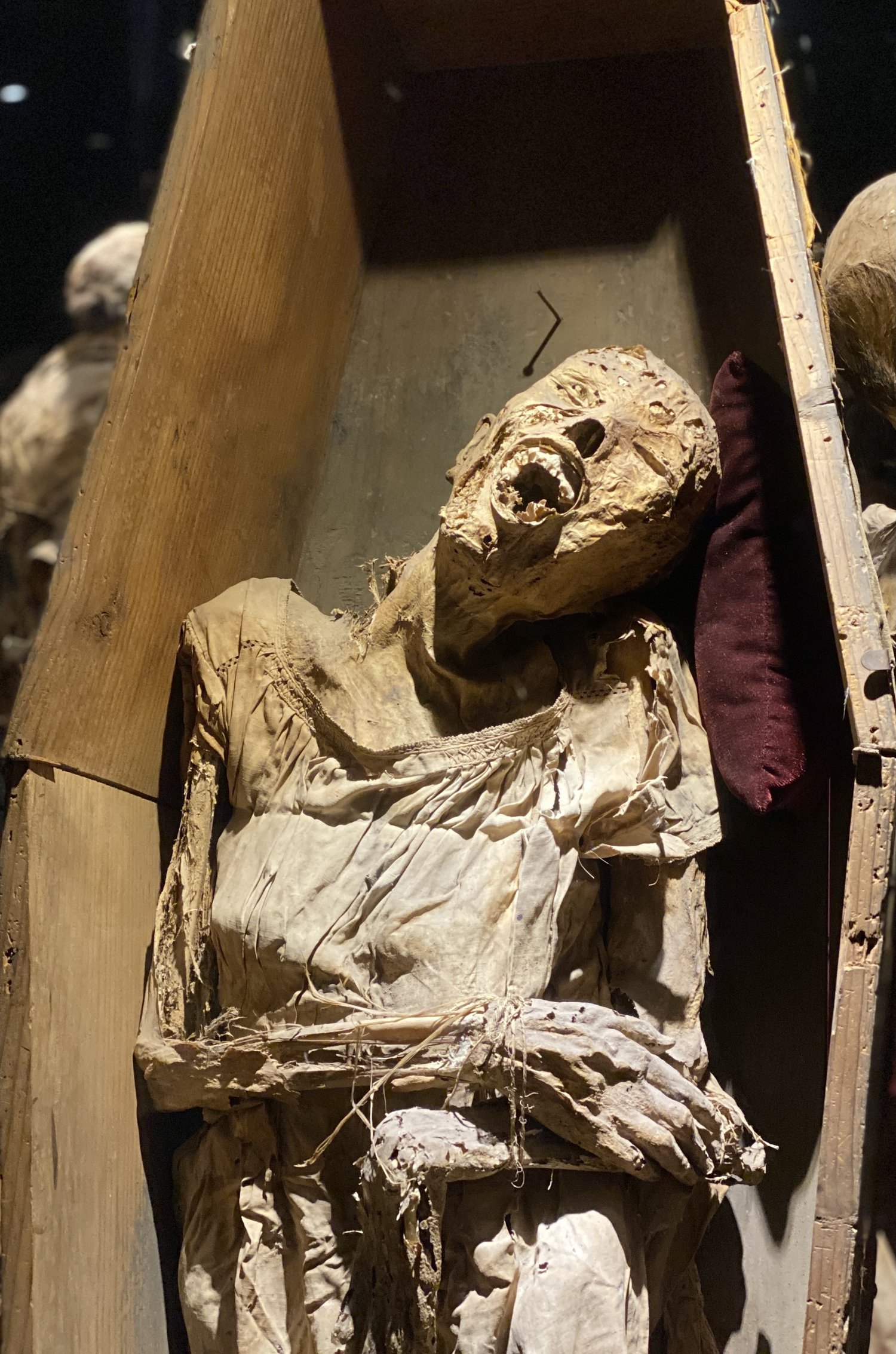
A mummy is a human or animal body whose soft tissues have been preserved after death, either through deliberate treatment or through natural environmental conditions. Unlike ordinary remains, which gradually decompose, mummies retain some combination of skin, hair, muscles, and internal organs. Some preserve remarkably recognizable facial features, clothing, and other details of life thousands of years ago.
Mummification occurs when the processes that normally break down a body are slowed or stopped. Ancient people learned to preserve the dead through carefully developed techniques, while certain environments produced mummies without human intervention. Although mummies are often associated with ancient Egypt, people in many parts of the world practiced body preservation for different cultural, religious, and practical reasons.
Understanding how mummies form reveals the relationship between chemistry, biology, climate, and human beliefs about death. It also explains why some bodies survive for millennia while others decompose within weeks or months.
What happens to a body after death?
After death, the human body begins to break down through several interconnected processes. Two of the most important are autolysis and putrefaction.
Autolysis is the self-digestion of cells. While a person is alive, cells maintain conditions that keep digestive enzymes under control. After death, these systems stop functioning, allowing enzymes to break down cellular structures and release their contents. Soft tissues gradually lose their organization.
Putrefaction is decomposition driven largely by microorganisms, including bacteria that live naturally in the body. As these organisms break down tissues, they produce gases and other compounds that change the body’s appearance and eventually cause its soft structures to disintegrate. Insects, scavengers, moisture, and environmental conditions can accelerate the process.
Mummification becomes possible when these normal processes are interrupted or greatly slowed. Removing moisture is particularly effective because most microorganisms need available water to grow and carry out the chemical reactions involved in decomposition. Extreme cold can also slow microbial activity and enzyme-driven breakdown, while certain chemical conditions can preserve tissues by altering the molecules that make them up.
The result depends on the circumstances. A preserved body may retain much of its skin and muscle, or it may consist mainly of dried skin covering the bones. Mummification does not necessarily preserve every tissue equally, and even exceptionally well-preserved bodies undergo chemical changes over time.
How ancient Egyptians made mummies
Ancient Egypt developed one of the best-known and most elaborate systems of deliberate mummification. Its methods evolved over thousands of years, and practices varied according to the period, the resources available, and the status of the deceased.
For many ancient Egyptians, preserving the body was connected to religious beliefs about the afterlife. The body was considered important to the continued existence of the deceased, making its preservation a central part of certain burial traditions. Mummification was therefore both a practical process and a religious undertaking.
Preparing the body
In the most elaborate forms of Egyptian mummification, specialists began by washing and preparing the body. They removed many of the internal organs because these tissues decompose relatively quickly. The liver, lungs, stomach, and intestines were often preserved separately, sometimes in containers known as canopic jars.
The brain was frequently removed through the nose using specialized instruments, although techniques varied over time. Unlike the heart, which was generally considered important to a person’s identity and spiritual existence, the brain did not occupy the same central role in traditional Egyptian beliefs. The heart was often left in place, though practices were not universal.
Removing internal organs reduced the amount of moisture-rich tissue inside the body and helped limit decomposition. The organs themselves could also be treated with drying materials and wrapped for separate preservation.
Not every mummy underwent the same procedure. More expensive treatments involved greater care and more extensive preparation, while less costly methods could be simpler.
Drying the body with natron
One of the most important materials in Egyptian mummification was natron, a naturally occurring mixture of salts that includes sodium carbonate and sodium bicarbonate, along with other salts. Its composition varied depending on the source.
After preparing the body, embalmers covered it with natron or placed it in contact with the material for an extended period. The salts drew moisture out of the tissues, producing a dry environment in which many microorganisms could no longer function effectively.
This step was essential because simply wrapping a body would not prevent decomposition if the tissues remained moist. Drying transformed the body into a more stable form, substantially reducing the biological activity responsible for decay.
The treatment also changed the appearance and texture of the tissues. Skin became dry and leathery, and some tissues shrank as they lost water. Although this process preserved much of the body’s structure, it did not stop every chemical reaction. Mummies could continue to deteriorate through exposure to humidity, oxygen, pollutants, and handling.
Applying oils, resins, and wrappings
Once the body had dried, embalmers could treat it with oils, resins, and other substances before wrapping it in linen. Resins derived from plants were particularly useful because they could form protective coatings and help bind or seal parts of the wrapping.
The wrappings supported the fragile, dried tissues and helped maintain the body’s shape. Layers of linen could also contain amulets and other objects intended to provide protection in the afterlife. In some periods, the outer layers were decorated with painted coverings, masks, or elaborate coffins.
These materials served several purposes. They contributed to the ritual significance of the burial, protected the body from some forms of physical disturbance, and created additional barriers between the remains and the surrounding environment.
However, the wrappings alone were not responsible for long-term preservation. The success of Egyptian mummification depended heavily on effective drying, careful preparation, and the conditions in which the mummy was subsequently stored.
How natural mummies form without human intervention
People do not need to prepare a body for mummification to occur. Nature can preserve human and animal remains when environmental conditions interfere with decomposition. In some cases, these conditions preserve tissues that would otherwise disappear relatively quickly.
Natural mummification generally depends on limiting microbial activity, reducing the availability of water, or slowing the chemical reactions that break down tissues. Different environments achieve these effects in different ways.
Desert heat and dryness
Hot, dry deserts can preserve bodies by causing rapid dehydration. When moisture evaporates before decomposition advances very far, the skin and other tissues can dry into a leathery state.
The key factor is not heat alone but the balance between moisture loss and tissue breakdown. High temperatures can accelerate decomposition when moisture is available, so a hot, humid environment is not equivalent to a dry desert.
Some naturally preserved bodies in arid regions owe their survival to the combined effects of low humidity, rapid drying, and limited exposure to moisture after death. Ancient Egypt’s climate helped preserve some remains even when deliberate embalming was absent or incomplete.
Ice and extreme cold
Cold environments can preserve bodies by slowing the activity of microorganisms and the chemical reactions involved in decomposition. When tissues freeze, much of their water becomes ice and is less available for microbial activity.
Glaciers, frozen ground, and other persistently cold settings can preserve skin, hair, clothing, and sometimes internal organs. However, freezing does not guarantee permanent preservation. When a body thaws, decomposition can resume, and repeated freezing and thawing can damage tissues.
Ice-preserved bodies may also undergo changes caused by pressure, dehydration, and the movement of water within tissues. Their condition depends on how consistently cold the environment remains and how the remains are exposed after discovery.
Bogs and waterlogged environments
Peat bogs can preserve some bodies through a different combination of conditions. These wetlands are often acidic, low in oxygen, and rich in organic material. The lack of oxygen restricts many decomposition processes, while the acidic water can alter skin and other tissues.
Some bog bodies retain recognizable facial features and remarkably preserved skin. Yet preservation is selective: the same conditions that protect certain soft tissues can damage bones by dissolving mineral components. A body may therefore retain its external appearance while its skeleton becomes fragile or partially disappears.
Not all wetlands produce the same results. Water chemistry, temperature, oxygen availability, and the properties of the surrounding peat all influence whether remains survive.
Dry caves and sheltered environments
Caves, rock shelters, and other protected spaces can also support natural mummification when they remain sufficiently dry and stable. Limited rainfall, low humidity, and protection from direct sunlight or scavengers may allow bodies to dehydrate gradually.
In some locations, airflow helps remove moisture, while stable temperatures reduce fluctuations that might otherwise encourage deterioration. Other caves are damp and unsuitable for preservation, demonstrating that the word cave alone does not explain why a body survives.
Natural mummification is therefore not a single process. It is the outcome of environmental conditions that disrupt the usual sequence of decomposition.
The science behind long-term preservation
The central challenge in preserving a body is controlling the conditions that allow tissues to break down. Water, temperature, oxygen, microorganisms, and chemical reactions all play roles, but their importance varies with the preservation method.
Water is especially important because cells and microorganisms depend on it for many biological and chemical processes. Removing water reduces the activity of bacteria and fungi and slows many reactions that degrade proteins and other biological molecules. Salt-based drying, desert dehydration, and some forms of freeze-drying exploit this principle in different ways.
Temperature affects both microbial growth and the speed of chemical reactions. Cold generally slows decomposition, while warmth can accelerate it when sufficient moisture is present. Under extremely dry conditions, however, moisture loss can outweigh the effects of heat, allowing a body to become preserved.
Oxygen also influences decomposition. Many microorganisms use oxygen, although others can function without it. Consequently, excluding oxygen alone does not guarantee preservation. An oxygen-poor environment may slow some forms of decay while allowing others to continue.
Chemical conditions matter as well. Acidity can preserve certain tissues while damaging others, as seen in bog bodies. Plant resins and other embalming substances may provide protective coatings or alter the environment around tissues, but their effects depend on their composition and application.
These factors interact rather than acting independently. A body preserved by freezing may deteriorate rapidly after thawing, while a naturally dried body may remain stable for centuries if it stays dry. Even a well-preserved mummy can suffer damage when exposed to changing humidity, heat, light, or microorganisms.
How scientists study mummies
Mummies provide evidence about ancient lives that skeletal remains alone cannot always reveal. Skin, hair, nails, clothing, and preserved organs can help researchers investigate health, diet, disease, physical appearance, and burial practices.
Scientists use a combination of imaging, chemical analysis, microscopy, and other laboratory methods to study preserved remains. Each technique answers different questions, and researchers must account for the changes that occur during mummification.
Computed tomography, commonly called CT scanning, uses X-rays to create detailed cross-sectional images of the body. These images can reveal bones, preserved organs, injuries, dental conditions, and objects concealed beneath wrappings. Because researchers can examine many features without unwrapping the mummy, CT scanning helps reduce unnecessary physical disturbance.
Chemical analysis can identify substances used during embalming and sometimes reveal information about diet or environmental exposure. Researchers may examine residues in wrappings, resins, and other materials to understand how a body was prepared. Such findings can also help distinguish different preservation traditions.
DNA analysis may provide clues about ancestry, biological relationships, and certain infections. However, ancient DNA is often fragmented and chemically damaged. Samples can also be contaminated by modern human DNA or microorganisms introduced during excavation and handling. Results must therefore be interpreted carefully rather than treated as complete or definitive accounts of an individual’s history.
Preserved tissues may contain evidence of disease, but diagnosis is not always straightforward. A visible lesion can have several possible causes, and mummification may distort organs or create changes that resemble disease. Scientists compare multiple lines of evidence whenever possible and distinguish what the remains demonstrate from what can only be inferred.
What mummies can and cannot tell us
Mummies offer an unusual record of the past because they preserve parts of the body that normally disappear. They can reveal details of clothing, grooming, medical treatment, burial customs, and the physical effects of disease or injury. When combined with archaeological evidence, they can also help researchers understand trade, technology, social differences, and religious beliefs.
Yet mummies are incomplete historical records. Soft tissues survive selectively, and preservation can change the appearance and chemistry of the remains. A body preserved in a desert will not provide exactly the same evidence as one recovered from ice or a bog.
The circumstances of burial also influence which people become available for study. Elaborately prepared Egyptian mummies, for example, often reflect access to specialized labor and resources. They cannot automatically represent the health, diet, or living conditions of the entire population.
Scientific interpretation also depends on context. The position of a body, the materials used in burial, and the objects found nearby may help researchers reconstruct past practices, but individual details can remain uncertain. Not every injury reveals how a person died, and not every preserved sign of disease establishes the cause of death.
Mummies are best understood as physical evidence that must be interpreted alongside other sources. Their preservation makes certain questions possible, but it does not eliminate the uncertainties inherent in reconstructing ancient lives.
Why mummies eventually deteriorate
Even exceptionally well-preserved mummies are vulnerable to environmental change. A body that remains stable in a dry tomb may deteriorate when exposed to humid air, fluctuating temperatures, or direct handling.
When a dried mummy absorbs moisture, microorganisms may become active again, and tissues can soften or weaken. Changes in humidity can also cause wrappings and preserved skin to expand and contract, increasing the risk of cracking. Light and oxygen can contribute to chemical changes, while dust, pollutants, and handling can damage delicate surfaces.
Museums and researchers therefore pay close attention to storage conditions. Stable temperature and humidity, limited light exposure, careful support, and appropriate enclosures can help slow deterioration. The goal is not to make a mummy permanently unchanged but to preserve the evidence it contains for future study.
The same principle applies to archaeological discoveries. Excavation can expose remains to conditions very different from those in which they survived. Careful documentation, controlled handling, and conservation planning are important because even a brief environmental change can affect fragile tissues.
Why people preserved the dead
Mummification was never simply a technical solution to decomposition. Across different cultures, the preservation of bodies reflected beliefs about death, identity, ancestry, spirituality, and the relationship between the living and the dead.
In ancient Egypt, elaborate mummification was associated with religious ideas about the afterlife and the continued significance of the body. Other societies preserved ancestors as part of practices that maintained connections between generations. In some places, naturally preserved remains became part of funerary traditions, while in others, preservation occurred without any deliberate human intention.
The methods used by each society reflected its environment, available materials, technical knowledge, and cultural priorities. Salt, smoke, plant substances, cold, and dry air could all contribute to preservation, but the meaning attached to the process differed across time and place.
These traditions also show that humans have long recognized the body’s vulnerability after death and developed ways to respond to it. Some methods were based on accumulated practical experience rather than a modern understanding of microorganisms or chemistry. People could discover that a particular combination of drying, wrapping, and storage worked without knowing the biological mechanisms behind its success.
A mummy, then, is both a preserved biological body and a source of evidence about human history. Its survival depends on physical and chemical conditions, but its significance often extends far beyond the science of preservation. By studying how bodies endure, researchers can learn not only about ancient environments and technologies but also about the beliefs and practices through which different societies understood death.