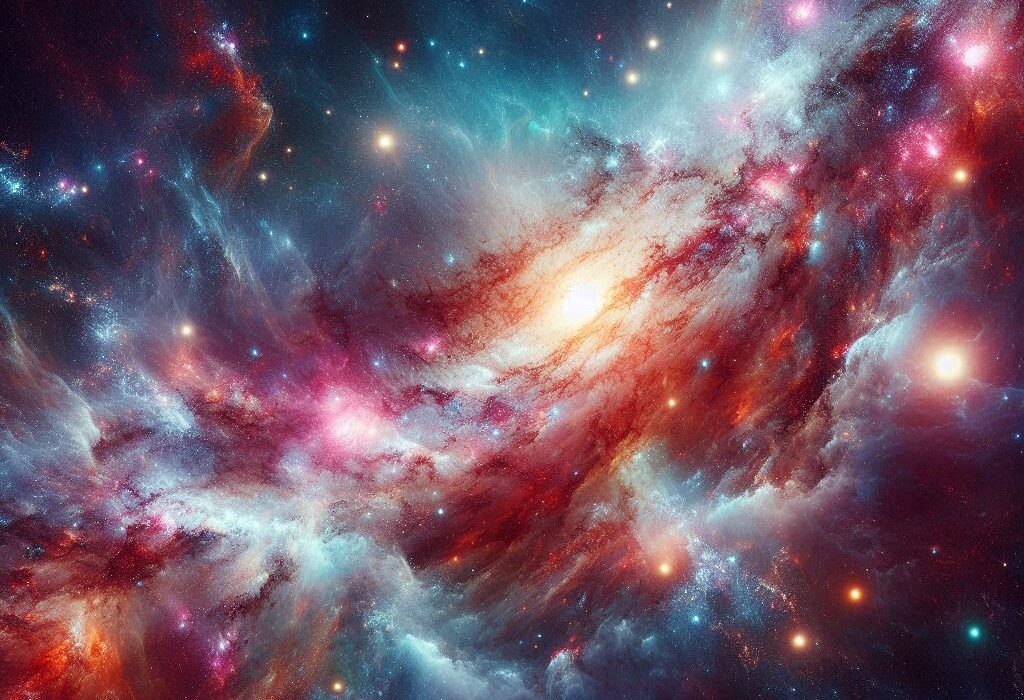
On a clear night far from city lights, the sky reveals a breathtaking secret. Stretching across the darkness is a faint, glowing river of stars known as the Milky Way. To the naked eye it appears like a hazy band, but in reality it is something far greater: an enormous collection of hundreds of billions of stars, swirling together through space. This vast stellar city is what astronomers call a galaxy.
A galaxy is one of the largest structures in the universe. It is a gravitationally bound system made up of stars, planets, gas, dust, dark matter, and often mysterious phenomena such as black holes and energetic cosmic radiation. Within a galaxy, countless stars ignite, live their brilliant lives, and eventually fade, while new stars are constantly being born from giant clouds of gas.
The galaxy we live in is the Milky Way, but it is only one among an unimaginable number. Observations of the deep universe suggest that the cosmos contains hundreds of billions—perhaps even trillions—of galaxies scattered across cosmic space.
Each galaxy is a universe of its own, a grand cosmic ecosystem filled with swirling star systems, glowing nebulae, violent explosions, and hidden forces that shape its evolution over billions of years. Understanding what a galaxy is means exploring one of the most magnificent structures nature has ever created.
The Discovery That Changed Our View of the Universe
For most of human history, people believed that the Milky Way contained all the stars in existence. The faint cloudy streak across the sky was thought to be the edge of our own star system or perhaps a mysterious celestial phenomenon.
Ancient astronomers observed the Milky Way but could not resolve it into individual stars. It was not until the invention of the telescope in the early seventeenth century that the truth began to emerge. When Galileo Galilei pointed his telescope toward the Milky Way, he discovered that the cloudy band was actually composed of countless individual stars.
Yet even then, astronomers still believed that our galaxy was the entire universe. Faint fuzzy patches of light visible through telescopes—called nebulae—were thought to exist within the Milky Way.
The great revelation arrived in the 1920s. Using observations from the powerful telescope at Mount Wilson Observatory, the American astronomer Edwin Hubble studied a distant object known as the Andromeda Galaxy. By measuring certain variable stars within it, Hubble discovered that Andromeda was far outside the Milky Way.
This meant that Andromeda was not a cloud inside our galaxy—it was an entirely separate galaxy of its own.
In a single moment, the universe expanded dramatically in humanity’s imagination. The Milky Way was no longer the whole cosmos; it was only one island in an immense ocean of galaxies.
The Basic Structure of a Galaxy
Although galaxies vary greatly in shape and size, they share several fundamental components.
At the most visible level are the stars. These stars are not randomly scattered but organized into patterns determined by gravity. Some gather into swirling spiral arms, while others fill massive elliptical clouds.
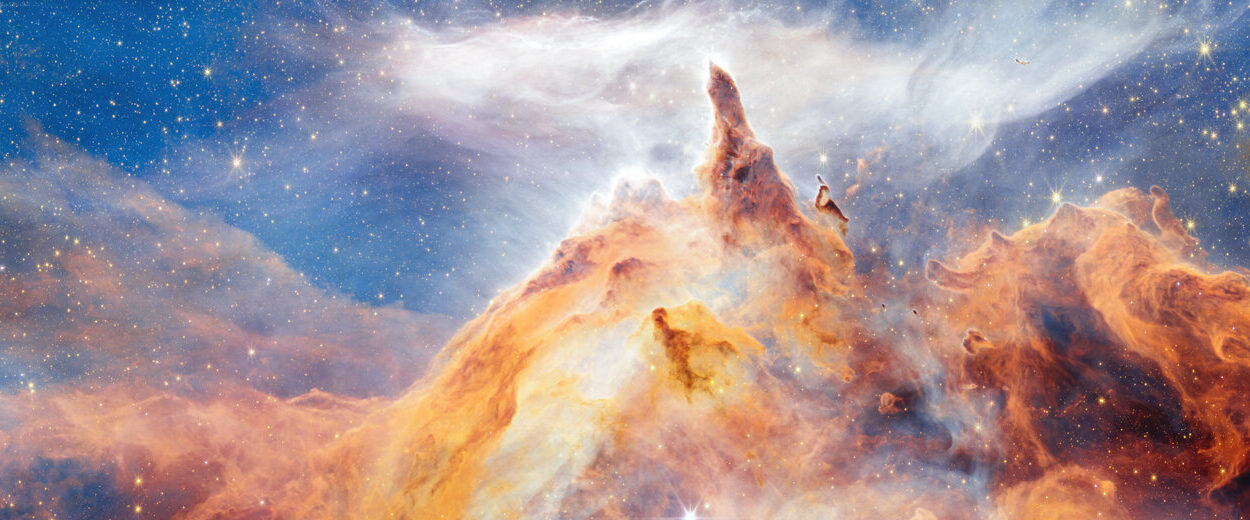
Between the stars lies vast amounts of gas and dust. These materials form enormous interstellar clouds called nebulae, where new stars are born. When gravity pulls the gas together, the pressure and temperature rise until nuclear fusion begins, igniting a new star.
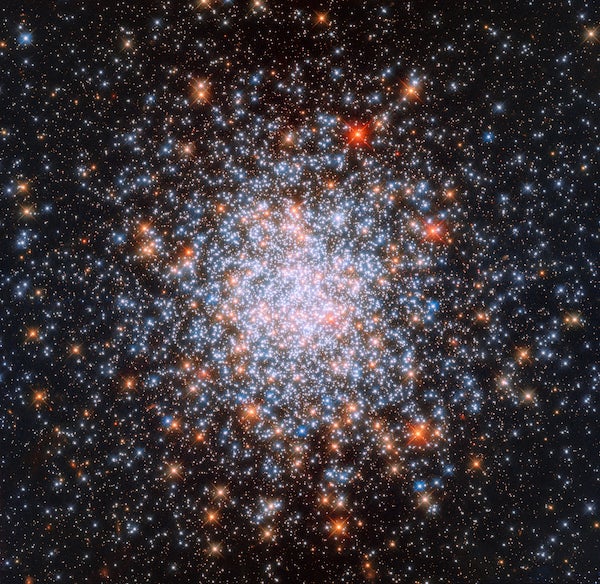
Galaxies also contain star clusters. Some clusters are young and loosely arranged, while others are ancient, tightly bound groups of stars known as globular clusters that orbit the outskirts of galaxies.
Another critical component is dark matter, a mysterious substance that cannot be seen but exerts gravitational influence. Astronomers have discovered that galaxies rotate in a way that cannot be explained by visible matter alone. Dark matter appears to form a massive invisible halo surrounding each galaxy, holding it together.
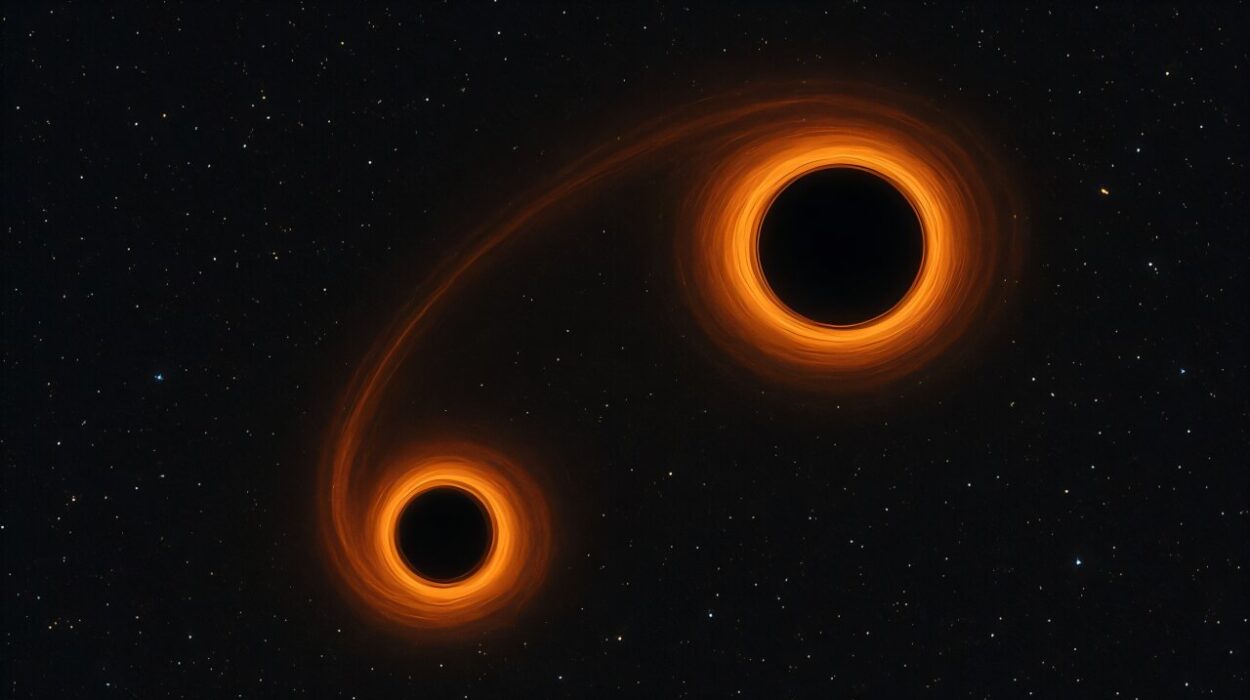
At the center of most large galaxies lies a supermassive black hole. These extraordinary objects contain millions or even billions of times the mass of the Sun, yet are packed into a region smaller than our solar system. The central black hole of the Milky Way is known as Sagittarius A*.
All of these components—stars, gas, dust, dark matter, and black holes—interact through gravity and energy, shaping the galaxy’s structure and evolution.
Spiral Galaxies: Cosmic Pinwheels
One of the most visually striking types of galaxies is the spiral galaxy. These galaxies resemble giant cosmic pinwheels, with graceful arms spiraling outward from a bright central bulge.
The Milky Way itself belongs to this category, along with the Andromeda Galaxy. Spiral galaxies contain vast rotating disks filled with stars, gas, and dust. Within the spiral arms, star formation is especially active.
These arms are not fixed structures made of the same stars forever. Instead, they are regions where stars and gas temporarily crowd together as density waves move through the galactic disk. As gas clouds enter these regions, they collapse and form new stars, creating brilliant clusters that illuminate the arms.
Young stars in spiral arms tend to be hot, blue, and short-lived, making the arms glow brightly in photographs. Older stars populate the central bulge and outer disk.
Spiral galaxies can span hundreds of thousands of light-years and contain hundreds of billions of stars. Their beauty has fascinated astronomers and photographers alike, offering a glimpse of the dynamic processes shaping the cosmos.
Elliptical Galaxies: Giant Stellar Clouds
Another major category is elliptical galaxies. Unlike spirals, these galaxies lack well-defined arms or disks. Instead, they appear as smooth, rounded clouds of stars.
Elliptical galaxies range dramatically in size. Some are relatively small, containing only a few million stars, while the largest can hold trillions.
Stars within elliptical galaxies orbit in many different directions rather than forming organized rotating disks. As a result, the galaxy takes on an elongated, three-dimensional shape.
Elliptical galaxies typically contain very little gas and dust, which means that new star formation is rare. Most of their stars are old, red, and stable.
Astronomers believe many elliptical galaxies form when spiral galaxies collide and merge. These enormous cosmic collisions scramble the orderly rotation of stars and gas, transforming spiral structures into smooth elliptical shapes.
Such mergers are common throughout cosmic history, and they play a crucial role in the evolution of galaxies.
Irregular Galaxies: Chaos in the Cosmos
Not all galaxies fit neatly into spiral or elliptical categories. Some galaxies appear distorted, asymmetric, or chaotic in shape. These are known as irregular galaxies.
Irregular galaxies often contain abundant gas and dust, which leads to vigorous star formation. Their chaotic appearance may result from gravitational interactions with nearby galaxies.
A well-known example is the Large Magellanic Cloud, a neighboring galaxy visible from the Southern Hemisphere. It contains glowing nebulae, young stars, and dramatic regions of stellar birth.
Irregular galaxies remind astronomers that the universe is dynamic and constantly changing. Gravity pulls galaxies together, distorting their shapes and sometimes triggering waves of new star formation.
The Birth of Galaxies
Galaxies did not exist at the beginning of the universe. They formed gradually as matter clumped together under the influence of gravity.
According to the Big Bang model, the universe began approximately 13.8 billion years ago in an extremely hot and dense state. In the early universe, matter was distributed almost uniformly, with tiny fluctuations in density.
Over time, gravity amplified these fluctuations. Regions containing slightly more matter attracted additional matter, growing larger and denser. Gas clouds collapsed into rotating structures that eventually formed the first galaxies.
Within these early galaxies, the first stars ignited. These early stars were massive and short-lived, producing heavy elements through nuclear fusion and explosive supernova events.
As generations of stars lived and died, galaxies became richer in heavier elements, enabling the formation of planets and complex chemistry.
Galaxies have continued to evolve for billions of years, growing through mergers and interactions with neighboring galaxies.
Galactic Collisions and Mergers
Although galaxies are immense structures, the distances between individual stars are so vast that direct stellar collisions are extremely rare. However, entire galaxies can collide and merge over cosmic timescales.
When galaxies approach each other, their gravitational fields begin to interact. Stars shift into new orbits, gas clouds collide and compress, and powerful bursts of star formation may occur.
These interactions can dramatically reshape galaxies. Spiral arms may stretch and distort into long tidal tails. Gas may funnel toward the center, feeding the central black hole and producing energetic radiation.
Eventually, two galaxies may merge completely, forming a single larger galaxy.
Our own Milky Way is destined for such an encounter. In about four to five billion years, it is expected to collide with the Andromeda Galaxy. Over millions of years, the two galaxies will merge into a new, larger galaxy.
Despite the dramatic scale of this event, the vast distances between stars mean that our solar system is unlikely to experience a direct stellar collision.
The Role of Dark Matter
One of the most mysterious aspects of galaxies is the presence of dark matter. Observations show that galaxies rotate faster than their visible mass can explain.
If galaxies contained only the stars and gas we can see, their outer regions would spin too quickly and fly apart. Instead, they remain gravitationally bound.
Astronomers concluded that galaxies must contain large amounts of unseen mass. This invisible substance, called dark matter, does not emit or absorb light, making it extremely difficult to detect directly.
Dark matter appears to form an extended halo surrounding each galaxy. Its gravitational influence helps hold galaxies together and plays a crucial role in their formation.
Although scientists have not yet identified the true nature of dark matter, it is believed to make up most of the matter in the universe.
Star Formation Within Galaxies
Galaxies are not static collections of stars. They are active environments where stars continually form and evolve.
Star formation begins within cold molecular clouds composed mainly of hydrogen gas. When parts of these clouds collapse under gravity, the material becomes denser and hotter.
Eventually, the core becomes hot enough for nuclear fusion to begin, creating a new star.
These young stars often form in clusters and may illuminate surrounding gas clouds, producing glowing nebulae visible across great distances.
Over millions or billions of years, stars exhaust their nuclear fuel. Some quietly fade into white dwarfs, while others explode as supernovae, scattering heavy elements into space.
These elements become part of new stars and planets, continuing the cosmic cycle.
Supermassive Black Holes and Galactic Centers
Nearly every large galaxy contains a supermassive black hole at its center. These black holes are millions or billions of times more massive than the Sun.
When gas and dust fall toward a supermassive black hole, they form a rapidly spinning disk known as an accretion disk. As material spirals inward, it heats to extreme temperatures and emits powerful radiation.
In some galaxies, this process creates extremely bright objects called quasars. Quasars are among the most luminous objects in the universe and can outshine entire galaxies.
The relationship between galaxies and their central black holes remains one of the most intriguing puzzles in astrophysics. Evidence suggests that galaxies and their black holes grow together, influencing each other over billions of years.
Galaxies in Clusters and Superclusters
Galaxies rarely exist alone. They often gather in groups and clusters held together by gravity.
Our Milky Way belongs to a small collection of galaxies known as the Local Group. This group includes Andromeda and several smaller satellite galaxies.
On larger scales, galaxy clusters can contain hundreds or thousands of galaxies bound together in enormous structures.
Even clusters themselves gather into larger formations called superclusters, creating a vast cosmic web of galaxies connected by filaments of dark matter and gas.
Between these filaments lie enormous voids containing relatively few galaxies.
When astronomers map the large-scale structure of the universe, they see a pattern resembling a gigantic cosmic network—one of the largest structures known to science.
Observing Galaxies Across the Universe
Modern telescopes allow astronomers to observe galaxies billions of light-years away. Because light takes time to travel, looking far into space means looking back in time.
When we observe distant galaxies, we see them as they existed billions of years ago. Some appear small and irregular, revealing how galaxies looked in the early universe.
The Hubble Space Telescope captured deep images of the universe filled with thousands of galaxies of different shapes and sizes.
More recently, the James Webb Space Telescope has revealed even more distant galaxies, offering glimpses of the earliest stages of galactic formation.
These observations help astronomers understand how galaxies evolve over cosmic history.
The Milky Way: Our Galactic Home
Our home galaxy, the Milky Way, is a barred spiral galaxy spanning roughly one hundred thousand light-years. It contains hundreds of billions of stars, including our own Sun.
The solar system resides within one of the Milky Way’s spiral arms, about twenty-six thousand light-years from the galactic center.
From Earth, we cannot see the Milky Way’s full structure because we are inside it. Instead, we observe its disk as the glowing band stretching across the night sky.
Studying our own galaxy provides crucial insight into the processes shaping galaxies throughout the universe.
The Future of Galaxies
Galaxies are not eternal. Over billions of years, they evolve through star formation, mergers, and gravitational interactions.
As stars gradually exhaust their nuclear fuel, galaxies will eventually contain fewer bright young stars. In the far future, star formation may slow dramatically as gas reserves are depleted.
Yet even as individual galaxies fade, cosmic evolution will continue. Galaxies will merge into larger structures, and gravitational interactions will reshape the cosmic landscape.
The universe itself continues to expand, driven by a mysterious force known as dark energy.
The Cosmic Significance of Galaxies
To understand galaxies is to understand the architecture of the universe. Galaxies are the cosmic environments where stars ignite, planets form, and the elements necessary for life are forged.
Every atom in your body—carbon, oxygen, calcium, iron—was created in the hearts of stars within ancient galaxies.
In a sense, galaxies are the grand laboratories of cosmic evolution. They are the places where matter organizes itself into complexity, where stars light the darkness, and where the building blocks of life emerge.
Looking up at the Milky Way on a dark night, it is easy to feel small. Yet that glowing band of light is also a reminder that we are part of something immense and extraordinary.
We live inside a galaxy—a vast island of stars drifting through the cosmic ocean.
And beyond it, billions more galaxies shine across the universe, each carrying its own stories of creation, destruction, and transformation across the endless expanse of space.