On a clear night far away from city lights, the sky becomes something extraordinary. Thousands of stars emerge from the darkness, scattered across the heavens like glittering jewels. For modern observers, these stars may seem random, beautiful but disconnected. Yet for most of human history, people did not see a collection of isolated points of light. They saw stories.
A hunter chasing prey across the sky. A giant scorpion stalking its victim. A heroic king. A celestial dragon. A sacred bird. A bear wandering among the stars.
These imagined patterns are what we call constellations.
Today, constellations are recognized as official regions of the sky used by astronomers to locate celestial objects. But their origins are much older and far more human. Long before telescopes, observatories, and space agencies existed, constellations helped people understand their world. They guided travelers across deserts and oceans. They marked the changing seasons. They inspired myths, religious beliefs, and cultural traditions.
The history of constellations is not merely a story about astronomy. It is a story about humanity itself. It reveals how different cultures interpreted the same stars and transformed them into maps of meaning.
Every constellation is a reminder that humans have always looked upward and wondered about their place in the universe.
What Exactly Is a Constellation?
In its simplest form, a constellation is a recognizable pattern of stars viewed from Earth.
When people connect stars with imaginary lines, they often see shapes resembling animals, people, objects, or mythical beings. These patterns become constellations.
However, modern astronomy uses a more precise definition.
Today, a constellation refers not only to a pattern of stars but also to a specific area of the sky. Every point in the celestial sphere belongs to one of the officially recognized constellations.
This means that constellations function much like countries on a map. Just as every location on Earth belongs to a nation or territory, every visible object in the sky belongs to a constellation region.
The stars that form a constellation often appear close together from our perspective on Earth. In reality, many of them are separated by enormous distances. Some stars may be dozens of light-years away, while others are hundreds or even thousands of light-years distant.
Their apparent connection exists only because of our viewpoint.
Constellations are therefore not physical structures. They are patterns created by human observation.
Yet despite being imaginary arrangements, they have played a very real role in human history.
The First Stargazers
The desire to identify patterns in the night sky is ancient.
Long before written records existed, early humans likely observed the stars and noticed recurring arrangements. Certain star patterns appeared during particular seasons. Some rose before sunrise at specific times of year. Others disappeared for months before returning.
For hunter-gatherers, these celestial cycles provided valuable information.
The stars could signal changes in weather, animal migrations, or seasonal opportunities.
Although direct evidence from prehistoric times is limited, archaeological discoveries suggest that ancient people paid close attention to the sky.
Some researchers believe that cave paintings, stone monuments, and ancient carvings may contain representations of celestial objects.
One famous example is the prehistoric site of Lascaux Cave, where some scholars have proposed connections between animal images and star patterns. While such interpretations remain debated, they highlight the possibility that astronomical thinking stretches deep into humanity’s past.
Even before formal astronomy existed, people were already turning the night sky into a meaningful landscape.
Why Humans Create Patterns in the Stars
There is an important psychological reason why constellations emerged in nearly every culture.
The human brain is exceptionally good at recognizing patterns.
This ability helped our ancestors survive. Identifying faces, spotting predators, recognizing edible plants, and interpreting environmental clues were essential skills.
As a result, humans naturally search for order even when observing random arrangements.
When people look at groups of stars, they instinctively connect them into familiar shapes.
This tendency is known as pareidolia—the perception of meaningful patterns where none physically exist.
The same process causes people to see faces in clouds, animals in rock formations, or shapes in shadows.
Constellations are among the largest and most enduring examples of this human tendency.
Yet they are more than visual illusions.
The stories attached to constellations reflect cultural values, beliefs, fears, and hopes. Different societies looked at the same stars and saw entirely different worlds.
Ancient Mesopotamia and the Birth of Organized Star Maps
Some of the earliest documented constellations come from ancient Mesopotamia.
The civilizations of Babylon and Assyria carefully observed the heavens thousands of years ago. Their priests and scholars recorded celestial events and developed sophisticated astronomical traditions.
The night sky played an important role in religion, agriculture, and governance.
Babylonian astronomers identified numerous star groups and associated them with gods, animals, and mythological figures.
Many of their constellations later influenced Greek astronomy and eventually became part of modern star maps.
The Babylonians also contributed significantly to the development of the zodiac.
The zodiac consists of constellations located along the apparent path of the Sun through the sky. Because the Moon and planets also travel near this path, the zodiac became especially important for tracking celestial movements.
These early observations laid the foundation for astronomical systems that would shape civilizations for centuries.
The Sky of Ancient Egypt
For the ancient Egyptians, the stars were deeply connected to religion and the afterlife.
The night sky was viewed as a sacred realm inhabited by gods and cosmic forces.
Certain stars held special significance because they helped predict the annual flooding of the Nile River, one of the most important events in Egyptian life.
Among these stars, Sirius occupied a particularly important place.
Its appearance before sunrise each year closely coincided with the Nile’s flood season.
This connection transformed Sirius into a celestial marker of renewal and prosperity.
Egyptian star traditions differed from those of Greece and Mesopotamia. Instead of emphasizing familiar constellation patterns, they often focused on groups of stars known as decans, which helped track time during the night.
The Egyptian sky reflected a worldview in which astronomy, religion, and daily life were inseparable.
Greek Constellations and Mythology
When most people think of constellations today, they are often thinking of Greek constellations.
Ancient Greek astronomers inherited ideas from earlier civilizations but expanded them into a rich network of myths and legends.
Nearly every constellation became associated with a story.
Heroes, monsters, gods, and legendary creatures were placed among the stars.
The constellation Orion represented a mighty hunter.
Scorpius became the giant scorpion that ultimately defeated him.
Andromeda represented a princess chained to a rock.
Perseus depicted the hero who rescued her.
These stories transformed the night sky into a vast celestial theater.
Greek mythology provided a framework that made the stars memorable and meaningful.
As Greek influence spread throughout the Mediterranean world, many of these constellations became widely known.
Their legacy remains visible in modern astronomy.
The Work of Ptolemy
One of the most influential figures in the history of constellations was Claudius Ptolemy.
Living during the second century CE, Ptolemy compiled astronomical knowledge into a famous work called the Almagest.
In this text, he described forty-eight constellations.
Many of these remain part of the official constellation system used today.
Ptolemy’s catalog became enormously influential throughout Europe, the Middle East, and beyond.
For more than a thousand years, his descriptions served as the standard reference for mapping the night sky.
His work preserved ancient knowledge and helped shape future astronomy.
Without Ptolemy, many classical constellations might have been lost to history.
Constellations in Ancient China
While Greek constellations became dominant in the West, China developed a completely different system.
Chinese astronomers observed the heavens for thousands of years and created one of the world’s oldest continuous astronomical traditions.
Instead of organizing the sky around the familiar Greek figures, Chinese observers divided it into numerous smaller star groups known as asterisms.
These asterisms often represented imperial officials, palaces, military units, markets, and other aspects of Chinese society.
The structure of the sky reflected the structure of the empire.
The heavens were viewed as a cosmic mirror of earthly order.
Chinese astronomers maintained detailed records of celestial events, including comets, eclipses, and supernovae.
These records remain valuable to modern scientists studying historical astronomical phenomena.
The Chinese sky demonstrates how cultural perspectives shape celestial interpretation.
Indigenous Views of the Night Sky
Across the world, Indigenous cultures developed unique constellation traditions.
These traditions often differed dramatically from European star maps.
Many Indigenous peoples emphasized dark regions of the Milky Way rather than bright star patterns.
In Australia, numerous Aboriginal traditions identify a celestial emu formed not by stars but by dark dust clouds stretching across the Milky Way.
This remarkable constellation cannot be understood through Western approaches because it focuses on darkness rather than light.
For Indigenous communities, constellations often carried practical significance.
They marked seasonal changes, migration patterns, food availability, and ceremonial events.
The stars served as calendars, teaching tools, and repositories of cultural knowledge.
These traditions remind us that there is no single way to interpret the sky.
Every culture brings its own perspective to the stars.
The Role of Constellations in Navigation
Before GPS satellites and digital maps, travelers relied heavily on the sky.
Constellations became essential tools for navigation.
Sailors crossing vast oceans learned to identify key star patterns that revealed direction and position.
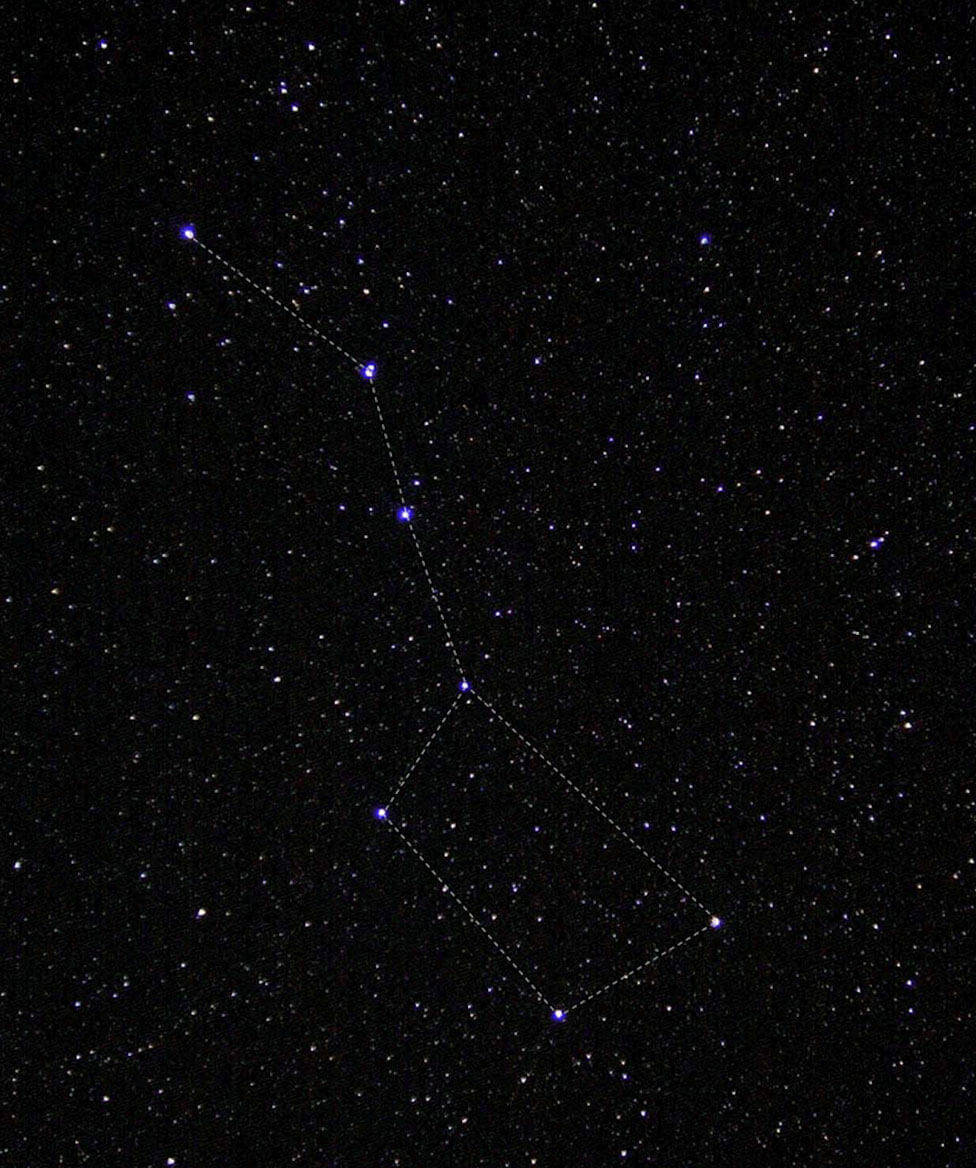
Among the most famous navigational constellations is Ursa Major.
The stars forming the Big Dipper point toward Polaris, which remains nearly fixed above Earth’s northern axis.
Finding Polaris allowed travelers to determine north.
In the Southern Hemisphere, navigators used different constellations, including Crux.
These celestial guides helped explorers travel thousands of kilometers across unfamiliar landscapes and oceans.
Long before modern technology, the stars were humanity’s most reliable map.
Constellations and the Agricultural Calendar
Agricultural societies depended on accurate knowledge of seasonal changes.
Constellations helped provide this information.
Certain star patterns appeared at predictable times of year.
Farmers learned to associate these appearances with planting, harvesting, and other agricultural activities.
One important concept was the heliacal rising of a star—the first appearance of a star just before sunrise after a period of invisibility.
These events often served as seasonal markers.
The relationship between stars and agriculture was so important that many ancient calendars incorporated astronomical observations.
Constellations functioned as giant clocks in the sky.
Their movements helped societies organize economic and social life.
The Zodiac and Its Cultural Influence
The zodiac occupies a special place in constellation history.
It consists of twelve traditional constellations located along the Sun’s apparent path across the sky.
Ancient astronomers tracked the movement of the Sun, Moon, and planets through these constellations.
Over time, the zodiac became associated with astrology.
Astrology and astronomy were once closely connected.
Ancient scholars often practiced both.
Although modern science distinguishes sharply between astronomy and astrology, the zodiac’s cultural influence remains powerful.
Millions of people still recognize zodiac names such as Aries, Taurus, Gemini, Leo, and Scorpio.
Even those with little interest in astronomy often know these constellations because of their role in popular culture.
The Age of Exploration and New Constellations
European explorers eventually traveled into regions of the world where unfamiliar stars filled the sky.
The Southern Hemisphere revealed celestial landscapes invisible to observers in Europe.
Astronomers began creating new constellations to map these previously uncharted areas.
Unlike the mythological figures of antiquity, many newer constellations reflected scientific instruments and technological achievements.
Telescopes, compasses, clocks, and other devices found their way into star charts.
This shift reflected changing cultural priorities.
The heavens were no longer viewed solely through mythology.
They increasingly became subjects of scientific investigation.
The sky itself became a record of humanity’s intellectual evolution.
Modern Astronomy Defines the Sky
By the nineteenth and early twentieth centuries, astronomers faced a problem.
Different star maps sometimes used different constellation boundaries.
Confusion arose when identifying celestial objects.
To solve this issue, astronomers established official definitions.
In 1922, the International Astronomical Union recognized eighty-eight official constellations.
Later, precise boundaries were assigned to each one.
Today, every object in the sky belongs to one of these eighty-eight regions.
This system provides consistency for scientific research.
Although the official constellations are based largely on European traditions, they serve practical rather than cultural purposes.
Modern astronomy uses them as coordinates rather than myths.
Yet the stories behind them continue to captivate people around the world.
Are Constellations Permanent?
At first glance, constellations seem eternal.
The same patterns appear year after year.
Generations come and go while the stars remain.
Yet constellations are not truly permanent.
Stars move through space.
Their motions are usually too slow to notice during a human lifetime, but over thousands of years the patterns gradually change.
The constellation Orion looked slightly different in the distant past and will look different in the distant future.
If humans exist tens of thousands of years from now, familiar constellations may become unrecognizable.
The sky itself evolves.
This realization adds a surprising dimension to constellation history.
The celestial stories we inherit are temporary snapshots within a much larger cosmic journey.
Why Different Cultures See Different Shapes
One of the most fascinating aspects of constellations is their diversity.
The same stars inspire entirely different interpretations across cultures.
A pattern viewed as a hunter in one society may become an animal, spirit, canoe, or deity in another.
There is no objectively correct constellation shape.
The stars themselves do not dictate a particular story.
Human imagination supplies the connection.
This diversity reveals something profound about human culture.
People everywhere share the desire to create meaning, yet they express that desire through different traditions and experiences.
Constellations are therefore not only astronomical objects but also cultural artifacts.
They tell us as much about humanity as they do about the heavens.
The Emotional Power of the Night Sky
Throughout history, constellations have done more than provide practical information.
They have offered comfort.
For ancient travelers, familiar star patterns provided reassurance during long journeys.
For sailors crossing dark oceans, constellations represented dependable companions.
For communities facing uncertain futures, the recurring stars symbolized continuity and stability.
Even today, many people experience a sense of wonder when identifying a familiar constellation.
The stars connect us to countless generations who gazed upward before us.
A person standing beneath Orion today shares an experience with ancient Greeks, medieval travelers, Indigenous storytellers, and modern astronomers.
The sky becomes a bridge across time.
Constellations transform distant stars into shared human heritage.
Constellations in the Age of Space Exploration
Space exploration has changed our understanding of the universe, but it has not diminished the importance of constellations.
Astronauts orbiting Earth still recognize familiar star patterns.
Space telescopes often use constellation regions as reference points.
Astronomers continue to describe celestial discoveries according to their locations within official constellations.
At the same time, modern science reveals the immense scale hidden behind these patterns.
The stars forming a constellation may have no physical connection whatsoever.
They belong to different stellar populations, lie at different distances, and follow different trajectories.
Yet knowing this does not make constellations less meaningful.
If anything, it makes them more remarkable.
Human beings transformed unrelated points of light into stories that endured for millennia.
That achievement speaks to the creative power of the human mind.
The Night Sky as Humanity’s First Storybook
Long before books existed, the sky served as a storytelling canvas.
Constellations allowed knowledge to be passed from one generation to the next.
A child learning the stars was also learning myths, values, history, navigation, and survival skills.
The night sky became a living archive.
Stories embedded in constellations helped preserve cultural identity.
Even when written records disappeared, celestial traditions often survived.
This role as a cosmic storybook may explain why constellations remain so memorable.
People remember narratives more easily than abstract information.
A hunter, a bear, a dragon, or a princess is easier to recall than a random collection of stars.
Through storytelling, the heavens became understandable.
Conclusion
A constellation is far more than a pattern of stars. It is a meeting point between nature and imagination, between astronomy and culture, between observation and storytelling. Although the stars themselves are physical objects governed by the laws of physics, the constellations we see among them are human creations.
For thousands of years, civilizations across the globe have mapped the night sky according to their own beliefs, experiences, and needs. Ancient Mesopotamians, Egyptians, Greeks, Chinese astronomers, Indigenous communities, sailors, farmers, and modern scientists have all looked upward and found meaning in the stars.
Constellations guided travelers, marked seasons, inspired myths, preserved traditions, and helped humanity understand its place in the cosmos. Even today, despite advanced technology and powerful telescopes, these celestial patterns remain part of our shared cultural heritage.
The stars above us are ancient, distant, and indifferent. Yet through constellations, humanity transformed them into stories filled with heroes, animals, spirits, and dreams. In doing so, people created one of the most enduring connections between the Earth and the sky.
Every time we recognize a constellation, we participate in a tradition that stretches back thousands of years. We join an unbroken chain of observers who looked into the darkness, connected the stars, and found meaning among the lights of the universe.