Dinosaurs ate a wide variety of foods, from meat and fish to leaves, ferns, seeds, and other plants. Their diets depended on their species, body size, teeth, jaw structure, and the environments in which they lived. Some dinosaurs were specialized predators that hunted other animals, while others fed on vegetation, and a smaller number may have eaten both plant and animal matter.
Scientists reconstruct dinosaur diets by examining fossilized teeth, jaws, skulls, stomach contents, fossilized droppings, and other evidence. These clues reveal how dinosaurs obtained food, processed it, and adapted to the ecosystems around them. Although the exact diet of every dinosaur is not known, the evidence shows that dinosaurs occupied many different feeding roles during the Mesozoic Era, the geological period that lasted from about 252 million to 66 million years ago.
How scientists determine what dinosaurs ate
Dinosaur diets cannot usually be observed directly, so paleontologists rely on several kinds of fossil evidence. Each provides a different clue about what an animal ate and how it fed.
Teeth are among the most useful indicators. Sharp, curved teeth with serrated edges were well suited to cutting flesh, while broad teeth with ridges or other grinding surfaces helped process tough plant material. Some dinosaurs had beaks instead of teeth in parts of their mouths, allowing them to crop or bite off food. The shape and arrangement of teeth can reveal how an animal handled food, although teeth alone do not always provide a complete picture of its diet.
Jaw structure also matters. A strong skull and powerful jaw muscles can indicate the ability to bite forcefully, while long jaws lined with many relatively uniform teeth may be suited to slicing or processing particular foods. The position of the eyes, shape of the snout, and structure of the neck and limbs can offer additional clues about feeding behavior.
In rare cases, fossils preserve direct evidence of meals. Stomach contents may contain recognizable plant fragments, fish remains, or bones from other animals. Fossilized feces, called coprolites, can preserve undigested material that helps scientists identify what an animal consumed. Such evidence is especially valuable because it can confirm aspects of a diet that skull shape alone might only suggest.
Scientists also examine wear patterns on teeth and compare dinosaur anatomy with that of living animals. These comparisons help researchers develop plausible explanations for feeding behavior, but they must be used carefully. Dinosaurs were a diverse group, and their biology did not always match that of modern reptiles, birds, or mammals.
Carnivorous dinosaurs ate other animals
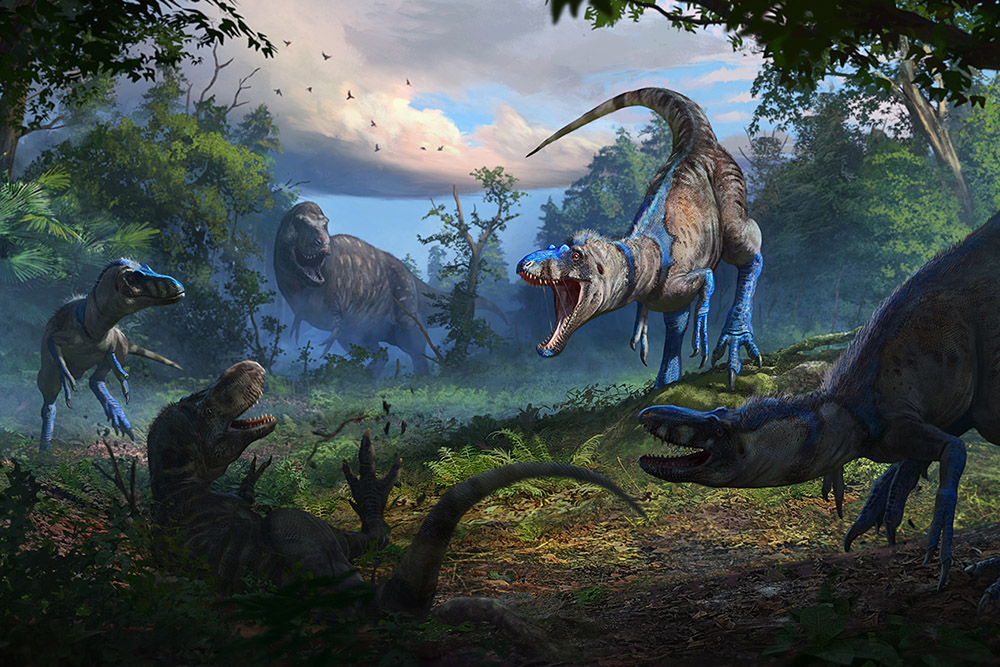
Carnivores are animals that eat other animals. Many well-known dinosaurs belonged to this group, including Tyrannosaurus rex, Velociraptor, and Allosaurus. These predators varied greatly in size, hunting strategies, and the prey they could capture.
Large carnivorous dinosaurs often had strong skulls, muscular jaws, and teeth designed to grip, puncture, or cut flesh. Tyrannosaurus rex, for example, had massive teeth with thick roots and serrated edges. Its powerful jaws could crush bone as well as tear into the bodies of other animals. Fossil evidence indicates that it ate large plant-eating dinosaurs, although its feeding opportunities likely included both hunting live prey and scavenging animals that had already died.
Scavenging is the practice of feeding on dead animals rather than killing them. It is sometimes presented as the opposite of hunting, but the two behaviors are not mutually exclusive. A predator could hunt when opportunities arose and scavenge when it encountered a carcass. Because these behaviors rarely leave unambiguous evidence in the fossil record, scientists cannot always determine how much a particular dinosaur relied on either strategy.
Smaller carnivorous dinosaurs had different adaptations. Some had relatively narrow skulls and slender teeth suited to catching small animals. Others possessed grasping forelimbs, sharp claws, or lightweight bodies that may have helped them capture prey. Their potential food sources included insects, small vertebrates, and other dinosaurs, depending on the species and habitat.
Not every carnivore was a giant land predator. Some dinosaurs may have caught fish or other aquatic animals, particularly those with long snouts and teeth suited to gripping slippery prey. Fossil evidence can support fish-eating behavior in certain species, although researchers must distinguish likely feeding adaptations from direct proof of a particular meal.
Carnivorous dinosaurs played important roles in their ecosystems by consuming other animals. Their presence could influence prey populations, while the availability of prey affected where predators lived and how they obtained food.
Herbivorous dinosaurs relied on plants
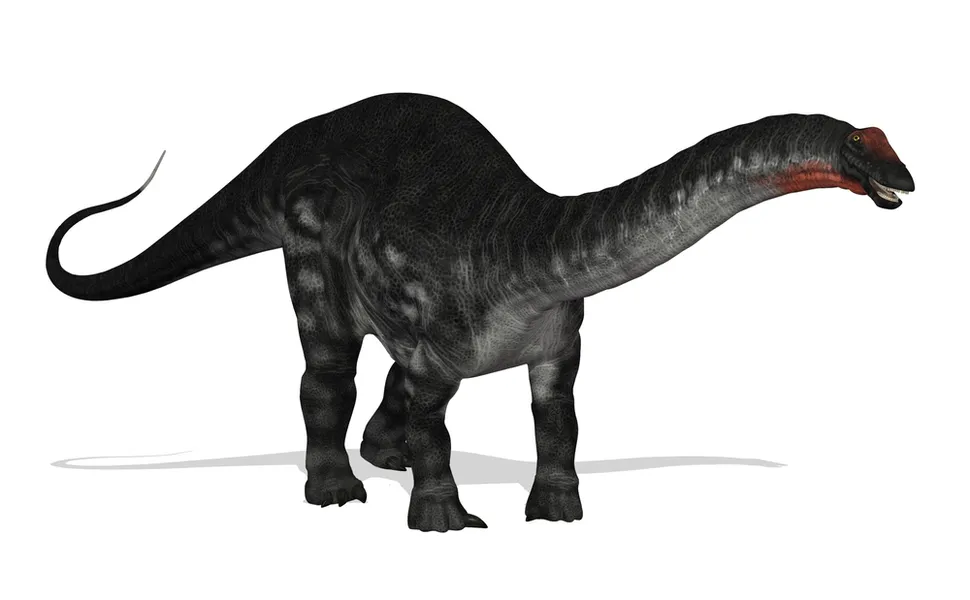
Herbivores are animals that eat plants. Many dinosaurs were herbivores, including Triceratops, Stegosaurus, Diplodocus, and Brachiosaurus. They fed on the vegetation available in their environments, which changed over millions of years as plant communities evolved.
During much of the Mesozoic Era, landscapes included abundant conifers, cycads, ginkgo relatives, ferns, and other ancient plant groups. Flowering plants became increasingly widespread later in the Cretaceous Period. Unlike modern grasslands, which support many large grazing mammals, most dinosaur habitats did not have extensive grass-dominated ecosystems of the kind familiar today.
Different herbivorous dinosaurs adapted to different feeding opportunities. Long-necked sauropods such as Brachiosaurus could reach vegetation above the ground, while other sauropods may have fed at lower levels. Their long necks allowed them to access plants across a broad feeding area without moving their enormous bodies as frequently.
Triceratops had a beaked mouth and rows of teeth arranged into dental batteries, in which multiple teeth worked together to process food. These structures helped it crop and break down vegetation. Its skull and jaws were suited to handling substantial amounts of plant material, although the precise proportions of leaves, branches, and other foods in its diet remain uncertain.
Stegosaurus had a relatively small head and leaf-shaped teeth. Its anatomy suggests that it fed on vegetation that could be cropped and processed without the powerful grinding apparatus found in some later plant-eating dinosaurs. The exact height and types of plants it preferred are difficult to establish, and its feeding habits may have varied with local conditions.
Plant-eating dinosaurs consumed different parts of vegetation, including leaves, shoots, and potentially seeds, fruits, or other plant structures when available. The diet of any particular species depended on the plants growing nearby, the season, and its physical ability to reach and process them.
How plant-eating dinosaurs digested tough vegetation
Plants contain cellulose, a structural material that gives their cell walls strength. Cellulose can be difficult for animals to digest because their own digestive enzymes generally cannot break it down efficiently. Many plant-eating animals therefore rely on microorganisms in their digestive systems to help extract energy from fibrous vegetation.
Some dinosaurs had large body cavities that may have accommodated extensive digestive systems. Large sauropods, for example, could consume substantial quantities of vegetation, allowing them to meet their energy needs despite the relatively low energy density of many plant foods. Their digestive systems likely processed food through a combination of chemical digestion and microbial activity, although the exact details are difficult to reconstruct from fossils.
Other herbivorous dinosaurs had specialized teeth and jaws that helped break plant material into smaller pieces before swallowing. Processing food mechanically increases its surface area, making it easier for digestive fluids and microorganisms to act on it.
Scientists cannot always determine whether a dinosaur chewed its food thoroughly, swallowed it in large pieces, or relied more heavily on digestion within the gut. These differences matter because animals can extract nutrients from plants in several ways, and the same broad diet does not necessarily imply the same digestive strategy.
Plant-eating dinosaurs also had to obtain enough nutrients from vegetation that varied in quality. Young shoots might have been more nutritious or easier to process than mature, fibrous leaves. Seasonal changes in plant growth could therefore have influenced where herbivores fed and how much food they needed to consume.
Were any dinosaurs omnivores?
Omnivores eat both plant and animal matter. Some dinosaurs may have been omnivorous, although it can be difficult to establish an omnivorous diet with confidence because many foods leave little direct fossil evidence.
Certain small theropods, the group that includes birds and many carnivorous dinosaurs, had teeth or other anatomical features compatible with eating a variety of foods. Some may have consumed insects, small vertebrates, eggs, seeds, fruit, or other plant material. However, a feature that suggests a flexible diet does not prove that an animal regularly ate both plants and animals.
Ornithomimus and other ornithomimosaurs, sometimes called ostrich-mimic dinosaurs, are examples of dinosaurs whose diets have attracted scientific interest. They had relatively small teeth or toothless beaks, depending on the species, and long limbs. These features do not by themselves establish whether they were herbivores, omnivores, or specialized consumers of particular small animals. Their diets may have differed among species.
Some small dinosaurs likely took advantage of whatever food was available. Insects and other invertebrates could provide protein and fat, while seeds and plant material offered additional sources of energy. Eggs, small vertebrates, and carrion may also have been available to opportunistic feeders.
The distinction between carnivores, herbivores, and omnivores is useful, but real feeding behavior can be more complicated than three categories suggest. An animal classified as a carnivore might occasionally consume plant material, while an herbivore might accidentally swallow insects while feeding. Scientists therefore distinguish between foods an animal could eat and the foods that made up a meaningful part of its regular diet.
What different dinosaur teeth reveal about their diets
Dinosaur teeth evolved into a remarkable variety of shapes. Their structure provides evidence of how different species captured food and processed it.
Sharp, blade-like teeth were effective at cutting flesh. Serrated edges could help a tooth slice through tissue, while thicker teeth were better suited to withstanding substantial forces. These features were particularly useful for many large theropods that fed on other vertebrates.
Plant-eating dinosaurs often had broader or more complex teeth. Some developed ridges and multiple surfaces that helped break down vegetation. Hadrosaurs, commonly known as duck-billed dinosaurs, had elaborate dental batteries containing many closely packed teeth. As individual teeth wore down, replacement teeth developed, helping maintain a working surface for processing food over time.
Tooth replacement was especially important for animals that regularly consumed abrasive plant material. Food can contain grit and other particles that wear down teeth, and tough vegetation can require extensive processing. Continuously replacing teeth helped some dinosaurs cope with this wear.
Other herbivores had beaks that allowed them to crop plants. A beak could be effective for biting off leaves or shoots, while teeth farther back in the mouth, when present, handled additional processing. The combination of beaks and teeth varied among dinosaur groups.
Tooth shape is informative, but it is not a perfect guide to diet. Some animals with similar-looking teeth can eat different foods, and fossils may preserve only part of a dinosaur’s feeding apparatus. Researchers therefore combine dental evidence with skull anatomy, gut contents, and other clues whenever possible.
How dinosaur diets changed across the Mesozoic Era
The Mesozoic Era included the Triassic, Jurassic, and Cretaceous periods. During these roughly 186 million years, dinosaur species evolved, environments changed, and new plants and animals became available as food.
Early dinosaurs lived in ecosystems where conifers, ferns, and other ancient plants were important parts of the landscape. As dinosaur groups diversified, they developed a wider range of feeding adaptations. Some became large predators, others evolved into enormous plant eaters, and still others occupied smaller feeding roles.
During the Jurassic Period, many sauropods reached enormous sizes. Their ability to consume large quantities of vegetation helped support their bodies, while differences in neck length, skull shape, and tooth structure may have allowed different species to exploit different feeding areas or plant types.
The Cretaceous Period saw further changes in dinosaur communities. Hadrosaurs and horned dinosaurs became prominent in many ecosystems, while flowering plants spread and diversified. These botanical changes created new feeding opportunities, although the extent to which particular dinosaur groups depended on flowering plants varied and is not always known.
Dinosaur diets were also shaped by competition. When several herbivores shared an environment, differences in body size, feeding height, mouth structure, or digestive ability could help them use different resources. This separation of food resources is known as resource partitioning. It can reduce direct competition, although paleontologists must infer such patterns from fossils rather than observe them directly.
Predators were affected by these same changes. The size, abundance, and diversity of available prey influenced the animals they could hunt and the food they could obtain. Dinosaur ecosystems were therefore connected networks of feeding relationships rather than simple chains in which one species always ate another.
Did all dinosaurs eat the same way?
No. Dinosaurs differed in size, anatomy, habitat, and evolutionary history, so their feeding strategies varied widely. A giant sauropod that consumed large quantities of leaves faced very different challenges from a small theropod catching insects or a large predator feeding on other dinosaurs.
Even closely related species could have had different diets. Differences in tooth shape, jaw mechanics, body size, and the environments they occupied could affect which foods were easiest to obtain. Young dinosaurs may also have eaten differently from adults if their size and feeding abilities changed as they grew, although the extent of these differences is uncertain for many species.
Diet could also vary with opportunity. A predator might eat different prey depending on what was available, and a plant eater might consume different vegetation as it moved through its habitat. Fossils rarely preserve enough evidence to reconstruct every seasonal or individual variation in feeding behavior.
These differences help explain why dinosaurs were so successful across many environments. Their evolutionary diversity allowed them to exploit a wide range of food sources, from vegetation near the ground to leaves higher in the canopy and from small invertebrates to large vertebrate prey.
What dinosaur diets tell us about prehistoric ecosystems
Knowing what dinosaurs ate helps scientists reconstruct ancient environments. Plant-eating dinosaurs depended on vegetation, while carnivores depended directly or indirectly on other animals. Their fossils therefore provide clues about the food resources available in a particular place and time.
Large herbivores could influence vegetation through repeated feeding, much as large plant-eating animals do in modern ecosystems. Predators could affect the abundance and behavior of prey. Smaller animals, including insects and other invertebrates, may have served as food for numerous dinosaur species, connecting different levels of the food web.
A food web describes the network of feeding relationships within an ecosystem. Plants capture energy from sunlight through photosynthesis. Herbivores obtain that energy by consuming plants, and carnivores obtain it by eating other animals. Omnivores can draw energy from more than one level of the food web.
Not all of the energy consumed by an animal becomes new body tissue. Some is used for movement, growth, and other biological processes, while some is lost as waste or released as heat. As a result, ecosystems generally support less total biomass at higher levels of the food web. This helps explain why large predators typically require access to substantial prey populations.
Dinosaur fossils also show that ancient ecosystems were not static. Plant communities changed, animals evolved new adaptations, and environmental conditions shifted. These changes affected which foods were available and which species could survive.
What scientists still do not know about dinosaur diets
Despite extensive fossil evidence, many questions remain unresolved. A fossil skull may reveal how a dinosaur bit or chewed, but it may not identify every plant or animal it consumed. Teeth can suggest a feeding strategy without proving exactly how often an animal used it.
Direct evidence, such as preserved stomach contents, is uncommon. Even when it survives, a single meal cannot necessarily represent an animal’s entire diet. Fossilized droppings can reveal consumed material, but identifying the animal that produced them may be difficult unless the specimen can be connected convincingly to a particular species.
Some dinosaurs also had features compatible with several different diets. A beak, for example, can be used to crop vegetation or handle other kinds of food. Scientists must consider the entire animal and its environment rather than treating one anatomical feature as decisive.
As new fossils are discovered and existing specimens are examined with improved methods, researchers can revise their interpretations. Scientific uncertainty does not mean that dinosaur diets are unknowable. It means that conclusions must match the strength of the evidence.
The broad picture is clear: dinosaurs included meat-eaters, plant-eaters, and species that may have consumed both. Their teeth, jaws, digestive adaptations, and relationships with other organisms reveal a diverse range of feeding strategies. Understanding those diets helps explain not only what dinosaurs ate, but also how they lived and how the ecosystems of the Mesozoic Era functioned.