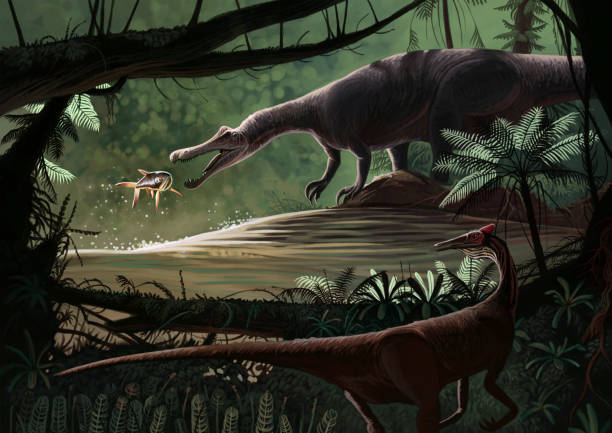
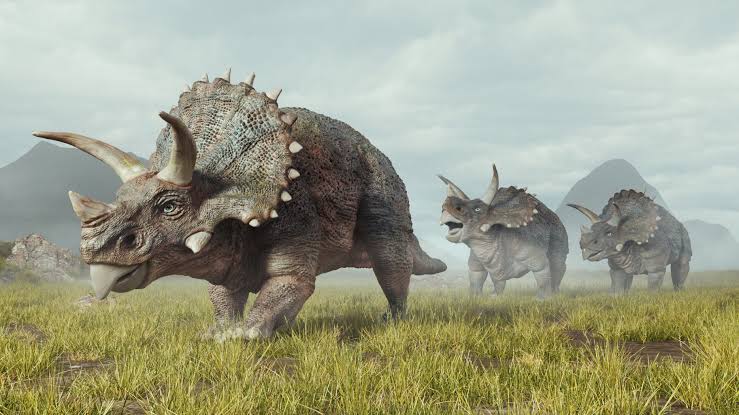
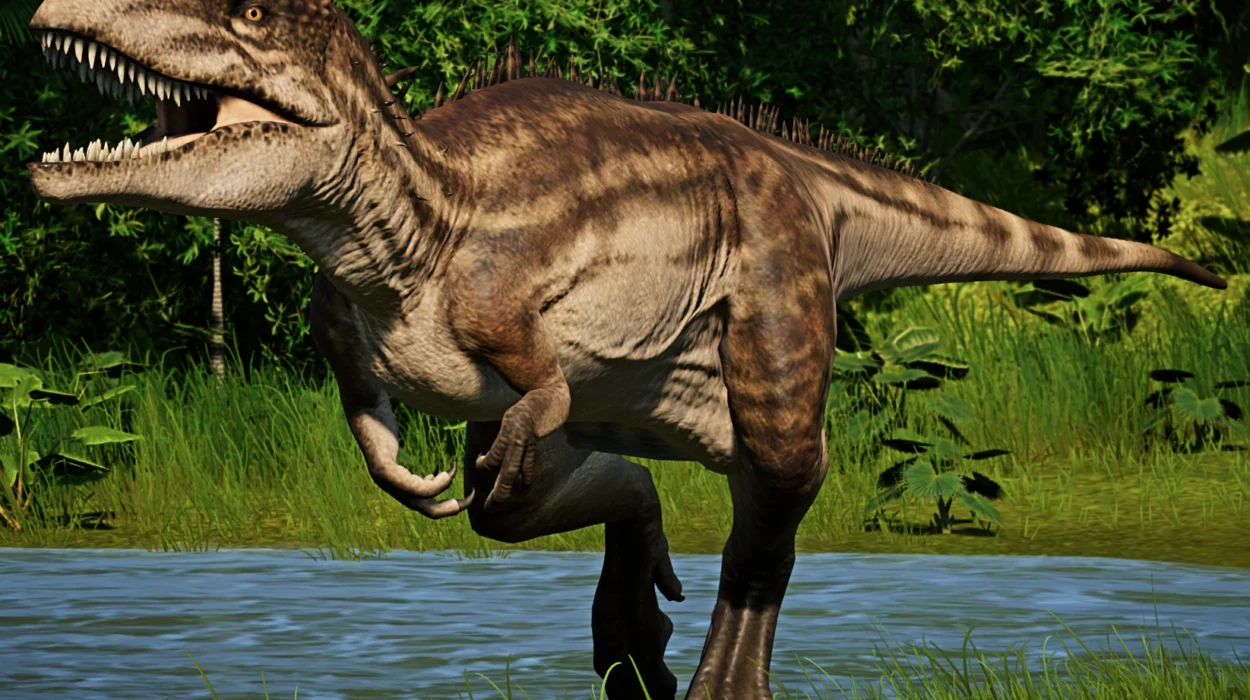
Fossils are preserved remains, impressions, or traces of organisms that lived in the past. They provide direct evidence of ancient life, from microscopic organisms that existed billions of years ago to dinosaurs, early mammals, and plants that grew long before humans appeared. Some fossils preserve bones, shells, and teeth, while others record footprints, burrows, leaf impressions, or the chemical signatures of organisms that no longer exist.
Most fossils form when an organism or evidence of its activity becomes buried and undergoes physical or chemical changes that preserve it over time. Fossilization is uncommon because dead organisms usually decay, get eaten, or break apart before they can be preserved. When conditions are favorable, however, parts of an organism or traces of its behavior can survive for millions of years.
By studying fossils, scientists can reconstruct ancient environments, track the evolution of life, identify past climate changes, and investigate how species responded to environmental disruptions. Fossils are therefore more than remnants of the past. They are essential evidence for understanding how life on Earth has changed through geological time.
What counts as a fossil?
A fossil is evidence of ancient life preserved in a natural material, most commonly sedimentary rock. Fossils can include an organism’s actual remains, such as bones or shells, as well as indirect evidence, such as footprints, nests, and feeding marks. In some cases, even microscopic structures or chemical compounds associated with ancient organisms provide evidence of past biological activity.
Fossils are generally associated with geological processes and the long-term preservation of evidence from the distant past. There is no single age threshold that applies to every use of the term, but fossils commonly represent organisms that lived thousands to billions of years ago. The distinction between a fossil and a recent biological remain can depend on its age, preservation, and geological context.
Not every ancient object is a fossil. A naturally shaped rock may resemble a shell or bone without having any biological origin. Scientists distinguish genuine fossils from look-alikes by examining their structure, composition, surrounding rock, and relationship to other geological evidence.
Fossils also do not always preserve an organism’s original material. A dinosaur bone, for example, may retain its recognizable shape even though much of its original organic material has been replaced by minerals. In other cases, the organism disappears entirely, leaving only an impression or a mineral record of its former presence.
The main types of fossils
Fossils are classified in several ways, often according to what they preserve and how they formed. The broadest distinction is between body fossils, which preserve parts of organisms, and trace fossils, which record their activities. Other forms include impressions, molds, casts, and chemical evidence of ancient life.
Body fossils
Body fossils preserve some part of an organism’s physical structure. Common examples include bones, teeth, shells, wood, and leaves. These fossils can reveal details about anatomy, growth, and relationships among species.
Hard tissues generally fossilize more readily than soft tissues because they are more resistant to decay and physical damage. Bones and shells can survive long enough to become buried, while muscles, skin, and internal organs usually decompose quickly. Nevertheless, under exceptional conditions, soft tissues can leave impressions or preserve microscopic structures and chemical remnants.
The information contained in a body fossil depends on what survived. A tooth may reveal an animal’s diet, while a shell can provide clues about water chemistry and environmental conditions. A fossil leaf may preserve its outline and vein pattern, helping scientists identify the plant and investigate the climate in which it grew.
Trace fossils
Trace fossils preserve evidence of an organism’s activity rather than its body. Examples include footprints, trackways, burrows, tunnels, nests, and fossilized droppings, known as coprolites. Marks left by feeding or movement can also become trace fossils.
These records can reveal behavior that body fossils alone cannot show. A sequence of footprints may indicate how an animal walked or whether several animals moved together. Burrows can provide evidence of feeding strategies, shelter, and the conditions in the sediment where the organisms lived.
Trace fossils require careful interpretation. A footprint’s size and spacing may help estimate an animal’s movement, but they do not necessarily establish its exact speed or behavior. Similarly, a trackway that appears to show several animals traveling together may not prove that they were cooperating. Scientists compare the traces with known anatomy, sediment conditions, and other evidence before drawing conclusions.
Molds and casts
Molds and casts preserve an organism’s shape even when the original material disappears.
A mold forms when an organism or its remains leave a cavity or impression in surrounding sediment. If that space later fills with minerals or sediment that hardens, it may form a cast, a three-dimensional replica of the organism’s external shape.
For example, a shell buried in sediment may eventually dissolve, leaving a shell-shaped cavity. If the cavity fills with mineral-rich material and hardens, the resulting cast can preserve the shell’s general form.
Molds and casts are especially useful for studying shells and other organisms whose shapes can be reproduced even when their original tissues are lost. However, they may preserve less information about internal anatomy or fine surface details than exceptionally preserved body fossils.
Impressions and compressions
Impressions form when organisms leave marks in soft sediment or other material that later hardens. Leaf impressions, for example, can preserve outlines and vein patterns without retaining the original leaf.
Compressions form when an organism is flattened during burial. Some plant fossils preserve thin films of carbon left behind as other components of the original material break down or escape. Such fossils can reveal leaf shapes, stems, and other structures, although the original three-dimensional form is often lost.
Impressions and compressions are particularly important in the fossil record of plants and soft-bodied organisms. They can preserve evidence of organisms that would otherwise be unlikely to leave recognizable fossils.
Chemical fossils
Chemical fossils, sometimes called molecular fossils or biomarkers, are chemical compounds or distinctive molecular patterns associated with past biological activity. They can survive in rocks and sediments even when recognizable body fossils are absent.
Certain organic molecules, for example, can provide evidence of ancient microbial communities or other organisms. Their interpretation requires caution because some compounds can have multiple biological sources, and chemical signals may be altered by heat, pressure, or later geological processes.
Chemical fossils are valuable because much of Earth’s early life was microscopic and did not produce large, durable skeletons. Along with microscopic structures and other geological evidence, chemical signatures help scientists investigate life from periods when the fossil record contains relatively few recognizable body fossils.
How fossils form
Fossilization is not a single process. It involves several possible pathways through which biological material or traces of activity become preserved. The outcome depends on the organism, the environment, the speed of burial, the chemistry of the surrounding material, and the geological changes that occur afterward.
Most fossils are found in sedimentary rocks, which form as particles such as sand, mud, and mineral fragments accumulate and become compacted or cemented together. These environments can bury remains and protect them from some of the processes that normally destroy them.
Burial and protection from decay
The first major step in many fossilization pathways is rapid burial. When an organism dies in an environment where sediment accumulates, its remains may become covered by mud, sand, or other particles.
Burial can reduce exposure to scavengers, physical disturbance, and oxygen. Because many decomposing organisms and chemical reactions depend on oxygen, low-oxygen conditions can slow certain forms of decay. However, decomposition does not necessarily stop, and burial alone does not guarantee fossilization.
The material being buried also matters. Fine-grained sediment can preserve delicate structures and small impressions, while coarse sediment may damage fragile remains. In some environments, chemical conditions favor mineral precipitation or help prevent remains from dissolving.
Organisms that die in places where sediment does not accumulate may disappear without leaving fossils. Even remains that are buried can be destroyed by erosion, groundwater, heat, pressure, or later geological changes.
Mineral replacement and permineralization
One important fossilization process involves minerals carried by groundwater. As water moves through buried remains, dissolved minerals can enter pores and spaces within bones, wood, or other materials.
When minerals precipitate from the water, they may fill these spaces, strengthening or preserving the structure. This process is called permineralization. It is common in fossilized wood and occurs in many other types of fossil remains.
Mineral replacement is related but distinct. In this process, the original material dissolves and minerals take its place, preserving the organism’s shape and sometimes its microscopic structure. Replacement can occur gradually, allowing a fossil to retain considerable anatomical detail even when its original composition has changed.
The specific minerals involved depend on local conditions. Silica, calcite, and iron-bearing minerals can contribute to fossil preservation, among others. Fossils may contain several mineral types, and their composition can change during later geological processes.
Carbonization and compression
Plant material and some soft-bodied organisms can be preserved through processes that concentrate carbon. During burial, pressure and chemical changes may drive off water and other volatile components, leaving a thin carbon-rich residue.
This process, called carbonization, can preserve outlines and fine surface features. Many fossil leaves and some fossils of soft-bodied organisms owe their appearance to carbon-rich films or related preservation processes.
Compression often accompanies burial as layers of sediment accumulate. The weight of overlying material can flatten remains, changing their original shape. Although compression can destroy three-dimensional structures, it may preserve valuable details that reveal the organism’s identity.
Preservation in amber, ice, and other unusual settings
Not all fossils form in sedimentary rock. In rare circumstances, organisms can be preserved in materials or environments that limit decay.
Amber, fossilized tree resin, can trap insects, spiders, plant fragments, and other small organisms. Resin may protect delicate structures from physical disturbance and decay, sometimes preserving details of the body surface that would otherwise be lost. However, amber fossils represent only a limited sample of ancient life, and organisms that were unlikely to encounter resin are underrepresented.
Freezing can preserve animal remains in ice or permanently frozen ground, sometimes retaining skin, hair, and other soft tissues. Such remains are especially useful for studying relatively recent geological periods. They may be called fossils when they meet the relevant geological and paleontological criteria, although frozen remains are not necessarily mineralized.
Other exceptional conditions include very fine sediment, mineral-rich deposits, and environments where decay is strongly restricted. These settings can preserve soft tissues, delicate body outlines, and microscopic structures that rarely survive in ordinary fossilization.
From buried remains to exposed fossils
After burial, sediments may gradually harden into rock. Over geological time, tectonic movements can raise layers of rock, while erosion removes the material above them. Rivers, wind, glaciers, and waves may expose fossil-bearing layers at the surface.
This is how fossils that formed underground can eventually become accessible to researchers. Scientists locate them in exposed rock, excavations, quarries, and other places where the relevant geological layers are visible.
Finding a fossil is only part of the process. Researchers must also document its location, the rock layer in which it occurred, its orientation, and its relationship to surrounding material. These details help establish the fossil’s geological age and environmental context. A specimen removed without adequate documentation may retain its anatomy but lose much of its scientific value.
Why some organisms fossilize while others do not
The fossil record is incomplete because fossilization depends on a series of conditions that rarely occur together. Most organisms leave no recognizable fossils, and even preserved remains may be destroyed before scientists discover them.
Hard parts such as shells, teeth, and bones often have a greater chance of preservation than soft tissues. Yet this advantage is not absolute. A shell can dissolve in acidic water, while soft tissues may survive under exceptional conditions that slow decomposition or rapidly stabilize biological structures.
The environment also plays a major role. Organisms living in settings with rapid sediment accumulation may be buried before their remains are destroyed. Those living in upland environments, exposed to weathering, or in places where sediment rarely accumulates may be less likely to enter the fossil record.
The abundance of an organism affects its chances of being represented as well. Species that were widespread or lived for long periods may leave more fossils than rare species with limited distributions. However, abundance alone does not determine preservation, and a species can be common in life yet scarce in the fossil record.
Geological history introduces further biases. Heat and pressure can alter or destroy fossils, tectonic activity can deform rocks, and erosion can remove entire layers. Fossils may also remain buried in places that have never been explored.
For these reasons, the absence of a fossil does not necessarily prove that an organism was absent from a particular environment. Scientists interpret gaps in the fossil record alongside geological evidence, the distribution of other fossils, and what is known about the organism’s likely habitat.
How scientists determine the age of fossils
Knowing a fossil’s age is essential for understanding when an organism lived and how it relates to other forms of life. Scientists use several dating methods, with the choice depending on the age of the fossil, the surrounding rocks, and the materials available for analysis.
Relative dating and rock layers
Relative dating determines whether a fossil or rock layer is older or younger than another. In an undisturbed sequence of sedimentary rocks, lower layers generally formed before the layers above them. This principle, known as superposition, helps scientists establish the order in which geological events occurred.
The sequence can become complicated when rocks are folded, faulted, eroded, or overturned. Geologists therefore examine the structure of the rock layers rather than assuming that every lower layer is older.
Fossils can also help correlate rock layers from different locations. Certain species existed during relatively limited intervals of geological time and spread across broad regions. Their fossils can serve as index fossils, helping scientists identify and compare rock layers of similar age.
Relative dating establishes a sequence, but it does not always provide an age in years. To estimate numerical ages, scientists often use radiometric dating.
Radiometric dating
Radiometric dating estimates age by measuring the predictable decay of radioactive isotopes. An isotope is a form of an element with a particular number of neutrons in its atoms. Radioactive isotopes transform into other isotopes or elements at characteristic rates.
The time required for half of a radioactive isotope in a sample to decay is called its half-life. By measuring the proportions of parent isotopes and their decay products, and applying the appropriate geological assumptions, scientists can estimate when a mineral formed or when a geological event occurred.
Many fossils cannot be dated directly because their original materials have been replaced, altered, or lost. Instead, scientists date volcanic ash layers or igneous rocks above and below fossil-bearing sedimentary layers. These dates can constrain the time when the fossil-bearing sediment accumulated.
Carbon-14 dating is useful for relatively recent organic remains, generally up to tens of thousands of years old under suitable conditions. It is not appropriate for dating dinosaur fossils millions of years old. Older fossils are commonly dated using other radioactive isotope systems in suitable geological materials.
Dating results are strongest when they agree with the stratigraphic sequence, the geology of the site, and other independent evidence. Scientists also account for uncertainty in measurements and the assumptions required by each method.
What fossils reveal about evolution
Fossils provide one of the most important lines of evidence for evolution, the process by which inherited characteristics of populations change across generations. Arranged in geological order, fossils show that life has changed substantially throughout Earth’s history.
Older rocks contain different combinations of organisms from younger rocks. Many species that once lived are now extinct, while others have changed over time. The fossil record documents the appearance, diversification, and disappearance of numerous groups, including marine invertebrates, fishes, land plants, reptiles, birds, and mammals.
Fossils can also preserve combinations of features that help scientists understand evolutionary transitions. Some ancient organisms possess anatomical characteristics shared with different major groups, providing evidence about how particular structures evolved. The fossil record of early whales, for example, documents a transition from land-dwelling ancestors to increasingly aquatic forms through changes in the skeleton, limbs, and other features.
Evolutionary relationships are not established by superficial resemblance alone. Scientists compare anatomical details, geological ages, geographic distributions, and, when available, genetic evidence from living organisms. They use these data to evaluate competing explanations of how groups are related.
The fossil record has gaps, but it does not need to preserve every generation to document evolutionary change. Fossils from different times provide a historical sequence that can be tested against evidence from genetics, comparative anatomy, embryology, and biogeography.
What fossils reveal about ancient environments and climates
Fossils help scientists reconstruct ecosystems that existed long before modern landscapes took shape. The organisms found together in a rock layer can indicate the type of habitat in which they lived, while the surrounding sediment provides additional evidence about water depth, currents, soil conditions, and other environmental factors.
Marine shells and coral fossils found in rocks far inland, for example, can indicate that an area was once covered by the sea. Fossilized leaves, pollen, and wood can reveal which plants grew in a region and help researchers infer whether the environment supported forests, grasslands, or other vegetation types.
Pollen and spores are particularly useful because plants produce them in large quantities, and their durable outer walls can survive in sediments. By examining these microscopic fossils, scientists can track changes in vegetation across thousands or millions of years. Such changes may reflect shifts in temperature, rainfall, elevation, or other environmental conditions.
Some fossils also provide clues about ancient climates. The distribution of plant species, the growth patterns of fossil wood, and the chemical composition of certain shells can help researchers investigate past temperatures, rainfall patterns, and water chemistry. These records are interpreted alongside geological indicators such as sediment types, mineral deposits, and evidence of glaciers.
No single fossil usually provides a complete picture of an ancient climate. Similar organisms can sometimes tolerate different environmental conditions, and their remains may have been transported away from where they lived. Reliable reconstructions therefore combine multiple types of evidence and account for changes that occurred after burial.
What fossils reveal about behavior and ecosystems
Fossils preserve more than the physical appearance of ancient organisms. In some cases, they record interactions between living things, allowing scientists to investigate food webs, movement, reproduction, and other aspects of behavior.
Footprints can reveal how an animal moved across a surface. Burrows provide evidence of organisms living within sediment, while fossil nests and eggs can offer clues about reproduction and development. Coprolites may contain fragments of plants, bones, or other material that help identify what an animal ate.
Evidence of feeding can also reveal relationships between predators and prey. Tooth marks on bones, for example, may indicate that an animal fed on another organism. However, interpreting such evidence requires care because different animals can produce similar marks, and a bone may have been damaged by scavengers or other processes after the animal died.
When fossils of different species occur together in the same geological setting, they may help reconstruct an ancient community. Scientists can investigate which organisms occupied similar habitats, which were likely predators or prey, and how ecological relationships changed over time.
The record remains incomplete. Organisms that lived in different environments may be mixed together by currents or other processes, and some species may be missing entirely. Researchers therefore distinguish direct evidence of interaction from interpretations that remain plausible but uncertain.
How fossils document extinction and major changes in life
Extinction occurs when a species or another defined group disappears completely. Fossils document countless extinct organisms and show that the composition of Earth’s living communities has changed repeatedly.
Some extinctions occurred gradually as environments changed, populations declined, or species were replaced by other forms. At other times, many groups disappeared within a relatively short geological interval. These episodes are known as mass extinctions when extinction rates rise dramatically across many groups and environments.
The fossil record reveals several major mass extinctions, including the end-Permian event, which eliminated a large proportion of marine species, and the end-Cretaceous event, which coincided with the disappearance of non-avian dinosaurs. Birds, which evolved within the dinosaur lineage, survived the end-Cretaceous extinction.
Scientists investigate the causes of extinction by comparing fossil distributions with evidence of environmental change. Relevant evidence can include volcanic activity, changes in ocean chemistry, shifts in climate, and impact-related geological deposits. In many cases, several environmental pressures may have acted together.
Fossils also show that extinction does not end biological change. Surviving groups may diversify into ecological roles left vacant by extinct organisms. Over time, these changes can reshape ecosystems and produce new combinations of species.
How paleontologists study fossils
Paleontology is the scientific study of ancient life through fossils and their geological context. Paleontologists combine fieldwork, laboratory analysis, geological mapping, and comparisons with living organisms to understand the history of life.
Field researchers first identify fossil-bearing rocks and document their geological setting. They may remove sediment carefully using hand tools, brushes, or specialized equipment, taking precautions to protect fragile specimens. Larger fossils can require extensive excavation and support materials to prevent breakage during removal.
In the laboratory, researchers clean, stabilize, and examine specimens. They may use microscopes, imaging techniques, chemical analyses, or computed tomography, commonly called CT scanning, to investigate structures hidden inside rock or fossil material. These techniques can reveal internal anatomy without requiring the specimen to be cut apart.
Scientists also compare fossils with modern organisms and previously described specimens. Anatomical similarities and differences can help establish likely relationships, identify new species, or revise earlier interpretations. Measurements and digital models can support further analysis, but conclusions still depend on the quality of the evidence and the assumptions behind the methods.
A fossil’s context is often as important as the specimen itself. The rock layer, associated fossils, sedimentary structures, and location help establish when and where the organism lived. Careful records allow other researchers to evaluate the findings and compare them with evidence from other sites.
Why fossils matter today
Fossils provide a long-term perspective on how organisms respond to environmental change. Although ancient ecosystems differed from modern ones, the fossil record can reveal how shifts in climate, ocean chemistry, habitat, and food availability affected the distribution and survival of species.
This historical perspective helps scientists investigate the resilience and vulnerability of ecosystems. Fossils can show whether a group persisted through major environmental changes, disappeared from particular regions, or recovered after a disturbance. They also reveal that ecological recovery can take a long time and may produce communities very different from those that existed before an extinction.
Fossils have practical applications in geology as well. Fossil assemblages help geologists correlate rock layers, reconstruct ancient depositional environments, and understand the geological history of sedimentary basins. This information can contribute to research on groundwater, natural resources, and the history of Earth’s landscapes.
The fossil record also helps place humanity within the broader history of life. Fossils of ancient human relatives and other primates, considered alongside archaeological and genetic evidence, reveal that modern humans emerged through a much longer evolutionary history. They show that the living world is not fixed but has been shaped by changes across immense spans of time.
What the fossil record cannot tell us with certainty
Fossils are powerful evidence, but they do not provide a complete or perfectly preserved account of ancient life. Many organisms never fossilized, and others left remains that were later destroyed or have not yet been discovered. The record is therefore uneven across different environments, geological periods, and kinds of organisms.
Interpretation can also be difficult. A fossil may preserve only part of an animal’s skeleton, leaving scientists uncertain about its overall appearance or behavior. Similar structures can evolve independently in unrelated groups, and some fossils are too fragmentary to place confidently within an evolutionary tree.
Even well-preserved specimens can raise questions about their original environment. Remains may have been transported, mixed with material from other periods, or altered by geological processes after burial. Chemical signals can also change over time, making it necessary to distinguish original biological information from later modifications.
Scientists address these limitations by comparing multiple lines of evidence, testing alternative explanations, and stating uncertainty where appropriate. A conclusion supported by several independent forms of evidence is generally more reliable than one based on a single ambiguous specimen.
The strength of paleontology lies not in claiming that every detail of the past is known, but in using preserved evidence to develop and refine explanations of how ancient life existed, changed, and interacted with its environment. Fossils remain among the most direct records of that history, connecting the living world today with the immense biological and geological past of Earth.