Ultraviolet imaging has uncovered previously invisible anatomical details in 152-million-year-old Jurassic fish fossils, allowing researchers to identify the first known juveniles of Mesturus verrucosus and clarify long-standing confusion about the ancient fish group. The discovery demonstrates how UV light can expose delicate fossil features that remained hidden despite more than a century of study.
For more than 150 years, Jurassic fish fossils housed in European museum collections have been examined by generations of paleontologists. Yet many of their most informative anatomical features remained concealed until researcher Martin Ebert revisited them using ultraviolet light.
The fossils belong to the little-understood fish family Mesturidae, which inhabited the tropical seas of central Europe roughly 152 million years ago. By applying UV imaging to these exceptionally preserved specimens, Ebert, of the Bavarian State Collection for Paleontology and Geology, uncovered delicate structures that had escaped detection under conventional lighting. His findings are published in the Swiss Journal of Palaeontology.
Hidden structures emerge under ultraviolet light
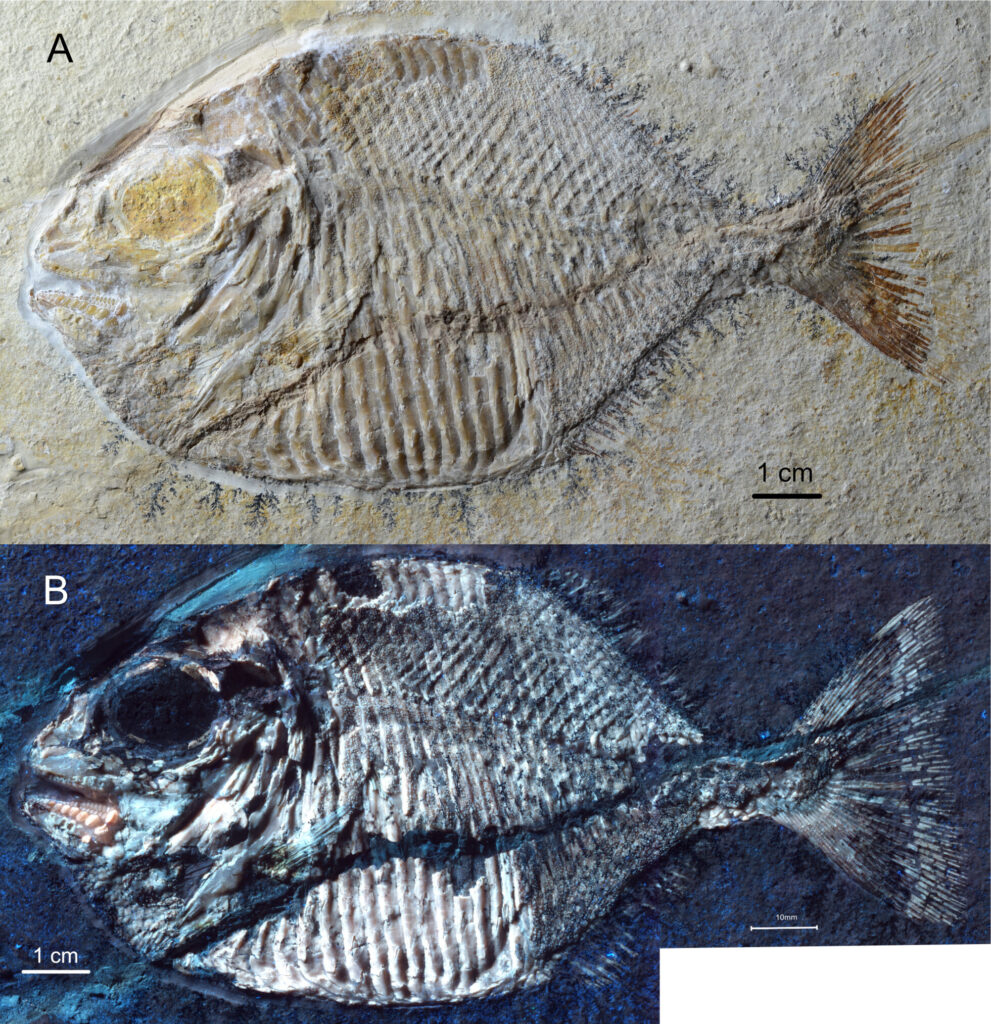
The ultraviolet examination revealed remarkably fine anatomical details across juvenile specimens, including rows of scales and body spines extending over much of the fish. These features were preserved even in fossils considered extremely old and fragile.
“What astonished me most was that these fine structures remain clearly visible under UV light,” Ebert said. According to the researcher, even the most brittle specimens exposed previously unseen details when illuminated this way.
The discovery highlights how imaging techniques can reveal information that remains invisible during traditional fossil examinations. In this case, UV light exposed anatomical evidence that fundamentally changed scientists’ understanding of these ancient fish.
First juvenile specimens identified
Among the study’s most significant findings was the identification of the first juvenile examples of Mesturus verrucosus, a species whose early life stages had never before been recognized.
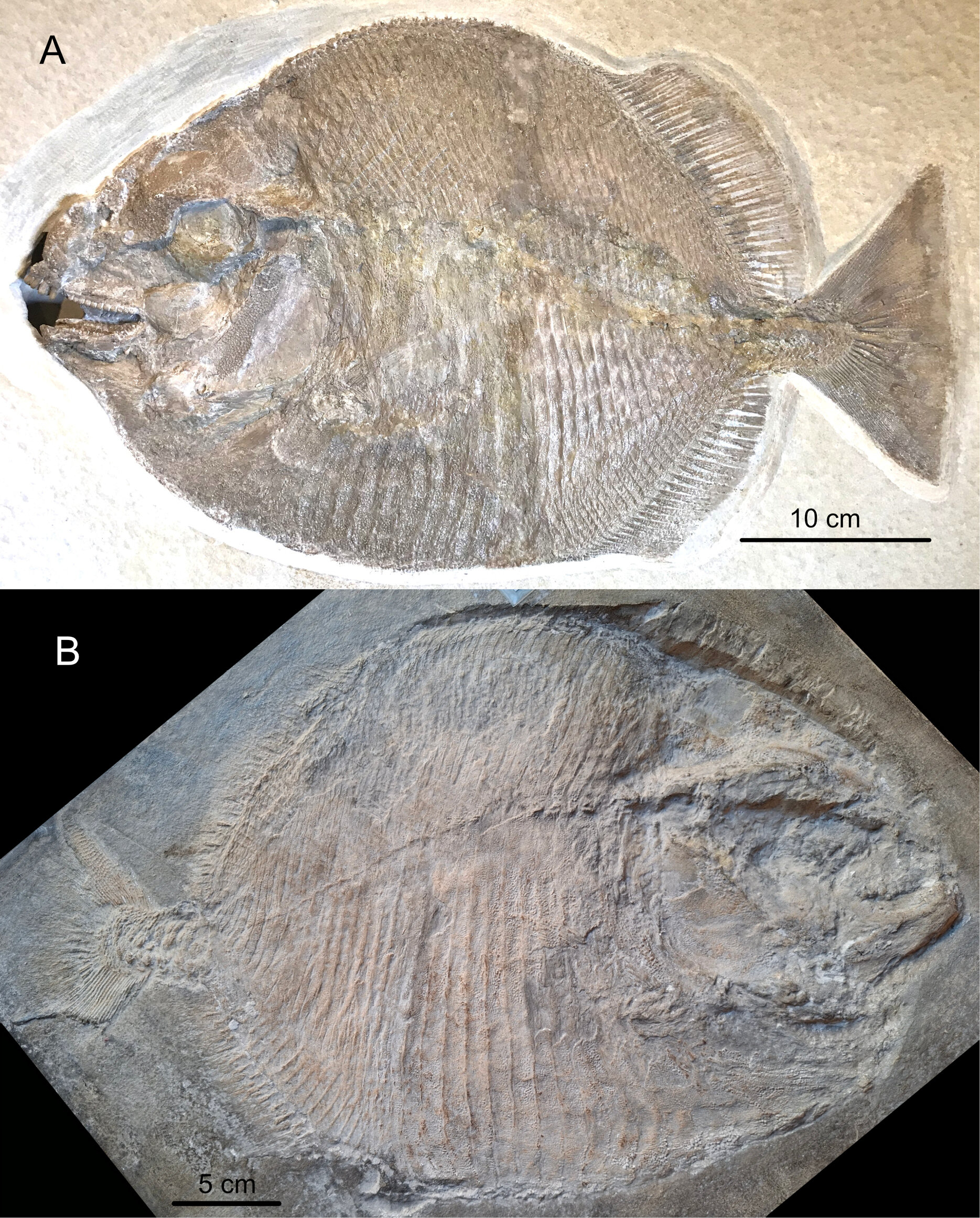
The juvenile fish measured only 4 to 9 centimeters (1.6 to 3.5 inches) long. Until now, they had not been linked to the much larger adults, which reached lengths 6 to 13 times greater and ranked among the largest members of their group.
Recognizing these young individuals allowed Ebert to distinguish them from other fossils that had previously been grouped incorrectly. Earlier research had combined multiple species under the same name because important anatomical differences had gone unnoticed.
The newly observed body characteristics enabled the fossils to be separated more accurately, refining the classification of this ancient fish lineage.
Ancient reef fish with powerful jaws
Although they lived during the Jurassic Period, Mesturus had a body shape familiar to modern divers and snorkelers.
“Mesturus was a disk-shaped coral reef fish reaching up to 50 cm (20 inches) in length, similar in form to the coral reef fish of today,” Ebert explained.
The fish inhabited tropical marine environments and used robust teeth to crush hard-shelled prey such as sea urchins and mollusks. This feeding strategy made them typical representatives of their broader group, the pycnodontiforms.
Despite their distinctive appearance, the evolutionary position of these fishes remains uncertain. Pycnodontiforms occupy a location near the base of a major branch of the fish family tree, but researchers continue to debate exactly where they fit. Ebert argues that studying primitive fossil fishes such as Mesturidae is essential for resolving that question.
A promising technique with important limits
The study also demonstrates both the potential and the limitations of ultraviolet imaging for paleontology.
Not every fossil responds the same way under UV light. Specimens from Eichstätt and Solnhofen revealed glowing anatomical details, while fossils collected from Painten sometimes remained dark.
“The reasons for this have not yet been investigated in detail,” Ebert said.
That variability suggests the method is highly valuable but not universally applicable, depending on how individual fossils were preserved.
New species names honor victims of political violence
The research extends beyond anatomy and classification. Ebert also chose to commemorate victims of political violence by naming newly identified species after them.
Among those honored are Jina Mahsa Amini, the Iranian woman who died in custody in 2022, along with Renée Good and Alex Pretti, who were killed by ICE officers.
For Ebert, the decision reflects a broader purpose.
“Why not honor people who have championed human rights by naming fossil fish after them?” he said.
He noted that he had previously followed the same approach in 2024 by naming another fossil after imprisoned human rights lawyer Nasrin Sotoudeh.
Explaining the motivation behind these names, Ebert added, “The current unfortunate situation in many countries makes it necessary to increasingly call these individuals to mind.”
Building a clearer picture of Jurassic seas
The newly identified juveniles represent only one part of a much larger research effort.
Between 2006 and 2016, Ebert collected fossil material in Bavaria while assembling an extensive photographic archive of Jurassic fish. His collection now contains nearly 24,000 photographs, which he continues to examine in an effort to reconstruct the ancient marine ecosystems of the Solnhofen Archipelago.
“The goal is to find out as much as possible about the fish faunas of the various basins,” he said.
The latest findings demonstrate that even fossils examined repeatedly over generations can still yield important discoveries. By revealing anatomical details hidden for more than a century, ultraviolet imaging has provided fresh evidence about the growth, diversity, and classification of Jurassic fishes while opening new opportunities for studying ancient marine life preserved in museum collections.