For years, a particular promise shimmered at the edge of modern physics: the idea that tiny electronic devices could unlock a new way to build quantum computers. These devices, made from nanoscale superconducting or semiconducting systems, seemed to display striking signals that matched long-standing theoretical predictions. To many readers, the data looked like the long-awaited footprints of a future technology known as topological quantum computing.
The original studies traveled fast. They carried bold claims, suggested dramatic progress, and found homes in the most prestigious scientific journals. Within the community, excitement grew. If these results were correct, they hinted at a way to store and manipulate quantum information while shielding it from errors, one of the most stubborn problems in quantum computing.
But science, at its healthiest, is not built on excitement alone. It is built on repetition, skepticism, and patience. That is where a group of scientists led by Sergey Frolov, a professor of physics at the University of Pittsburgh, entered the story.
The Quiet Work of Looking Again
Frolov and his collaborators, including co-authors from Minnesota and Grenoble, did not set out to overturn a field. Instead, they focused on something less glamorous but deeply essential: replication studies. Their goal was to repeat key experiments and examine whether the celebrated signals truly required the revolutionary explanations that had been proposed.
The field they examined revolves around topological effects in tiny electronic devices. These effects are subtle, often buried in complex data, and notoriously difficult to interpret. Experiments are slow, expensive, and demanding. Each dataset represents months or years of effort.
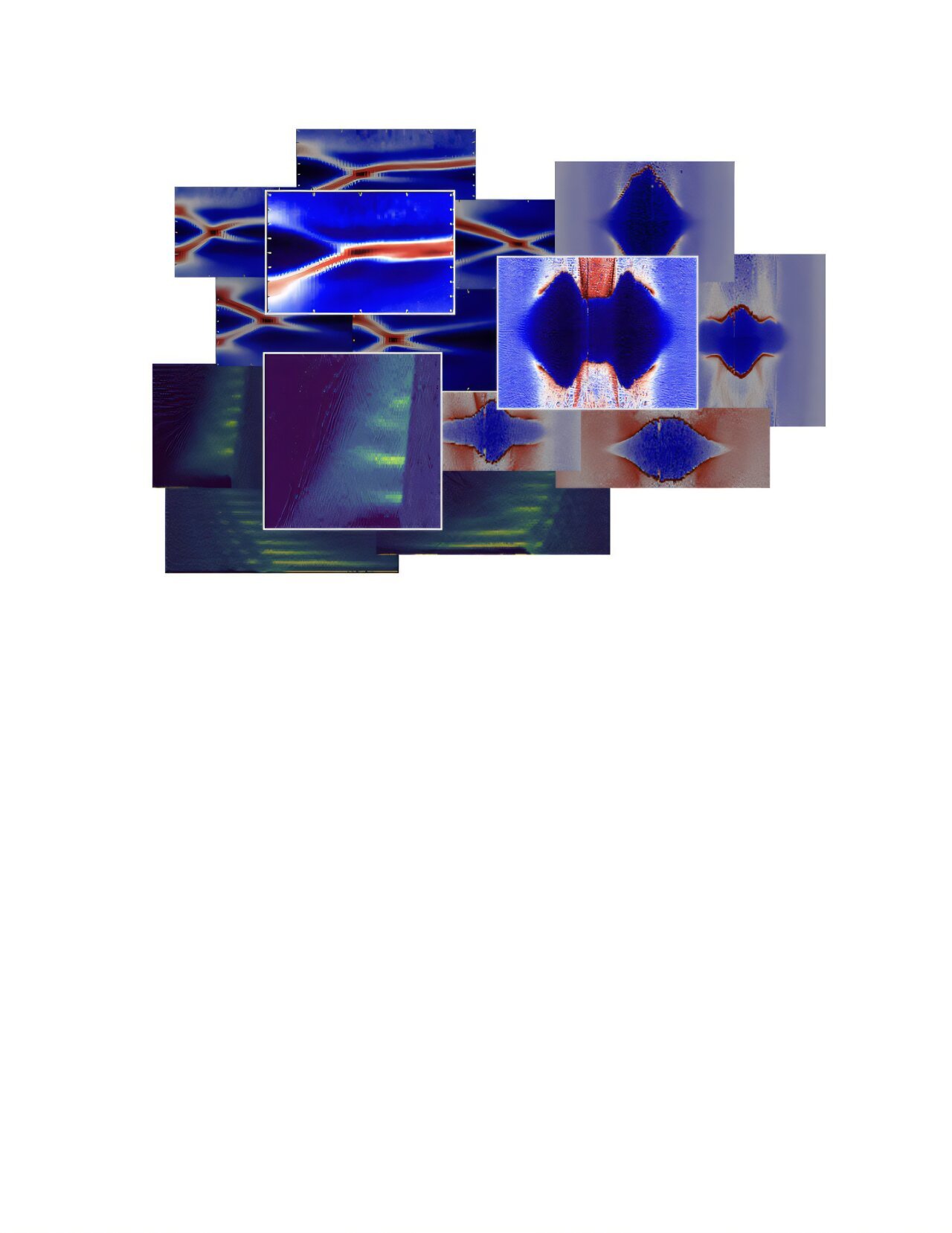
As the team worked through multiple replication attempts, a pattern began to emerge. They were seeing signals that resembled those reported in earlier papers. But when they looked closely, especially when they considered fuller datasets, something surprising happened.
In every case, the same data could be explained in another way.
The results did not necessarily mean the original experiments were wrong. Instead, they suggested that what appeared to be dramatic evidence for a major breakthrough might also arise from more ordinary physical mechanisms. The difference lay not in the raw measurements, but in how completely the data were explored and how many alternative explanations were seriously considered.
When Replication Meets Resistance
The scientists did what researchers are expected to do. They wrote up their findings and submitted them to the same high-profile journals that had published the original claims. The response was not what they hoped.
Editors rejected the papers, often for reasons that had little to do with scientific accuracy. The work was described as not novel enough. Reviewers argued that because the original studies were published a few years earlier, the field had already moved on.
For the researchers, this logic felt deeply flawed. Replication takes time, especially in experimental fields where setups are delicate and resources limited. These experiments cannot be rushed, and careful verification is not a luxury. It is a necessity. Important scientific questions do not expire after a short period, particularly when their implications could reshape an entire technology.
Yet again and again, individual replication studies struggled to find a place in the literature.
Bringing the Evidence Together
Faced with repeated rejection, the scientists changed strategy. Instead of submitting each replication effort on its own, they united several replication attempts in the same area of topological quantum computing into a single, comprehensive paper.
This was not just a collection of experiments. It was a carefully argued narrative showing how multiple high-profile signals, once believed to point toward revolutionary physics, could reasonably arise from alternative explanations. By placing these studies side by side, the authors made it harder to dismiss them as isolated or inconclusive.
The paper had two clear goals. First, it aimed to demonstrate that even the most dramatic experimental signatures can be misleading when viewed in isolation. When datasets are expanded and scrutinized more thoroughly, apparent breakthroughs may lose their uniqueness. Second, it sought to spark a conversation about how experimental science is evaluated and shared.
The authors argued for sharing more data and for openly discussing alternative explanations, not as signs of weakness, but as markers of strong, reliable science.
A Long Road Through Peer Review
When the combined paper was submitted to the journal Science, the journey was far from easy. The idea that widely celebrated results might have other explanations challenged deeply held assumptions. Accepting such a possibility required the community to slow down and reconsider narratives that had already taken root.
The review process stretched on for an extraordinary length of time. The paper spent two full years under peer and editorial review, a record that reflected not just technical scrutiny, but intense debate about interpretation, standards, and responsibility.
Arguments were revisited. Evidence was weighed and reweighed. The authors defended their conclusions with persistence and care, emphasizing that their work was not an attack on progress, but a call for rigor.
Eventually, the paper was published.
What the Data Were Really Saying
At the heart of the story lies a subtle but powerful lesson. Experimental data, especially in cutting-edge fields, rarely speak for themselves. They must be interpreted, and interpretation is shaped by expectations, incentives, and prevailing excitement.
The replication studies showed that similar data can support very different conclusions. Signals that look like landmarks of a new technology may also be explained by more conventional effects, particularly when only partial datasets are considered. Without full transparency and open debate, the risk of over-interpretation grows.
This does not mean that topological quantum computing is impossible or that the original experiments lacked value. It means that the path toward such a technology is more complex and uncertain than early headlines suggested.
Why This Research Matters
This work matters because it touches the foundation of how science moves forward. Fields like quantum computing carry enormous expectations, both scientific and societal. Claims of breakthroughs attract attention, funding, and hope. But without rigorous replication, those claims can harden into beliefs before they are fully tested.
By showing that dramatic experimental signatures can have alternative explanations, the researchers remind us that progress is not only about discovering new effects. It is also about carefully ruling out what those effects are not. Reliability, not speed, is what ultimately turns ideas into technologies.
The paper also shines a light on the scientific publishing process itself. If replication studies struggle to be published, especially when they challenge exciting narratives, the system risks favoring novelty over truth. Calls for broader data sharing and open discussion are not abstract ideals. They are practical steps toward a more trustworthy scientific record.
In the end, this story is not about slowing science down. It is about strengthening it. By insisting on careful replication and honest debate, researchers like Frolov and his colleagues help ensure that when a true breakthrough finally arrives, it will stand on solid ground.
Study Details
S. M. Frolov, Data sharing helps avoid “smoking gun” claims of topological milestones, Science (2026). DOI: 10.1126/science.adk9181. www.science.org/doi/10.1126/science.adk9181