The smallest known members of the solar system’s distant population are giving astronomers an unexpected look at how planet-building began. By combining observations from NASA’s Hubble and James Webb Space Telescopes, researchers identified 27 previously unseen trans-Neptunian objects, including one only about 3 miles (5 kilometers) across, and found fewer very small bodies than some planet-formation models predicted.
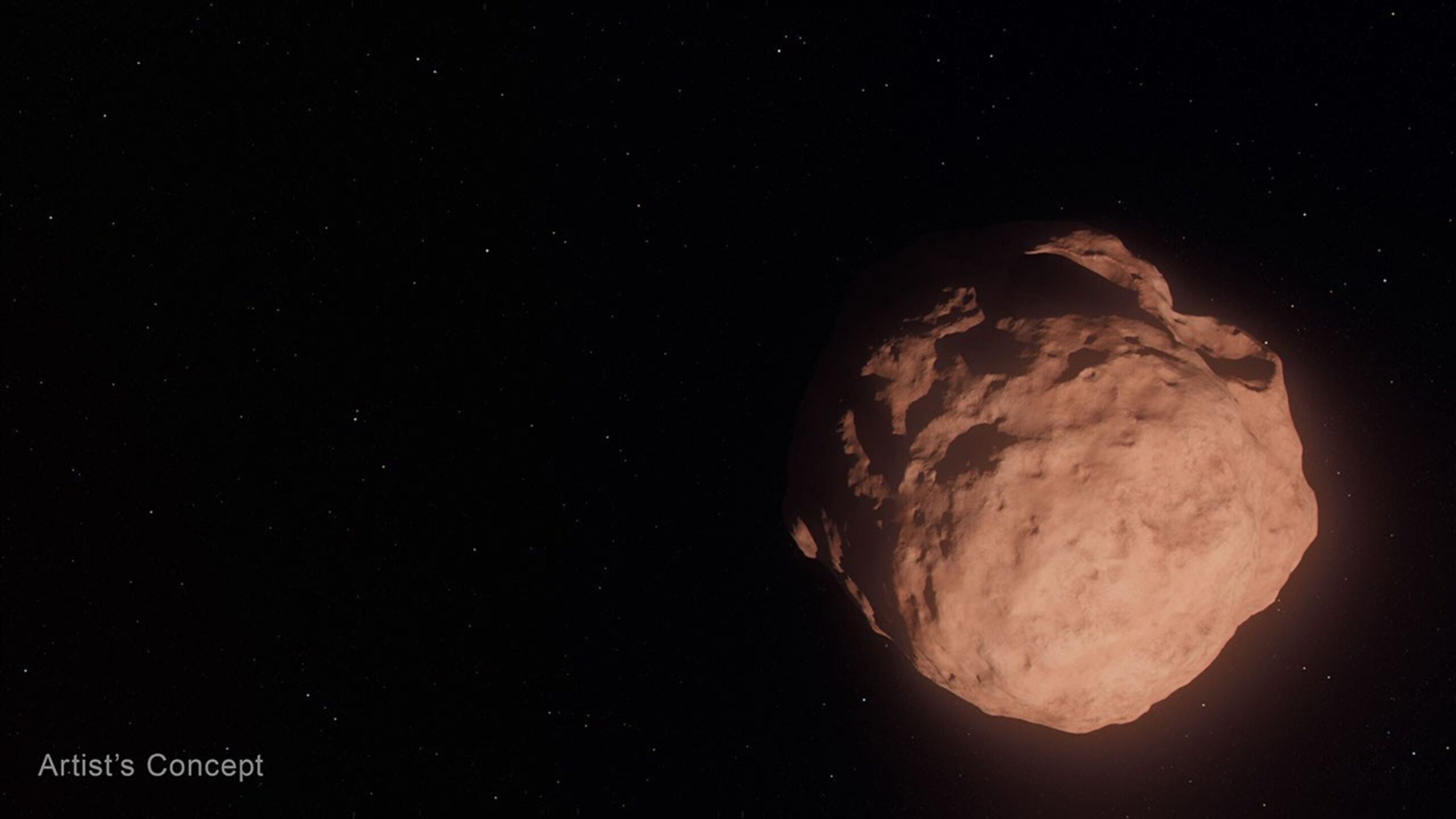
Trans-Neptunian objects, or TNOs, are small, faint, icy bodies that orbit the sun beyond Neptune. Most are more than 100 million times dimmer than objects visible to the unaided eye.
In the deepest survey of TNOs to date, research teams led by Ph.D. candidates from the University of Victoria in Canada and Northern Arizona University in Flagstaff observed the same patch of sky with both space telescopes. Hubble recorded visible light, while Webb observed infrared light.
Together, the observations allowed the researchers to measure the objects’ colors, sizes and orbits. Their colors provide information about surface composition.
The teams examined 27 newly discovered small TNOs in two complementary studies. The observations included some of the faintest and smallest TNOs ever directly detected.
These distant objects are useful for studying an early phase of planet formation. At that time, dust and pebbles in a disk around the young sun came together into planetesimals, solid bodies that could eventually build planets. Beyond Neptune, that later growth into full-size worlds did not occur, leaving a population of frozen planetesimals.
The smallest objects kept the colors of larger ones
The researchers divided the TNOs into two populations with different orbital histories.
Dynamically “cold” TNOs remain on relatively circular orbits in the plane of the solar system. Dynamically “hot” TNOs formed between the early locations of Uranus and Neptune and were later pushed outward as the outer gas giants migrated. They now travel on highly elliptical orbits and move in and out of the solar system’s plane.
Astronomers had expected repeated collisions among the smaller TNOs to alter their surfaces, potentially making their colors different from those of larger objects.
Instead, the observations found that the small TNOs have colors like their larger counterparts. Both populations appear to have retained their original colors with little change since the solar system formed.
That suggests collisions have not substantially changed the surfaces. The reason remains unresolved. There may have been fewer collisions than expected, or the objects may somehow have preserved their original compositions despite collisions.
“You could imagine a scenario where getting knocked around and fragmented would change the surface composition, and then you would see a different surface color for tiny TNOs compared to their larger siblings. So it’s really fascinating to see that the smallest objects are somehow ‘remembering’ and preserving the history of how they were made,” said Anastasia Morgan, a Northern Arizona University Ph.D. candidate who led the color and composition study.
David Trilling, a Northern Arizona University co-author, said the hot TNOs retain a signature of where they formed even though their orbits were later altered.
The number of tiny bodies was lower than expected
Webb also gave the researchers a way to examine how many objects existed at different sizes. The overall size distributions of the hot and cold populations were surprisingly similar.
Marielle Eduardo, a University of Victoria Ph.D. candidate who led the size-distribution study, said the result suggests that planetesimal formation produced similar size distributions in the two populations even though they formed in different regions of the early solar system.
The observations also found fewer very small TNOs than some planet-formation models had predicted.
Among the 27 new objects was one so faint that its brightness was compared with seeing a small swarm of fireflies on the moon from Earth. The smallest observed object is about 3 miles (5 kilometers) in diameter, roughly five times smaller than the size detectable with the most sensitive ground-based telescopes.
The observations depended on the different capabilities of the two space telescopes. Hubble’s sensitivity to visible light and Webb’s sensitivity to infrared light allowed the teams to detect and characterize the distant objects using information from both parts of the spectrum.
The first paper, The Luminosity Function of Ultrafaint Trans-Neptunian Objects Detected by JWST, and the second paper, Combined JWST and HST Deep Imaging to Characterize the Smallest Known Trans-Neptunian Objects, were published in The Astronomical Journal.