GRB 221009A produced a photonlike event with an estimated energy of 300 TeV, posing an unusually difficult puzzle for the physics of how light travels across the universe. The gamma-ray burst lies at a redshift of about 0.151, and the event was recorded by the Carpet-3 detector roughly 4,536 seconds after the burst. In conventional propagation models, photons at this energy should be overwhelmingly absorbed before reaching Earth, yet the Carpet Collaboration’s completed analysis reported an event with an energy of TeV.
GRB 221009A had already presented an extraordinary high-energy observation before the Carpet result. LHAASO recorded more than 5,000 photons above 500 GeV during the first 2,000 seconds after the Fermi-GBM trigger, including 142 photonlike events between 3 and 20 TeV and eight above 10 TeV. The earlier Carpet analysis reported a photonlike event at about 251 TeV, while the completed analysis using the full detector over one day yielded the higher-energy result.
The updated Carpet event coincided with the burst in both arrival direction and time, with a quoted chance probability of about . Carpet estimated the probability that the event was a misidentified hadron at about . The collaboration also found that the same power-law photon flux used to fit the LHAASO observations was within an order of magnitude of the Carpet event when extrapolated to much higher energies.
That combination creates the central problem. As these photons travel toward Earth, they encounter radiation that can absorb them through the process . The relevant background includes the extragalactic background light, the cosmic microwave background and the radio background. At the roughly 300-TeV energies of the Carpet event, the cosmic microwave background is the dominant source of absorption.
Using conventional physics, the authors calculate an expected Carpet photon count of only about . That estimate comes from taking the emitted photon flux, multiplying it by the photon survival probability, and integrating over Carpet’s 262-to-343-TeV energy range, using an effective detector area of about 60 square meters and a one-day exposure. The calculation is dominated by cosmic-microwave-background absorption at these energies.
The enormous mismatch means that simply extending the standard propagation picture does not account for the reported event within the assumptions explored in the study.
Axionlike particles are not enough
One possible way to make the universe more transparent to high-energy photons involves hypothetical particles called axionlike particles, or ALPs. In the scenario considered here, photons can oscillate into ALPs in magnetic fields. Because ALPs are not subject to the same photon absorption processes, photon-ALP oscillations can reduce the effective absorption from the extragalactic background light, cosmic microwave background and radio background.
The authors had previously considered ALPs as an explanation for the photons above 10 TeV detected by LHAASO. To preserve that explanation, they examine ALPs with masses of approximately to eV and photon couplings of roughly to GeV.
But those parameters do not solve the Carpet problem. Across the entire explored range, the calculated number of Carpet photons remains at or below roughly . Because the expected number is so small, the authors use Poisson statistics. At 95% confidence, they require an expected count of at least 0.0513 for the observation to be accommodated. The ALP prediction therefore falls about two orders of magnitude short.
The authors also tested the robustness of that result by varying the relevant astrophysical parameters. Their ALP calculation generated about 1,000 realizations while varying the ALP parameters and magnetic-field configurations. The resulting bands represented the central 95% of those realizations at each energy. They report that changing the extragalactic-background-light model or host-galaxy magnetic field did not qualitatively change the result. Even the most favorable configurations explored left the predicted 300-TeV photon count about two orders of magnitude below the level required at 95% confidence.
So the mechanism that the authors use to account for LHAASO’s lower-energy, very-high-energy photons does not, by itself, make the reported Carpet event sufficiently likely.
The alternative changes the rules for photon propagation
The authors next examine Lorentz invariance violation, or LIV, in which the usual relationship between a particle’s energy and momentum is modified at very high energies. They consider a parametrization in which the leading physically allowed modification appears at either first order or second order in energy relative to a characteristic LIV scale. The analysis is restricted to the subluminal case, in which the modified propagation increases cosmic transparency at the energies relevant to Carpet.
The reason is the pair-production threshold. Under the subluminal LIV scenario examined here, very-high-energy photons from a cosmological source interact with background photons at higher energies, where the background photon density is lower. This increases the calculated survival probability of the high-energy photons. The superluminal case instead makes the universe less transparent and is discarded in the analysis.
The calculation also includes an energy-dependent photon velocity, which produces a time delay for subluminal propagation. Within the framework considered, the photons are also stable against photon decay and photon splitting.
The authors then ask whether LIV alone can produce enough surviving photons to account for the Carpet observation. As in the ALP calculation, they integrate the expected flux over the Carpet energy range and multiply by the detector’s effective area and exposure time. Requiring at least 0.0513 expected photons at 95% confidence produces upper limits on the LIV scale.
For a first-order modification, the resulting limit is
while for a second-order modification it is
both at 95% confidence. The quoted uncertainties reflect the systematic uncertainty in the Carpet spectral normalization.
The first-order case has an additional complication. In conventional versions of first-order LIV, the authors note, birefringence would rotate the polarization of photons and would conflict with astronomical evidence for polarized emission from distant sources. The paper reports existing lower limits of GeV for the first-order scale and GeV for the second-order scale.
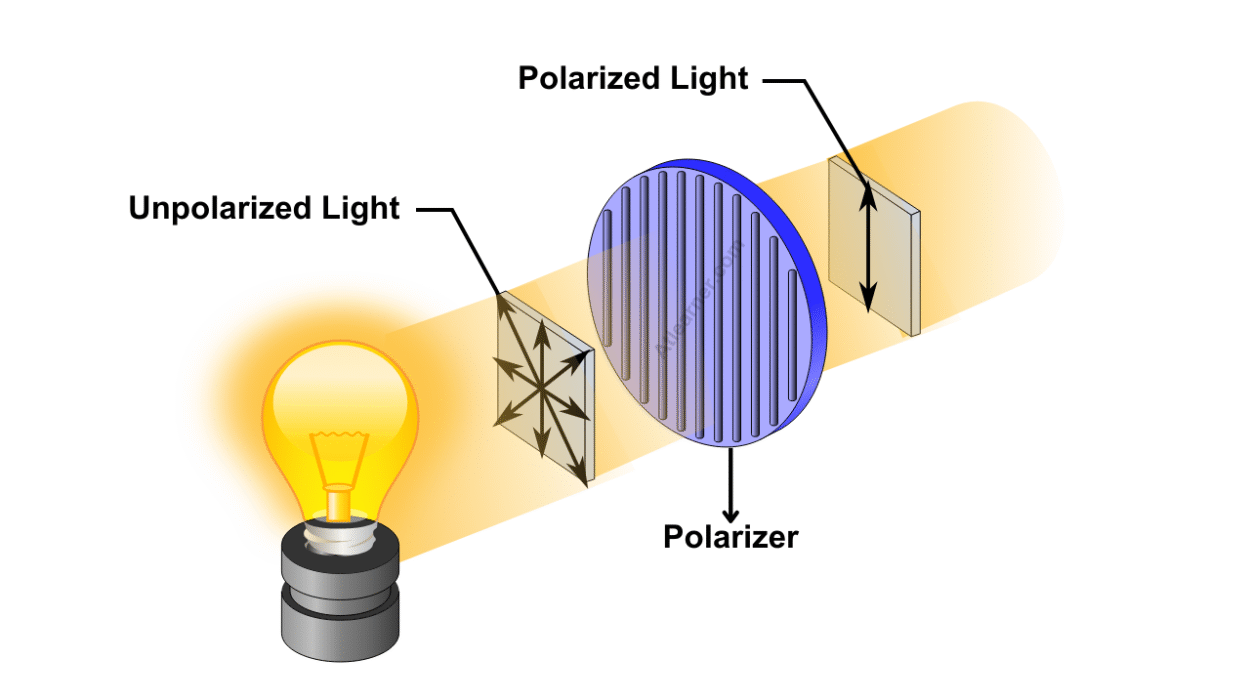
The authors identify a specific D-brane framework in which this particular problem with first-order LIV does not arise: although the photon dispersion relation is deformed, the two circular photon polarization states propagate at the same speed, so no birefringence occurs. The paper finds no analogous limitation for the second-order case.
There is also a separate connection to the timing of the event. The paper notes that a recent calculation by Ofengeim and Piran found that the more-than-one-hour delay between the LHAASO very-high-energy photons and the Carpet event can be explained with second-order LIV using GeV. That value lies within the upper bound obtained in the present analysis.
Combining the two effects
The authors’ more complete scenario does not simply choose between ALPs and LIV. Instead, it combines them.
The premise is that photon-ALP oscillations remain Lorentz invariant even when LIV modifies photon propagation. For that to hold in the framework examined, the photon-ALP interaction must remain unaffected by LIV and photons and ALPs must experience the same LIV modification. The resulting effective description contains corresponding LIV terms for the photon and ALP.
This combination addresses the two parts of the GRB observation within the authors’ framework. ALP oscillations provide the mechanism previously used to account for LHAASO’s photons above 10 TeV, while LIV modifies propagation sufficiently to make the much higher-energy Carpet event possible. The authors calculate the two effects together in a single photon-ALP propagation model rather than adding separate predictions after the fact.
For illustrative calculations, they use an ALP mass of eV, a photon coupling of GeV, a first-order LIV scale of GeV and a second-order scale of GeV. These values are within the constraints considered in the analysis.
The authors vary the parameters over their allowed ranges and calculate the resulting photon survival probabilities and expected spectral energy distributions. They report that the qualitative behavior remains stable across the configurations explored. For the intrinsic Carpet spectrum, they allow a factor-of-three variation above and below the extrapolated LHAASO flux, corresponding to the systematic uncertainty reported by the Carpet analysis.
The resulting picture is therefore not presented as a definitive detection of Lorentz invariance violation. The authors describe the combined ALP-plus-LIV frameworks as providing a consistent interpretation of the GRB 221009A observations and as suggesting a potential first indication of LIV in the particular contexts they examined. They explicitly state that further observations are required to determine whether these clues represent real discoveries.
For now, the scientific significance of the 300-TeV event rests on the unresolved gap between what conventional propagation predicts and what the detector reported. Within the models examined in this study, ALPs alone leave that gap too large, while particular subluminal LIV scenarios can make the event compatible with the expected photon flux. The combined scenario offers a way to accommodate both the lower-energy LHAASO observations and the much higher-energy Carpet event within one propagation framework.
The study was published in Physical Review Letters.