Inside every living cell, there exists a quiet and tireless world of microscopic activity. Life is not a still picture but a continuous dance of molecules, energy, and information. Proteins fold and unfold, DNA sends instructions, nutrients are broken down and rebuilt, and signals travel from one structure to another in a choreography so complex that it still astonishes scientists today. At the center of this cellular universe lies a small yet extraordinary structure known as the mitochondrion.
For decades, mitochondria have been famously described as the “powerhouses of the cell.” This phrase appears in textbooks across the world, teaching generations of students that mitochondria produce the energy cells need to survive. While this description is not wrong, it is far from complete. Modern biology has revealed that mitochondria are far more than tiny energy factories. They are regulators of life and death, guardians of cellular balance, participants in immune defense, shapers of development, and witnesses to an ancient evolutionary partnership that helped create complex life.
Understanding mitochondria means peering into one of the most fascinating stories in biology. It is a story that connects microscopic chemistry to human health, ancient evolution to modern disease, and the delicate workings of cells to the survival of entire organisms.
Discovering the Hidden Engines of Cells
The story of mitochondria begins in the nineteenth century, when improvements in microscopy allowed scientists to observe structures inside cells with greater clarity than ever before. Researchers noticed tiny thread-like or bean-shaped bodies scattered throughout the cytoplasm. These structures appeared in many types of cells, but their purpose was unknown.
The name “mitochondria” was eventually given to these structures, derived from Greek words meaning “thread” and “granule,” reflecting their varied shapes under the microscope. At first, mitochondria were little more than mysterious components within cells, recognized but poorly understood.
The true importance of mitochondria began to emerge in the early twentieth century as scientists investigated how cells generate energy. Life requires a continuous supply of energy to maintain order, build molecules, move structures, and sustain countless biochemical reactions. Researchers discovered that mitochondria played a central role in this process.
Experiments showed that the chemical reactions responsible for cellular respiration—the process by which nutrients are converted into usable energy—occur largely inside mitochondria. These organelles were found to be rich in enzymes that break down molecules such as glucose and fatty acids. Through a series of reactions, energy stored in food is captured and converted into a molecule called adenosine triphosphate, or ATP.
ATP functions as the universal energy currency of life. When cells need energy to perform tasks such as muscle contraction, nerve signaling, or protein synthesis, they use ATP. Mitochondria generate vast quantities of this molecule, making them indispensable to almost every form of life that depends on oxygen.
This discovery earned mitochondria their reputation as the cell’s powerhouses. Yet as research progressed, scientists began to realize that mitochondria were involved in far more than energy production.
The Structure of a Mitochondrion
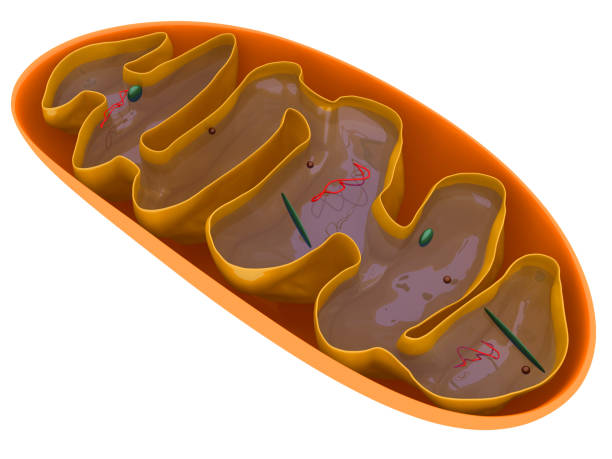
To understand the many roles of mitochondria, it is helpful to explore their structure. A mitochondrion is not a simple container of enzymes. Instead, it is a highly organized and dynamic organelle with specialized compartments that allow complex processes to occur efficiently.
Each mitochondrion is surrounded by two membranes. The outer membrane forms the boundary between the mitochondrion and the rest of the cell. It contains proteins that allow certain molecules to pass through, making it relatively permeable compared to other biological membranes.
The inner membrane, however, is very different. It is highly selective and tightly regulated, controlling the movement of molecules into and out of the mitochondrial interior. This membrane is folded into numerous inward projections called cristae. These folds greatly increase the surface area of the membrane, providing more space for the molecular machinery involved in energy production.
Inside the inner membrane lies a region known as the mitochondrial matrix. This space contains enzymes that carry out crucial steps of cellular respiration, as well as mitochondrial DNA and ribosomes.
The arrangement of these compartments allows mitochondria to perform their functions with remarkable efficiency. The inner membrane houses proteins that transfer electrons through a chain of reactions, generating a flow of energy used to produce ATP. Meanwhile, the matrix provides the environment for metabolic cycles that break down nutrients and release chemical energy.
This structural complexity reflects the sophisticated nature of mitochondria. They are not passive energy generators but highly active centers of metabolism and regulation.
Cellular Respiration and the Production of Energy
The most widely known function of mitochondria is their role in cellular respiration. This process allows cells to extract energy from nutrients and convert it into ATP.
Cellular respiration occurs in several stages, beginning with the breakdown of glucose in the cytoplasm through a process known as glycolysis. Although glycolysis produces a small amount of ATP, most of the energy remains locked within intermediate molecules that must be further processed inside mitochondria.
Once these molecules enter the mitochondrial matrix, they participate in a series of reactions known as the citric acid cycle. During this cycle, carbon atoms are gradually removed and released as carbon dioxide. At the same time, high-energy electrons are transferred to molecules that carry them to the inner mitochondrial membrane.
The final stage of cellular respiration takes place along the inner membrane, where electrons move through a chain of proteins known as the electron transport chain. As electrons travel through this chain, their energy is used to pump protons across the inner membrane, creating a gradient.
This gradient stores potential energy, much like water held behind a dam. When protons flow back through specialized proteins called ATP synthases, the energy released drives the production of ATP.
Through this intricate system, mitochondria can generate large quantities of ATP from the energy contained in nutrients. The process is extraordinarily efficient and allows cells to sustain the activities required for life.
However, mitochondria do much more than simply convert food into energy.
The Evolutionary Origins of Mitochondria
One of the most fascinating aspects of mitochondria is their evolutionary history. Unlike most structures inside cells, mitochondria possess their own DNA and reproduce independently of the cell’s nucleus. This unusual feature led scientists to propose a remarkable theory about their origin.
According to the endosymbiotic theory, mitochondria were once free-living bacteria that existed billions of years ago. Early in the history of life, a primitive cell engulfed one of these bacteria. Instead of digesting it, the host cell formed a stable partnership with the bacterium.
This relationship proved advantageous for both partners. The bacterium was capable of generating energy using oxygen, a resource that was becoming more abundant in Earth’s atmosphere. The host cell provided protection and access to nutrients.
Over time, the bacterium evolved into the mitochondrion. Many of its genes were transferred to the host cell’s nucleus, and the two organisms became inseparable. The descendant of this ancient partnership gave rise to all complex cells known as eukaryotic cells.
Evidence supporting this theory is abundant. Mitochondria have their own circular DNA, similar to bacterial genomes. They possess ribosomes that resemble those found in bacteria. They also divide through a process that closely resembles bacterial replication.
This evolutionary story reveals that mitochondria are not merely cellular components but the descendants of ancient organisms. Their presence within cells represents one of the most transformative events in the history of life.
Without mitochondria, complex organisms such as animals, plants, and fungi might never have evolved.
Mitochondria and Cellular Metabolism
Energy production is only one aspect of mitochondrial function. These organelles are also central hubs of metabolism, participating in the synthesis and breakdown of many important molecules.
Mitochondria play key roles in the metabolism of fatty acids. When cells require energy from stored fats, mitochondria break down fatty acids through a process known as beta-oxidation. This process releases electrons and energy that feed into the pathways of cellular respiration.
In addition to breaking down molecules, mitochondria also contribute to biosynthesis. They help produce certain amino acids, lipids, and cofactors required for cellular functions.
Another critical role involves the regulation of reactive oxygen species. During the process of electron transport, small amounts of oxygen can be partially reduced, forming reactive molecules known as free radicals. While these molecules can serve useful signaling roles, excessive amounts can damage proteins, DNA, and membranes.
Mitochondria contain systems that help manage and neutralize these reactive molecules, maintaining a balance that protects cells from oxidative stress.
Through these metabolic activities, mitochondria influence nearly every aspect of cellular chemistry.
Mitochondria and the Control of Cell Death
Perhaps one of the most dramatic roles of mitochondria involves their participation in programmed cell death, a process known as apoptosis. At first glance, it may seem strange that cells would possess mechanisms to destroy themselves. Yet apoptosis is essential for maintaining healthy tissues and removing damaged or dangerous cells.
Mitochondria act as central regulators in this process. Under certain conditions—such as severe DNA damage, infection, or developmental signals—mitochondria release proteins that trigger a cascade of events leading to cell death.
One of these proteins activates enzymes called caspases, which dismantle cellular components in a controlled manner. The cell shrinks, its contents are packaged into small fragments, and surrounding immune cells remove the debris without causing inflammation.
This carefully orchestrated process allows the body to eliminate unwanted cells without harming neighboring tissues.
Mitochondria therefore serve as guardians of cellular integrity. They help determine whether a cell should continue living or be safely removed for the greater health of the organism.
Mitochondria in Development and Aging
Mitochondria also influence how organisms grow, develop, and age. During early development, energy demands are enormous as cells divide rapidly and form complex tissues. Mitochondria supply the energy required for these processes and help regulate metabolic pathways that guide development.
As organisms age, mitochondrial function can gradually decline. Damage to mitochondrial DNA, accumulation of oxidative stress, and changes in metabolic regulation may contribute to the aging process.
Scientists have long suspected that mitochondrial dysfunction plays a role in age-related diseases such as neurodegenerative disorders and metabolic conditions. Research continues to explore how maintaining mitochondrial health might influence longevity and overall well-being.
The study of mitochondria has therefore become central to understanding the biology of aging.
Mitochondria and Human Health
Because mitochondria are so essential to cellular function, problems affecting them can have serious consequences for health. Mutations in mitochondrial DNA or in genes controlling mitochondrial processes can lead to a range of disorders known as mitochondrial diseases.
These diseases often affect tissues with high energy demands, such as the brain, muscles, and heart. Symptoms may include muscle weakness, neurological problems, and organ dysfunction.
Beyond rare genetic disorders, mitochondrial dysfunction has been linked to more common conditions, including diabetes, cardiovascular disease, and neurodegenerative illnesses.
Researchers are investigating ways to treat these conditions by improving mitochondrial function, repairing damaged pathways, or supporting cellular energy production.
Understanding mitochondria therefore has profound implications for medicine and human health.
The Dynamic Nature of Mitochondria
Mitochondria are not static structures sitting quietly within cells. They are highly dynamic and constantly changing their shape, number, and distribution.
Through processes known as fusion and fission, mitochondria merge together or split apart. Fusion allows mitochondria to share contents and repair damage, while fission helps remove defective segments and distribute mitochondria during cell division.
Cells carefully regulate these processes to maintain a healthy population of mitochondria. When mitochondria become severely damaged, specialized pathways can target them for removal through a process known as mitophagy.
These dynamic behaviors ensure that mitochondria remain functional and responsive to the needs of the cell.
The Continuing Mystery of Mitochondria
Despite decades of research, mitochondria continue to surprise scientists. New discoveries reveal additional roles in immune responses, cellular signaling, and metabolic regulation.
Researchers are uncovering how mitochondria communicate with the cell nucleus, influence gene expression, and adapt to changing environmental conditions.
The more scientists study mitochondria, the clearer it becomes that these organelles are deeply integrated into nearly every aspect of cellular life.
More Than a Powerhouse
The phrase “powerhouse of the cell” captures only a small fraction of what mitochondria truly are. They are energy producers, metabolic centers, evolutionary relics, regulators of life and death, and guardians of cellular balance.
They carry within them the legacy of an ancient partnership that helped make complex life possible. They sustain the energy needs of every heartbeat, every thought, and every movement.
Within the microscopic landscape of the cell, mitochondria stand as one of biology’s most remarkable achievements. They remind us that even the smallest structures can hold profound stories about the origins, survival, and future of life itself.
To understand mitochondria is to glimpse the hidden engines of life and to appreciate the intricate systems that sustain the living world.