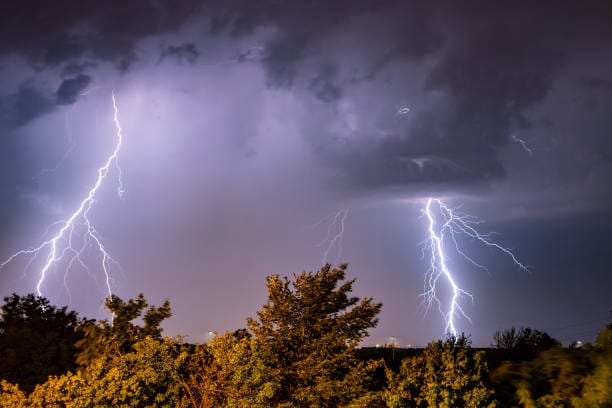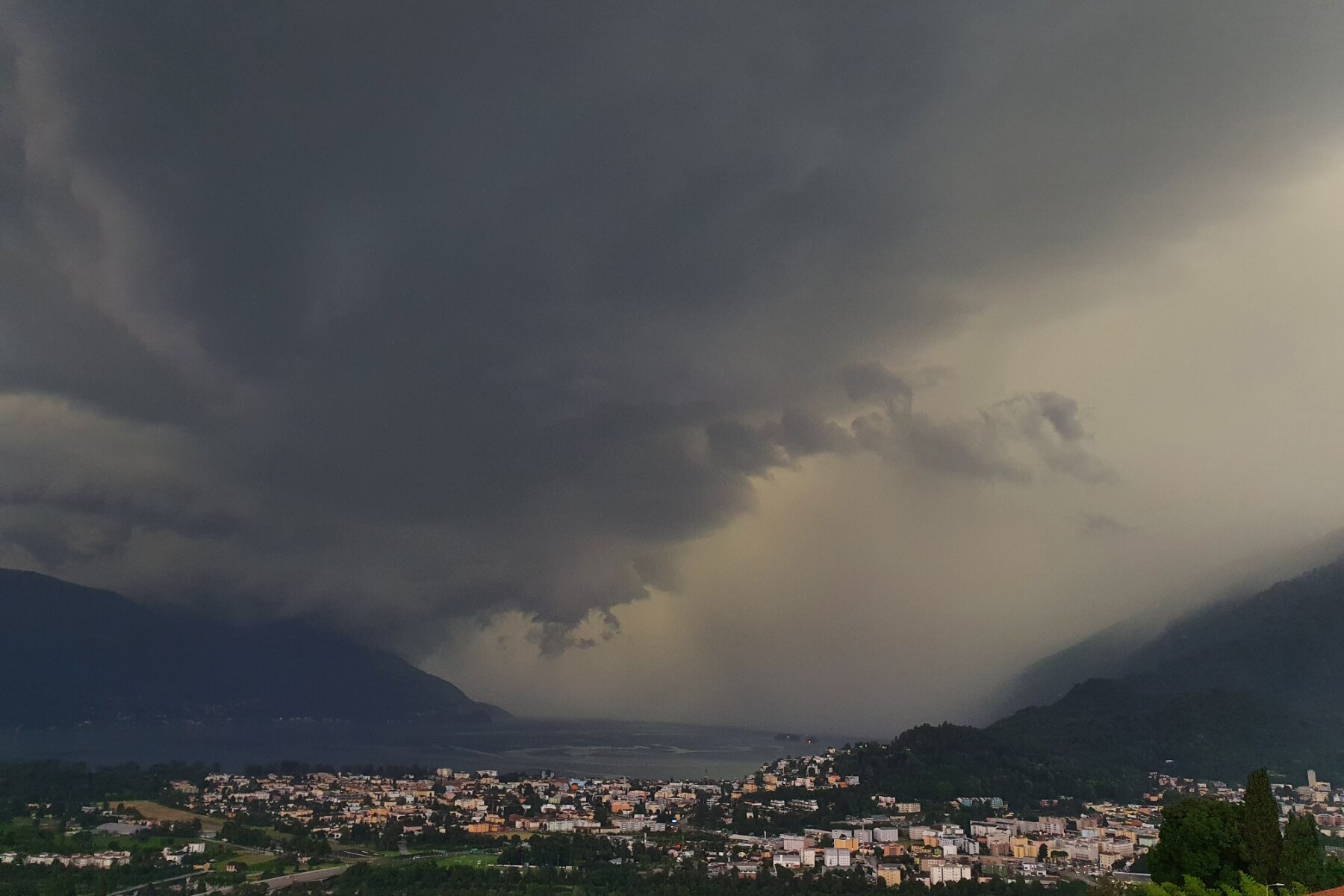
On a warm summer evening, the sky over the Alps can transform in minutes. What begins as a tranquil horizon of golden light and drifting clouds can suddenly grow dark and menacing. The air thickens, the wind sharpens, and towering thunderclouds spiral into a monstrous rotation. When the first hailstones—sometimes as large as golf balls—slam into roofs, cars, and crops, it is clear that this is no ordinary storm. This is a supercell thunderstorm: one of nature’s most powerful and destructive displays.
Supercell thunderstorms are rare in Europe compared to ordinary storms, but their impacts are far greater. They bring torrential rain, destructive winds, massive hail, and occasionally tornadoes. For those caught in their path, the consequences can be devastating—damaged homes, ruined harvests, crippled traffic systems, and tragically, risks to human life.
Now, new research suggests that as the climate warms, these storms may become even more frequent, especially in the Alpine region. Europe’s skies are changing, and the storms of the future may challenge us in ways we are only beginning to grasp.
What Makes a Supercell Different?
Most thunderstorms follow a predictable life cycle: they grow, rain, and dissipate. Supercells are different. They are defined by a rotating updraft, a powerful column of rising warm, moist air that begins to spin due to wind shear—changes in wind speed and direction with altitude. This rotation allows the storm to sustain itself for hours, feeding on the energy of the atmosphere.
Within the churning core of a supercell, rain and hailstones are suspended, growing larger before gravity pulls them to the ground. Winds spiral with explosive force, and in rare but extreme cases, the rotation can tighten into a tornado. While Europe is not as tornado-prone as the United States, supercells here can still unleash destruction on an alarming scale.
What makes these storms especially dangerous is not just their intensity, but their unpredictability. A single supercell can devastate one valley while leaving another untouched. Their rarity makes them harder to anticipate, but their impact makes them impossible to ignore.
Mapping the Unseen: A New Era of Storm Simulation
Until recently, European meteorologists faced a frustrating challenge: while weather radar could track thunderstorms, differences between national radar systems made it difficult to build a consistent, continent-wide picture. Storms, after all, do not respect borders.
This is where the collaboration between the University of Bern’s Institute of Geography and Oeschger Center for Climate Change Research, the Mobiliar Lab for Natural Risks, and ETH Zurich’s Institute for Atmospheric and Climate Science changed the game.
Through the scClim project, scientists developed a new type of high-resolution climate model capable of simulating thunderstorms with unprecedented detail—down to a scale of 2.2 kilometers. This means that for the first time, digital maps could capture the anatomy of individual supercells rather than lumping them into broad averages.
The research team conducted an eleven-year simulation and compared the results with real-world storm data from 2016 to 2021. The outcome was striking: the model successfully mirrored observed storm behavior, giving researchers confidence that it could also predict how storm activity will shift in a warming climate.
The Alps: Europe’s Thunderstorm Hotspot
The simulations revealed what many in the Alpine region have long suspected: the Alps are a thunderstorm hotspot. On average, the northern slopes experience around 38 supercell thunderstorms per season, while the southern side sees as many as 61.
This is not just a meteorological curiosity—it is a geographical consequence. The towering mountains force moist air upward, creating ideal conditions for storm formation. The result is a landscape that is as vulnerable as it is beautiful, where valleys and farmlands are regularly at the mercy of severe weather.
With climate change, the threat is set to intensify. A temperature rise of 3°C compared to pre-industrial times could bring 52% more storms north of the Alps and 36% more south of the Alps. While regions like the Iberian Peninsula and southwest France may see fewer supercells, the overall increase across Europe is projected to be about 11%.
This uneven distribution underscores a sobering truth: climate change does not affect all places equally. Some regions may find temporary relief, while others, like the Alpine corridor, face mounting risks.
When Rare Storms Cause Outsized Damage
One of the paradoxes of supercell thunderstorms is that they are relatively rare, yet they account for a disproportionate share of thunderstorm-related damage. A single storm can flatten crops across hundreds of hectares, shred roofs with hail, or flood entire towns with sudden downpours.
Insurance companies know this all too well. In recent years, the financial costs of hailstorms in Europe have risen sharply, with individual events causing hundreds of millions of euros in damage. For farmers, a single summer storm can erase an entire year of work. For households, the aftermath may mean months of repairs.
And while numbers tell one part of the story, the human dimension is equally stark. Families displaced, roads blocked, flights canceled, and emergency responders stretched to their limits—these storms ripple through communities in ways that are both immediate and lasting.
Climate Change: Fuel for the Storm
Why are these storms expected to increase? The answer lies in the basic physics of a warming planet. Warmer air can hold more moisture, and moisture is the lifeblood of thunderstorms. Add in stronger temperature contrasts and shifting wind patterns, and the ingredients for severe storms become more plentiful.
The Alps, with their unique topography, act like a natural amplifier. Rising temperatures intensify the convective processes that trigger storms, while mountain slopes channel and lift the air into towering thunderclouds. What was once an occasional event may become an all-too-common feature of summer.
But perhaps the most unsettling truth is that these changes are already underway. The storms of recent summers—violent, sudden, and destructive—are not just freak events; they are glimpses of a future where extreme weather is the norm rather than the exception.
Preparing for a Stormier Future
The research from Bern and Zurich is more than an academic achievement. It is a call to action. By providing more precise forecasts and simulations, these storm maps can help authorities, insurers, and communities prepare.
Preparedness means more than just predicting storms; it means adapting society to withstand them. Stronger building codes, resilient infrastructure, smarter agricultural practices, and early warning systems all play a role. Just as importantly, integrating supercell risk into disaster strategies and climate adaptation plans is vital to protecting both lives and livelihoods.
As Monika Feldmann of the Mobiliar Lab for Natural Risks emphasizes, “Understanding the conditions that favor these storms is key to better preparedness.” It is not enough to marvel at the power of the skies—we must learn to live with them.
Conclusion: Listening to the Sky
Supercell thunderstorms remind us of the delicate balance between humanity and nature. They are awe-inspiring in their beauty and terrifying in their power. For centuries, people have looked at thunderclouds with a mix of reverence and fear. Today, science allows us to see them more clearly—not just as spectacles, but as phenomena shaped by a changing climate.
Europe stands at a crossroads. As the atmosphere warms, the storms of tomorrow will not look like those of yesterday. We cannot stop the skies from turning, but we can choose how we respond—through science, resilience, and collective action.
The next time thunder rumbles over the Alps and a storm builds on the horizon, it will carry with it not only lightning and hail, but also a message: that the climate is changing, and that our future depends on how we prepare for the storms to come.
More information: Monika Feldmann, European supercell thunderstorms – a prevalent current threat and an increasing future hazard, Science Advances (2025). DOI: 10.1126/sciadv.adx0513. www.science.org/doi/10.1126/sciadv.adx0513