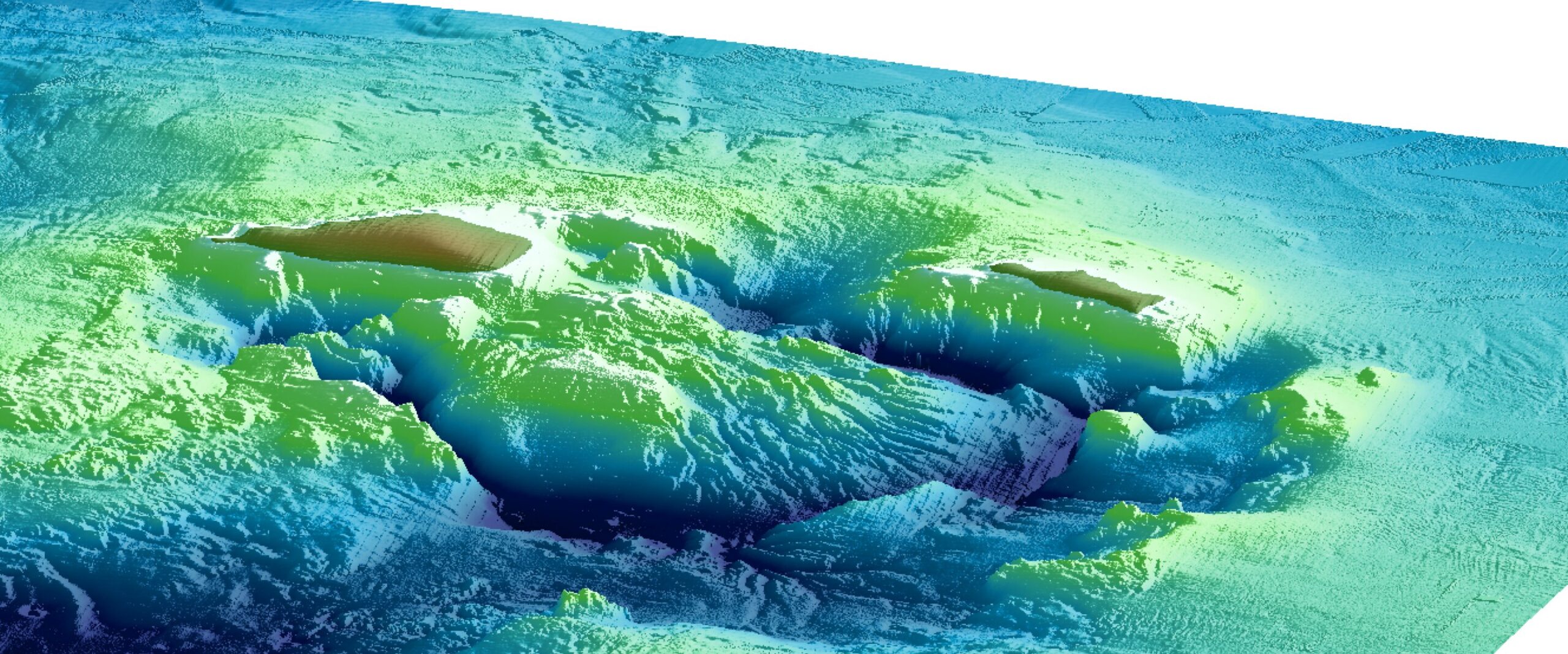
Seven millennia ago, the Earth’s crust off the coast of southern Japan underwent a transformation so violent it redefined the landscape of the Holocene epoch. The Kikai caldera, once a site of unimaginable geological fury, collapsed into the sea after an eruption that ejected enough magma to bury an area the size of Central Park under 12 kilometers of molten rock. For thousands of years, the remains of this giant sat silently beneath the waves, a submerged scar on the ocean floor. But beneath the stillness of the Pacific, something is stirring. New research from Kobe University suggests that the heart of this monster is beating once again, providing a rare, subterranean look at how the world’s most dangerous volcanoes prepare for their next act.
A Ghost in the Deep
To understand the scale of a caldera, one must imagine a volcano so powerful that it does not merely blow its top; it hollows itself out until the ground above caves in, leaving a massive, shallow crater. While names like Yellowstone in the United States or Toba in Indonesia dominate the conversation regarding supervolcanoes, the Kikai caldera holds the title for the largest eruption of the current geological age. Because it is mostly underwater, it has long remained a mystery to scientists, its internal mechanisms shielded by layers of ocean and earth.
However, its watery grave has recently become its greatest advantage for science. Geophysicist Seama Nobukazu of Kobe University notes that the underwater location allows researchers to conduct systematic, large-scale surveys that would be nearly impossible on rugged, mountainous terrain. To peer into the dark recesses of the Earth’s crust, Seama and a team from the Japan Agency for Marine-Earth Science and Technology (JAMSTEC) turned to a specialized form of acoustic “vision.” By using airgun arrays to create artificial seismic pulses and placing ocean bottom seismometers on the seafloor to listen, they could track how those waves moved through the ground. Like an ultrasound for the planet, the speed and behavior of these waves revealed the hidden structures lurking miles below the seabed.
The Reservoir Awakens
The data returned by the seismometers painted a startling picture. Directly beneath the site of the ancient eruption, the team identified a massive region characterized by a high degree of magma. By analyzing the shape and extent of this zone, the researchers confirmed a critical suspicion: the magma reservoir that fueled the eruption 7,300 years ago is not an empty tomb. It is currently refilling.
For years, the scientific community debated whether the activity seen at calderas was simply the “leftovers” of previous eruptions—stagnant, cooling rock that never made it to the surface. But the Kikai evidence suggests a far more dynamic story. The team discovered that a lava dome has been slowly rising in the center of the caldera over the last 3,900 years. When they performed chemical analyses on the material from this dome and other recent volcanic activity, they found something unexpected. The chemical signature of this “new” rock did not match the magma ejected during the great Holocene blast.
This discrepancy in composition acts as a geological fingerprint. It proves that the molten heart of Kikai is not made of recycled remnants, but of newly injected magma. This fresh material is being pumped into the old reservoir from deep within the Earth, effectively “recharging” the volcanic system. This discovery has allowed Seama and his team to propose a magma re-injection model, a blueprint that explains how these giant systems return to life after a period of dormancy.
A Blueprint for the Giants
The implications of the Kikai findings stretch far beyond the Japanese archipelago. The magma re-injection model developed here appears to be consistent with the structures found beneath other global titans, including Yellowstone and Toba. These supervolcanoes all possess large, shallow magma reservoirs that seem to follow a similar cycle of depletion and replenishment.
By identifying the specific size, location, and behavior of the Kikai reservoir, researchers are finally beginning to understand the magma supply cycles that follow giant eruptions. We have long known that these volcanoes can re-erupt, but the “how” and “when” have remained frustratingly out of reach. We have been ill-equipped to make predictions because we didn’t understand the precursor processes—the slow, century-long accumulation of force that happens long before the first puff of smoke.
Why This Subterranean Search Matters
This research matters because it moves us from the realm of observation into the realm of foresight. Giant caldera eruptions are rare, but their impact is planetary, capable of altering global climates and threatening modern civilization. By refining the methods used at Kikai, scientists hope to gain a deeper understanding of the re-injection processes that govern all large-scale volcanic systems.
The ultimate goal of Seama’s team is to identify the crucial indicators of future giant eruptions. If we can monitor how a reservoir fills, how its chemistry changes, and how the ground above it responds to the pressure of newly injected magma, we may eventually be able to predict the behavior of the world’s most dangerous volcanoes. Understanding the heartbeat of the Kikai caldera is a vital step toward ensuring that, when the Earth’s giants finally decide to wake up again, we won’t be caught in the dark.
Study Details
Melt re-injection into large magma reservoir after giant caldera eruption at Kikai Caldera Volcano, Communications Earth & Environment (2026). DOI: 10.1038/s43247-026-03347-9