Deep within the constellation of Vela, about 1,000 light years away from Earth, lies a cosmic crime scene of immense proportions. It is a place where a star once died in a violent explosion, leaving behind a spinning corpse known as the Vela pulsar. But the story didn’t end with that ancient blast. Instead, the pulsar began exhaling a relentless wind of charged particles, creating a glowing shroud of energy known as a pulsar wind nebula. This specific nebula, dubbed Vela X, has long puzzled astronomers because of its bizarre, asymmetrical shape and a mysterious structure known as the Cocoon.
A Ghostly Tail in the Dark
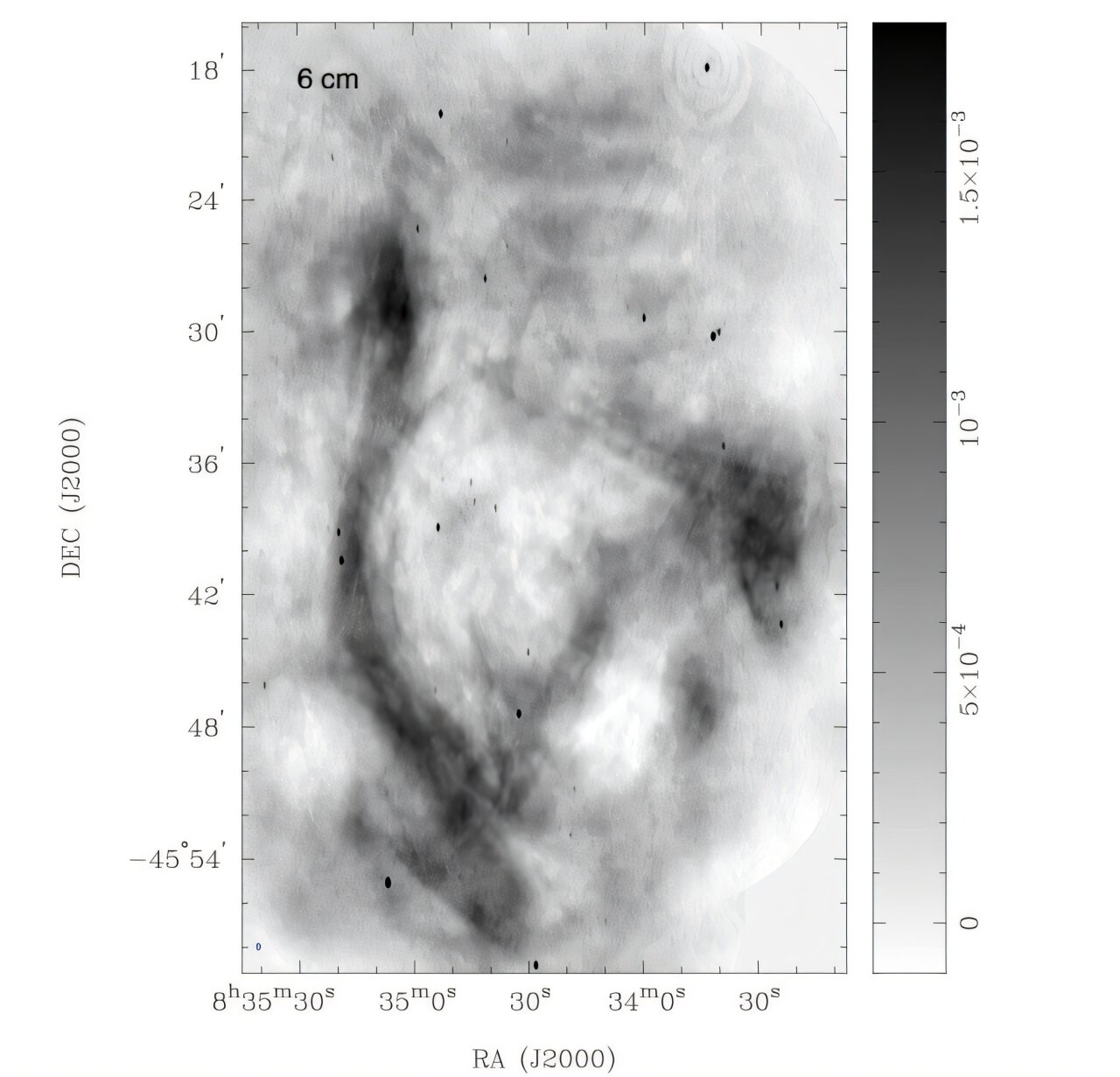
The Cocoon is a long, collimated filament of high-energy particles that stretches out from the pulsar like a ghostly tail, pointing toward the south-southwest. While most nebulae tend to expand somewhat evenly, this one is strikingly lopsided. For years, scientists have looked at the Cocoon and seen a contradiction. When they looked through radio telescopes, they saw one thing; when they looked through X-ray telescopes, they saw another. The emissions from these two different energy bands were physically separated, appearing in different spots despite being part of the same structure.
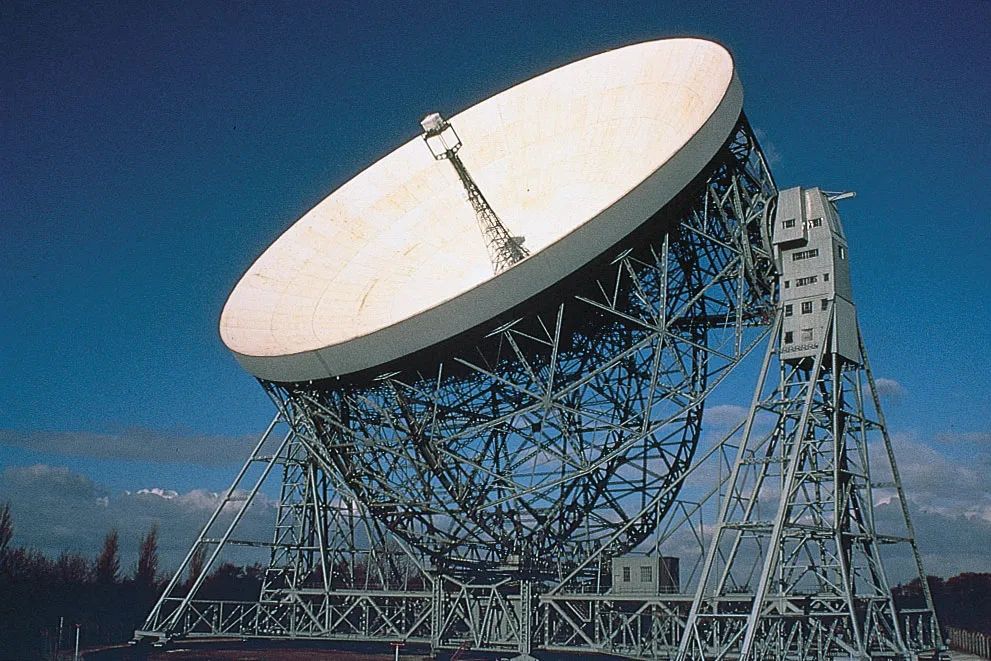
This separation created a scientific mystery. Why were the radio and X-ray features so distinct? Why did the most significant features appear so far away from the Vela pulsar itself? Some theorists suggested that a reverse shock—a wave of pressure bouncing back from the northern edge of the supernova debris—might have slammed into the original nebula, crushing it and shoving its contents into the strange, elongated shape we see today. To solve this mystery, a team of researchers led by Yihan Liu of Sun Yat-Sen University turned to the Australia Telescope Compact Array (ATCA), seeking a clearer view of the chaos.
Capturing the Invisible Threads
Over three days in late November 2024, the team aimed the ATCA dishes toward the Cocoon. They used a specific configuration of the telescope array, known as 750D, which allowed them to balance high-resolution detail with a wide enough view to capture the nebula’s large-scale structure. They weren’t just looking for light; they were looking for the underlying “skeleton” of the nebula—the magnetic fields and the arrangement of particles that define its shape.
When the new data arrived, it revealed a landscape far more complex than previously imagined. Instead of a smooth cloud of gas, the Cocoon appeared as a tangled web of curved filaments. These large-scale structures were accompanied by smaller, chaotic wisp-like features that flickered throughout the region. It looked less like a simple wind and more like a turbulent sea. The high-resolution images confirmed that the environment within this pulsar wind nebula and its surrounding supernova remnant, known as G263.9−3.3, is incredibly dynamic and constantly shifting.
The Magnetic Compass of a Dead Star
One of the most revealing aspects of the study involved polarization. When light or radio waves are polarized, they vibrate in a specific direction, usually dictated by the orientation of magnetic fields. The researchers found that the large-scale filaments in the Cocoon were highly polarized, with the magnetic field lines running tangential to the filaments themselves. This means the magnetic fields are essentially “wrapped” along the curves of the nebula’s structure.
Furthermore, the team examined the rotation measure, a tool used to track how radio waves change as they pass through magnetized plasma. In the most prominent filament, they discovered a distinct “hump” in this measurement, while other regions remained erratic and fluctuating. To make sense of these tangled signals, the researchers proposed a fascinating model: the Cocoon might actually be a spiral filament. The appearance of the nebula could be influenced by a Doppler-boosting effect, where the motion of the particles toward us makes certain parts look brighter and more defined, all while interacting with a chaotic circumstellar medium.
Distinguishing the Wind from the Shrapnel
A major question the team sought to answer was whether these radio features were actually part of the pulsar’s “breath” or if they were just glowing bits of the supernova remnant—the original star’s shrapnel. By analyzing the radio spectral indices, which act like a chemical fingerprint for energy, the researchers concluded that the features in the Cocoon are indeed related to the pulsar itself. They are not merely leftovers from the explosion; they are actively being shaped and powered by the Vela pulsar today.
However, the mystery isn’t fully solved. While the spiral model explains the intensity of the light and the rotation measures, the specific way the polarization is distributed across the nebula still defies a simple explanation. The comparison with older images only reinforced how different the radio and X-ray filaments truly are. This mismatch confirms that the Vela X system is a place of extreme physics, where different populations of particles are being accelerated and moved by forces we are only beginning to map.
Why This Galactic Portrait Matters
This research is vital because it provides a rare, detailed look at how energy is transferred from a collapsed star into the surrounding galaxy. By studying the Cocoon, astronomers gain an important estimate of local magnetic field strength, a value that is notoriously difficult to measure in deep space. These real-world numbers are the “fuel” for magneto-hydrodynamical simulations, the complex computer models scientists use to understand how fluids and magnetic fields interact in the universe.
Every new filament and wisp captured by the ATCA helps refine these models, allowing us to predict how other pulsars might behave. Ultimately, the study of Vela X is about understanding the lifecycle of matter. It shows us that even after a star dies, its heart remains a powerful engine, weaving intricate patterns into the fabric of space and leaving behind a complex legacy that challenges our understanding of the cosmos. As the team calls for even more observations, they are not just looking at a nebula; they are decoding the magnetic signature of a star’s afterlife.
Study Details
Yihan Liu et al, Radio Study of Vela X Cocoon, arXiv (2026). DOI: 10.48550/arxiv.2603.02046