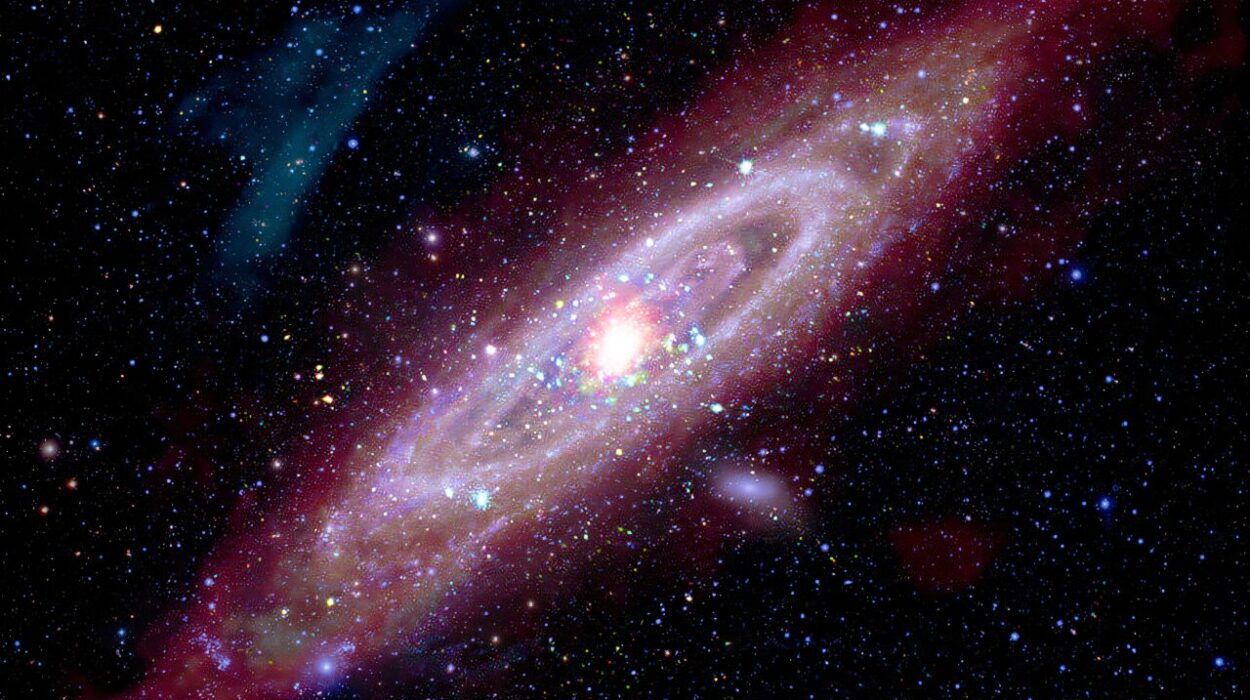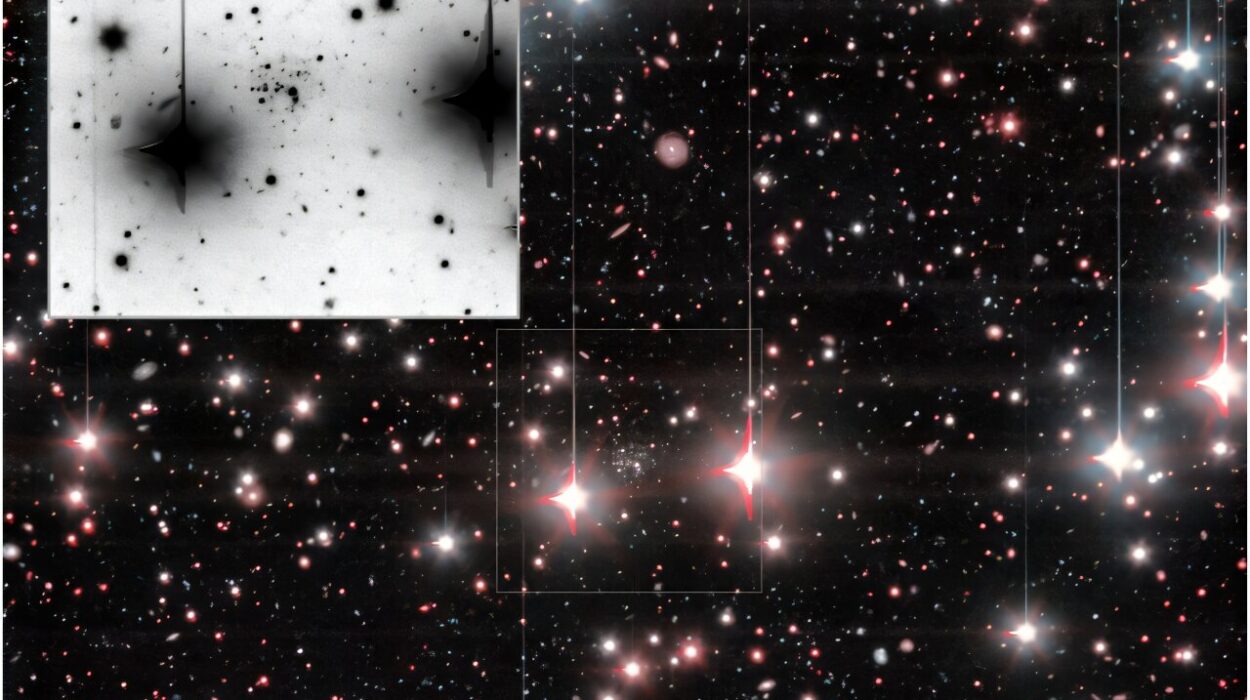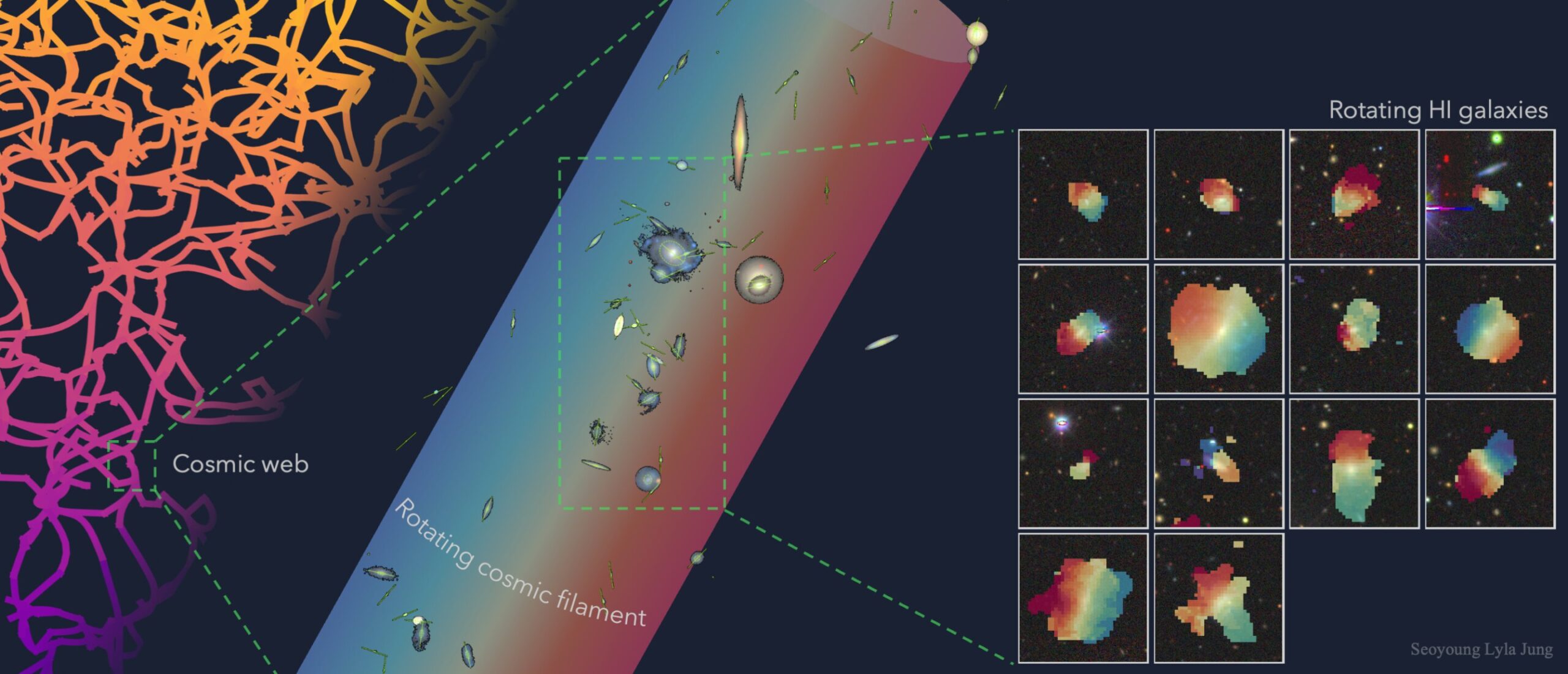
Imagine a vast, thread-like structure in the universe, stretching across millions of light-years, spinning gently like a carousel. Now, imagine that within this cosmic filament are 14 galaxies, spinning in sync with the structure itself. This breathtaking discovery, made by an international team of scientists led by the University of Oxford, opens up new possibilities for understanding the formation and evolution of galaxies in the early universe.
The research, published in the Monthly Notices of the Royal Astronomical Society, shines a spotlight on a massive, rotating cosmic filament—one of the largest rotating structures ever observed. It’s a cosmic “teacup ride” where galaxies act like spinning cups, yet the entire structure itself rotates, providing rare insight into how galaxies acquire their spin.
The Search for the Giant Cosmic Highway
The team’s discovery began with a search for cosmic filaments. These filaments are the largest known structures in the universe, vast webs of galaxies and dark matter that form a type of scaffolding throughout the cosmos. Imagine them as highways for the flow of matter and energy—threads that stretch through space, guiding galaxies and their evolution.
The scientists had been looking for filaments that contained galaxies spinning in the same direction. Why? These filaments could help explain how galaxies gain their spin and how momentum flows through the universe. When galaxies within a filament move together in a coordinated way, it could point to deeper connections between cosmic structures and their influence on galaxy formation.
As they sifted through data from various observatories, they stumbled upon a cosmic filament that was particularly intriguing. This structure, 140 million light-years away, was home to 14 hydrogen-rich galaxies arranged in a razor-thin, stretched-out line spanning 5.5 million light-years long and 117,000 light-years wide. But what made this discovery even more captivating was the fact that these galaxies appeared to be spinning in the same direction as the filament itself—a pattern far too precise to be the result of random chance.
The Filament Spins: An Unexpected Revelation
The findings were groundbreaking. The team realized that the galaxies within the filament were not only aligned in the same direction, but they were also moving in opposite directions on either side of the filament’s spine. This suggested that the entire structure was rotating, with a velocity of 110 kilometers per second.
This was a key moment in the research, as the alignment of galaxy spins and the rotational motion of the filament challenged existing models of galaxy formation. The typical assumption has been that cosmic structures like filaments had a much weaker influence on the spin of individual galaxies. But this discovery revealed that cosmic structures might have a far stronger impact on galaxy spin than previously thought—possibly shaping how galaxies evolve over vast distances and timescales.
Co-lead author Dr. Lyla Jung, from the University of Oxford, explained the significance of this dual motion: “What makes this structure exceptional is not just its size, but the combination of spin alignment and rotational motion. You can liken it to the teacups ride at a theme park. Each galaxy is like a spinning teacup, but the whole platform—the cosmic filament—is rotating too. This dual motion gives us rare insight into how galaxies gain their spin from the larger structures they live in.”
A Young, Gas-Rich Filament
Further examination revealed that this cosmic filament is not only rotating but also in a relatively young and undisturbed state. It contained a large number of gas-rich galaxies, still in the early stages of development. This “dynamically cold” filament had low internal motion, which indicated that it was still gathering and accumulating material.
The abundance of hydrogen—a key ingredient in star formation—meant that these galaxies were actively forming stars or still in the process of gathering the necessary fuel to do so. This made them prime candidates for studying galaxy evolution. Galaxies rich in hydrogen serve as excellent tracers of gas flow, as the presence of hydrogen reveals how gas is funneled through the filament and into the galaxies, influencing their formation and development.
What was even more exciting was that these hydrogen-rich galaxies were showing the “fingerprints” of the forces at work in cosmic filaments—how the flow of gas through these structures can influence a galaxy’s spin, star formation, and overall morphology. The research suggested that cosmic filaments may play a larger role in galaxy formation than previously thought, acting as conduits for both gas and angular momentum.
Decoding the Cosmic Web
The significance of this discovery goes beyond simply observing galaxies in motion. It provides a deeper look into how galaxies acquire their spin and evolve over time, potentially offering clues to the broader processes at work in the cosmic web. These filaments, often invisible to the naked eye, are the unsung highways of the universe, guiding galaxies through the vastness of space.
Dr. Madalina Tudorache, another co-lead author from the University of Oxford, emphasized the value of this discovery in unlocking the mysteries of cosmic evolution: “This filament is a fossil record of cosmic flows. It helps us piece together how galaxies acquire their spin and grow over time.”
The study’s implications extend beyond astrophysics. The team’s observations could play a crucial role in future cosmological surveys, such as the European Space Agency’s Euclid mission and the Vera C. Rubin Observatory in Chile. These upcoming missions will rely on understanding the intrinsic alignments of galaxies, and the discovery of this spinning filament could help refine models that predict how galaxies evolve in the cosmic web.
A New Lens on the Universe
The research was made possible by the combined power of several state-of-the-art telescopes, including South Africa’s MeerKAT radio telescope, which boasts 64 interlinked satellite dishes, and optical instruments like the Dark Energy Spectroscopic Instrument (DESI) and the Sloan Digital Sky Survey (SDSS). These telescopes gave the researchers a multi-faceted view of the sky, allowing them to observe the filament’s motion and gas flow in unprecedented detail.
Professor Matt Jarvis, one of the study’s leaders from the University of Oxford, reflected on the collaborative effort: “This really demonstrates the power of combining data from different observatories to obtain greater insights into how large structures and galaxies form in the universe.”
The team’s findings not only deepen our understanding of how galaxies form and evolve but also highlight the importance of cosmic filaments in shaping the very structure of the universe.
Why This Matters
This discovery of a rotating cosmic filament matters because it changes the way we think about the building blocks of the universe. By revealing that large structures like filaments can influence the rotation of galaxies over vast distances, the research challenges existing models of galaxy formation and evolution. It opens up new avenues for exploring how galaxies acquire their characteristics, including their spin and gas composition, from the larger cosmic structures they inhabit.
Ultimately, this discovery adds another chapter to the story of the universe’s evolution, providing a clearer picture of the cosmic web and the forces that shape everything within it. As scientists continue to probe deeper into these vast structures, the insights gained will not only illuminate the history of galaxies but may also offer clues about the future of the universe itself.
More information: A 15 Mpc rotating galaxy filament at redshift 𝑧 = 0.032, Monthly Notices of the Royal Astronomical Society (2025). academic.oup.com/mnras/article … .1093/mnras/staf2005