More than a billion years ago, sunlight shimmered across a shallow lake in what is now northern Ontario. The world was warmer, quieter, and almost unrecognizable. Bacteria ruled the planet. Red algae had only just begun to exist. Animals, forests, and flowers were still unimaginable futures, waiting hundreds of millions of years to arrive.
The lake itself resembled a modern desert basin, something like Death Valley. Day after day, under gentle heat, its waters slowly evaporated. As the water retreated, it left behind crystals of halite, ordinary rock salt. Nothing about the scene would have hinted that this drying lake was quietly preparing one of the most extraordinary time capsules Earth has ever made.
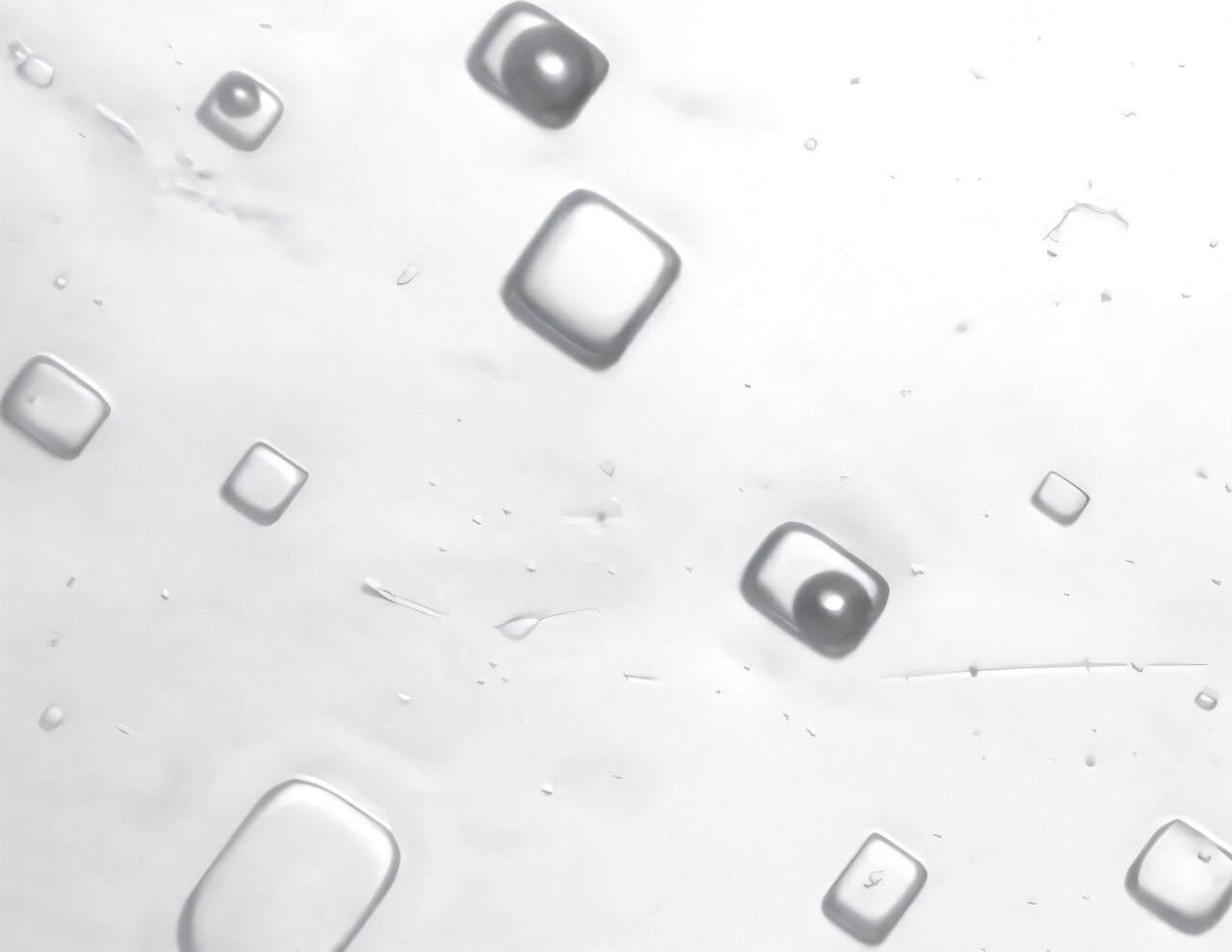
As the water thickened into brine, tiny pockets of fluid and air became trapped inside the growing salt crystals. Minute bubbles sealed themselves off from the outside world, preserving a sample of the lake water and, more astonishingly, the air hovering above it. Then sediment buried the crystals. The planet changed. Continents shifted. Life evolved. Extinctions came and went. And for 1.4 billion years, those microscopic bubbles waited.
Until now.
Opening a Window to a Lost Sky
A team of researchers led by Rensselaer Polytechnic Institute graduate student Justin Park, working with his advisor, Professor Morgan Schaller, has done something no one has done before. They have directly analyzed the gases trapped inside those ancient halite crystals, effectively extending humanity’s direct record of Earth’s atmosphere back by roughly 1.4 billion years.
Their work, published in the Proceedings of the National Academy of Sciences, transforms a long-standing scientific hope into reality. For decades, scientists knew these crystals held ancient air, but the technical barriers to reading that air clearly were immense. Now, for the first time, the Mesoproterozoic atmosphere is no longer inferred only from indirect clues. It has been sampled.
“It’s an incredible feeling, to crack open a sample of air that’s a billion years older than the dinosaurs,” Park said.
That sentence carries the weight of what this achievement represents. The dinosaurs vanished only about 66 million years ago. The air inside these crystals predates them by more than a billion years. It comes from a time when Earth itself was still learning how to be alive.
The Difficulty of Listening to Salt
The idea of ancient air trapped in crystals sounds simple. The reality is anything but. Each halite crystal contains both tiny air bubbles and liquid brine. Gases like oxygen and carbon dioxide dissolve into water in ways that distort their original proportions. Once dissolved, they no longer behave the way they do in air.
For years, researchers struggled with this problem. They could see the bubbles, but separating the signal of ancient atmosphere from the influence of water proved extraordinarily difficult. Correcting for how gases partition between air and liquid required precision that earlier methods could not achieve.
Park found a way forward. With the help of custom-built equipment in Schaller’s lab, he developed techniques to carefully measure and correct for those differences. The result was a clear reading of gases that had not exchanged with the modern world since before complex life existed.
“The carbon dioxide measurements Justin obtained have never been done before,” Schaller said. “We’ve never been able to peer back into this era of Earth’s history with this degree of accuracy. These are actual samples of ancient air.”
Those words mark a turning point. For the first time, scientists were not guessing at the Mesoproterozoic atmosphere. They were measuring it directly.
A Breath of Unexpected Oxygen
When the results emerged, they carried surprises.
The oxygen content of the Mesoproterozoic atmosphere turned out to be about 3.7% of today’s levels. That may sound small, but in the context of Earth’s deep past, it is remarkably high. High enough, in fact, to support complex multicellular animal life.
And yet animals did not appear for hundreds of millions of years after this period.
This finding challenges long-held assumptions about the relationship between oxygen and evolution. If oxygen was already present at levels capable of supporting animals, then something else must have delayed their emergence.
Carbon dioxide told a complementary story. The measurements showed that CO₂ levels were about ten times higher than they are today. That abundance would have helped counteract the so-called faint young sun, keeping Earth warm enough to avoid widespread glaciation. In other words, despite the ancient sun shining less brightly, the planet may have enjoyed a climate not so different from the modern one.
Together, the oxygen and carbon dioxide readings paint a picture of a world more dynamic and potentially more habitable than previously believed.
The Quiet Mystery of the “Boring Billion”
The Mesoproterozoic era, stretching from about 1.6 to 1.0 billion years ago, is sometimes jokingly called the “boring billion.” It is known for long stretches of apparent stability, low oxygen levels, and relatively little evolutionary change compared to other dramatic periods in Earth’s history.
Park is careful to emphasize that the halite crystals capture only a snapshot in time.
“It may reflect a brief, transient oxygenation event in this long era that geologists jokingly call the ‘boring billion,'” he said.
That possibility matters. If oxygen levels rose temporarily and then fell again, it could help explain why complex life did not immediately flourish. Evolution depends not just on reaching certain thresholds, but on maintaining them long enough for biological innovation to take hold.
“Despite its name, having direct observational data from this period is incredibly important because it helps us better understand how complex life arose on the planet, and how our atmosphere came to be what it is today,” Park said.
The “boring billion” may turn out to be anything but boring. It may have been punctuated by moments of opportunity, fleeting windows when conditions briefly aligned for life to experiment and advance.
Climate Without Ice
Before this study, estimates of carbon dioxide levels during the Mesoproterozoic were largely indirect. Many of those estimates suggested relatively low CO₂ concentrations. But those lower values created a puzzle. Geological evidence indicates there were no significant glaciers during this era, which would be difficult to reconcile with low greenhouse gas levels under a fainter sun.
The direct measurements from the halite crystals help resolve that contradiction. High carbon dioxide levels, combined with temperature estimates derived from the salt itself, suggest that the climate was milder than expected. Not a frozen world locked in ice, but a stable, temperate planet.
Comparable, in some ways, to today.
This matters because climate stability plays a crucial role in evolution. Extreme conditions can suppress biological complexity, while stable environments can allow life to diversify and explore new forms.
Algae, Oxygen, and a Subtle Revolution
Another intriguing piece of the puzzle lies in the timing. Red algae are known to have arisen around this point in Earth’s history. These organisms remain major contributors to global oxygen production even today.
Schaller suggests that the relatively high oxygen levels detected in the crystals could be directly linked to the increasing abundance and complexity of algal life.
“It’s possible that what we captured is actually a very exciting moment smack in the middle of the boring billion,” he said.
If true, the halite crystals may record a turning point when life began quietly reshaping the atmosphere in meaningful ways. Not with explosive diversification or dramatic extinctions, but through slow, persistent biological activity that gradually changed the balance of gases in the air.
Why This Discovery Matters
This research matters because it transforms our understanding of one of the least understood chapters in Earth’s history. For the first time, scientists have direct samples of air from a world more than a billion years old. Not models. Not proxies. Actual ancient atmosphere, sealed in salt.
It matters because it challenges simple explanations for why complex life took so long to appear. Oxygen alone was not the whole story. Stability, timing, and persistence may have been just as important.
It matters because it reshapes our view of Earth’s ancient climate, suggesting a planet that was warmer and more stable than previously believed, even under a dimmer sun.
And it matters because it shows how much the planet still has to teach us. Tiny crystals, formed in a forgotten lake, have carried a message across deep time. They tell us that Earth’s path to complexity was not straightforward or inevitable. It was shaped by moments of possibility, brief alignments of chemistry and climate, and long periods of waiting.
By listening carefully to air trapped for 1.4 billion years, scientists are learning not just about the past, but about the delicate conditions that made our present possible.
More information: Justin G. Park et al, Breathing life into the boring billion: Direct constraints from 1.4 Ga fluid inclusions reveal a fair climate and oxygenated atmosphere, Proceedings of the National Academy of Sciences (2025). DOI: 10.1073/pnas.2513030122