More than 70 million years ago, the Arctic wasn’t a barren edge of the world—it was home to thriving mammals adapted to extreme seasonal darkness and cold. A new study reports three previously unknown rodent-like species from northern Alaska, including one whose ancestors likely migrated from Asia, reshaping scientists’ understanding of how early mammals spread and evolved.
- Researchers identified three new Arctic mammal species from fossil teeth dating to about 73 million years ago.
- One species appears closely related to a mammal from what is now Mongolia, suggesting an early intercontinental migration around 92 million years ago.
- Differences in tooth shape hint that these mammals survived by evolving flexible diets in a harsh polar environment.
More than 70 million years ago, Alaska’s Arctic landscape wasn’t silent or empty. Instead, small mammals were scurrying through ecosystems shared with dinosaurs—living through long winters of darkness, freezing conditions, and unpredictable food supplies.
That surprising picture is now clearer thanks to a new study published in the Proceedings of the National Academy of Sciences, led by researchers at the University of Colorado Boulder and collaborators. Their work identifies three previously unknown species of rodent-like mammals that lived in what is now northern Alaska, adding to a growing record of Arctic life during the age of dinosaurs.
Three New Mammals From the Top of the World
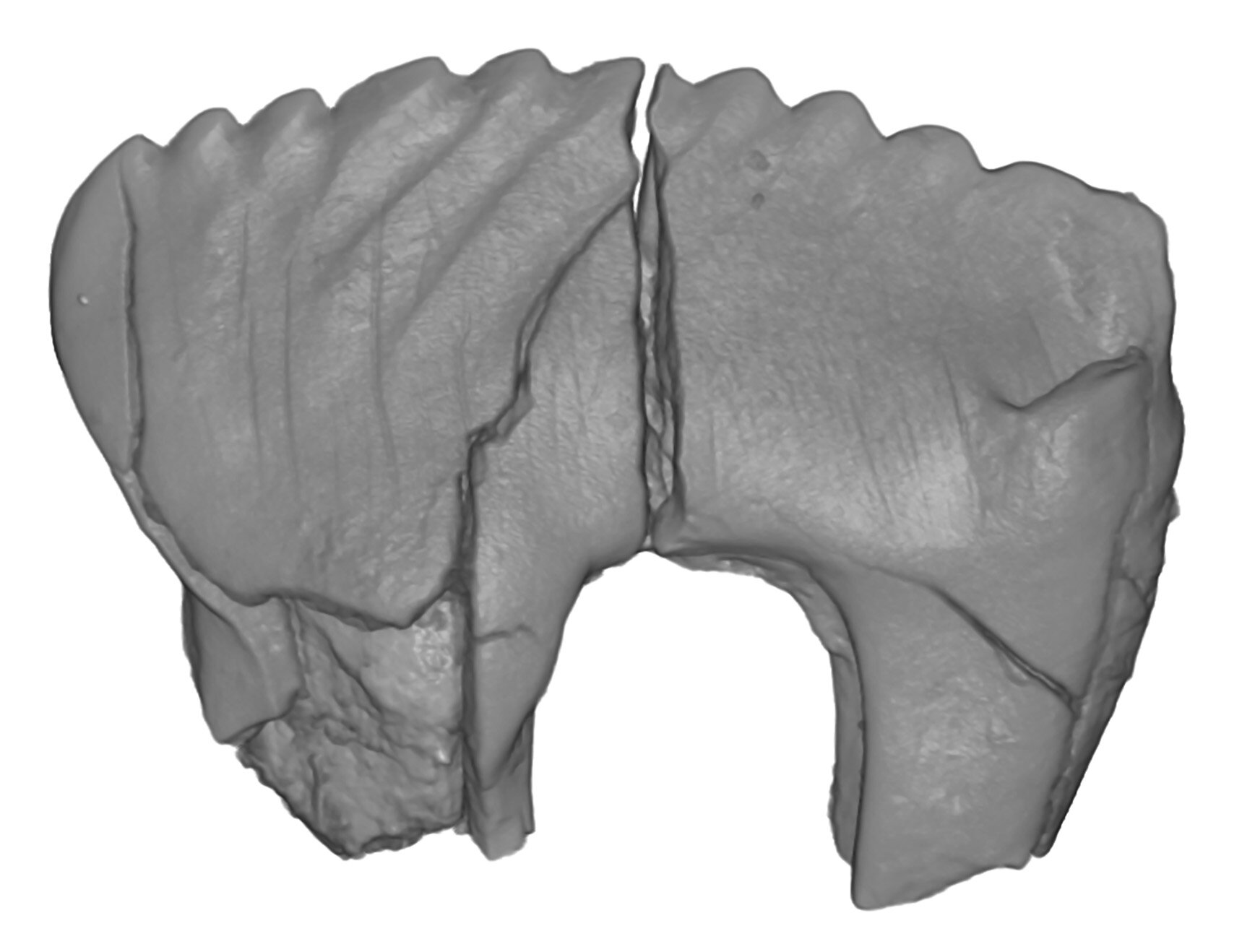
The study introduces three newly named species: Camurodon borealis, Qayaqgruk peregrinus, and Kaniqsiqcosmodon polaris.
Their names reflect both scientific description and cultural recognition. Camurodon borealis translates roughly to “Northern curved-tooth.” Qayaqgruk peregrinus means “the little wandering hero,” named after a legendary figure, Qayaq, in Alaskan Inuit culture. Kaniqsiqcosmodon polaris translates to “polar frost ornamented tooth.”
The discoveries were led by first author Sarah Shelley, now at the University of Lincoln in the U.K., who conducted the research as a postdoctoral scientist at CU Boulder. The senior author was Jaelyn Eberle, a professor in the Department of Geological Sciences and curator at the **University of Colorado Museum of Natural History.
Together, their team used small but telling fossil remains to reconstruct a much bigger story about Arctic evolution.
Fossil Teeth From a Harsh Ancient Arctic
The animals were identified from fossil teeth recovered in the Prince Creek Formation, a fossil-rich region located within the Arctic Circle. The site dates back roughly 73 million years, a time when dinosaurs still dominated the planet.
Even then, the environment was far from mild. The region experienced months of winter darkness, freezing temperatures, and likely seasonal food shortages.
Yet these mammals survived—and not just barely.
“These three new mammal species add to a growing body of evidence that this ancient arctic region was home to unique, polar-adapted species,” said co-author Patrick Druckenmiller of the University of Alaska Fairbanks.
The fossils show that the ancient Arctic wasn’t simply a marginal habitat. It was an active ecosystem supporting specialized life.
Meet the Multituberculates—One of Earth’s Most Successful Mammal Groups
All three species belong to an extinct group of mammals known as multituberculates.
These animals were roughly the size range between mice and rats, but their evolutionary success was enormous. Multituberculates were the longest-lived group of mammals known in Earth’s history, lasting more than 100 million years.
They lived from the Jurassic Period through to the end of the Eocene Epoch, about 35 million years ago. They even survived the asteroid impact that wiped out all non-avian dinosaurs.
To put that survival in perspective, the study notes that modern humans, Homo sapiens, have existed for only about 300,000 years.
For scientists, multituberculates have long raised an important question: what made them so resilient?
The answer may lie in their teeth.
Tooth Shapes Reveal How These Mammals Avoided Competition
The fossil evidence came mainly from teeth, but those teeth carried crucial information.
The researchers found striking differences in tooth shape among the three new species, suggesting that they likely relied on different diets.
Camurodon borealis showed teeth consistent with herbivores. Qayaqgruk peregrinus appeared to be an omnivore, likely feeding on insects as well as plants. Kaniqsiqcosmodon polaris also seemed to be an omnivore, but may have eaten mostly plants.
Those dietary differences may have been key to survival in the Arctic, where food resources were likely limited and seasonal.
Instead of competing for the same narrow set of resources, different species may have evolved ways to occupy distinct ecological roles. That adaptability could have allowed multiple multituberculate species to coexist in one region.
Shelley suggested this flexibility may also help explain how multituberculates endured larger planetary disruptions.
Such traits—dietary variety and ecological adaptability—may have been essential not only in harsh polar climates, but also during catastrophic global change.
A Surprising Link to Mongolia
Beyond revealing new species, the study also uncovered evidence of an ancient migration that challenges long-held assumptions about how mammals spread.
The team found that Qayaqgruk peregrinus is closely related to a species discovered in what is now Mongolia, suggesting its ancestors traveled from Asia to North America.
Shelley estimated this dispersal occurred around 92 million years ago, making it one of the earliest known examples of mammals crossing between continents.
“This means there was a land corridor between Asia and North America for these little mammals to come through,” Eberle said. “And this land bridge was already pretty active as far back as 90 million years ago.”
The implication is significant: the Arctic wasn’t just a dead-end habitat. It may have been a major route for movement and evolutionary mixing.
Rethinking the Arctic’s Role in Evolution
For decades, the polar regions have often been viewed as evolutionary sidelines—places where fewer species lived and where biodiversity was far lower than in tropical environments.
This study pushes back against that idea.
“While the polar regions don’t host the same level of biodiversity as the tropics, they were still very active places for life to flourish, extending far back into deep time,” Shelley said.
The discovery adds weight to a growing body of evidence that ancient Arctic ecosystems produced unique, specialized species adapted to extreme conditions.
And it reinforces the idea that even environments that seem harsh today may have played an outsized role in shaping life’s long history.
“It really challenges how we think about native species,” Shelley said. “Deep time reminds us that a place is not just a point on a map, but a long, layered history of landscapes and inhabitants.”
Why This Matters
This discovery does more than add three names to the fossil record. It changes how scientists view the ancient Arctic—not as a biological backwater, but as an active zone of survival, adaptation, and migration.
The fossil teeth reveal that small mammals were already experimenting with flexible diets in an environment defined by cold, darkness, and scarcity. That same adaptability may help explain why multituberculates became one of the most resilient mammal groups ever known.
And the apparent migration from Asia to North America around 92 million years ago shows that ecosystems have been shaped by movement across continents for tens of millions of years.
Study Details
Shelley, Sarah L., Arctic ecosystems shaped mammalian dispersal and diversification before the Cretaceous–Paleogene mass extinction, Proceedings of the National Academy of Sciences (2026). DOI: 10.1073/pnas.2601794123. doi.org/10.1073/pnas.2601794123