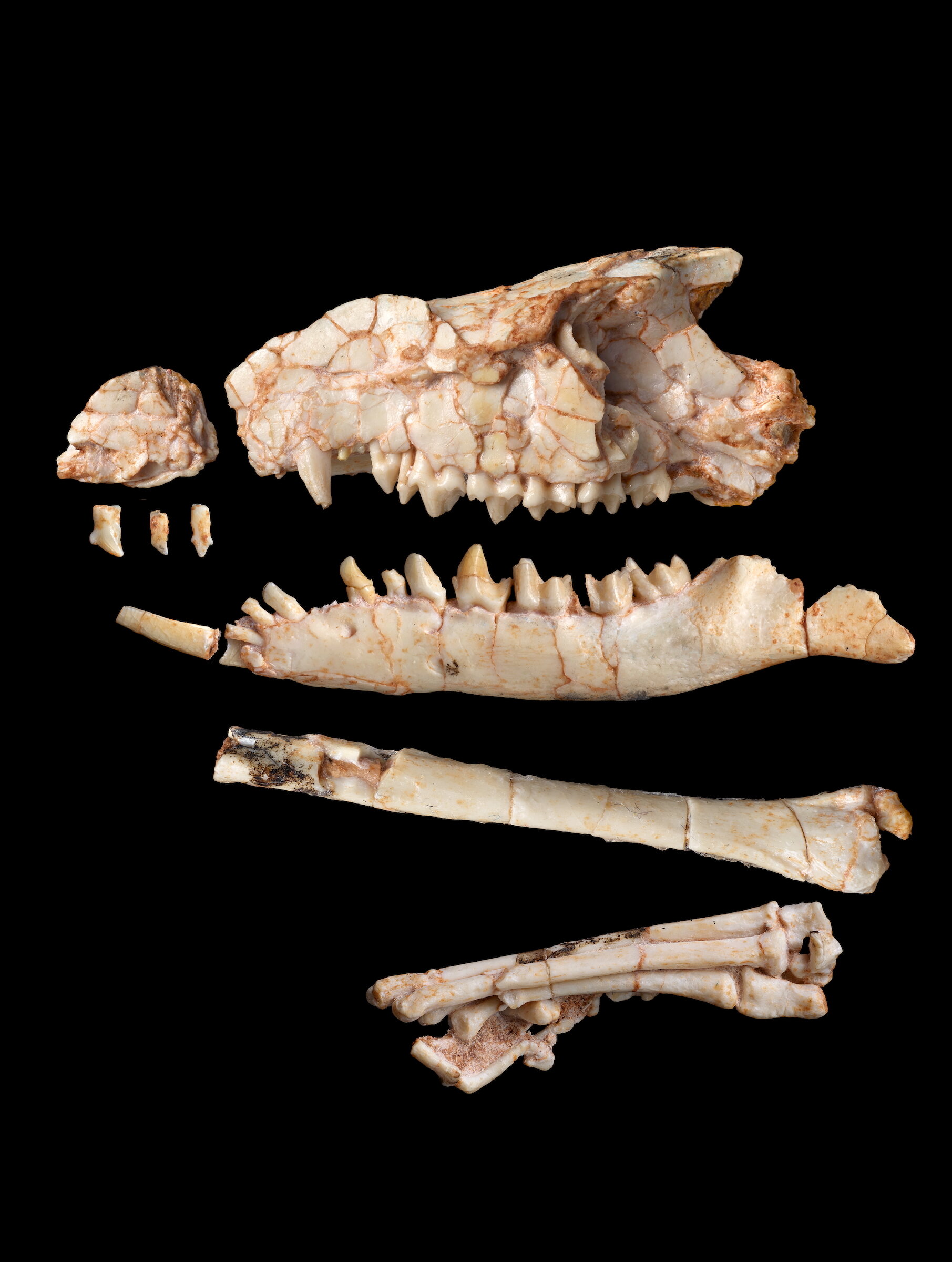
For nearly 40 years, a handful of distinctive fossil teeth convinced many paleontologists that an enigmatic group of ancient mammals might belong near the ancestors of today’s placental mammals. A remarkably complete fossil from Mongolia’s Gobi Desert has now rewritten that story, revealing that those teeth had been telling only part of it.
The fossil belongs to a newly described species, Tamirkhan balcarceli, and offers the clearest view yet of a mysterious group of extinct mammals known as zhelestids. Rather than supporting the long-held interpretation that zhelestids were close relatives of modern placental mammals, the new evidence places them on a different branch of early mammal evolution.
According to the researchers, the finding overturns an interpretation that had largely been built from isolated teeth and fragmentary fossils.
“This discovery illustrates why fieldwork remains indispensable to understanding life’s history,” said lead author Andres Giallombardo, who discovered the specimen during a Museum-sponsored expedition in 2004 while he was a graduate student.
“It was the thrill of a career to find a new species so completely preserved that it also solves a longstanding scientific problem, and a reminder that the Gobi Desert, which is well known for fossils, continues to change science.”
Teeth painted a misleading picture
Zhelestids have puzzled paleontologists for decades because their fossil record consisted mostly of isolated teeth. Those teeth differed from the sharp, insect-eating teeth common among many Cretaceous mammals. Instead, they were low and rounded, appearing more specialized for eating plants.
Those dental features led researchers to propose that zhelestids represented an unknown group of hoofed mammals. Debate continued over whether they were examples of Cretaceous placental mammals—the lineage that includes humans and most living mammals—or whether they belonged to a separate evolutionary branch that independently developed similar characteristics.
The idea that placental mammals already existed during the Cretaceous has been supported by molecular clock studies, which suggest that the group originated well before the end of that period. The newly described fossil, however, provides evidence pointing in a different direction.
“Molecular models based on living animals can predict the past, but fossils provide the evidence needed to test those predictions,” said study co-author Paul Velazco.
A skeleton that changed the evolutionary picture
Recovered from the eastern Gobi Desert, Tamirkhan balcarceli is the most complete zhelestid specimen discovered so far. While it retains the rounded teeth that define the group, the rest of its anatomy tells a different story.
The animal possessed long, ever-growing incisors and several distinctive skull features characteristic of small, shrew-like insectivorous mammals known as zalambdalestoids.
Its hind limbs reinforced that connection.
“Tamirkhan’s hind legs are long and slender with distinctive ankles, traits that are unmistakably zalambdalestoid,” said study author Shawn Zack.
Taken together, these anatomical features led the researchers to conclude that zhelestids were not placental mammals and were not especially placental-like. Instead, they represent a subset of the zalambdalestoid group.
One tooth could not predict the whole animal
The discovery also challenges assumptions about how much anatomy can be inferred from teeth alone.
The researchers argue that the rounded teeth shared by zhelestids and plant-eating mammals likely resulted from convergent evolution, in which unrelated groups independently evolve similar traits as they adapt to similar ways of life.
According to the study, this means mammal species living during the Cretaceous may not have been as anatomically diverse as their teeth alone had suggested.
“More than 200 years ago, French naturalist Georges Cuvier famously argued that a single tooth could allow scientists to predict the anatomy of an entire animal,” said study co-author Maureen O’Leary.
“While teeth remain among the most informative fossils available, this work demonstrates that teeth cannot always tell us how the whole animal looked.”
An ancient mammal that only looked like a rabbit
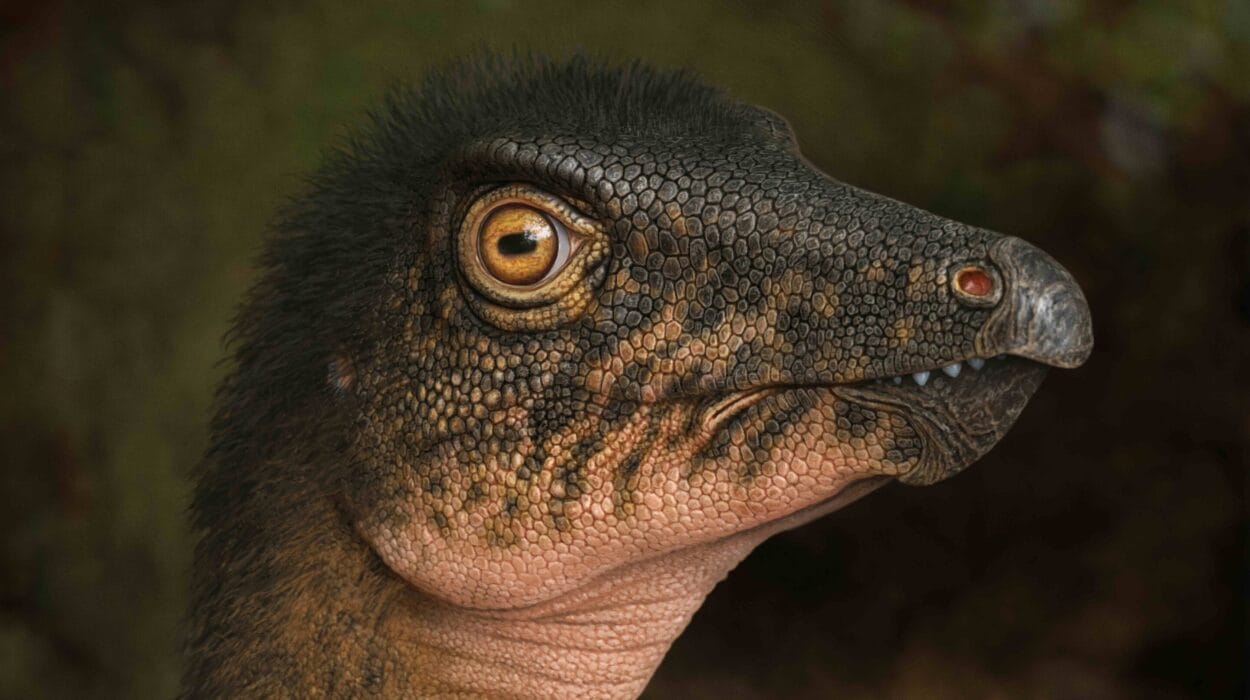
From head to tail, Tamirkhan measured about 6 to 7 inches (15 to 18 centimeters). Its elongated hind limbs gave it an almost rabbit-like appearance.
Because of that body shape, paleontologists have sometimes informally referred to zhelestids as “Cretaceous rabbits.” The new research indicates that despite their resemblance, they were only rabbit mimics and were distantly related to modern rabbits.
The Gobi Desert continues to reshape mammal evolution
The fossil also underscores the scientific importance of Mongolia’s Gobi Desert. Together with fossil sites in Kazakhstan, Kyrgyzstan, and Uzbekistan, it is one of the few regions where zhelestid fossils have been preserved.
“The Gobi is one of the only places where we routinely recover such remarkably complete Cretaceous mammals,” said co-author Michael Novacek, who has co-led annual expeditions to the Gobi since 1990 in partnership with the Mongolian Academy of Sciences. “These extraordinary fossils continue to transform our understanding of mammalian evolution.”
The researchers said their evolutionary conclusions were made possible by MorphoBank, a mammalian phylogenetic research platform first published in 2013. Over more than a decade, the database has expanded to include an increasing number of important fossil species, providing what the authors describe as the most comprehensive framework yet assembled for analyzing relationships among early mammals.
Publication details
Maureen O’Leary, Cretaceous zhelestid mammals are Zalambdalestoids, Nature (2026). DOI: 10.1038/s41586-026-10861-5. www.nature.com/articles/s41586-026-10861-5