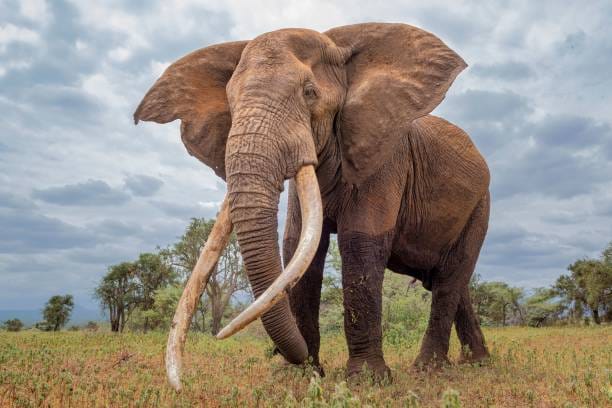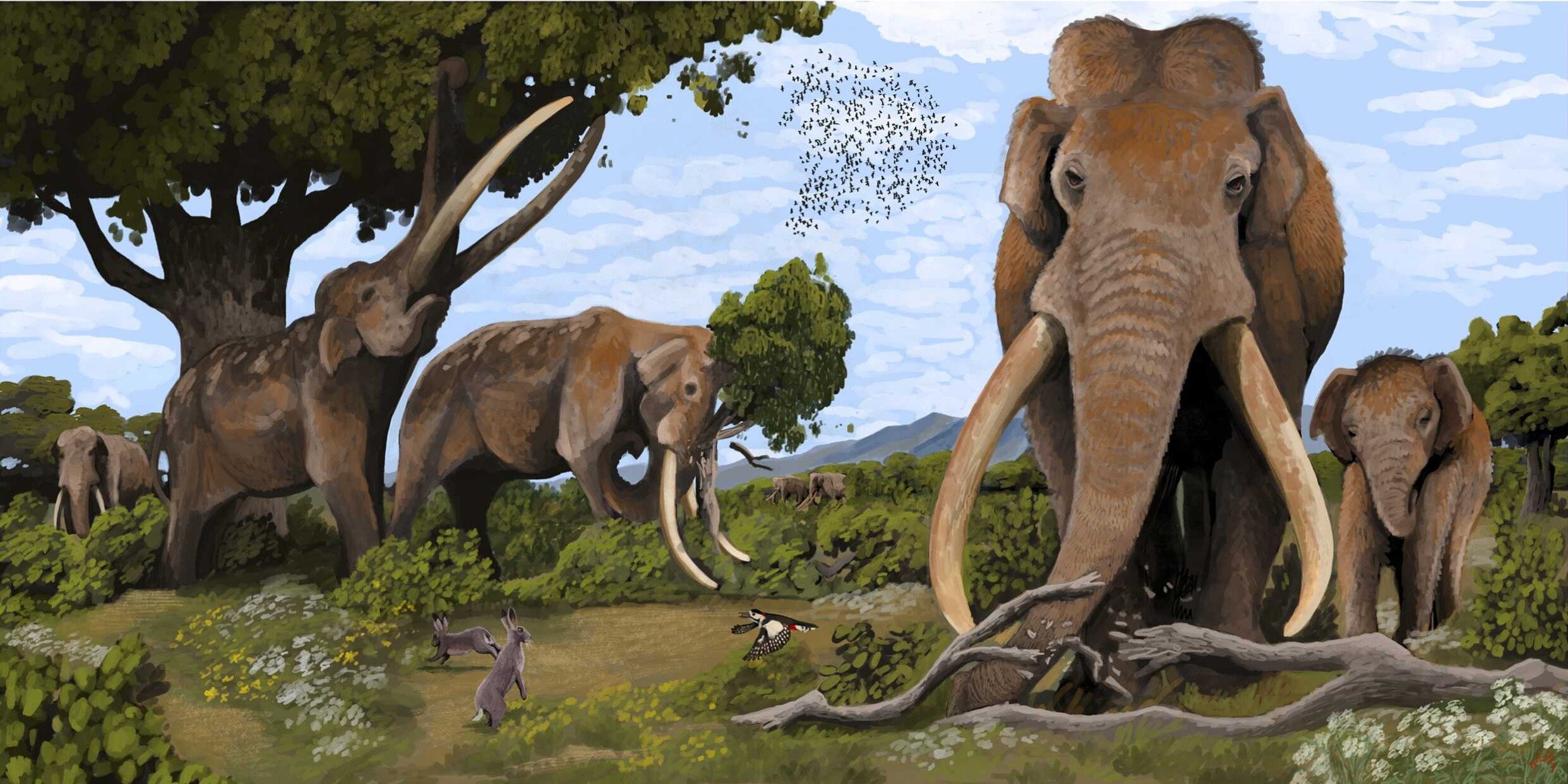
The shores of Neumark-Nord in northeastern Germany do not look today as they did during the last interglacial period. Where modern observers might see the remnants of a lignite mine, there was once a lush, shimmering lake landscape—a magnet for life in a world dominated by the ebb and flow of ice. This prehistoric oasis in Saxony-Anhalt has become one of the most significant paleontological sites in Europe, specifically for those seeking to understand the Palaeoloxodon antiquus, the legendary European straight-tusked elephant.
Beneath the soil, researchers have unearthed the fossil remains of more than 70 elephants. These were not small creatures; they were massive titans of the Pleistocene that shared this watering hole with a very specific neighbor: the Neanderthal. For years, the sheer volume of bones at the site hinted at a deep, perhaps violent, connection between the two species. Now, through a high-tech autopsy of the past, scientists are beginning to read the life stories of these giants, written in the very enamel of their teeth.
A Travel Diary Written in Enamel
To understand how these animals lived and died, an international team of researchers from Germany, the Netherlands, and the United States turned to the elephants’ molars. Using an innovative combination of isotope analysis—tracking carbon, oxygen, and strontium—and the cutting-edge field of paleoproteomics, the team effectively performed a chemical interrogation of four specific individuals.
As an elephant grows, its teeth act like a biological recorder. Strontium isotopes, absorbed from the water and plants the animal consumes, reflect the specific geology of the ground beneath its feet. By measuring these isotopes along the direction of growth in the molars, the researchers could track the elephants’ movements over several years. As the study’s lead author, Elena Armaroli, explains, these chemical signatures serve as a travel diary preserved for over one hundred thousand years.
The results revealed that these were not sedentary creatures. Some of the elephants were true wanderers, traveling vast distances of up to 300 kilometers before ever reaching the lakes of Neumark-Nord. This data allows scientists to reconstruct the home ranges of these beasts, mapping out how they navigated the ancient European landscape across decades of life.
The Wanderers and the Residents
The study also broke new ground by identifying the sex of the elephants through proteins preserved in the tooth enamel—the first time paleoproteomics has been applied to this species. Of the four elephants studied, three were identified as males and one was likely a female. This distinction proved vital for understanding their behavior.
Two of the males possessed isotope signatures that were vastly different from the local bedrock of the Neumark-Nord region. This suggests a social structure similar to modern elephants, where males roam over much larger territories than females. Some of these young males spent their adolescence and early adulthood far away from the lake. Whether the lake was a seasonal meeting point for elephants from across the continent, or a home base that young males eventually left and returned to, remains a mystery that the team is now hoping to solve through further genetic study.
However, the fact that these diverse individuals—from locals to long-distance travelers—all ended up at this specific site points toward a darker reality. The concentration of remains suggests that their presence at the lake was not just a natural occurrence, but a predictable pattern that someone else was watching very closely.
The Architects of the Lake Shore
The Neanderthals of Neumark-Nord were far more than scavengers waiting for a lucky break. The evidence suggests they were masters of their environment, operating within a rich lakeshore ecosystem for at least 2,500 years. They weren’t just surviving; they were thriving.
These early humans were active gatherers, collecting hazelnuts and acorns, but they were also highly organized hunters. The researchers believe the Neanderthals engaged in systematic butchery, extracting fat from large mammals on a massive scale. They knew the landscape so well that they could anticipate the arrival of the great straight-tusked elephants.
The discovery of so many elephant remains, coupled with the varied origins of the animals, indicates that this was likely organized hunting. To take down a creature of such immense size, the Neanderthals had to cooperate, plan, and communicate. They may have even used fire to modify the landscape to their advantage. This suggests that Neanderthals lived in larger, more complex social groups than science previously assumed, moving away from the image of the solitary caveman and toward a picture of a sophisticated society.
Why This Research Matters
This study is a pivotal moment in our understanding of human evolution because it shatters the idea that Neanderthals were primitive or purely reactive. By proving that they could hunt the largest land mammals of their time through cooperation and long-term planning, the research elevates our extinct cousins to the status of apex ecological actors.
Furthermore, the technological leap of using paleoproteomics to determine the sex of ancient animals opens a new door for archaeology. We can now look at a pile of bones and see the individual—the wandering male or the local female—and reconstruct the population dynamics of a world that vanished millennia ago. It reminds us that the history of our planet is not just a series of random events, but a complex narrative of interaction, where the choices of a single social group could leave a mark on the landscape for over a hundred thousand years.
Study Details
Elena Armaroli et al, Life histories of straight-tusked elephants from the Last Interglacial Neanderthal site of Neumark-Nord (~125 ka), Science Advances (2026). DOI: 10.1126/sciadv.adz0114