Hidden gravitational forces may have been quietly reshaping the young stars surrounding the Milky Way’s central black hole for millions of years. A new preprint presents a unified model that explains the dramatically different stellar orbits around Sagittarius A within a single framework, offering a potential solution to one of the galaxy’s longest-standing astronomical puzzles.*
The region surrounding the Milky Way’s central black hole has long challenged astronomers. Although the young, massive stars orbiting Sagittarius A* (Sgr A*), a supermassive black hole about four million times the mass of the Sun, are all believed to be relatively young, their motions appear remarkably different. Some travel along elongated, chaotic paths, while others move together in an orderly rotating disk.
For years, scientists have proposed multiple explanations for these contrasting orbital patterns. Yet none has successfully accounted for every observed group of stars at the same time. Now, researchers led by Xiaochen Zheng at the Beijing Academy of Science and Technology have developed a single model that reproduces the full diversity of these stellar motions. Their findings have been published as a preprint on the arXiv server.
Three Groups of Young Stars, Three Very Different Behaviors
The mystery begins with the stars themselves.
The young stellar population surrounding Sgr A* falls into three distinct groups, each displaying its own unique orbital behavior despite being no more than about 15 million years old.
Closest to the black hole lies a compact collection known as the S-stars. These stars follow highly elongated orbits that are tilted in seemingly random directions, creating an appearance of orbital chaos.
Farther from the galactic center is a separate population of hotter and more massive stars. Unlike the S-stars, these objects travel together within a relatively organized disk, rotating in a clockwise direction around Sgr A*.
Surrounding both populations is a third group consisting of stars whose orbits are less well constrained and span a broad range of inclinations, making the overall picture even more complicated.
Because all three groups appear similarly young, astronomers have struggled to determine whether they formed under different conditions or somehow evolved from a shared origin.
One Formation Scenario Instead of Several
Rather than treating each stellar population separately, Zheng’s team explored whether all three groups could have originated together.
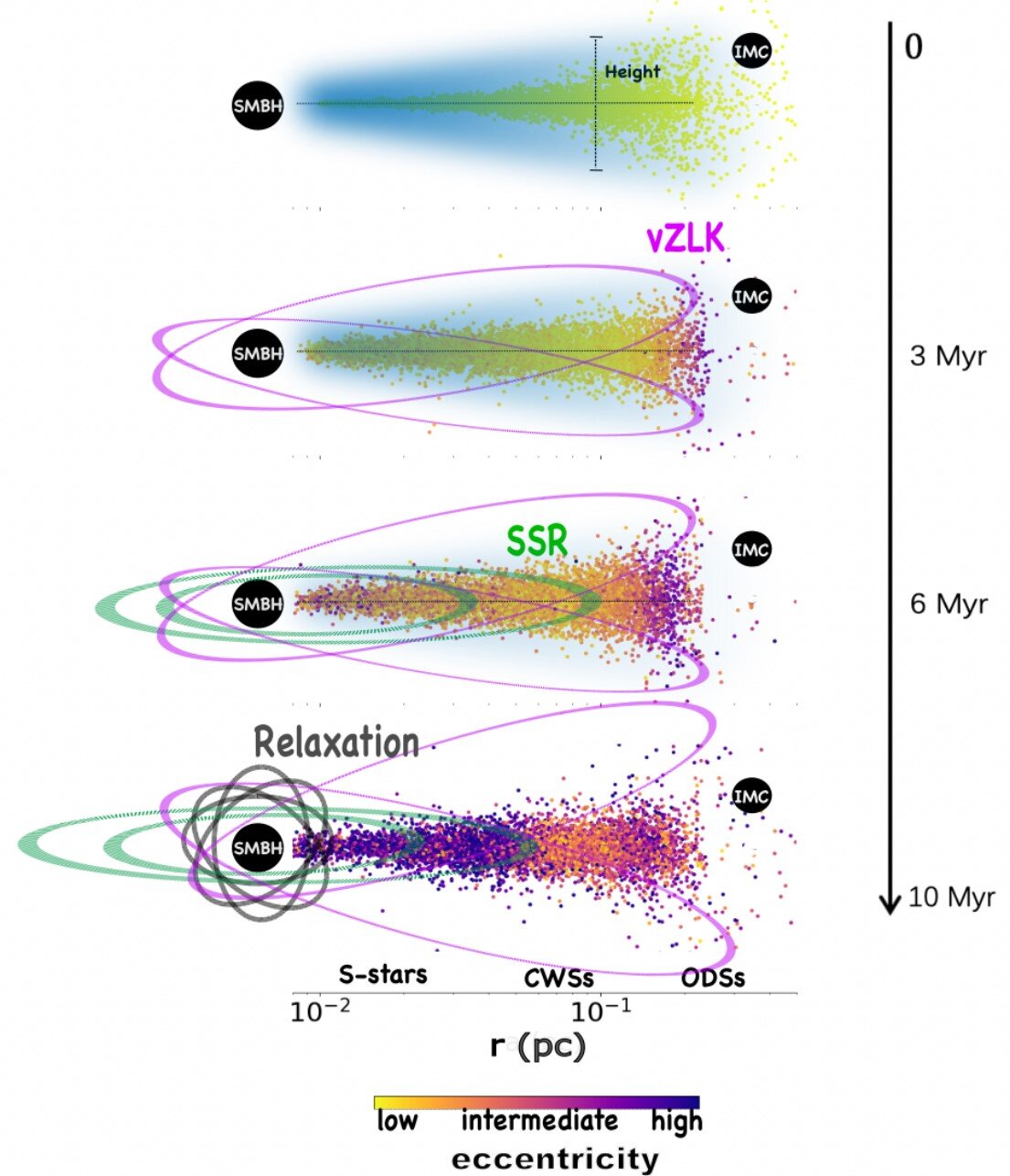
Their model proposes that every one of these young stars formed simultaneously within a single gas disk surrounding Sgr A*. The crucial ingredient is the presence of an intermediate-mass companion located farther from the black hole.
According to the model, this companion—either a dense star cluster or a black hole with a mass of roughly 10,000 Suns—exerts a slow but persistent gravitational influence over millions of years. Instead of immediately disrupting the stars, its gravity gradually reshapes their orbits.
Meanwhile, the stars themselves continue interacting gravitationally with one another. These encounters steadily redistribute energy and angular momentum throughout the system.
Together, these two processes transform the original stellar disk into the complex arrangement observed today.
How the Inner and Outer Regions Evolved Differently
The model naturally produces different outcomes depending on a star’s distance from Sgr A*.
In the innermost region, repeated gravitational interactions between neighboring stars gradually randomize their orbital orientations. Over time, this process converts the once orderly inner disk into the chaotic population recognized today as the S-stars, complete with their highly elongated and randomly tilted orbits.
Farther from the black hole, the effects are much weaker. The outer stellar disk remains largely intact, preserving its organized clockwise rotation while still experiencing some long-term gravitational shaping from the distant companion.
This combination allows the same initial stellar population to evolve into multiple distinct orbital structures without requiring separate formation events.
Matching Observations That Earlier Models Could Not
The researchers extensively tested their model against the observed properties of the Milky Way’s central stars.
According to the study, the simulations successfully reproduced the defining characteristics of all three stellar populations. They generated the high orbital eccentricities and randomly oriented paths seen among the S-stars, while also preserving the relatively ordered structure of the outer clockwise disk.
The model also explained a recently identified gap in the orbital distribution of the S-stars, a feature that previous explanations had been unable to reproduce.
Perhaps most importantly, the entire evolutionary process occurs within the stars’ actual lifetimes of approximately 15 million years. Earlier models struggled to produce the observed orbital configurations within such a limited timescale.
A Hidden Neighbor Could Be the Missing Piece
Beyond explaining the stellar orbits themselves, the study points toward a possible real-world object that may already exist near the Milky Way’s center.
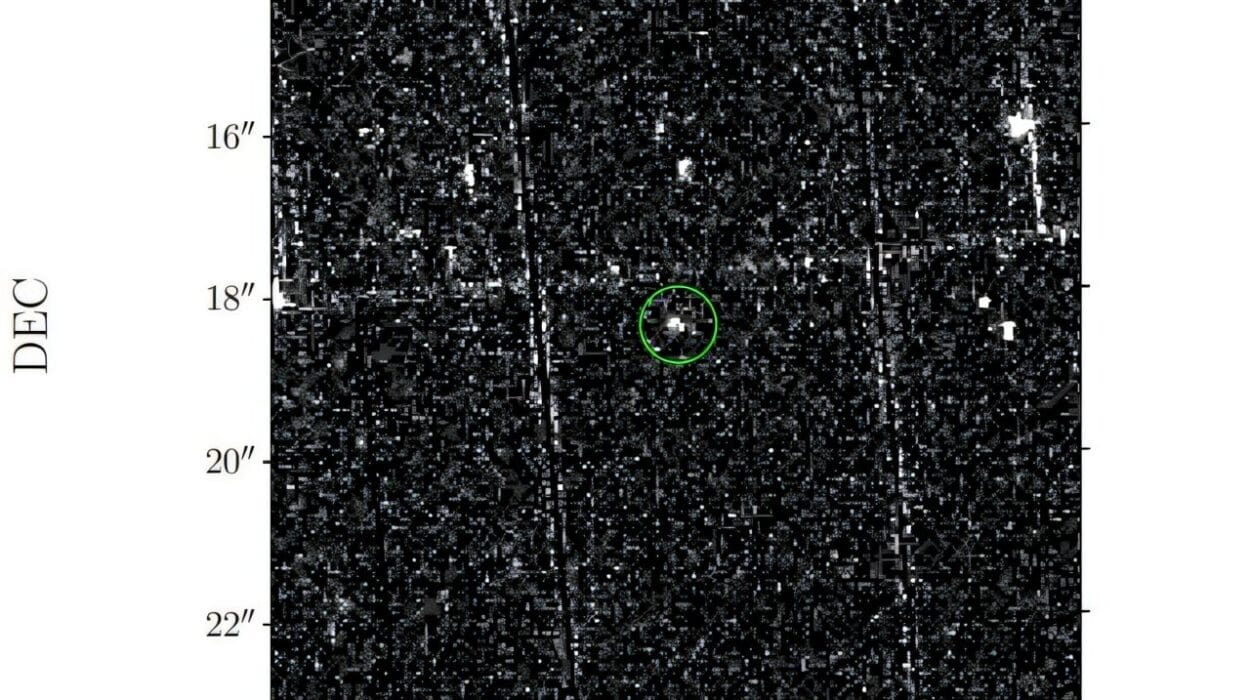
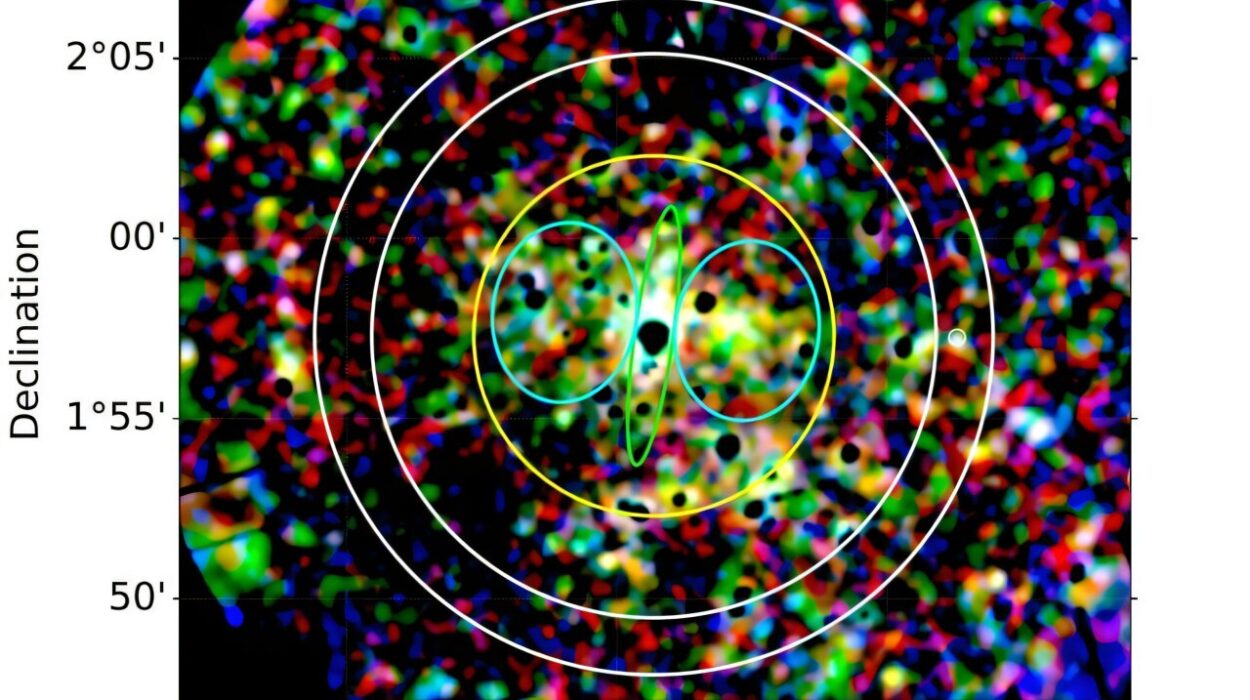
The researchers suggest that IRS-13E, a star cluster located about 0.13 parsecs from Sgr A*, could be the intermediate-mass companion responsible for driving the long-term gravitational evolution described in their model.
If that interpretation is correct, IRS-13E may represent the second massive object that has quietly influenced the dynamics of stars in the immediate neighborhood of the galaxy’s central black hole.
Future observations focusing on the cluster’s motion and internal structure could provide an opportunity to test this idea directly.
Why This Matters
Understanding how stars move around Sagittarius A* is essential for building a clearer picture of the Milky Way’s most extreme environment. By explaining the chaotic S-stars, the orderly clockwise disk, and the surrounding scattered stellar population within one unified model, the new research addresses a puzzle that has resisted previous explanations.
If future high-precision observations confirm that IRS-13E is the intermediate-mass companion proposed by the model, astronomers may gain compelling evidence that the Milky Way’s central black hole has not been evolving in isolation. Instead, the motions of its youngest neighboring stars may preserve the gravitational signature of another massive object that has been quietly shaping the heart of our galaxy for millions of years.