For Sacramento River winter-run Chinook salmon, survival may depend heavily on the river staying cool during just the first 15 days after their eggs are fertilized. New research found that even a small rise in temperature during this early period sharply reduced the chance that juveniles in a nest would survive.
The critical period comes early
Sacramento River winter-run Chinook salmon are California’s most endangered salmon. Only one population remains, with an average of a few thousand adult fish returning in recent decades.
Their original spawning habitat was in cold mountain rivers draining Mount Shasta. Shasta Dam now blocks access to that habitat, leaving the salmon to spawn in the lower Sacramento River, where summer temperatures can be much higher.
The new research found that the first 15 days after fertilization are especially important. During this period, cooler river temperatures were strongly associated with juvenile survival.
For every 1.8°F (1°C) increase in the river’s average temperature during those 15 days, the probability that juveniles in a nest would survive fell by about 73%.
That finding helps explain why counting adult salmon returning to spawn may not tell the whole story.
Many spawning fish do not mean many survivors
Fisheries biologists have traditionally measured the annual success of winter-run Chinook salmon by counting adults returning upriver to spawn. That approach assumes that many of the spawning fish will ultimately produce surviving juveniles.
But the new analysis found that successful reproduction can be much more limited.
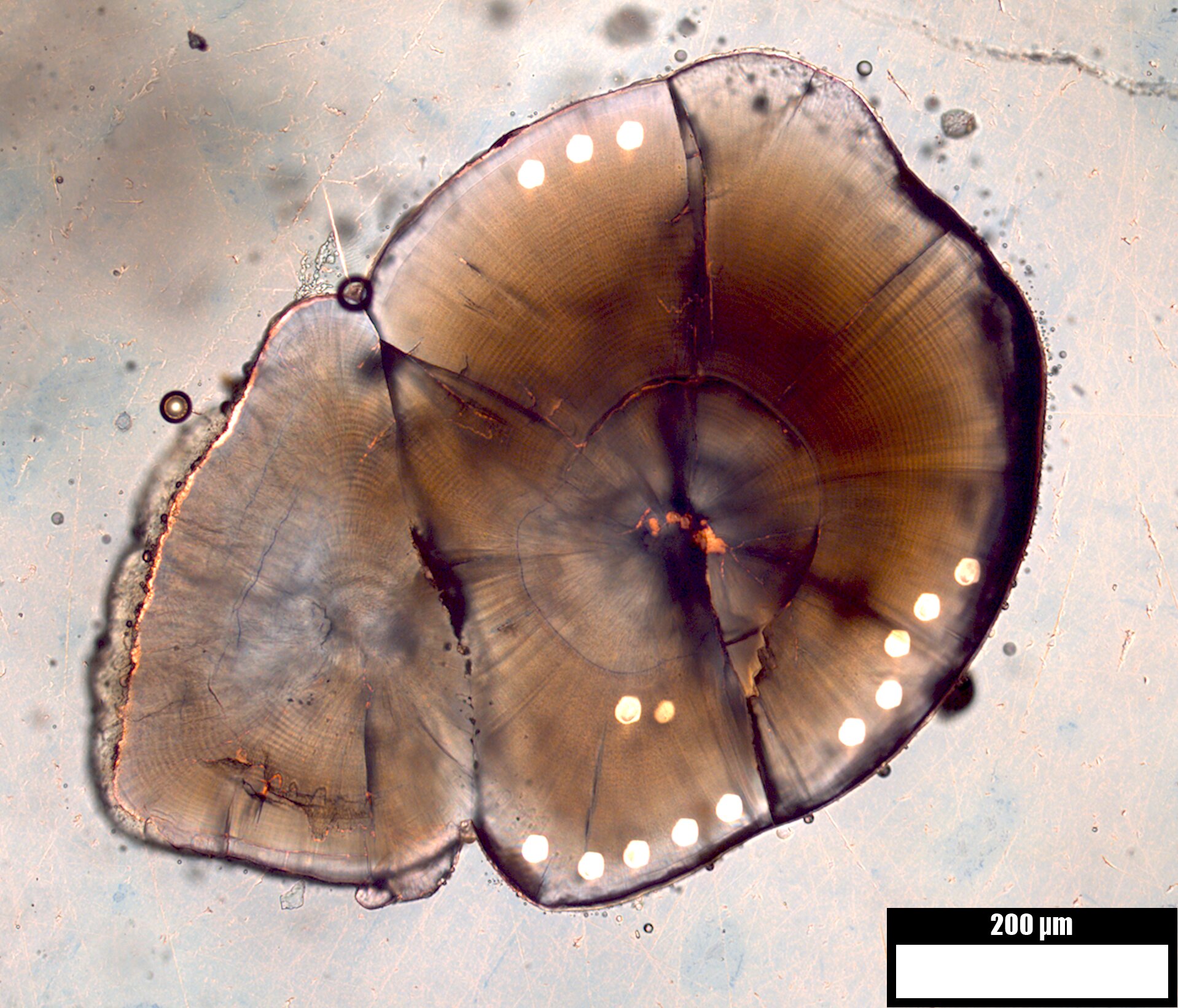
Researchers combined spawning surveys, river temperature models and measurements from salmon otoliths, the ear bones that record information about the fish’s environment during development. An ion microprobe at UCLA was used to measure oxygen isotopes in the otoliths, which provided information about the temperatures the developing salmon experienced.
The team also used growth patterns in the otoliths to estimate when the salmon hatched. By bringing these records together with river temperatures and spawning locations, researchers could identify which nests, or redds, were likely to have produced surviving juveniles.
The temperature pattern was clear. Juveniles that survived had experienced cooler temperatures during their earliest development, while locations where juveniles did not survive were consistently warmer during the same period.
Cold water is hardest to provide in warm years
Water managers release cold water from Shasta Reservoir to help keep the river cool enough for salmon eggs developing in gravel. At the same time, the reservoir supplies water for farms and cities.
That balance becomes more difficult when water supplies are low. In warm, low-water years, the available cold water may cover only a narrow part of the critical 15-day period.
The research suggests that the timing of cold water matters as well as its temperature. Even a short mismatch between when salmon spawn and when sufficiently cold water is available can substantially reduce the number of juveniles that survive.
The fish that make it through this early thermal window appeared able to tolerate higher temperatures later in development. That makes the earliest stages of development particularly important to the survival pattern observed in the study.
The finding changes how survival can be measured
The researchers said the early survival bottleneck can greatly reduce the effective population size and erode the diversity that helps salmon adapt to changing environmental conditions.
Rachel Johnson, a research scientist at NOAA’s Southwest Fisheries Science Center and the University of California, Davis, said that even when surveys record many salmon spawning across a long season, only the eggs exposed to suitable temperatures are likely to survive.
She said conservation efforts should not simply concentrate limited cold water on a small portion of the spawning season and favor fewer nests. Doing so could further narrow the opportunities for salmon to encounter favorable conditions later in life.
Instead, the researchers pointed to approaches such as reintroducing salmon to historical habitat, which could give the fish more opportunities to survive.
Otoliths reveal conditions during early development
The study’s approach allowed researchers to connect individual salmon development with conditions in the river.
The ion microprobe measurements were combined with the other datasets to reconstruct the temperatures experienced by salmon while they were still developing inside their eggs. The researchers said this combination could potentially be applied to studying early development in salmon and other species that are sensitive to temperature and changing environmental conditions.
For the winter-run Chinook salmon, however, the immediate finding is more specific. The evidence points to the first 15 days after fertilization as a major survival bottleneck, with warmer conditions during that period strongly associated with lower juvenile survival.
The study was published in Science Advances.